


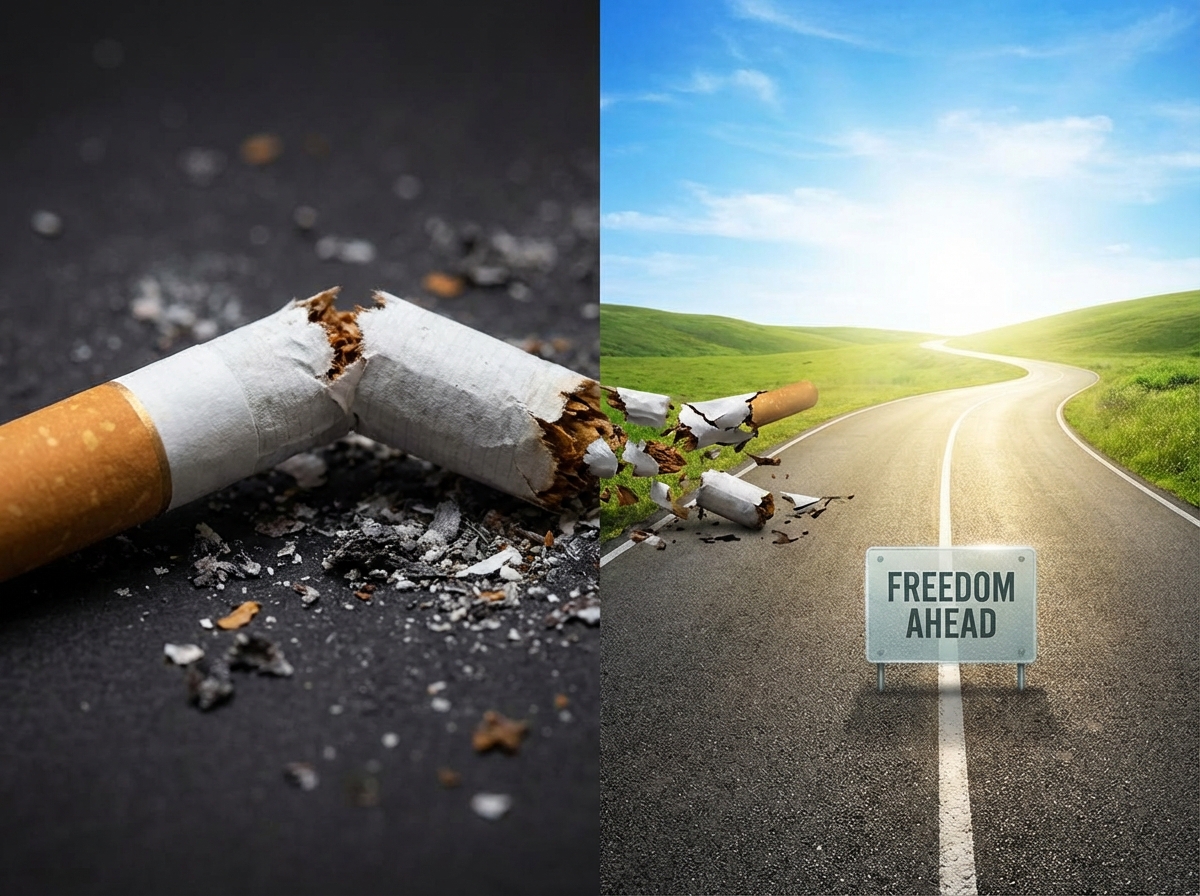
The last cigarette I ever smoked, I didn’t throw a party. I didn’t feel proud. I felt something closer to embarrassment — that it had taken me this long to understand something that now seemed so obvious.
If you’re looking to quit smoking for good, the method that actually works isn’t about willpower, patches, or white-knuckling through cravings. It’s about fundamentally changing the story you tell yourself about what a cigarette is actually doing for you. Once that story changes, the addiction loses most of its grip — not gradually, but surprisingly fast.
- The smokers who fail repeatedly aren’t weak — they’re using the wrong frame. They’re trying to give something up rather than recognizing there’s nothing worth keeping.
- Cravings feel physical, but they’re mostly psychological — which means they can be interrupted and redirected before they reach full intensity.
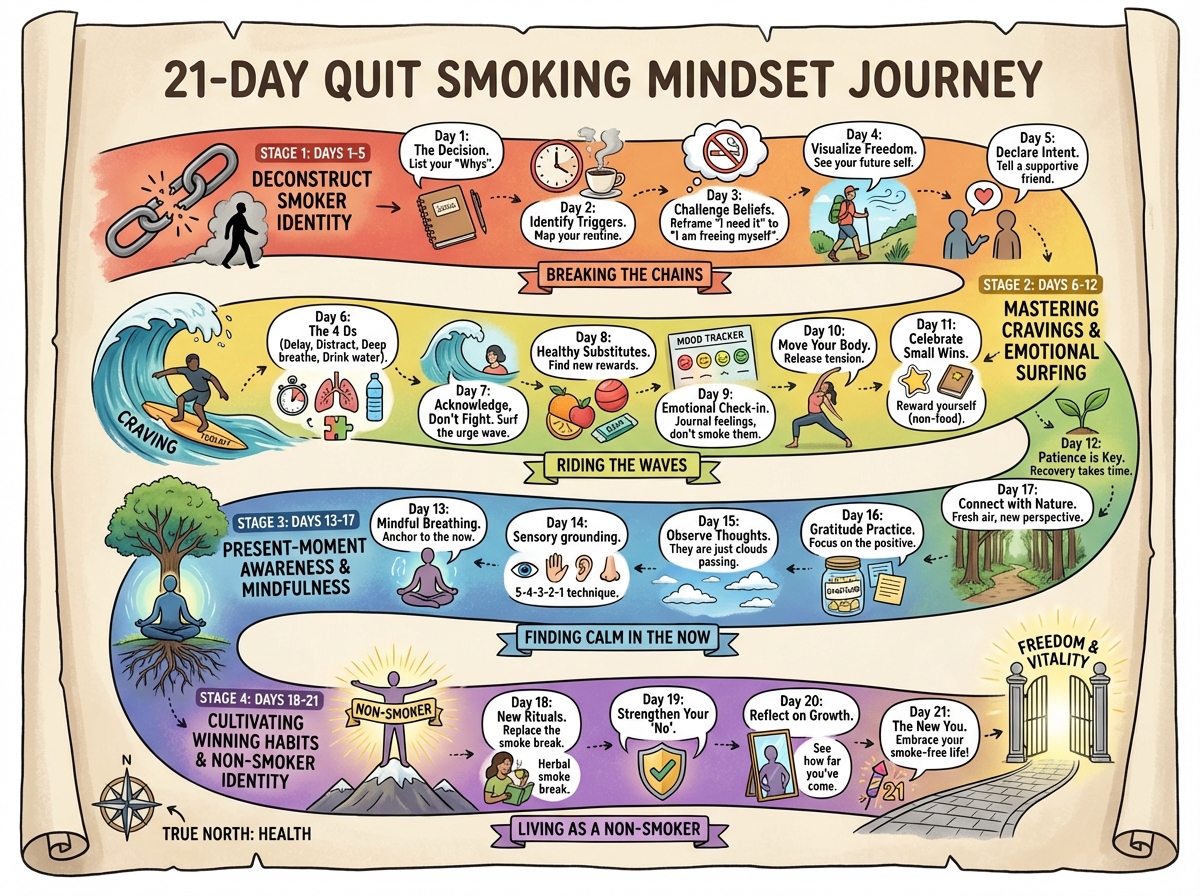
- The 21-day window isn’t arbitrary — it’s long enough to rebuild the mental habits that smoking filled, while short enough to stay committed.
What “Quitting Smoking” Actually Means
Most people think quitting smoking means enduring the absence of something they love. That framing is the problem. Nicotine addiction isn’t really about the chemical — it’s about the ritual, the emotional shortcut, the identity that grew around lighting up. Someone who smokes with their morning coffee isn’t addicted to nicotine in a vacuum; they’re attached to a specific moment, a specific feeling, a story about who they are before the day starts.
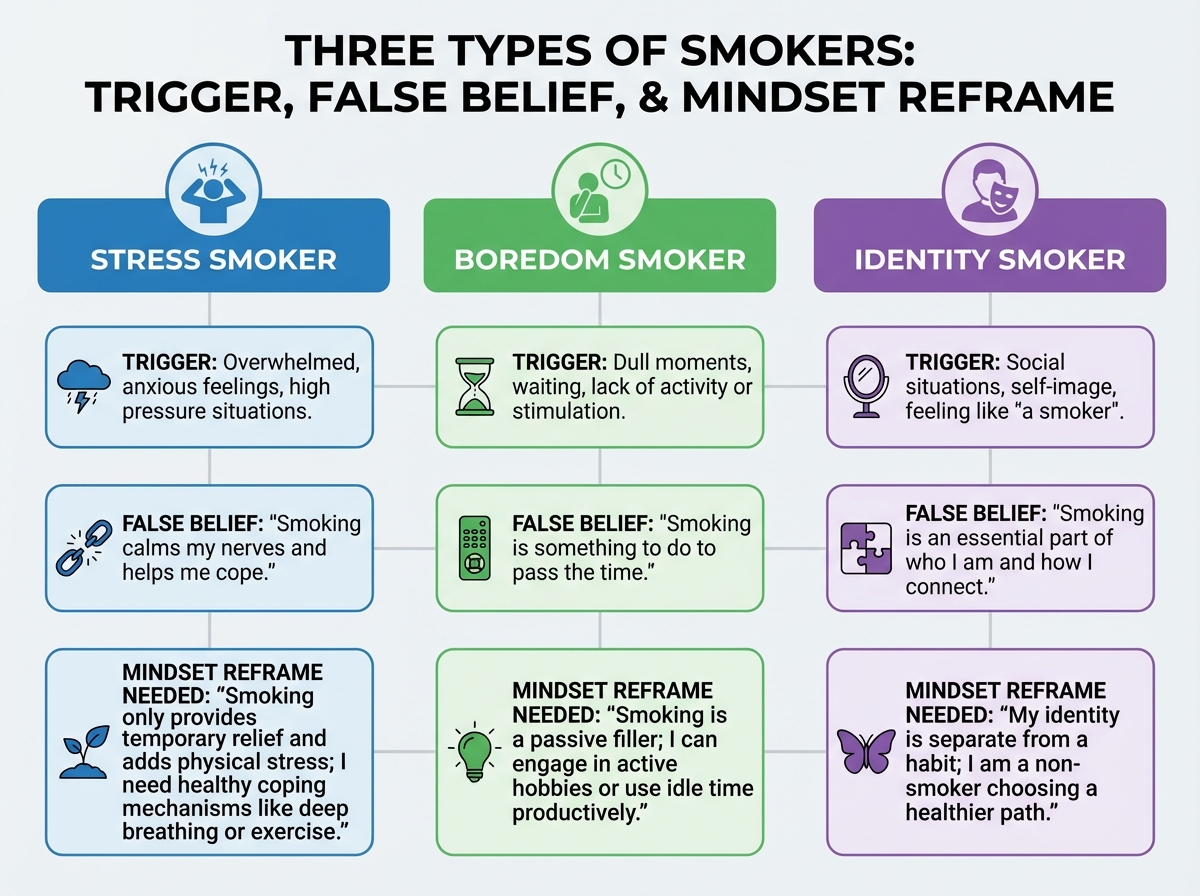
There are roughly three types of smokers, and the type you are shapes everything about how you’ll quit:
- Stress smokers — cigarettes feel like a pressure valve. The problem is that nicotine actually increases cortisol, so the relief is borrowed, not real.
- Boredom smokers — smoking fills empty time and gives idle hands a purpose. These smokers often don’t even enjoy the cigarette; they just don’t know what else to do.
- Identity smokers — they’ve smoked so long that being a smoker feels like part of who they are. This is the deepest layer, and the one most quit attempts never touch.
The distinction matters because each type requires a different mental reframe — not a different nicotine substitute.
Sharp Insights
- Nicotine doesn’t reduce stress — it temporarily reverses the stress it causes.
- Identity smokers relapse fastest because quitting feels like losing a friend.
- The craving peaks at around 3 minutes and will pass whether you smoke or not.
How Long It Takes to Quit Smoking with a Mindset Approach
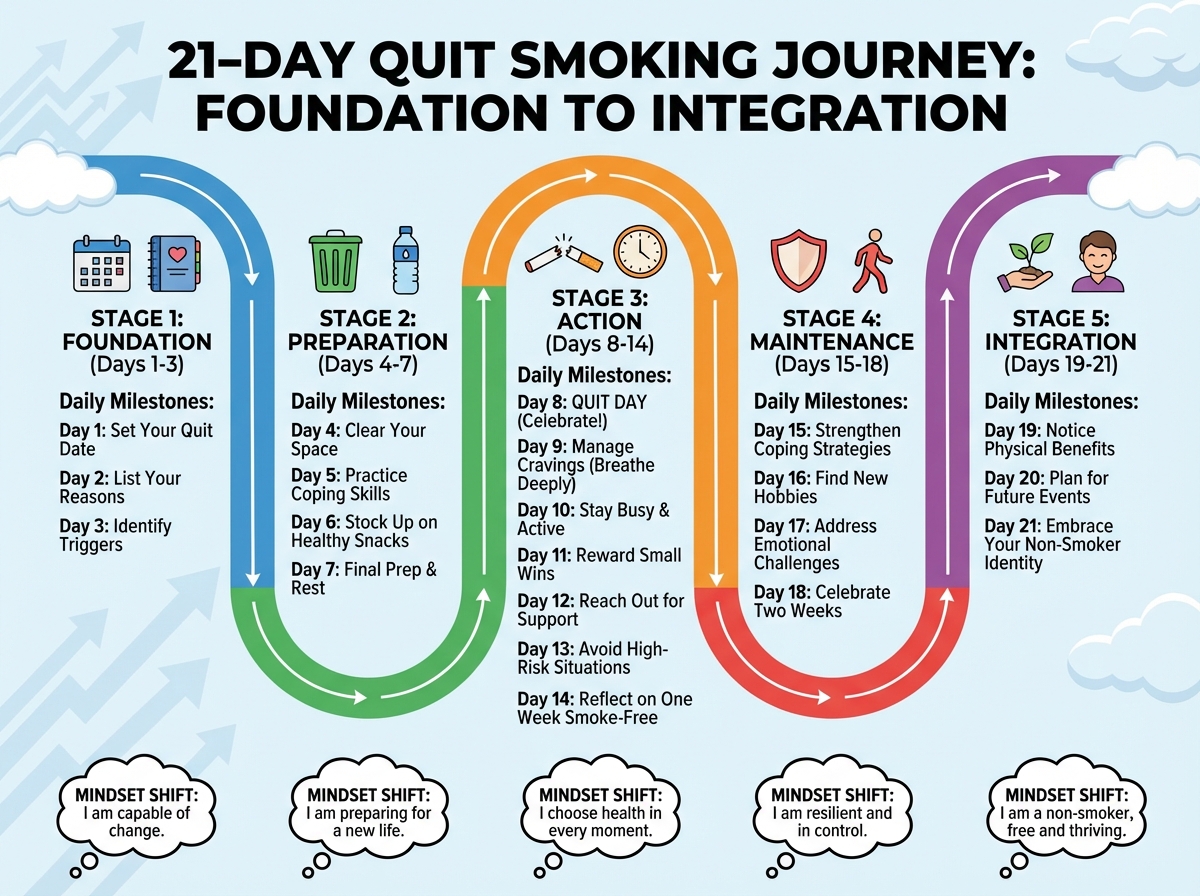
| Stage | What You’re Working On | Time |
|---|---|---|
| Foundation | Understanding your smoker type, mapping triggers, and beginning identity work | Days 1–3 |
| Friction | Confronting stress and boredom without the shortcut; practicing being a non-smoker mentally | Days 4–8 |
| Breakthrough | Present-moment awareness techniques begin replacing the automatic reach for a cigarette | Days 9–12 |
| Commitment | Quit day preparation, identifying do’s and don’ts, understanding what comes after | Days 12–17 |
| Integration | Becoming a non-smoker in daily life — rebuilding habits that don’t need cigarettes | Days 17–21 |
| Total | From smoker to non-smoker with new identity intact | 21 days |
The order of these stages matters far more than how quickly you move through them — rushing the identity work in the early days is how most people end up relapsed by week three. If you take longer than 21 days, that’s not failure; it means the deeper layers needed more time, and giving them that time is exactly right.
The Moment You Realize Why It Was So Hard
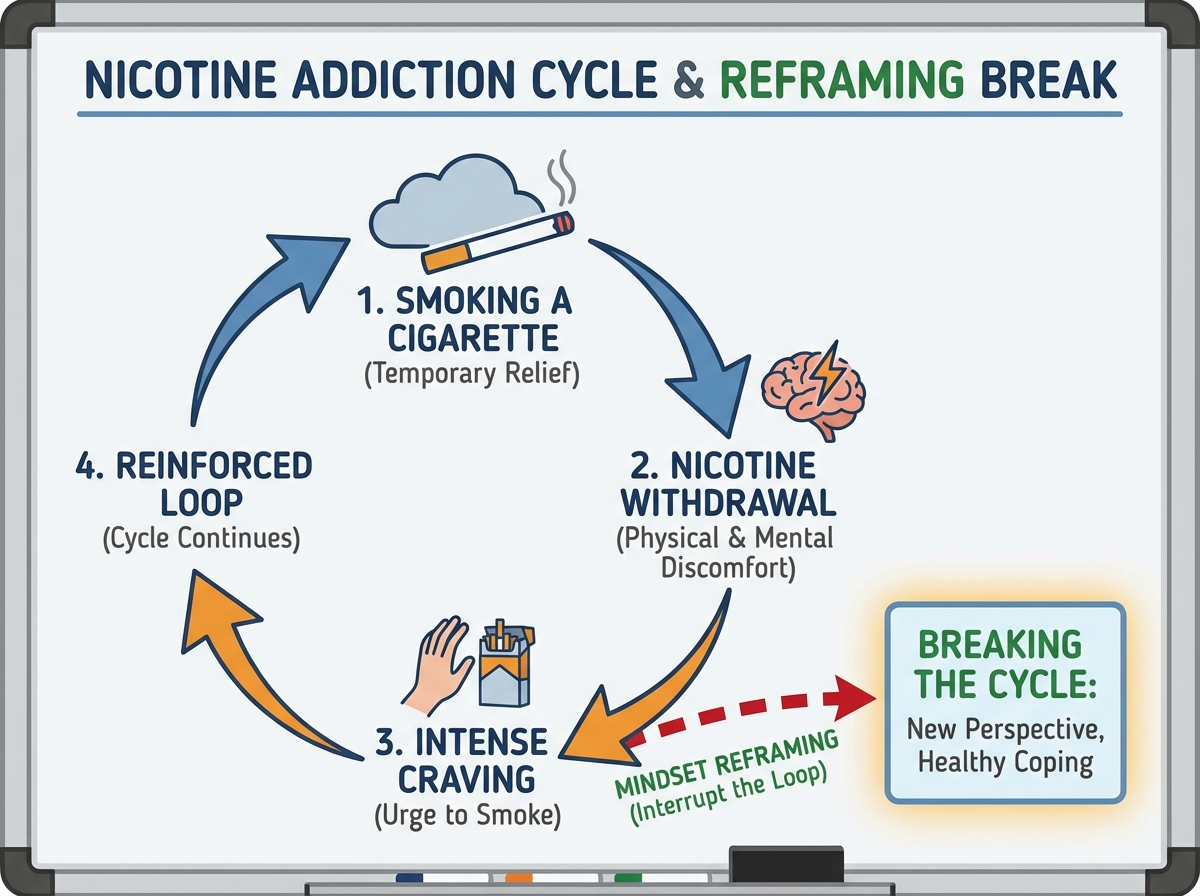
The biggest mistake people make when trying to quit smoking is treating it as a physical problem with a physical solution. Patches, gum, vapes — they all keep the addiction alive by keeping nicotine in the picture. What they don’t touch is the part of your brain that learned to associate a cigarette with relief, with reward, with identity. So even after the physical dependency fades, the psychological pull stays completely intact.
Spend even one day genuinely examining when you reach for a cigarette and you’ll notice something uncomfortable: most of the time, you’re not even enjoying it. You’re smoking out of habit, out of mild restlessness, out of a vague sense that something is missing. That observation — really sitting with it, not just intellectually noting it — is the first crack in the addiction’s foundation.
For me, the turning point came from a reframe that sounds almost too simple: I stopped envying non-smokers and started pitying smokers. Not from a place of superiority — from genuine recognition that every smoker I saw was trapped in the same cycle I was. The cigarette wasn’t giving them anything real. It was just briefly relieving the craving that cigarettes themselves had created. Once I saw that clearly, the spell broke.
What Boredom and Stress Are Actually Telling You
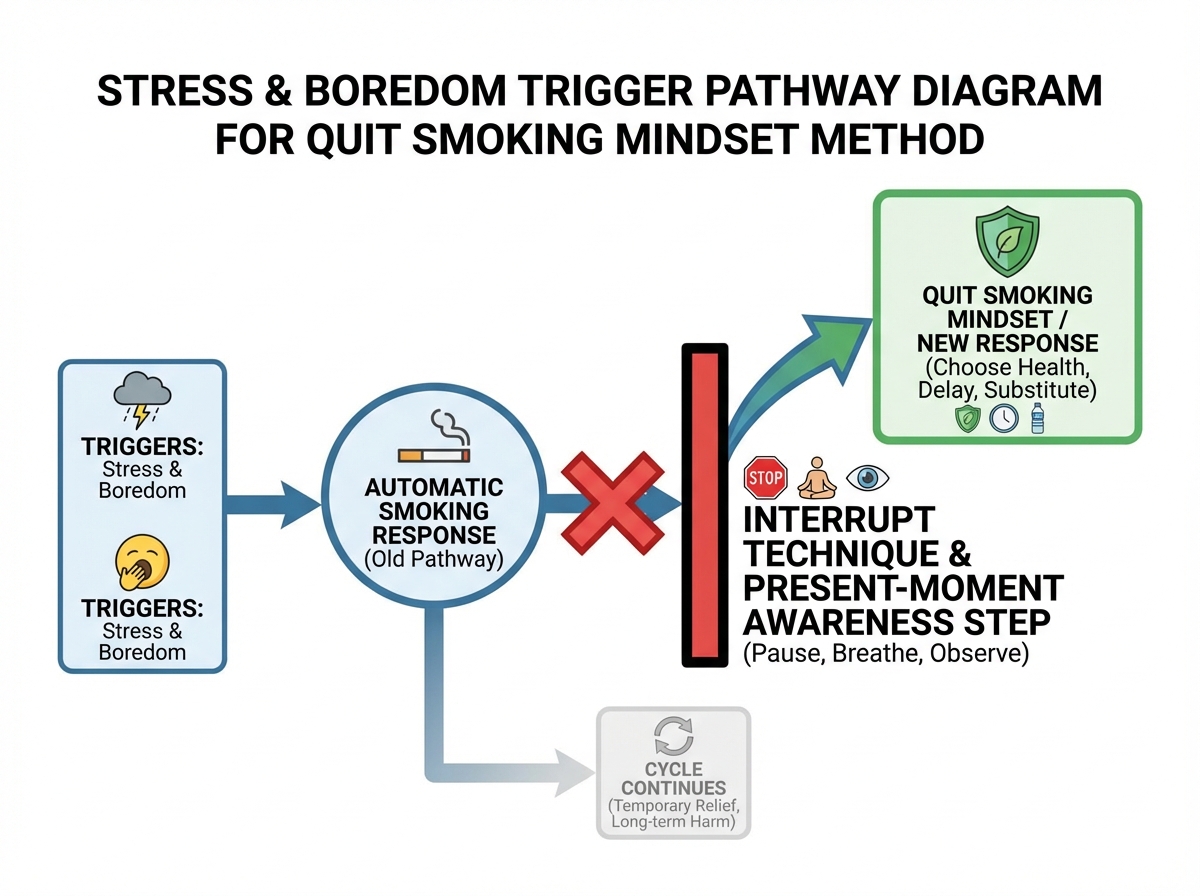
Stress and boredom are the two biggest relapse triggers — and they feel so different from each other that most people treat them as unrelated problems. They’re not. Both are states of unregulated attention. In stress, attention is overwhelmed; in boredom, it’s starved. Smoking gave both states a temporary resolution: something to do with your hands, a forced pause, a sensory anchor.
The moment you try to quit, stress feels sharper and boredom feels more oppressive, because the automatic response is gone. This is the friction point where most people reach for the phone to order more nicotine gum, or convince themselves they’ll try again next month. What’s actually needed here isn’t a substitute — it’s a new behavior that serves the same function: interrupting the overwhelm or filling the void.
Present-moment awareness — what some people call mindfulness, though it doesn’t require any meditation background — turns out to be remarkably effective here. Not because it’s calming in a spa-day sense, but because it teaches you to notice the feeling of stress or boredom before it triggers the automatic response. That gap between stimulus and response is where you get to make a different choice. Even a few days of practicing this consciously starts to rewire the reflex.
The Real Cost Nobody Calculates
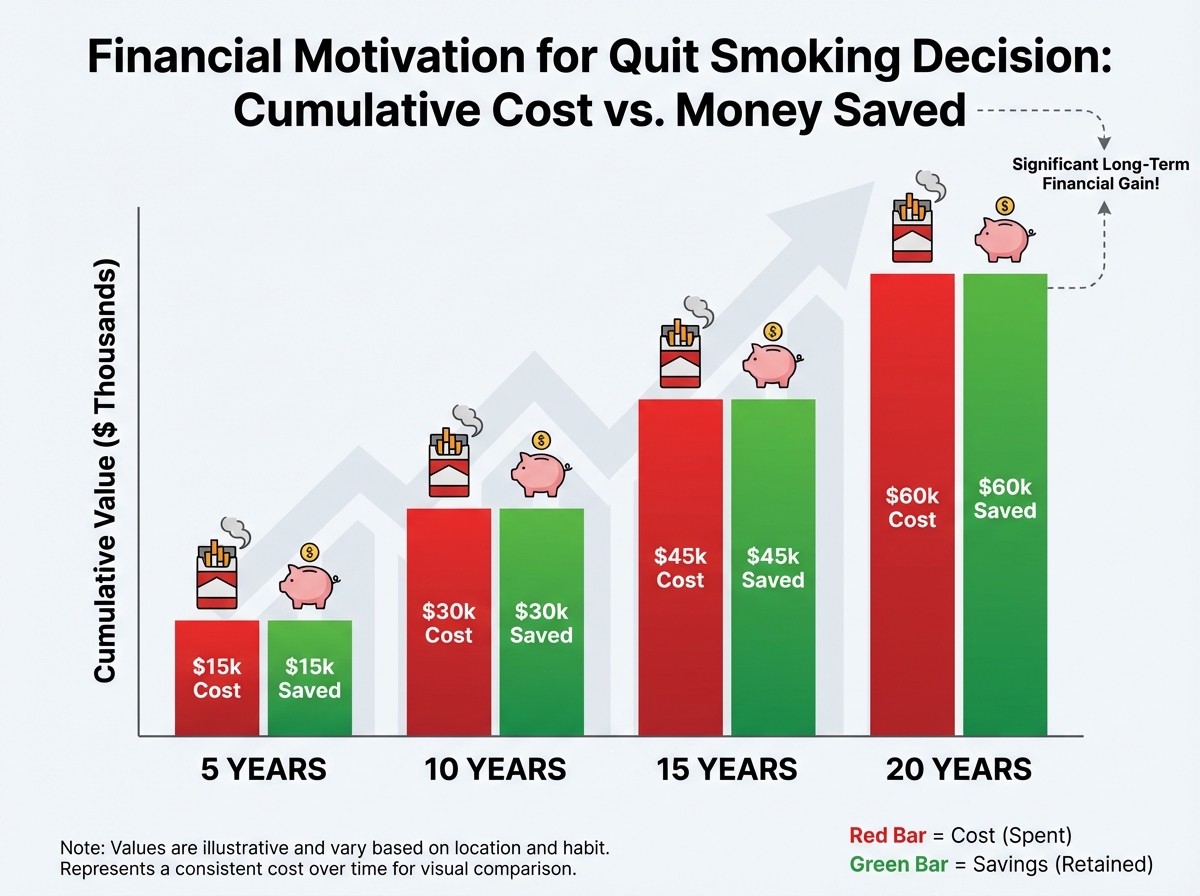
Everybody knows smoking is expensive and dangerous. Knowing that changes almost nothing. The people who quit successfully aren’t the ones who finally understood the health risks — they’re the ones who stopped seeing the cigarette as something worth protecting.
It helps to do the math once, concretely. Not in annual terms — in lifetime terms. What has this habit cost you over ten years, not just in money, but in the anxiety of running out, the inconvenience of stepping outside in the rain, the conversations you half-listened to because you were counting minutes until you could smoke? That accounting hits differently than another statistic about lung cancer.
The health angle works the same way — not as a threat, but as a prompt for a different kind of imagination. What does it feel like to breathe easily? What changes about your mornings when you don’t wake up needing something before you can function? These aren’t rhetorical questions. Sitting with them seriously — writing the answers down, returning to them when cravings hit — gives the quit attempt a texture that willpower alone never provides.
Self-Doubt Is the Relapse, Not the Cigarette
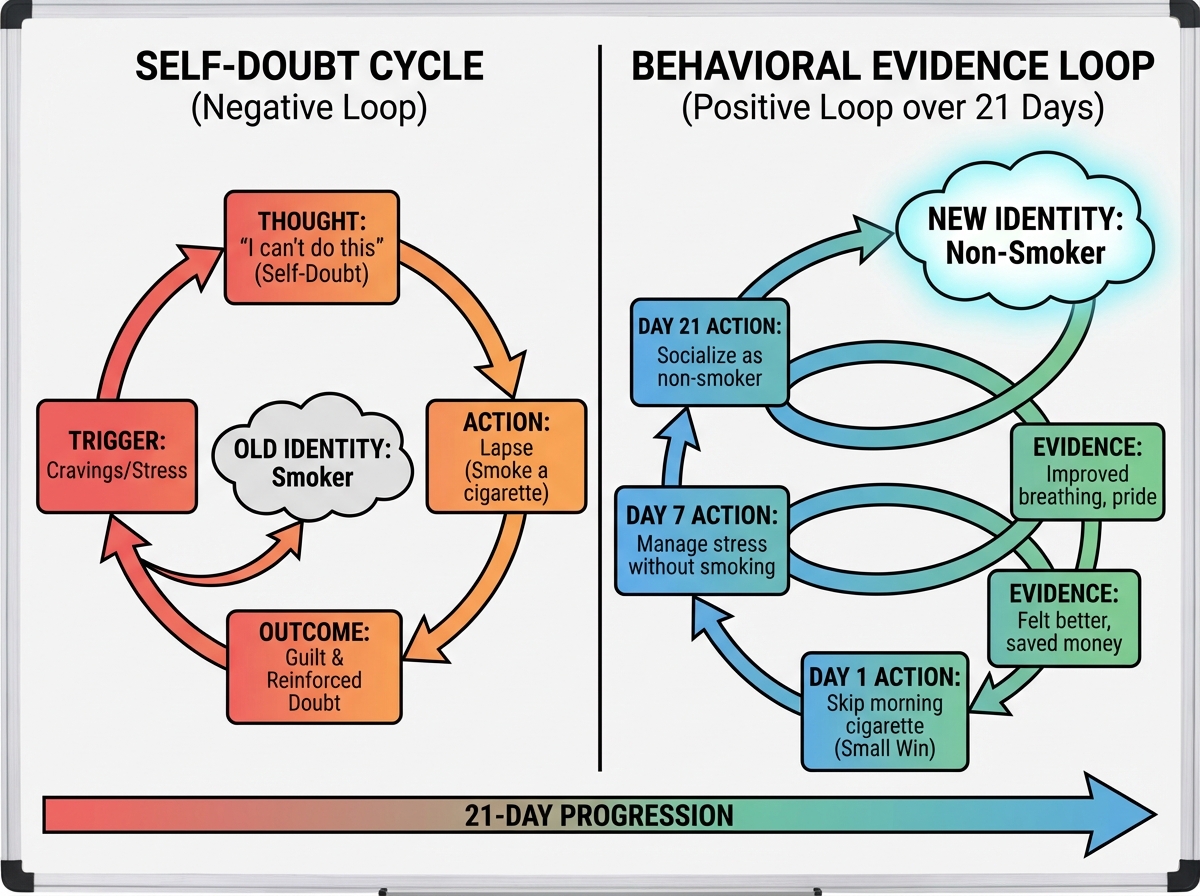
Almost everyone who tries to quit smoking has a version of the same thought somewhere in the first two weeks: I’ve tried before. What makes this time different? That thought is more dangerous than any craving. Cravings are just physical noise; self-doubt is a narrative that rewrites the outcome before it happens.
Self-doubt in the context of quitting almost always has a specific origin. Most people built a self-image as a smoker during a period of their life when they were also developing confidence, social identity, and coping skills. Smoking got tangled up with those things. Quitting, then, unconsciously feels like losing something that helped you get through hard times — which is why it triggers doubt even in people who desperately want to quit.
The antidote isn’t positive affirmations. It’s building evidence. Every hour you go without a cigarette is data. Every craving you let pass without acting on it proves that you can. The assignment isn’t to feel confident — it’s to act like a non-smoker before you fully believe you are one, and let the belief follow the behavior. This is where the daily practice of mentally rehearsing being smoke-free pays off in ways that surprise people.
The Day You Actually Quit — and What Comes Right After
When the quit day arrives — not the day you decide to quit, but the day you actually stop — the experience is almost never what people expected. The drama they braced for often doesn’t materialize, because the psychological work done in the preceding days already dismantled most of the anticipatory anxiety. What does appear is a kind of restlessness, a reaching for something that isn’t there anymore.
The do’s and don’ts of the first few days are specific and worth treating seriously. Do change small routines that were anchored to smoking — if you smoked with your morning coffee on the back step, drink your coffee somewhere else for a while. Do tell the people around you that you’ve quit, not so they can police you, but so they stop offering cigarettes out of habit. Don’t use the language of deprivation — “I can’t smoke” is a completely different psychological statement than “I don’t smoke.”
The shift from “I’m trying to quit” to “I’m a non-smoker” sounds like semantics, but it isn’t. People who smoke occasionally don’t think of themselves as smokers — they just make a choice in a given moment. People who are truly free from smoking don’t think of themselves as quitters fighting temptation — they simply don’t smoke. Getting there requires understanding what people who don’t smoke actually think about cigarettes, and deliberately practicing that perspective until it becomes automatic.
If you’re in the middle of rewiring these habits and want to think about this journey in terms of sustainable behavior change, the same principles that apply to building any lasting business habit — starting with identity before tactics — are exactly what make the difference between a temporary quit and a permanent one.
Winning Habits Replace the Hole Smoking Leaves
The clearest sign that someone will stay smoke-free isn’t how motivated they were on quit day — it’s what they built in place of the habit. Smoking wasn’t just a nicotine delivery system; it was a time-structuring device. It gave you micro-breaks during the day, a reason to step outside, a ritual that marked transitions. Remove all of that without replacing it and there’s an uncomfortable gap that eventually pulls people back.
Winning habits in this context are specific, not generic. It’s not “exercise more” — it’s knowing that a ten-minute walk when a craving hits will outlast the craving every time. It’s not “manage stress better” — it’s having two or three specific techniques for stress that don’t involve anything combustible. The habit replacement has to be concrete enough to deploy automatically, which means building it before you need it.
At 21 days, most of the neural pathway work is done. The brain has started building new associations. The identity shift — from smoker to non-smoker — is no longer aspirational; it’s starting to feel like a description of who you actually are. What made it possible wasn’t toughness. It was understanding what the cigarette was actually providing, finding that it was mostly illusion, and building something real in its place.
What to Do Starting Right Now
- Write down your smoker type — stress, boredom, or identity — and identify the two or three specific moments each day when you reach for a cigarette automatically. You can’t interrupt a pattern you haven’t mapped.
- Stop using the word “quitting” — replace it with “becoming a non-smoker.” The language you use shapes the identity you’re building, and quitting implies loss while becoming implies gain.
- Do the lifetime cost calculation — not annually, in total. Include time lost, social friction, and morning dependency, not just money. Let the number sit with you for a day before moving on.
- Practice the 3-minute rule during cravings — set a timer when a craving hits. Do anything else for three minutes. The craving will peak and pass. Do this enough times and your nervous system stops treating the craving as an emergency.
- Change one ritual that’s anchored to smoking — the morning coffee routine, the post-meal cigarette, the drive-home smoke. Alter just one physical element of that ritual this week, before your quit day, so the association starts weakening early.
- Build a stress response you can use anywhere — two slow exhales through the nose, a short walk, cold water on your wrists. It sounds small until you’re in a high-stress moment reaching for nothing and discovering that the small thing actually works.
- Spend one day paying attention to smokers without judgment — observe what the cigarette actually gives them in that moment. Notice the restlessness before it, the brief relief during it, the unchanged reality after. This is what present-moment awareness does for you automatically once the habit is gone.
- On your quit day, don’t announce a struggle — tell people you’re a non-smoker, not that you’re trying. The social expectation you set shapes how you behave when no one is watching.
Leave a Reply