


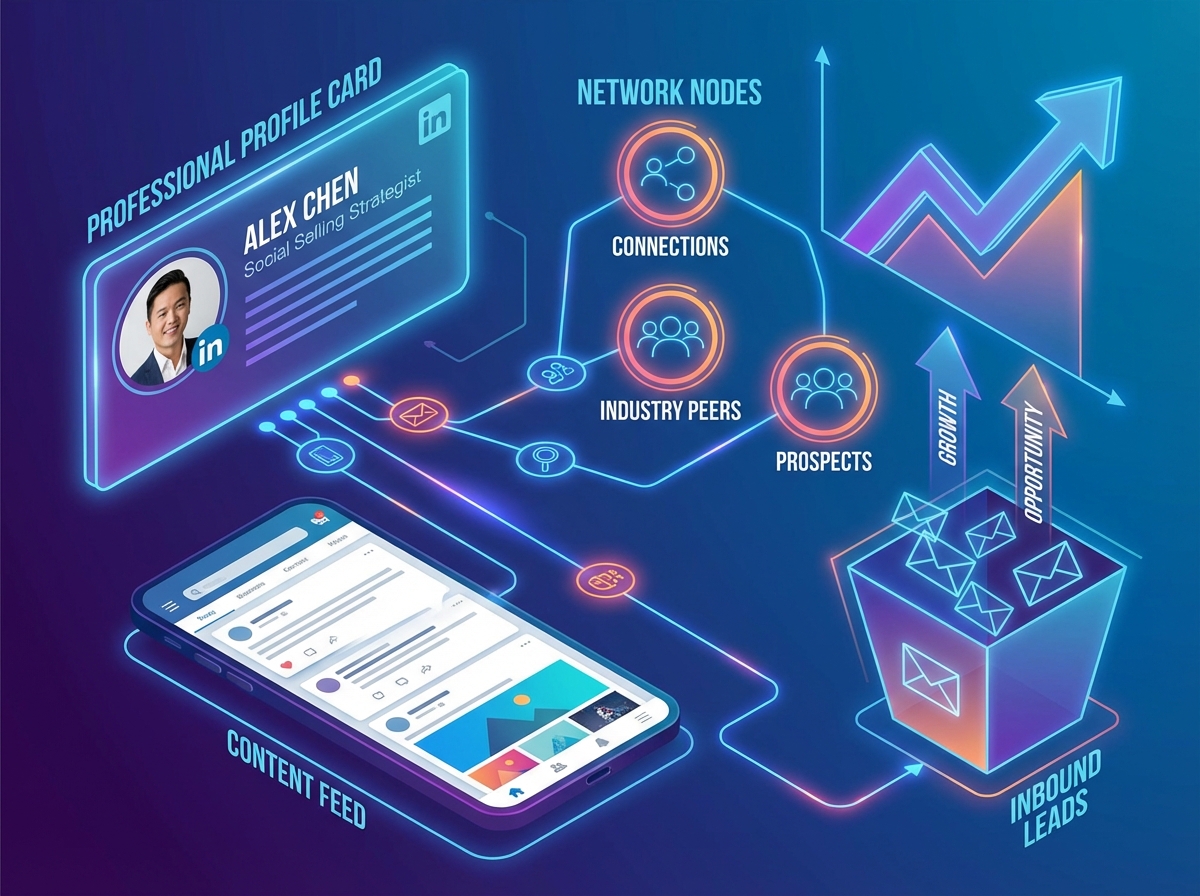
Most people set up their LinkedIn profile the same way they’d fill out a form at the DMV — just enough to get through it, then never touch it again.
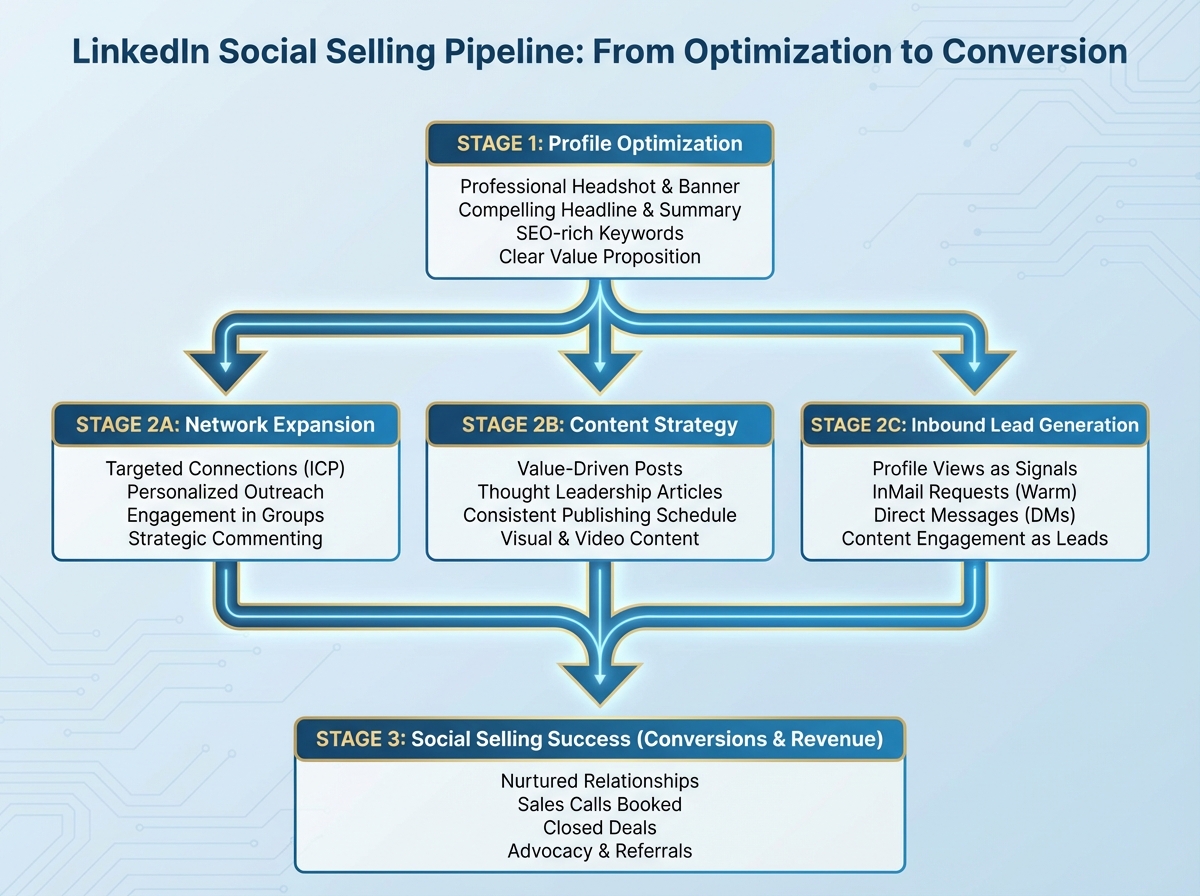
If you’re looking to learn LinkedIn social selling, the honest answer is this: the platform rewards people who treat it like a living system, not a static résumé. Your profile, your network, your content, and your outreach all feed each other — and when they’re aligned, LinkedIn starts generating opportunities without you hunting for them.
- A weak profile kills every other effort — fix it first before touching outreach or content
- The free version of LinkedIn is enough for most people to see real results if used correctly
- Ten focused minutes a day beats two hours of aimless scrolling every time
What LinkedIn Social Selling Actually Means
LinkedIn social selling is the practice of using your profile, network, and content to build trust with potential clients, employers, or partners — so that when they need what you offer, you’re already on their radar. It’s not cold pitching. It’s not follower farming. It sits between personal branding and business development, and it works for both job seekers and people trying to grow a client base.
| Approach | Best For | Key Mechanic |
|---|---|---|
| Profile Optimization | First impressions, search visibility | Keywords, featured content |
| Network Expansion | Reach, referrals | Targeted connection strategy |
| Content Publishing | Authority, top-of-mind presence | Posts, articles, timing |
| Social Selling Outreach | Direct pipeline building | InMail, warm messaging |
Three things that actually move the needle on LinkedIn:
- Your headline is searchable — treat it like a keyword, not a job title
- Content compounds over weeks, not days
- Inbound beats outbound every time once your profile is dialed in
How Long Does It Take to See Results on LinkedIn?
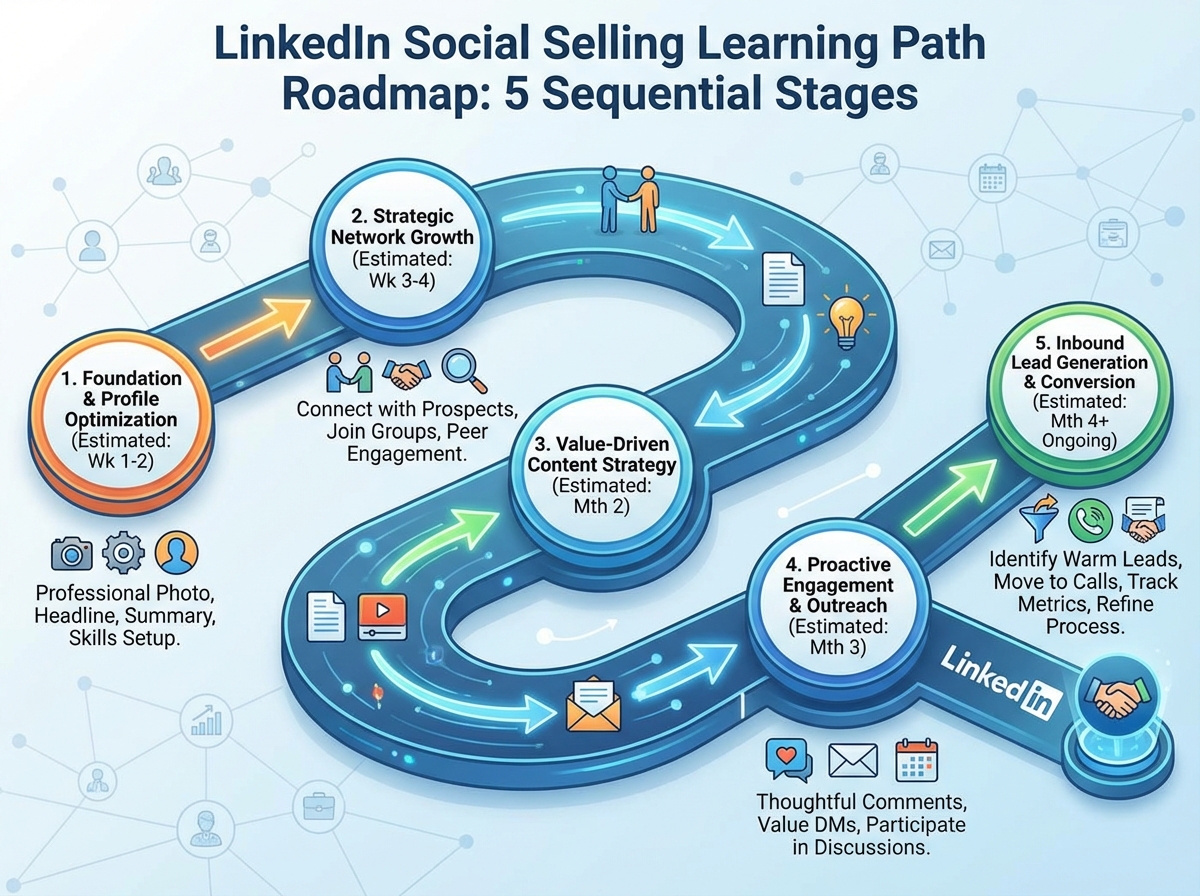
| Stage | What You’re Doing | Time |
|---|---|---|
| Profile overhaul | Headline, summary, featured section, keywords | 1–3 days |
| Network foundation | Targeted connections, response rate optimization | 1–2 weeks |
| Content rhythm | Regular posts, testing formats and timing | 3–4 weeks |
| Inbound traction | Unsolicited connection requests, profile views | 4–8 weeks |
| Measurable outcomes | Job interviews, client inquiries, partnerships | 6–12 weeks |
| Total | From zero to consistent results | 2–3 months |
The order matters far more than the speed — a great content strategy built on a broken profile will still underperform. And if it’s taking you longer than the estimate, that’s normal; most people spend the first month unlearning the wrong habits before the right ones start sticking.
Your Profile Is Not a Résumé
This is the single biggest mistake people make when starting with LinkedIn social selling: they treat the profile like a chronological work history instead of a marketing asset. I spent months wondering why my connection requests went unanswered, why recruiters never landed in my inbox, why posting felt like shouting into a void. The profile was the problem the whole time.
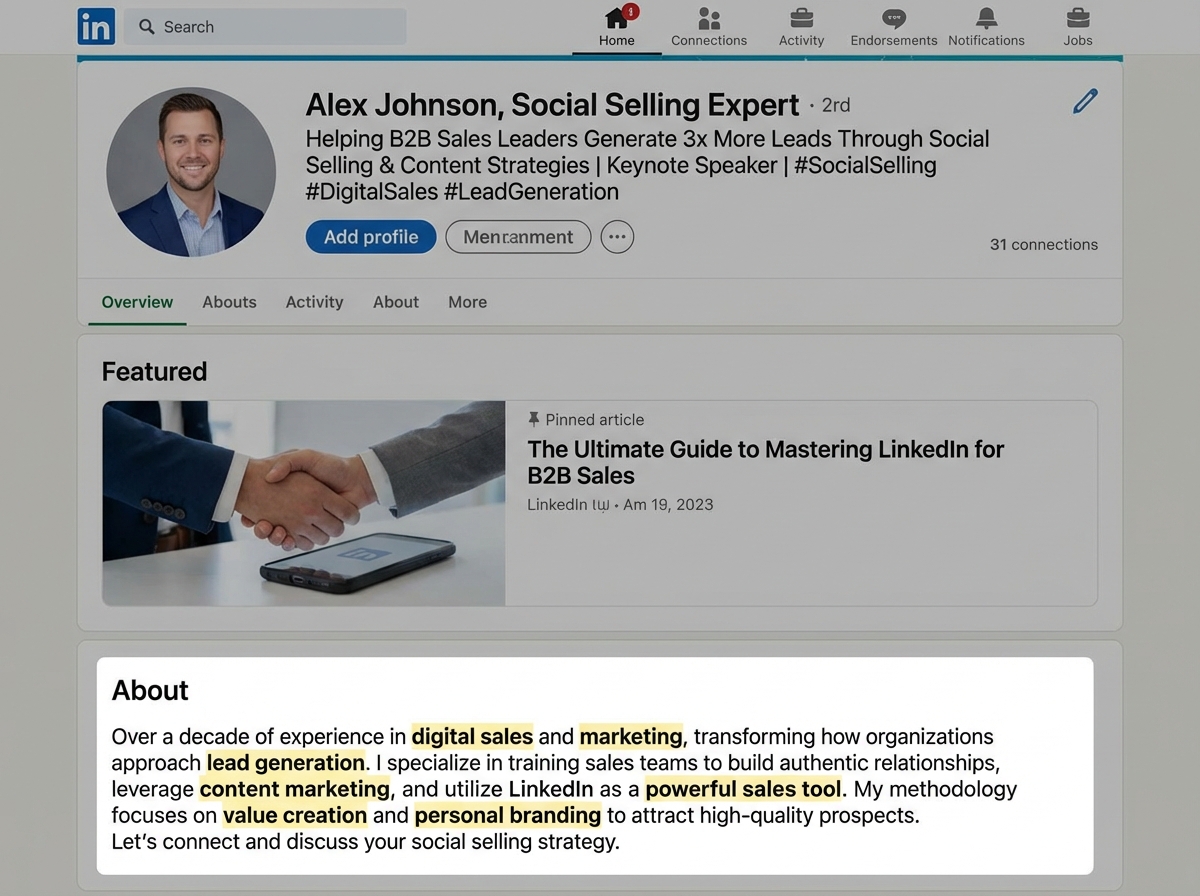
The headline is the most underused real estate on the platform. Most people write their job title. The people who get found write what they do for someone else — the outcome they deliver, not the role they hold. That shift alone changed the quality of who started viewing my profile.
The summary section — what LinkedIn calls “About” — is where most profiles die a quiet death. Generic buzzwords, a list of skills that could belong to anyone, maybe a sentence about being “passionate” about something. What actually works is specificity: a clear statement of who you help, how, and what happens when you do. Think of it less as a bio and more as a landing page.
Featured content is the section almost nobody uses, which means it’s one of the highest-signal things you can add. A well-placed article, a case study, a short video, or even a strong external link tells visitors what you want them to know about you before they scroll any further.
The Free Version Is Enough — Until It Isn’t
Every few weeks someone asks whether they need LinkedIn Premium to get results. The honest answer is no — not at first. The free version gives you access to advanced search, the ability to see who’s viewed your profile (partially), InMail if you’re getting it sent to you, and the full content engine. That’s enough to build a real presence and generate real opportunities.
Where Premium starts to make sense is when you’re actively prospecting at volume, need to send cold InMails to people outside your network, or want the full list of who’s visited your profile for outreach targeting. For job seekers, the “Featured Applicant” status has some value in competitive roles. But if your profile isn’t optimized and your network isn’t targeted, paying for Premium is like buying a faster car when you don’t know where you’re going.
The decision point is usually when you’ve done everything the free tier allows and you’ve hit a specific ceiling — not when you’re just getting started.
How to Expand Your Network Without Feeling Spammy
The worst LinkedIn advice I ever followed was “connect with as many people as possible.” I sent hundreds of generic requests, got a reasonable acceptance rate, and ended up with a feed full of people I had nothing in common with and a network that did nothing for me.
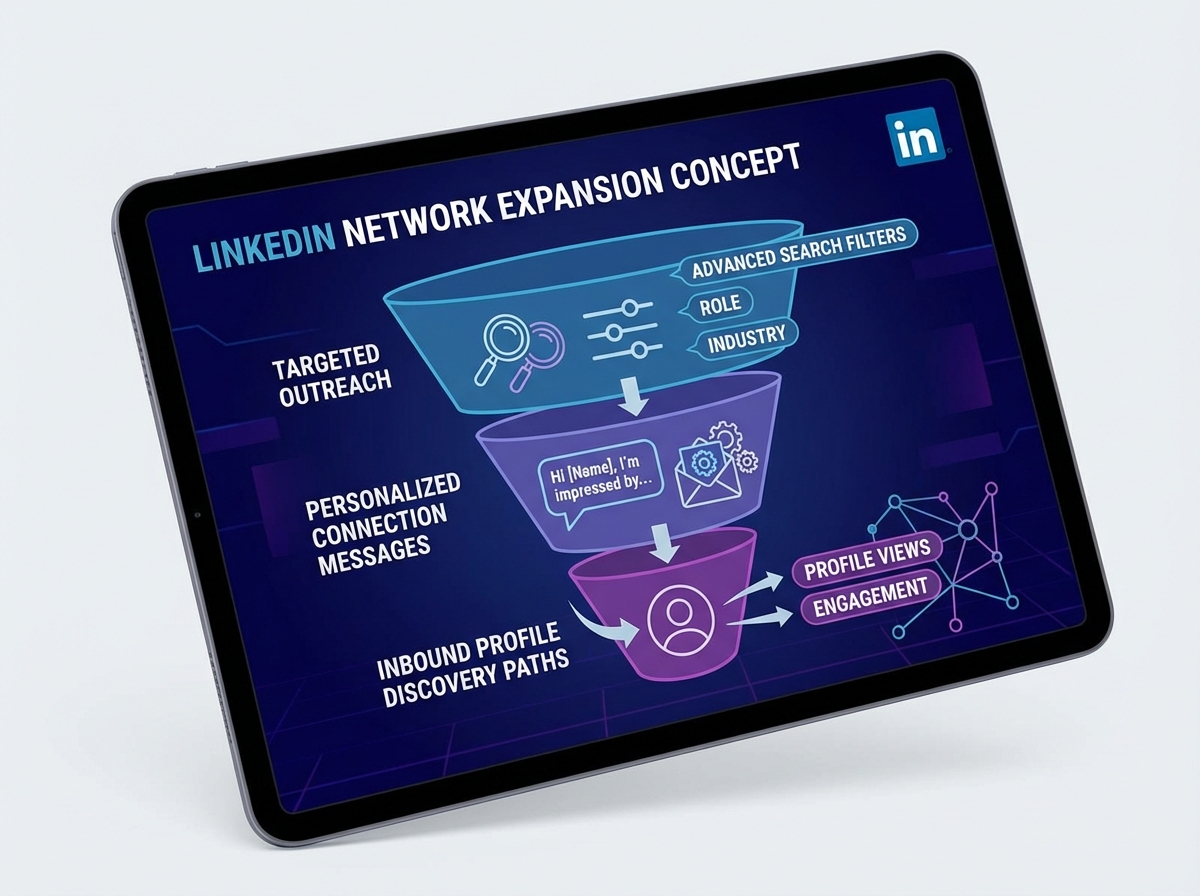
Targeted network building looks different. Advanced Search is the mechanism — you can filter by industry, company, geography, seniority level, and shared connections. But the filter is only half of it. The other half is how you initiate the connection. A blank request to a stranger has maybe a 20–30% acceptance rate. A single sentence that names something specific — a shared connection, a post they wrote, a problem you both work on — changes that completely.
The counterintuitive move is to make your profile attractive enough that people start coming to you. When your headline is clear, your activity is visible, and your featured section shows what you do, people in your target audience will find you through search or through mutual connections and send the request themselves. That inbound connection is worth ten outbound ones because they already know why they want to connect.
Content Is the Leverage Nobody Uses Consistently
Posting on LinkedIn feels awkward at first, especially if your instinct is to keep professional and personal separate. The platform rewards something in between — professional insight delivered with a human voice. Not personal confessions, not corporate announcements. Real thinking, shared regularly.
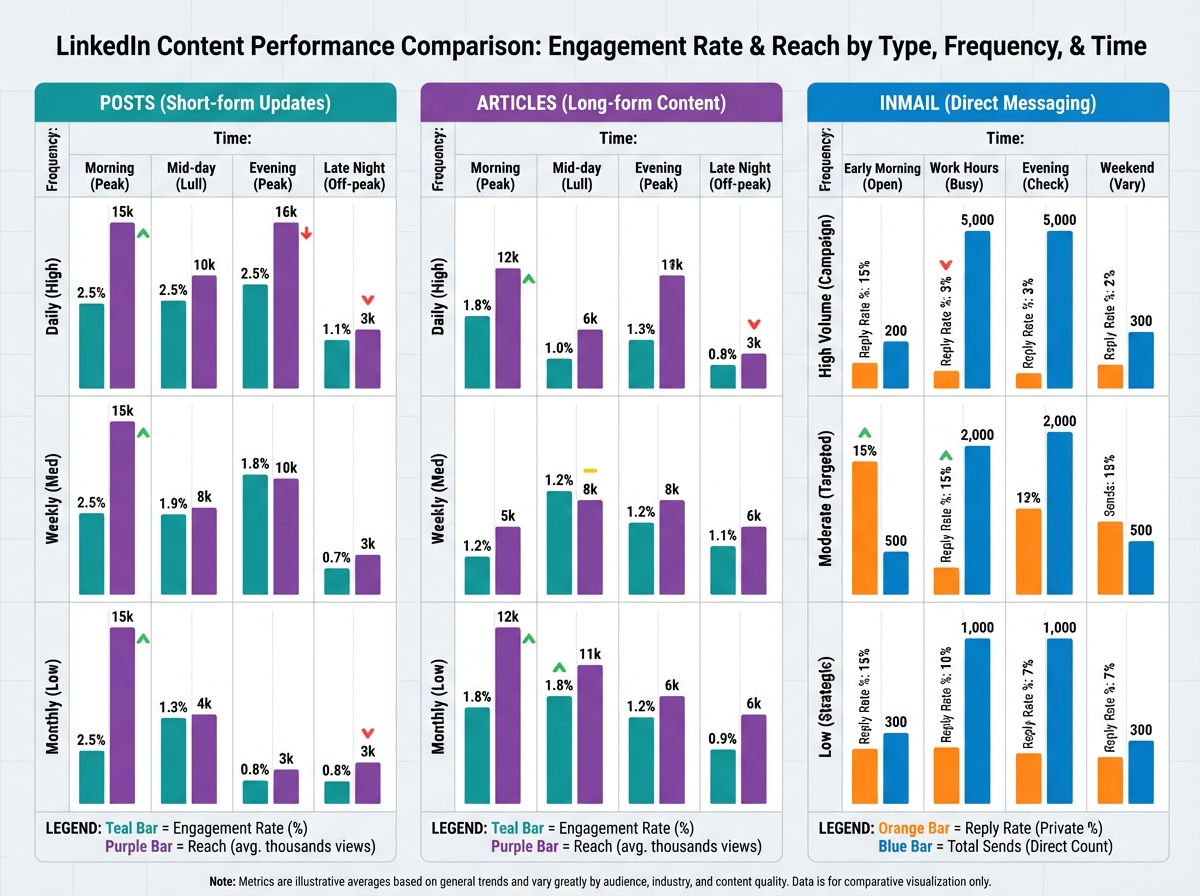
The timing question matters more than most people think. LinkedIn’s algorithm gives a post its biggest window of distribution in the first 60–90 minutes after publishing. Post when your audience is actually on the platform — early mornings on weekdays, particularly Tuesday through Thursday, tend to outperform weekends and late evenings. This is platform behavior, not theory.
Frequency beats perfection. One solid post three times a week consistently outperforms one carefully crafted post every two weeks. The algorithm rewards activity, and your audience learns to expect you. Scheduling tools exist precisely so you can batch-write posts when you’re thinking clearly and let them publish at optimal times without having to be online.
Articles serve a different purpose than posts. Posts get distribution. Articles get found through search — both on LinkedIn and on Google. A well-written LinkedIn article on a specific topic in your field can surface months or years after you publish it, which is a different kind of leverage than the 48-hour lifespan of a typical post.
Using InMail Without Getting Ignored
InMail is the most misused tool on the platform. The typical InMail that lands in someone’s inbox reads like a sales pitch that got lost on its way to a mass email list. Subject line vague, opening sentence about the sender, three paragraphs of features, a call to action that asks for a 30-minute call. Delete.
What works is a message short enough to read in 10 seconds, specific enough to prove you actually looked at their profile, and light enough in the ask that they don’t feel cornered. One sentence of context, one sentence of relevance, one sentence that opens a door without pushing them through it. The goal of the first InMail is a reply — not a meeting, not a sale.
For job seekers, InMail to hiring managers is often more effective than applying through the portal. A message that names the specific role, shows you’ve read something real about the company, and asks a genuine question about the team lands differently than application number 300 in the system.
LinkedIn for Job Seekers vs. Business Development
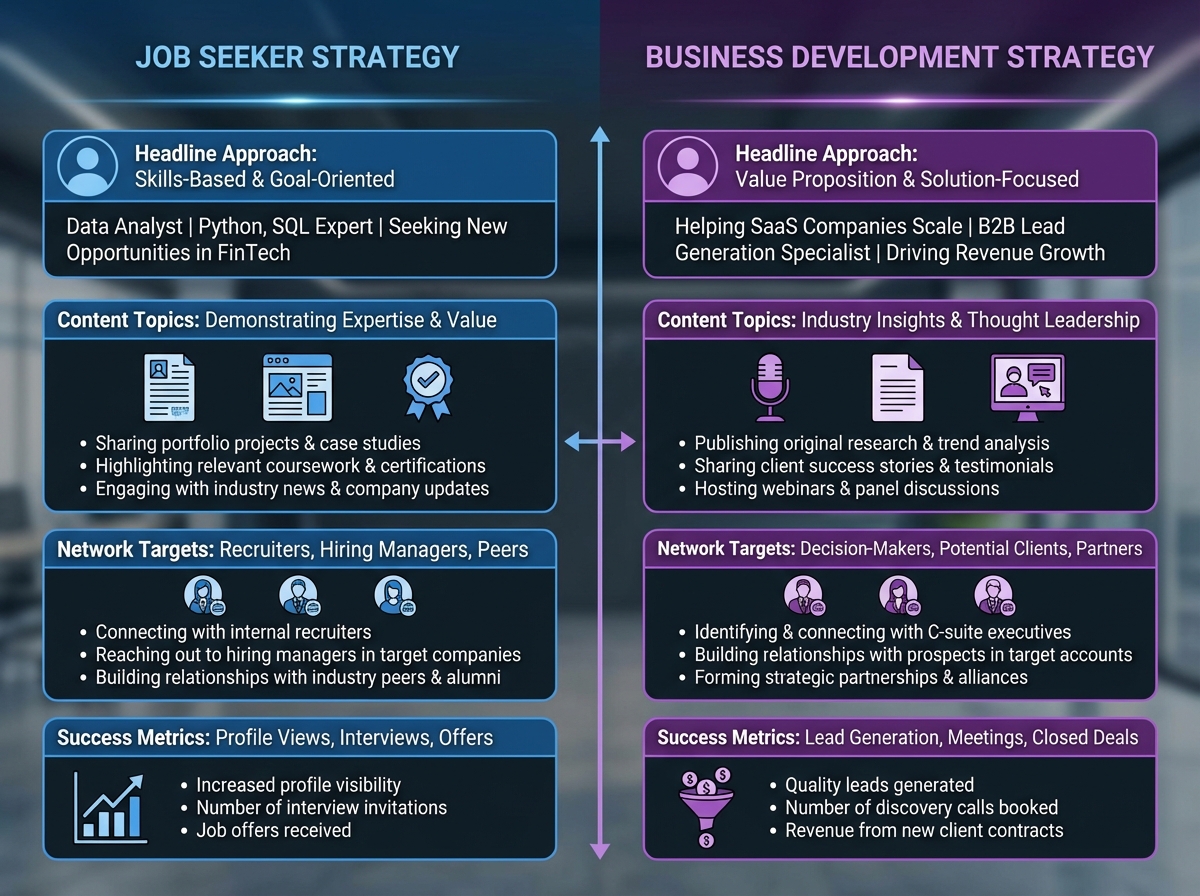
The mechanics overlap but the priorities don’t. If you’re job searching, your profile needs to be discoverable by recruiters — which means your headline, current title, and skills section need to match the language in job descriptions, not just reflect your self-perception. Recruiters search by keyword. If the word they search isn’t in your profile, you don’t exist.
For LinkedIn social selling and business development, the priority shifts toward building authority and visibility with a specific audience. The question changes from “will a recruiter find me?” to “will my ideal client recognize that I understand their problem?” That changes what you post, who you connect with, and what your featured section shows.
Both tracks benefit from the same foundation: a clear profile, a targeted network, and consistent presence. The difference is in the targeting — who you’re trying to reach and what action you want them to take when they land on your page.
Ten Minutes a Day Is a Real Strategy
The version of LinkedIn that burns people out is the one where you open the app without a plan, scroll for 20 minutes, feel vaguely anxious, close it, and wonder why nothing is happening. That’s not a LinkedIn problem. That’s a no-system problem.
Ten focused minutes with a clear sequence looks like: check notifications and respond to anything that needs a reply (2 minutes), engage meaningfully with 3–5 posts from people in your target network (4 minutes), check your connection requests and accept or send one targeted request (2 minutes), review your scheduled posts or draft one short observation (2 minutes). That’s it. That cadence, repeated five days a week, compounds into real visibility over 60–90 days.
For people building a personal brand and online presence, the consistency of showing up matters more than any single brilliant post. The algorithm is watching for regular activity, not occasional bursts.
What Changes When It Starts Working
There’s a specific moment on LinkedIn when the shift happens. You stop checking the platform to see if anything happened. Instead, things start coming to you — connection requests from people in your exact target audience, messages from recruiters you’ve never contacted, clients who found your profile through a post from three weeks ago.
That shift doesn’t happen from luck. It happens when your profile says the right thing, your network includes the right people, and your content has been visible long enough to establish that you know what you’re talking about. It’s a system, and it takes a few months to build. But once it’s running, it runs mostly on its own.
The people who never get there usually stall at one of two points: they optimize their profile but never post, so they have no presence — or they post constantly but never worked on their profile, so new visitors bounce. Both halves have to work together.
Here’s what to act on right now:
- Rewrite your headline as a value statement — replace your job title with the outcome you deliver and who you deliver it for, using the exact language your target audience searches for
- Audit your featured section today — add one piece of content that shows your best work, even if it’s just a well-written post you’re proud of
- Run an Advanced Search for 10 ideal connections — filter by industry, seniority, and geography, then write a one-sentence personalized message for each request
- Schedule your next three posts before the week starts — batch-writing removes the daily decision fatigue that kills most people’s content consistency
- Write one LinkedIn article on a specific problem in your field — not a post, an article, because articles surface in search results long after posts disappear
- Send one InMail this week that’s under 75 words — keep the ask small, make it specific to that person, and focus on opening a conversation rather than closing anything
- Set a 10-minute LinkedIn timer each morning — work through a repeatable sequence so every session has a defined output, not an open-ended scroll
- Track your profile views weekly — if the number isn’t growing after four weeks of consistent activity, your headline or keywords need reworking before anything else
For anyone building a business presence and thinking beyond LinkedIn alone, understanding how Google Ads campaigns drive results is a natural next step once your organic foundation is in place.
Leave a Reply