


The first time you lose a customer and can’t figure out why, something shifts in how you think about your business.
You had a decent offer. The price was fair. But they never came back — and worse, they didn’t complain. They just disappeared.
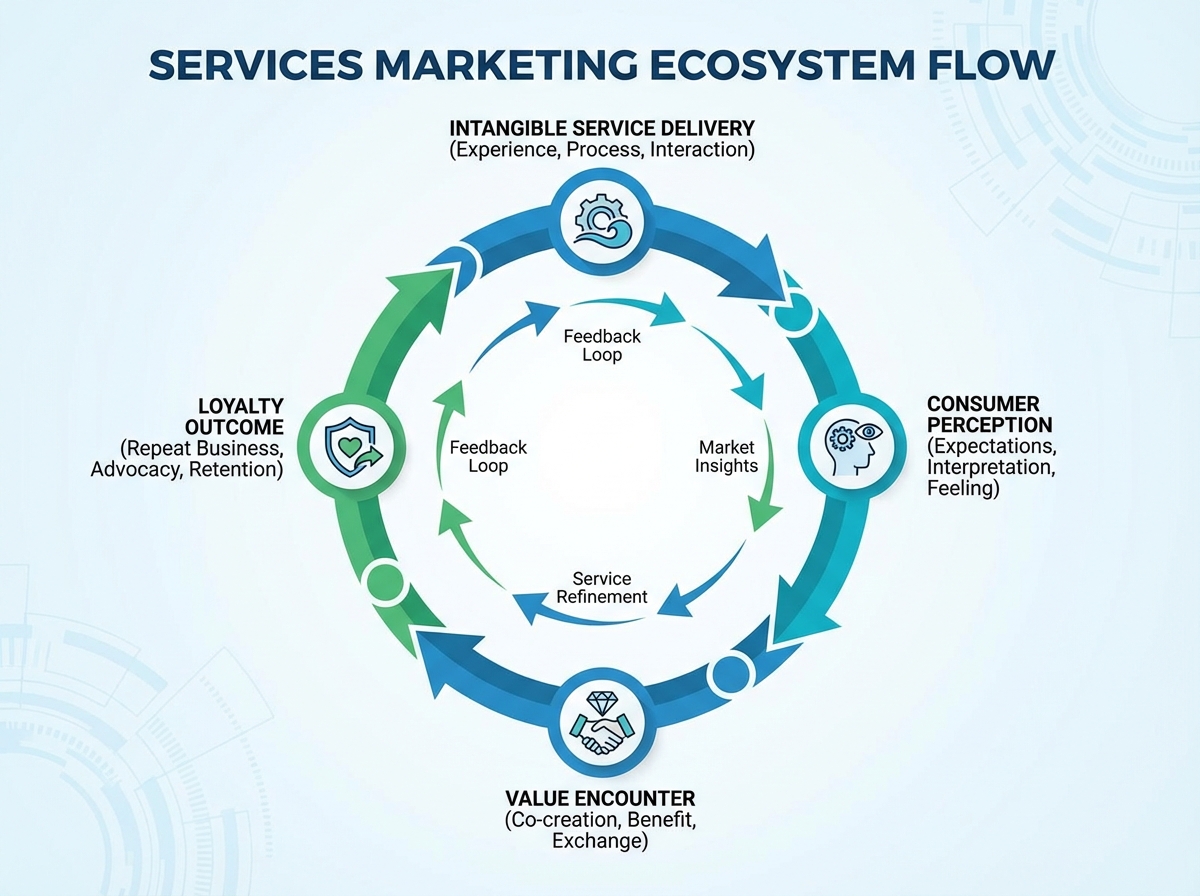
If you’re looking to learn services marketing, the honest starting point is this: a service isn’t a product with a softer edge. It’s a fundamentally different category — one that lives and dies by perception, timing, and human interaction. Services marketing is the discipline of managing that reality: understanding how intangible, perishable, and co-produced experiences translate into consumer decisions, repeat behavior, and brand loyalty. The rules that work for physical goods simply don’t apply here.
- Services cannot be stored, tested, or returned — which means every consumer encounter is both the product and the proof
- Consumer behavior in service markets is driven by trust signals, not specifications — what people feel during the interaction often outweighs what they receive
- Competitive edge in the service industry is built through consistent value addition across every touchpoint, not just the core offering
What “Services” Actually Means (and Why the Distinction Matters)
Most people treat “service” as a catch-all for anything that isn’t a physical product. That’s imprecise enough to cause real problems.
A service has four defining characteristics that shape every marketing decision you’ll ever make around it: it’s intangible (you can’t hold it before buying), inseparable (production and consumption happen at the same time), variable (quality shifts depending on who delivers it and when), and perishable (an empty appointment slot is revenue gone forever).
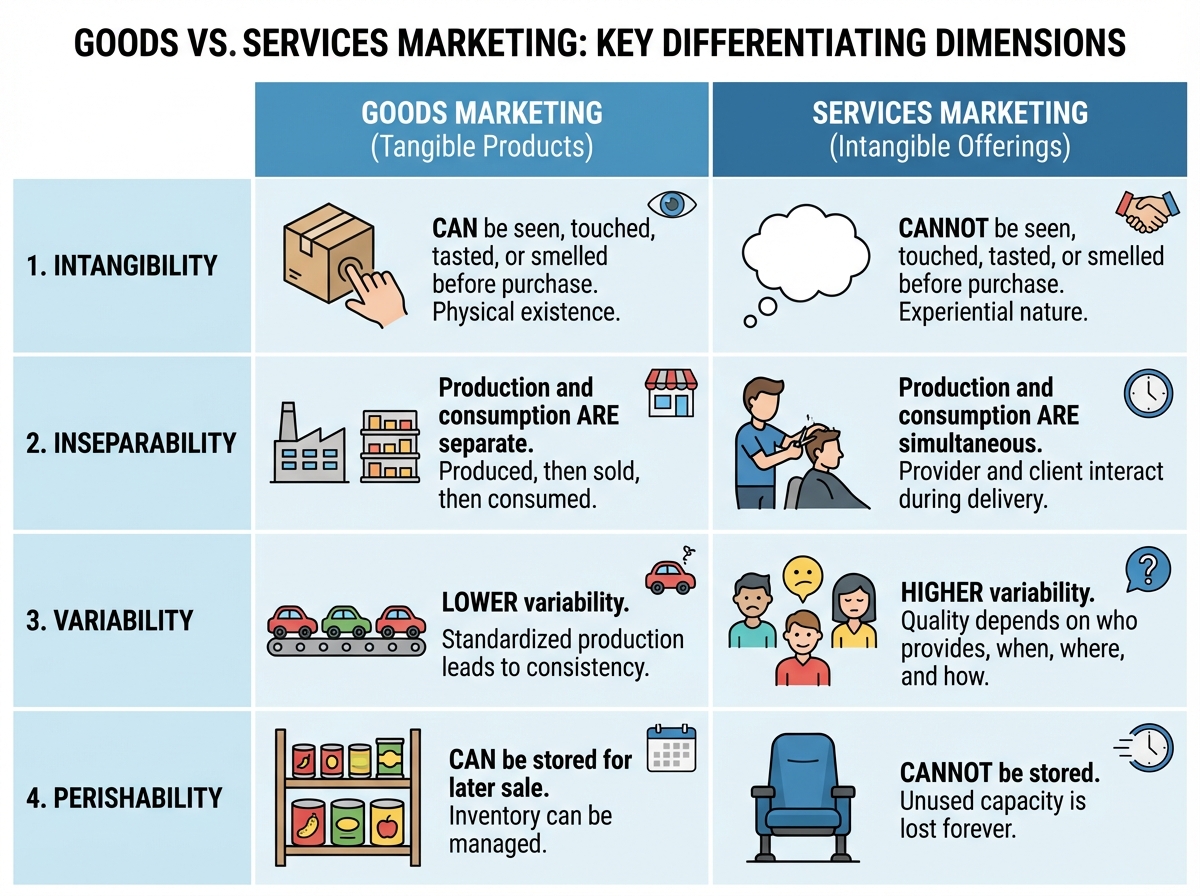
Understanding where a specific offering sits on this spectrum changes everything — from how you price it, to how you train staff, to what you guarantee.
| Dimension | Physical Goods | Services |
|---|---|---|
| Tangibility | High — can be inspected before purchase | Low — purchased on promise |
| Production vs. Consumption | Separate — made, then sold | Simultaneous — delivered as consumed |
| Standardization | Consistent across units | Variable by person, time, context |
| Inventory | Stockable | Perishable — unused capacity is lost |
| Ownership | Transferred to buyer | No transfer — access, not possession |
Three Things That Actually Drive Consumer Behavior in Service Markets
The biggest mistake people make when entering the service industry is trying to compete on the core offering alone. The restaurant competing purely on food. The consultancy competing purely on methodology. The gym competing purely on equipment.
What actually drives consumer behavior in service markets is a combination of three forces that most marketers underweight: the quality of the service encounter, the perception of value beyond the transaction, and the emotional residue left after the interaction ends. None of these are in the brochure. All of them are in the customer’s head.
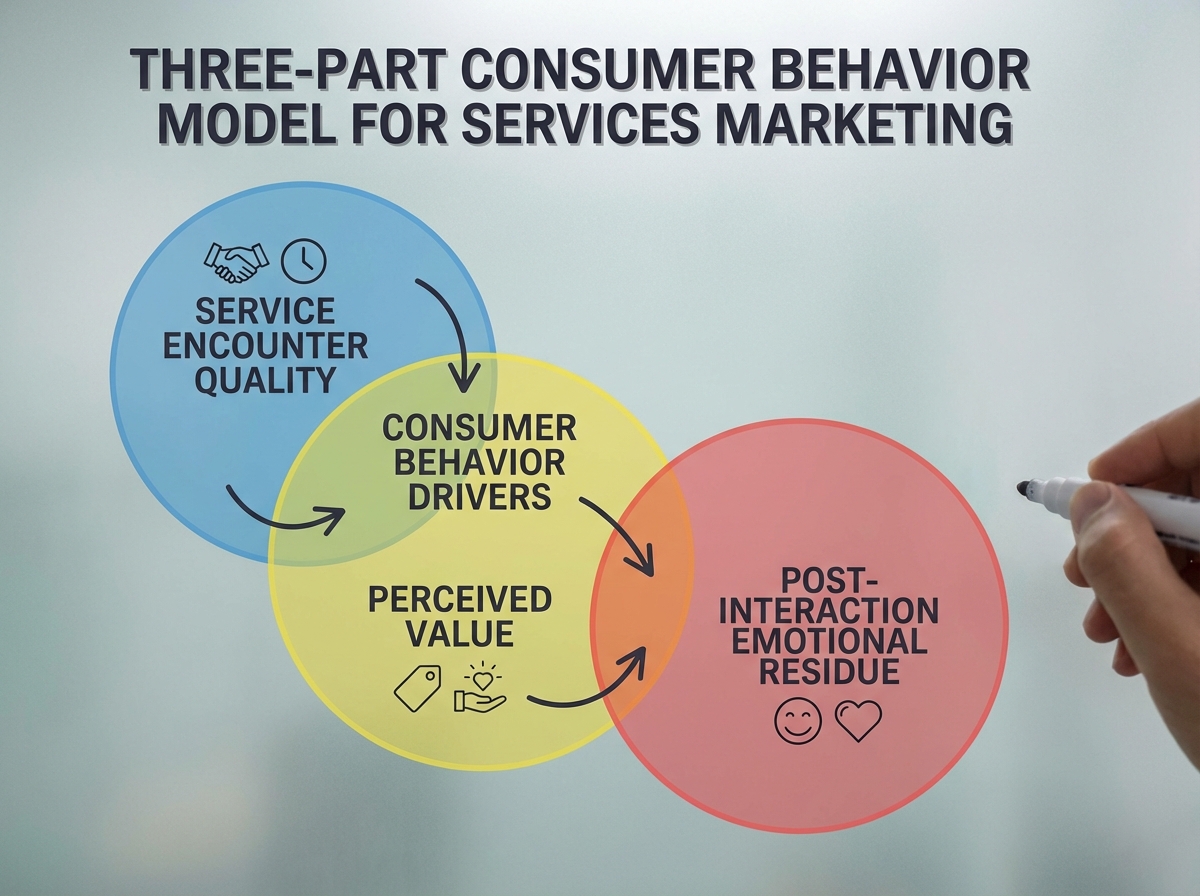
The service encounter — that specific moment when a customer interacts with a provider — is where trust is built or broken. Research consistently shows that customers who experience a problem that gets resolved well often develop stronger loyalty than those who never experienced a problem at all. The encounter is the product. How staff behave in that moment is the marketing.
Value addition is the second lever, and it’s chronically misunderstood. Value addition in the service industry doesn’t mean adding more features. It means making the customer’s experience feel more complete, more effortless, or more human than they expected. A hotel that remembers your preferred room type. An accountant who calls proactively before tax season. A dentist whose receptionist uses your name. None of those are “features.” All of them are felt.
The 7 Ps of Services Marketing (and Why the Last Three Are the Ones Most People Forget)
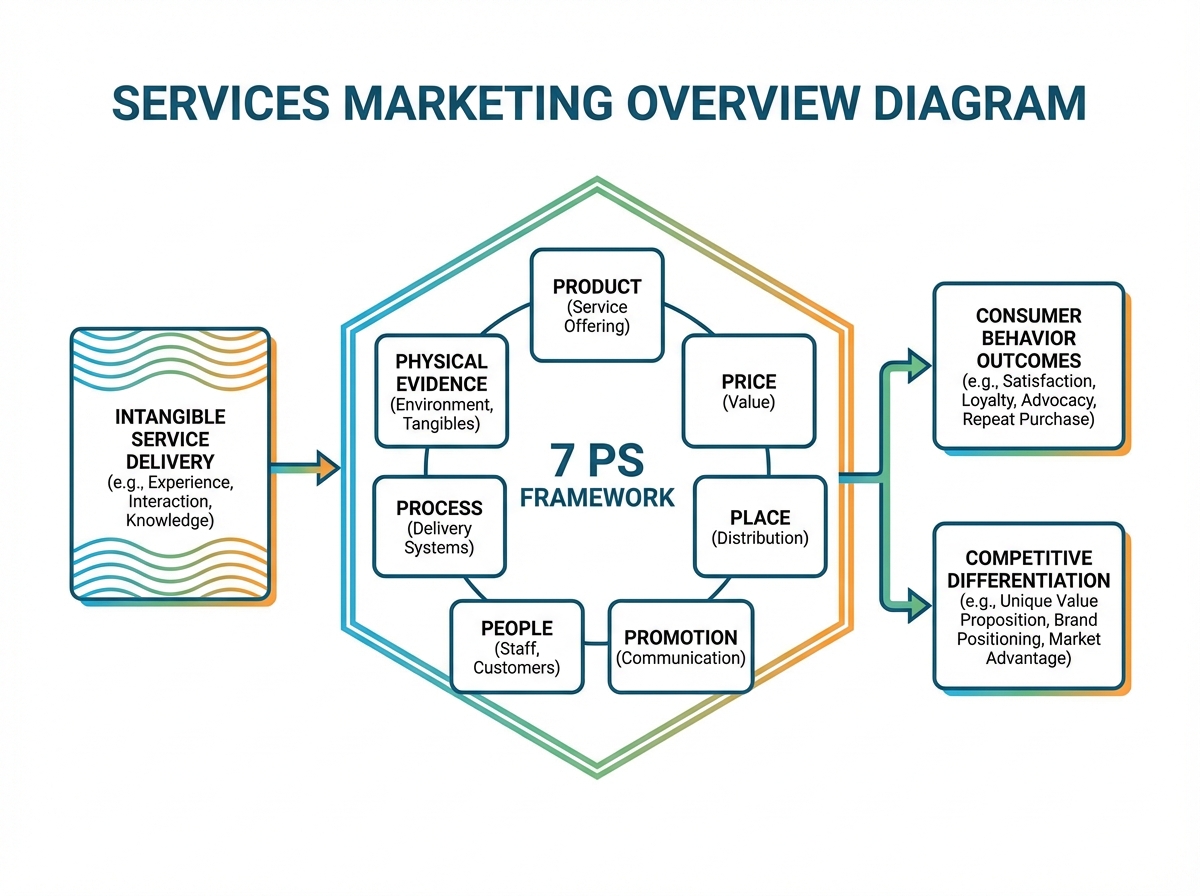
You’ve likely encountered the original 4 Ps — Product, Price, Place, Promotion. They were built for goods. When services entered the picture, marketers extended the framework to 7 Ps by adding People, Process, and Physical Evidence.
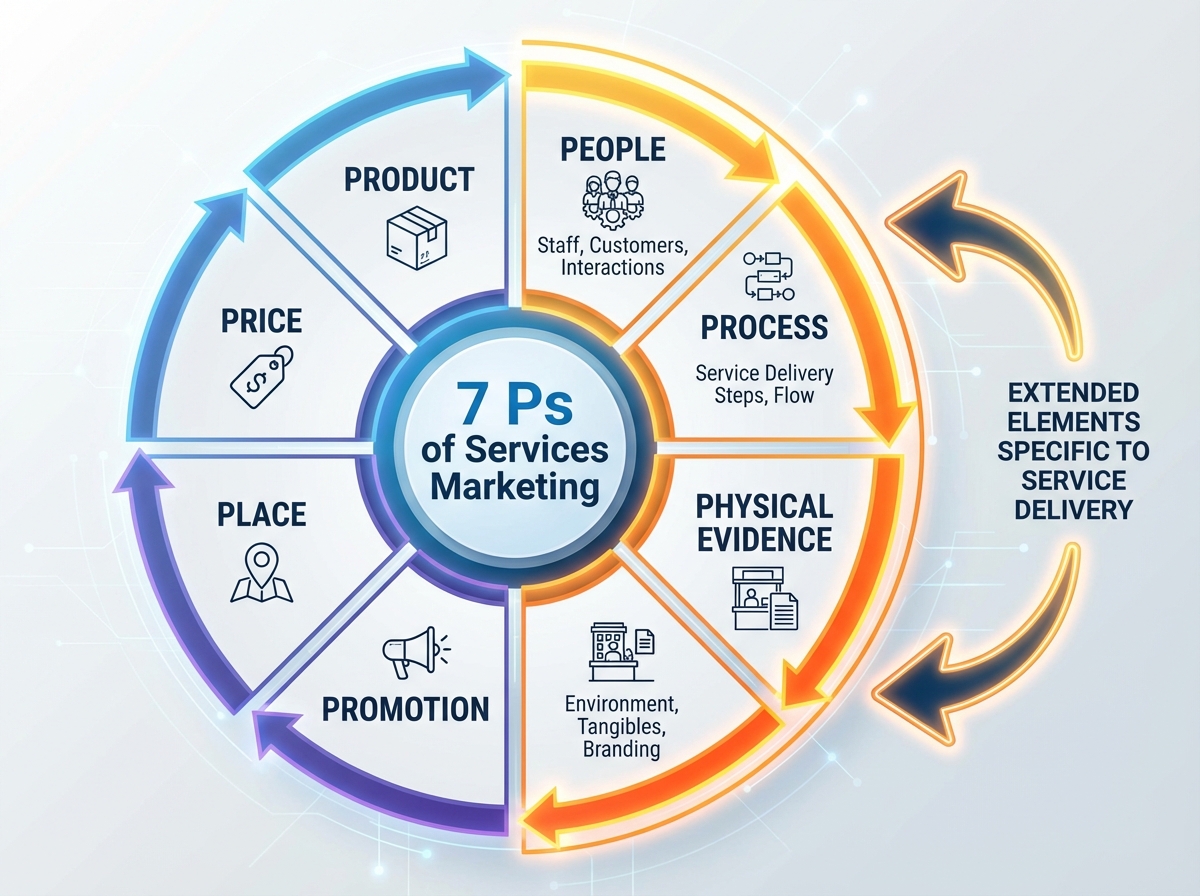
The original four still matter, but they behave differently in a service context. “Product” becomes the service experience itself. “Price” is harder to set because there’s no cost-of-goods anchor — pricing a service requires understanding perceived value, competitive positioning, and the psychology of what feels fair for something intangible. “Place” becomes access and availability — when and how the customer can reach you. “Promotion” in services leans heavily on social proof because consumers can’t evaluate what they haven’t yet experienced.
The three extended Ps are where service businesses actually win or lose. People — every person in your organization is simultaneously a delivery channel and a brand signal. Process — the systems, workflows, and consistency that determine whether the experience is repeatable. Physical Evidence — the tangible cues (your space, your packaging, your invoices, your website) that give consumers something concrete to evaluate an otherwise invisible offering.
Skip the last three and you’re managing half a business.
How Pricing a Service Actually Works
Pricing services is one of the most disorienting parts of the whole discipline — especially if you’ve previously priced products.
With a product, you start with cost and add margin. With a service, cost is often irrelevant to what the customer will pay. A lawyer who takes ten minutes to solve a problem you’ve had for three years isn’t worth ten minutes of billing. A consultant whose one insight saves your company from a failed launch isn’t worth a day rate. Value-based pricing exists in theory for products; in services, it’s the only honest framework.
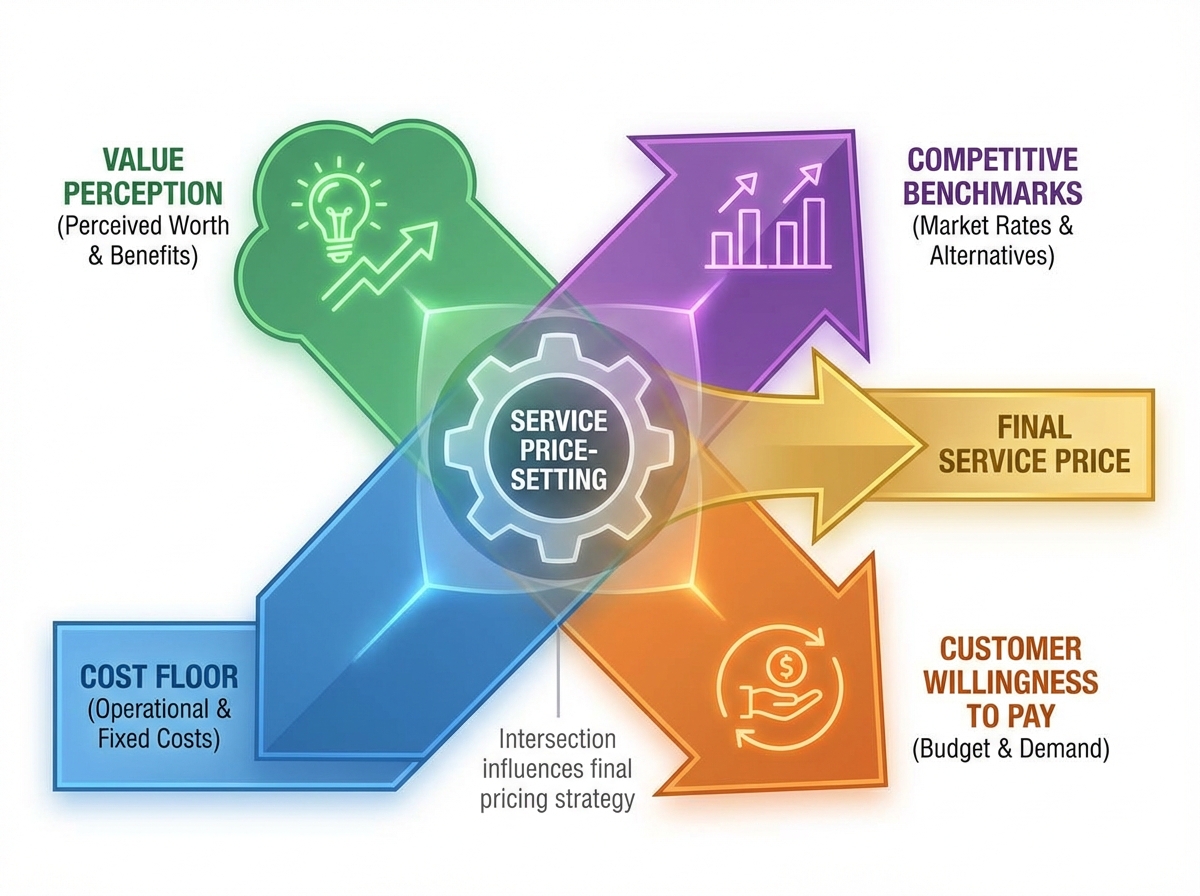
The factors that actually shape service pricing: the perceived expertise of the provider, the urgency of the consumer’s need, what comparable alternatives cost, and the risk the consumer assumes by choosing you over a known competitor. Price too low and you signal low quality in a category where the product is invisible before purchase. Price too high without sufficient trust signals and you lose before the conversation starts.
The moment this clicked for me was realizing that pricing a service is partly a communication act. Your price tells a story about what category you’re in.
What Software Products Taught Me About the Goods-Services Line
Software sits in a genuinely strange position in this framework. A software product can be packaged, versioned, and sold like a good — but once SaaS entered the picture, software became a service in almost every meaningful way.
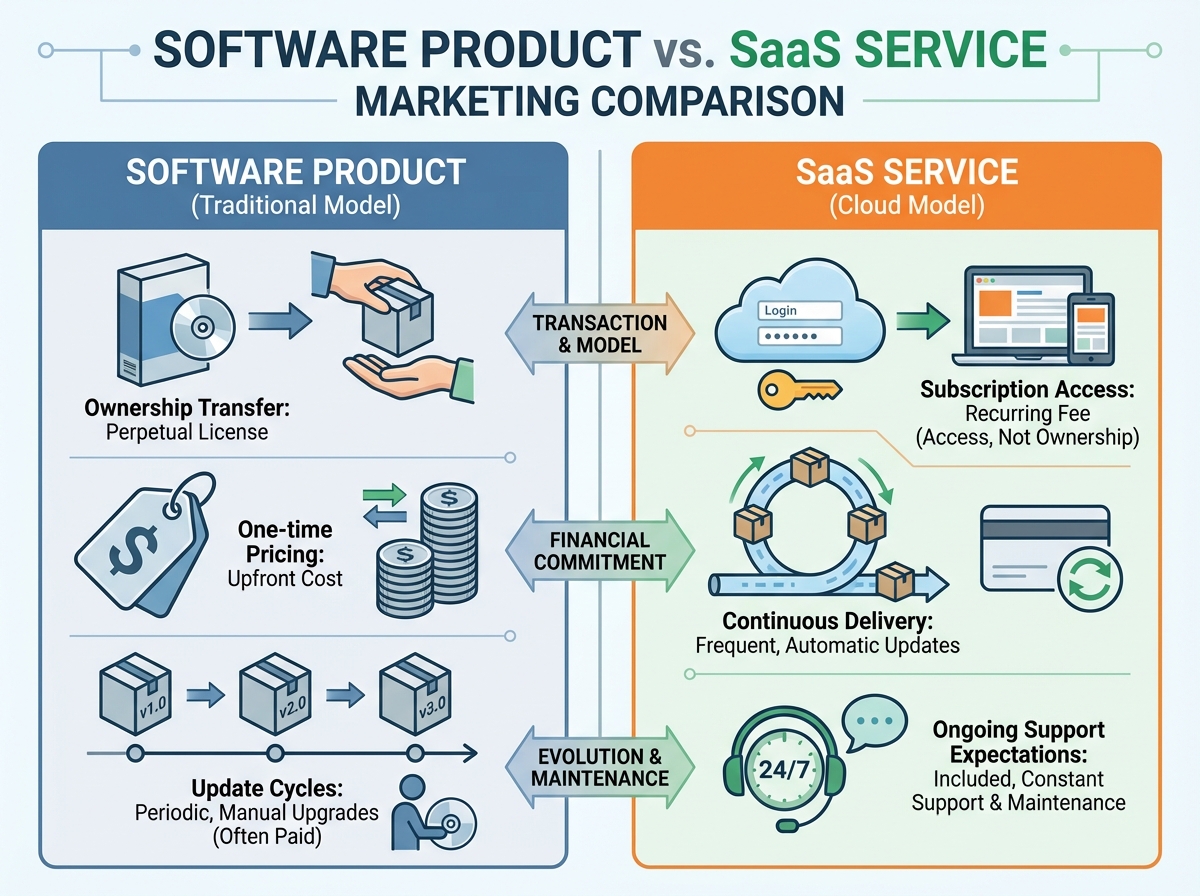
The practical difference matters enormously for services marketing strategy. A software product is evaluated at the point of sale. A software service is evaluated continuously — and churn happens any month the customer feels the ongoing value doesn’t justify the ongoing cost. This is why SaaS companies obsess over onboarding, customer success, and feature adoption. They’re not managing a product; they’re managing a service encounter that never technically ends.
If you’re in any business where the customer relationship continues after the initial sale, you’re in the services business whether you think of yourself that way or not.
The Competitive Edge Problem No One Talks About Honestly
Every service business eventually hits the same wall: you’ve built something good, your customers are happy, and then a competitor appears offering something nearly identical at a lower price.
The instinct is to compete on price. That’s almost always the wrong move. Price competition in services erodes margins without building loyalty — and in a category where quality is variable and invisible before purchase, cheap is not a safe signal to send.
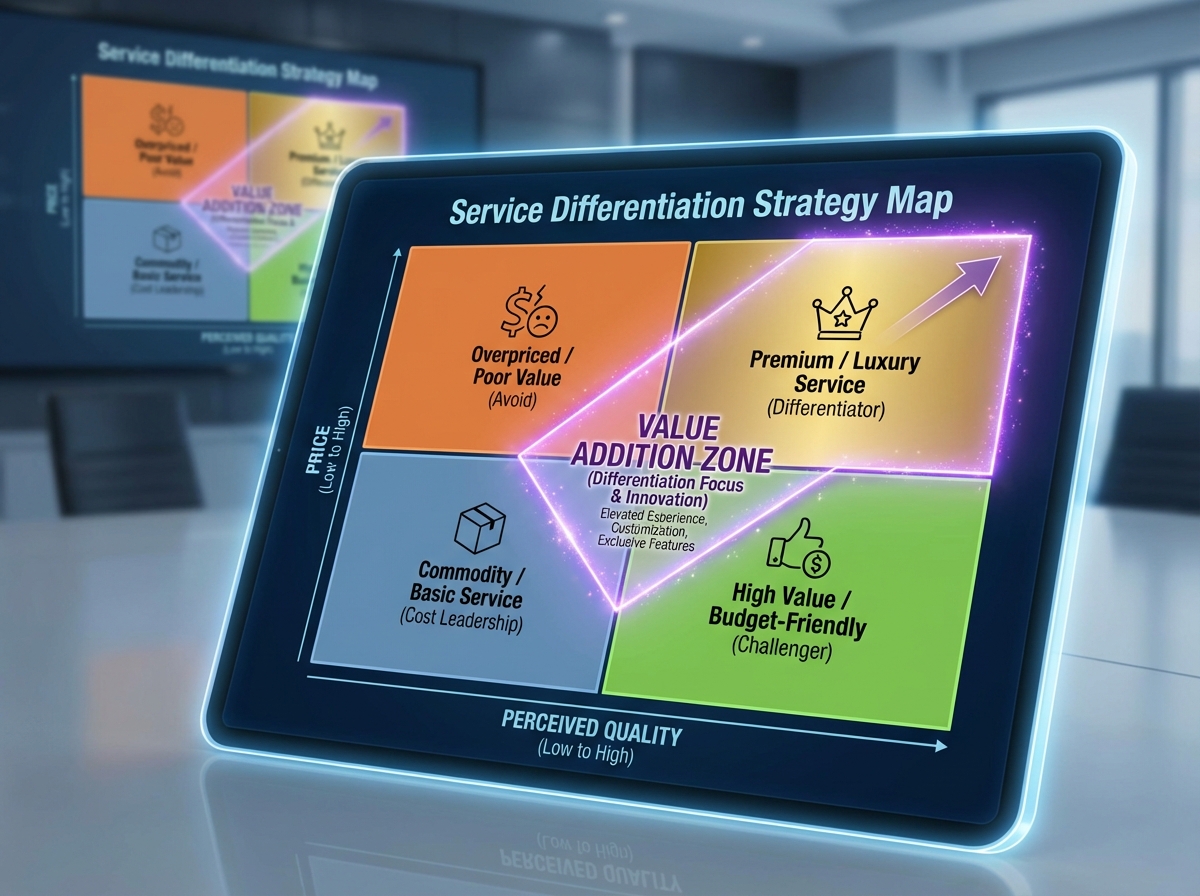
Competitive edge in the service industry comes from two sources that are genuinely hard to replicate: consistency and relationship. Consistency means your service encounter quality doesn’t vary significantly based on who delivers it or what day it is. Relationship means your customers feel known, not processed. Both of those require investment in people and process — the two Ps that show up last on the list but matter first in reality.
A service business that maintains quality, trains its people, and creates moments where customers feel seen will outlast competitors with better marketing or lower prices. Not because it’s a nice idea. Because 95% of customers who stop using a service do so after a negative human interaction — not because they found a cheaper alternative.
What Service Quality Actually Costs When You Ignore It
Service quality isn’t a feel-good metric. It has a direct financial value — and a measurable cost when it deteriorates.
The benefits of maintaining service quality are structural: it reduces customer acquisition costs (retention is always cheaper than replacement), generates word-of-mouth that outperforms paid promotion, and creates pricing power because customers who trust you are less price-sensitive. In a services context, quality is the only sustainable form of differentiation — everything else can be copied.
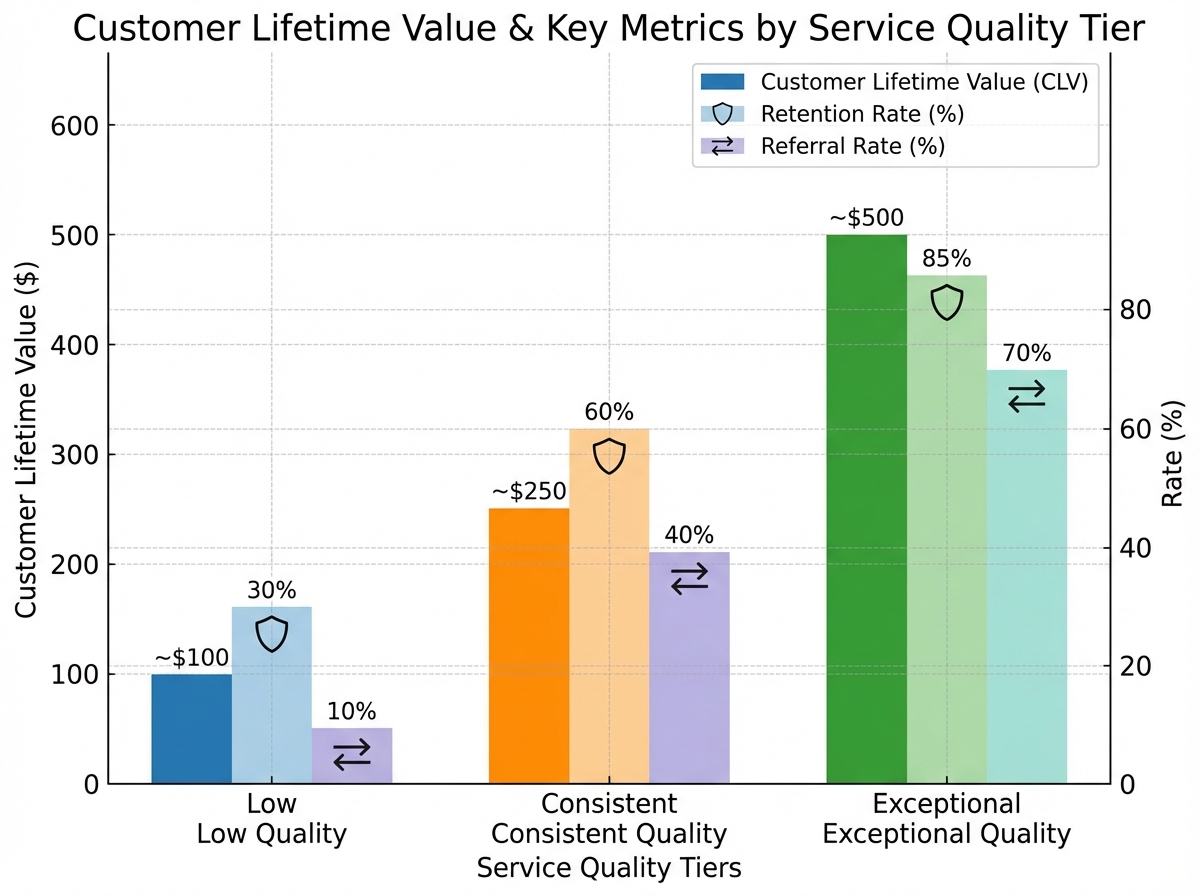
The challenges of services marketing exist precisely because quality is so hard to standardize. You can’t inspect a haircut before it happens. You can’t return a legal consultation. Every customer interaction carries real stakes, and the asymmetry of information — the customer can’t evaluate your service until after they’ve received it — means that trust is always the product beneath the product.
For entrepreneurs building service businesses, the operational implication is uncomfortable but clear: you have to invest in quality before it’s obviously paying off. The customer experience has to be built into your process, not added as polish at the end.
How Long Does It Take to Actually Understand Services Marketing?
| Stage | Content | Time |
|---|---|---|
| Foundations | Services definition, goods vs. services distinction, types of services | 1–2 hours |
| Core framework | 7 Ps, service encounter, pricing factors | 2–3 hours |
| Consumer behavior | What drives decisions, value perception, loyalty signals | 2–3 hours |
| Competitive strategy | Value addition, quality management, differentiation | 2–3 hours |
| Application | Challenges, real-world scenarios, practical analysis | 2–4 hours |
| Total | Full conceptual foundation | 9–15 hours |
The order matters more than the pace — trying to apply the 7 Ps before understanding why services behave differently from goods will lead you to make the same mistakes you were trying to avoid. If it takes you longer than the estimate, it usually means you’re thinking carefully about your own business as you go — which is exactly the right way to learn this.
Looking Back at What Actually Mattered
If you work through the full arc of services marketing — from the definition of intangibility all the way through competitive strategy — the thing that stays with you isn’t any single framework. It’s the shift in how you read every service interaction you encounter afterward.
You start noticing when a service encounter is doing its job and when it’s quietly destroying customer loyalty. You start seeing the 7 Ps in real businesses — the ones with strong physical evidence and weak process, or great people and no pricing strategy. The frameworks stop being academic and start being diagnostic.
For anyone building or working inside a customer acquisition system around a service offering, that diagnostic ability is worth more than any single tactic.
Here’s what to apply immediately:
- Map your service encounter touchpoints — list every moment your customer interacts with your business and identify which ones create trust and which ones create friction
- Audit your 7 Ps with brutal honesty — most service businesses are strong on two or three Ps and unconsciously ignoring the rest; find the gap
- Price around perceived value, not cost — write down what problem your service solves and what that outcome is worth to your customer before you look at your own costs
- Identify your variability sources — if your service quality depends on a specific person or condition being present, that’s a process risk; document what consistency looks like
- Build physical evidence deliberately — the tangible cues your customer sees before, during, and after the service experience are actively shaping their quality perception; treat them as part of the product
- Track your service encounter failures — every complaint or churn event is a data point about where your process broke down; create a simple log and look for patterns
- Define what value addition means in your specific context — not features, not upsells, but the moments where a customer feels your business went beyond the transaction
Leave a Reply