


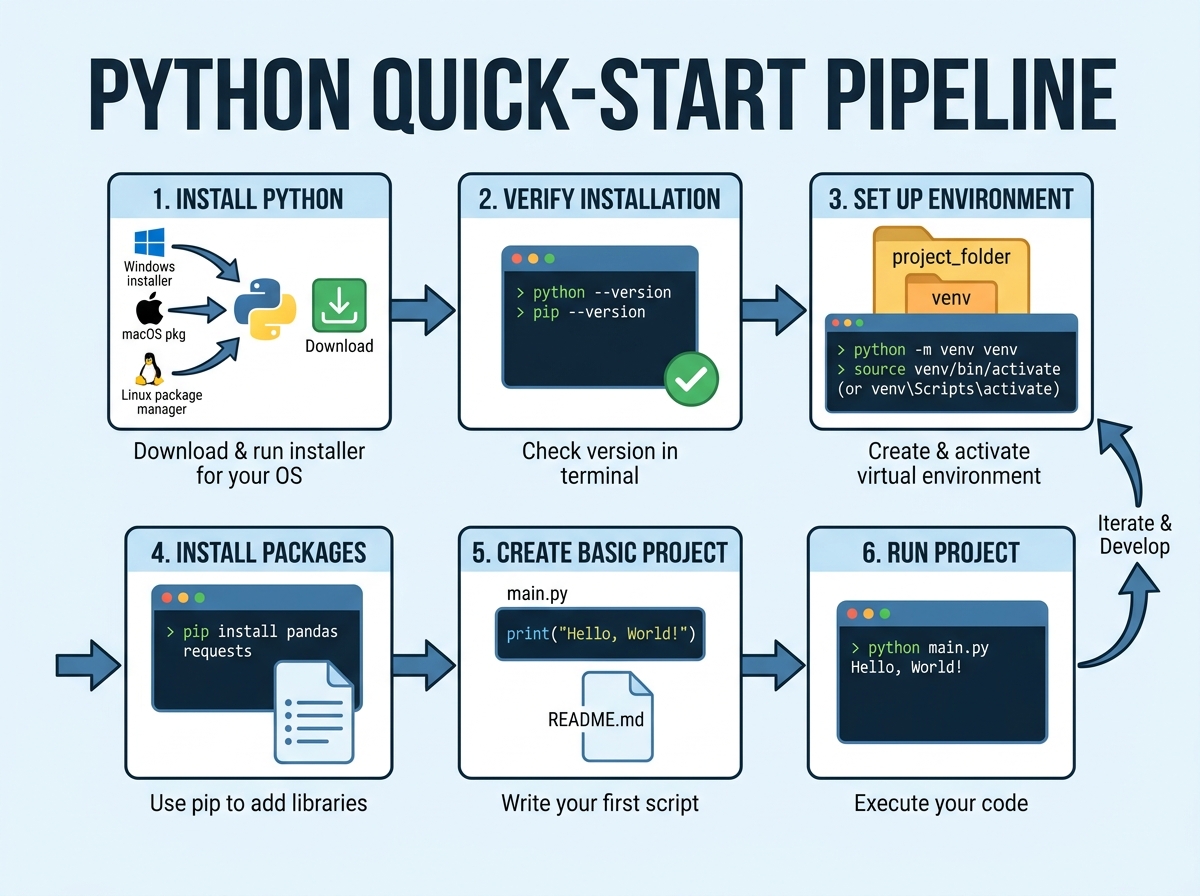
I started with almost no programming background and learned Python by tugging at the edges of my curiosity until it held together. The path wasn’t a neat syllabus; it was a real-world crawl through mistakes, tiny wins, and moments of clarity that changed how I think about problems. I didn’t just memorize syntax—I learned how to see problems as data, how to structure thoughts in code, and how to test ideas with small experiments. This is the story of that journey, with the concrete moments that mattered and the decisions that kept me moving forward. If you’re starting from scratch, you’ll recognize the same friction and the same tiny breakthroughs, and you’ll see how quickly a few core habits compound into real capability.
Opening a notebook and typing my first line felt like stepping onto a new street. By the end, I wasn’t chasing a course outcome; I was solving real questions I cared about. The tricky part wasn’t the commands; it was choosing what to build and when to stop overthinking. The milestones came from doing, not from watching videos. This article isn’t a review; it’s a personal map of how I navigated learning Python fundamentals, from installing tools to writing small projects, with enough detail to help you chart your own route.
Leave a Reply