


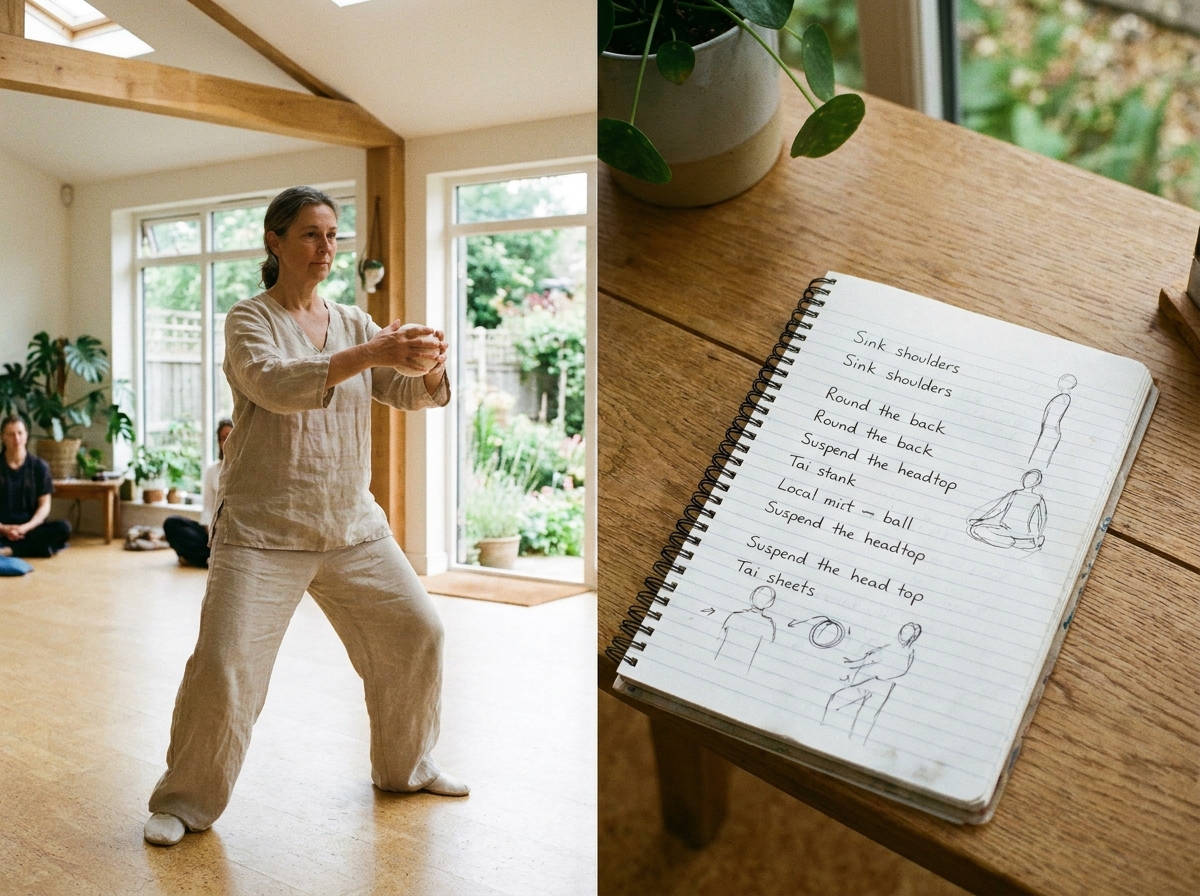
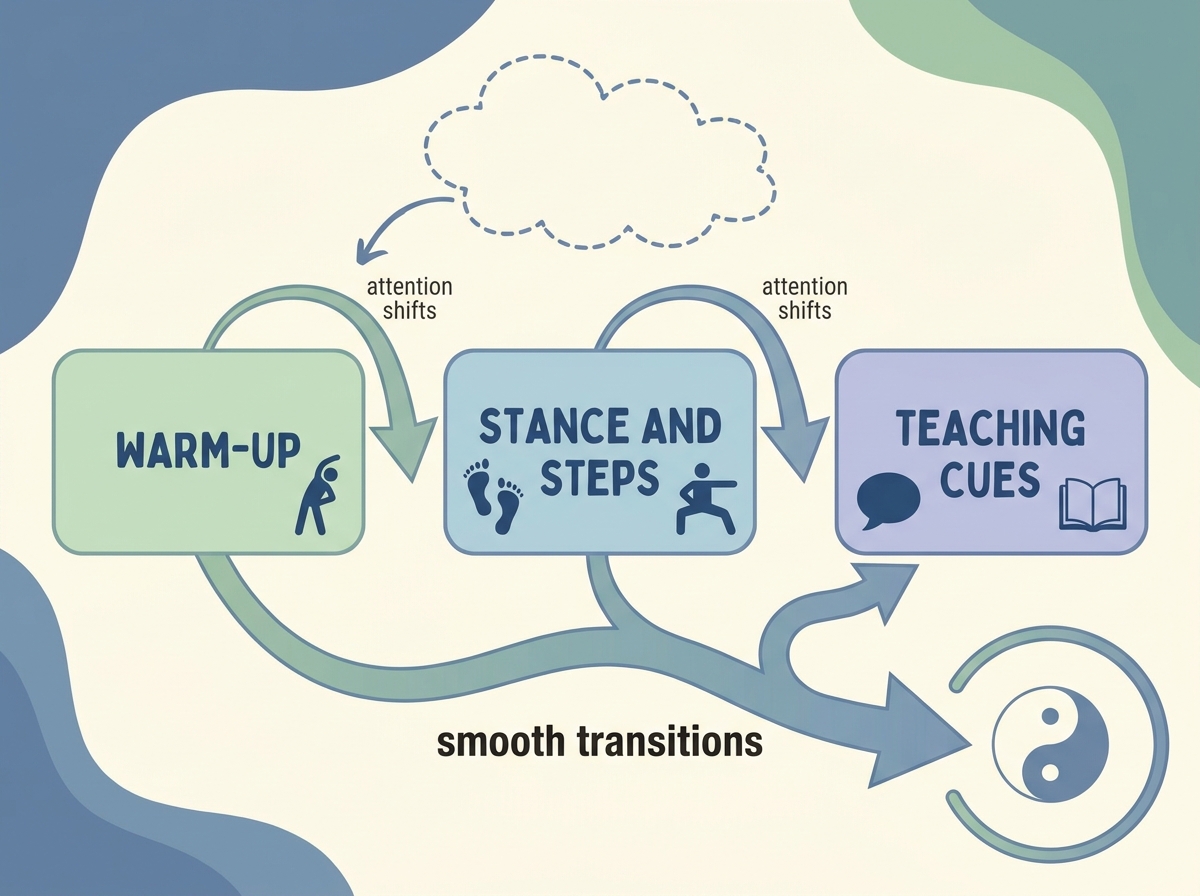
If you’re looking to learn Tai Chi the way an instructor actually learned it—slow, structured, and honest about what breaks—start with warm-up thinking, then stances, then how you explain form without confusing people. That’s where most beginners waste months: they copy movement like it’s a dance video, but instruction only clicks once you can name what the body is doing and what the mind is supposed to feel.
if you’re looking to learn Tai Chi, the shortest path I found wasn’t “learn a full form first.” It was learning how Tai Chi is trained: gentle warm-ups that prepare joints and breath, fundamentals of stance and steps, and then the way the practice connects to “energy” concepts used in Chinese healing. Once I could feel that connection, teaching stopped being memorizing sequences and became guiding someone’s balance, timing, and relaxation in real time.
- Learn warm-up exercises and stance mechanics first, because your cues depend on stable body positions.
- Practice with an internal “energy” awareness, otherwise your movements look right but feel empty.
- To teach, you must be able to explain what to notice in the student’s body, not just what to do.
What is Tai Chi training for beginners?
“Tai Chi training” is not only doing the moves. It’s training your posture, steps, and breath until your body can transition smoothly—then learning how to communicate those cues to another person. For a teaching-focused start, the two most important buckets I kept coming back to were: (1) practical warm-ups and stance/steps, and (2) basics of Chinese healing language so you can explain why certain adjustments matter.
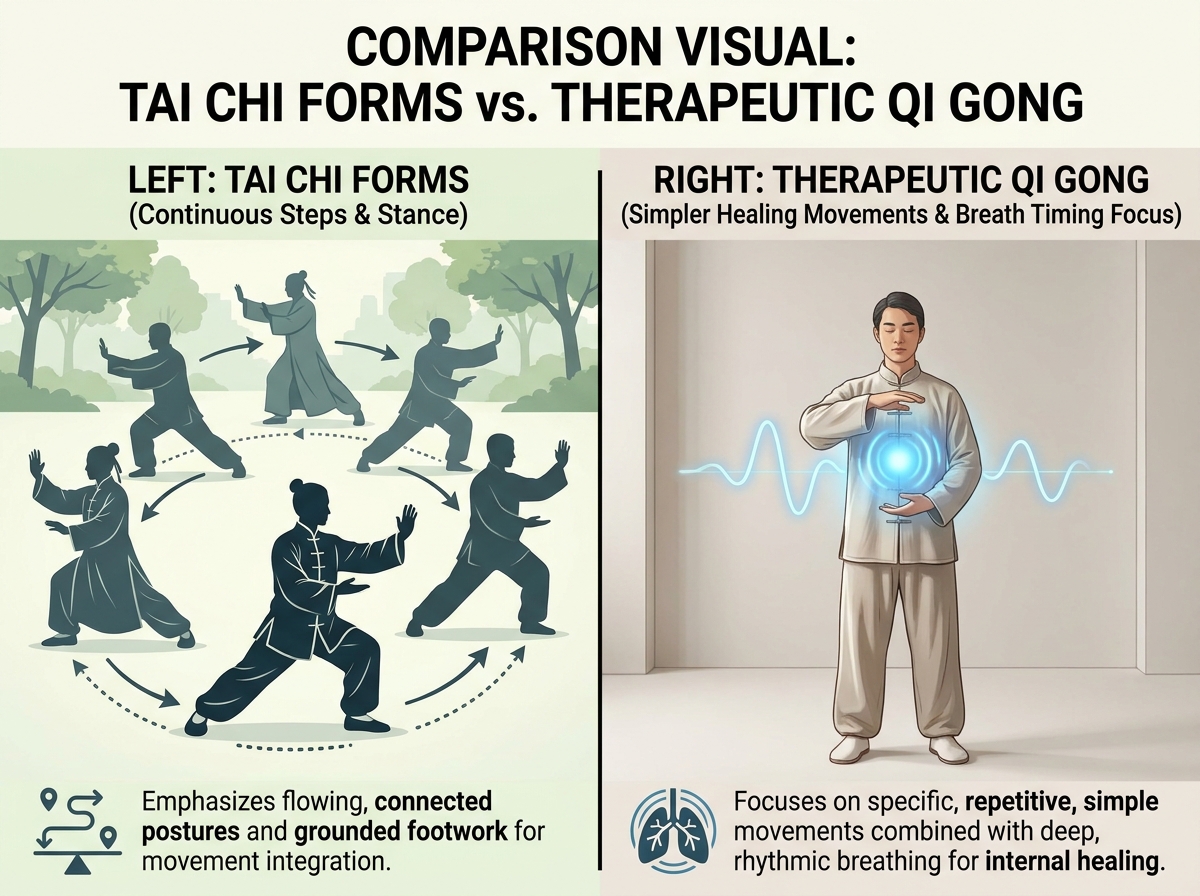
If you want an easy mental split:
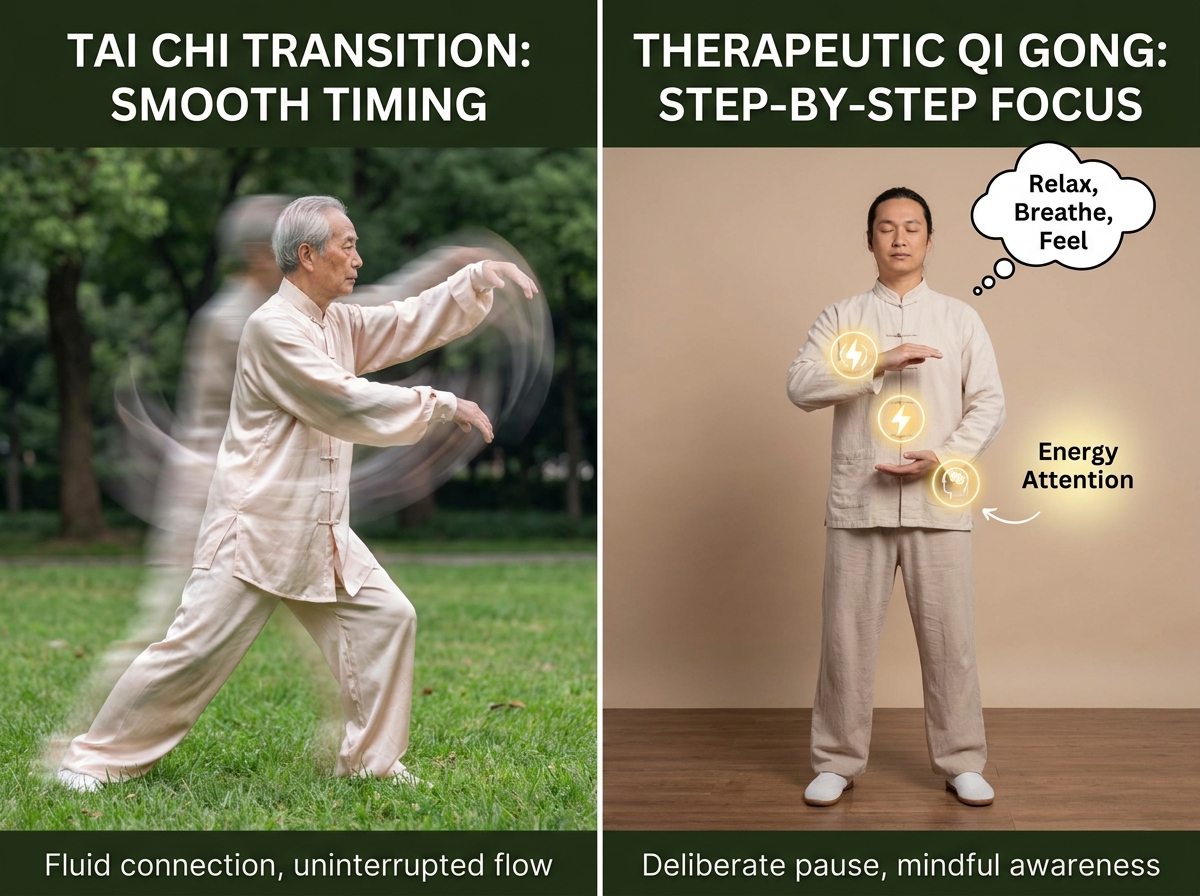
- Tai Chi (forms and movement continuity)
- Therapeutic Qi Gong (more direct “healing” style practice)
Three things beginners get wrong fast
- You can’t “teach” a form you only memorized in silence.
- Stances are boring—until your student’s balance falls apart.
- “Qi” becomes useful only after you notice breath and tension shift.
How long does it take?
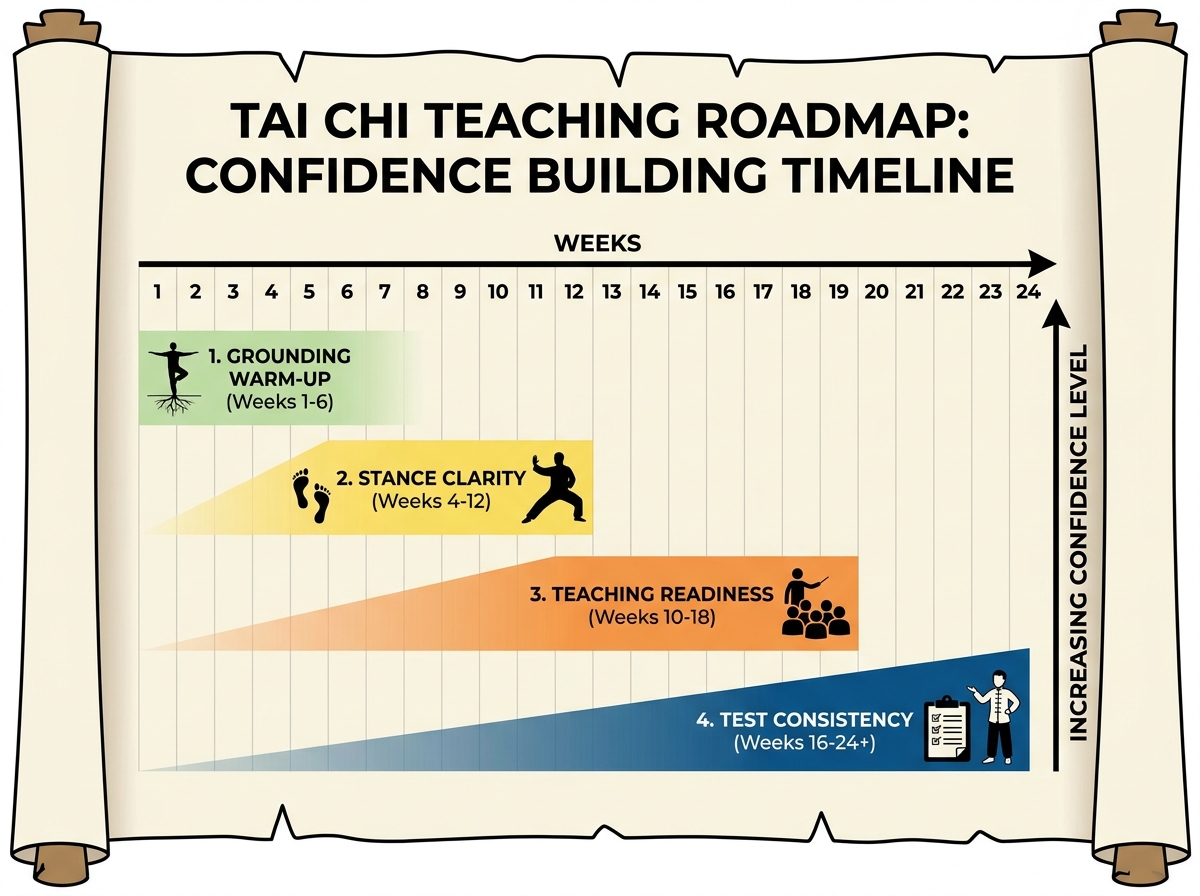
| Stage | Content | Time |
|---|---|---|
| Grounding | Comfortable setup, warm-up practice, stance awareness | 1–2 weeks |
| Movement clarity | Steps, transitions, gentle form basics | 3–5 weeks |
| Teaching readiness | How to cue, correct, and run a short practice session | 2–4 weeks |
| Certification preparation mindset | Self-review routine and test-focused consistency | 2–3 weeks |
| Total | Learn the core foundation needed to teach confidently | 8–14 weeks |
Order matters more than speed, because early mistakes become teaching habits. Being slower than the estimate is normal when you’re rebuilding coordination and language for what you feel.
Start with the warm-up you’ll actually use
My biggest surprise was how often warm-ups are treated like an optional “pre-workout.” I used to rush past them, then wonder why my body felt stiff in the first real movement—like I was trying to write an essay with my hands still numb. When I finally slowed down and treated warm-ups as training, my joints stopped fighting me, and my breath became something I could direct instead of something that just happened.
In practice, the gentle warm-up felt almost too easy at first. I’d stand, move, and tell myself I was “wasting time” until I realized the real win was reset: posture aligned, weight distribution steadier, and transitions stopped feeling like sudden jumps.
The moment things clicked was when I stopped asking, “Is this hard?” and started asking, “Can I feel where tension lives right now?” Then the warm-up stopped being a warm-up and became the first place where I learned how to notice and correct.
Learn stances and steps before chasing forms
People love forms because forms look like progress. But when you’re learning with the idea of teaching, forms are late. I didn’t understand that until I tried guiding someone for the first time and realized they were lost immediately—because I’d never trained my own stance long enough to explain it clearly.
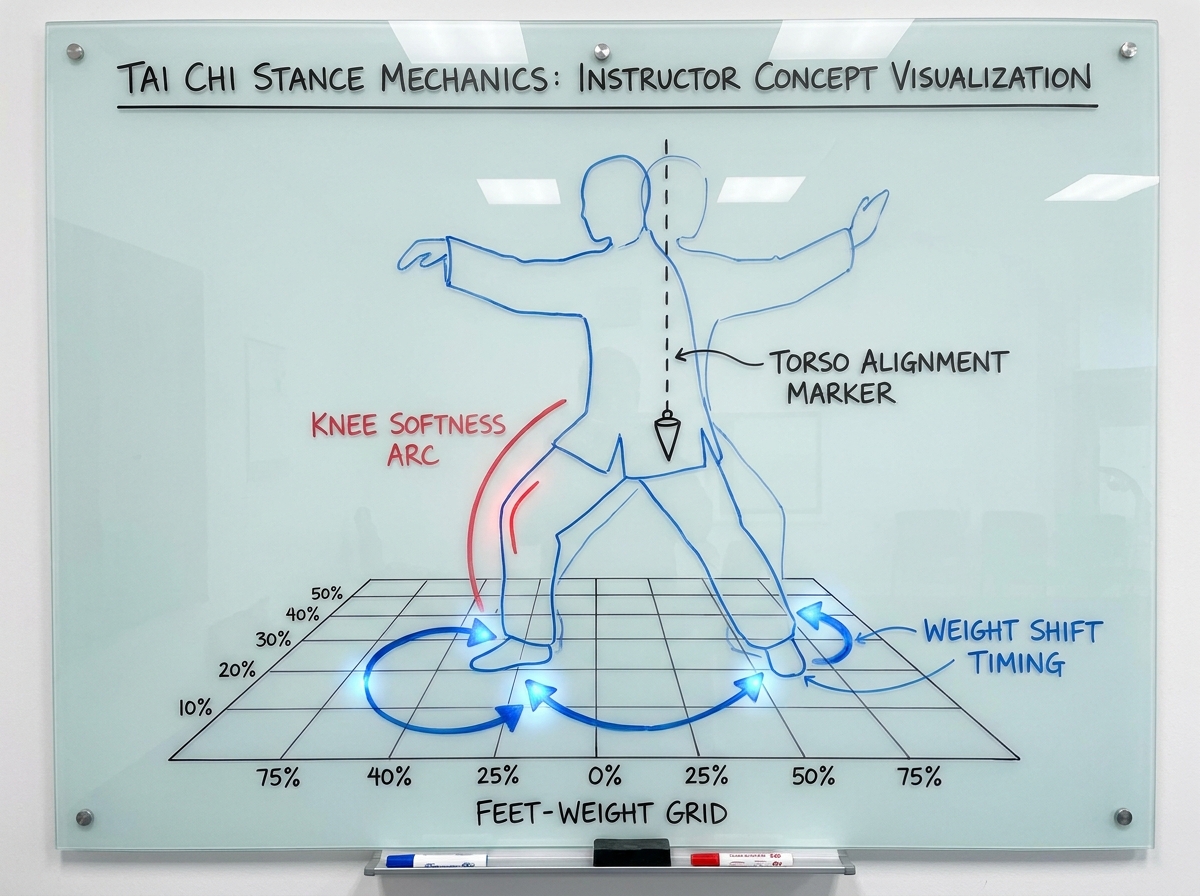
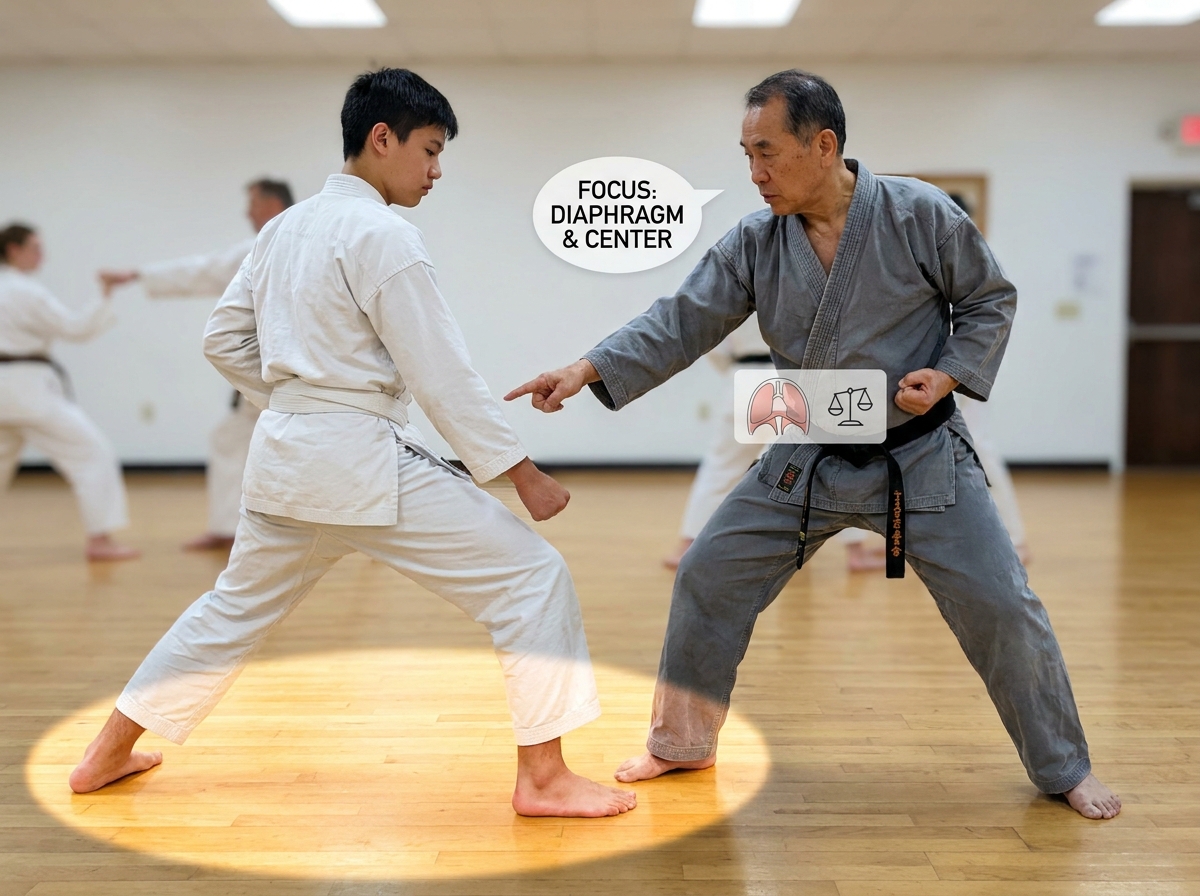
When I focused on stance and steps, the progress became physical and specific: feet placement that stabilizes the body, knee softness that prevents locking, and weight shifting that doesn’t jerk the torso. It sounds simple, but that “simple” part is where a lot of beginners stay blurry.
Then the frustration shifted. Instead of “Why can’t I do the move?” it became “What part should the student feel first?” Once I could answer that, corrections became kinder and more accurate.
Even now, when I practice too fast, I can tell instantly—because my stance quality drops first, before anything else does.
The “energy” piece is just attention
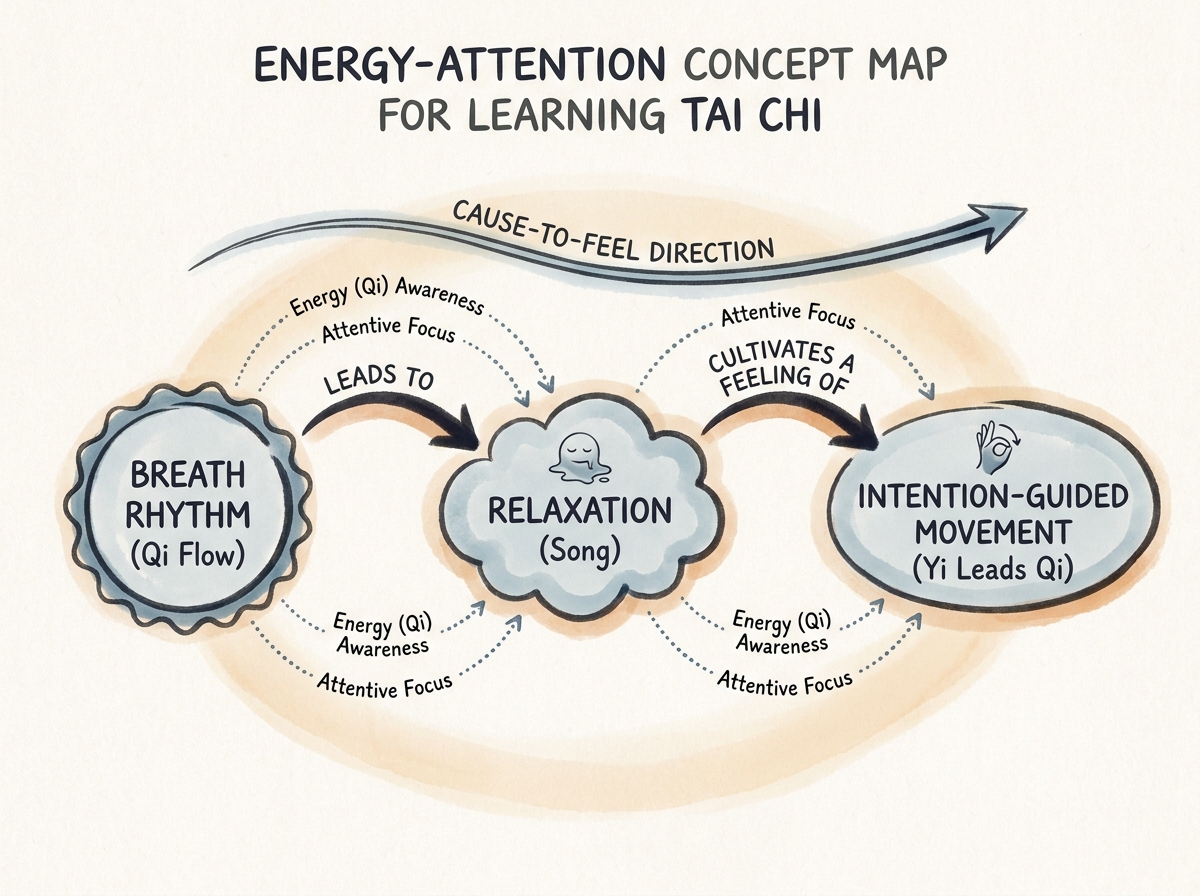
One of the hardest parts to explain honestly is the Chinese medicine language—especially when you’re trying to learn Tai Chi without turning it into mysticism. Early on, I kept using “qi” as a vibe word. My movements looked smoother, but my understanding was shallow, and I couldn’t translate what I felt into instructions.
The breakthrough happened when I stopped chasing a special sensation and started tracking a normal sequence: breath rhythm, muscle relaxation, and the way intention seemed to guide motion. “Energy” only became meaningful after I could connect it to something observable in my body.
That’s where the difference between Western-style exercise and Chinese exercise started to feel real. Western exercise taught me to push and track output; this training taught me to manage how movement is organized—so the “output” was a side effect.
If your attention stays scattered, your student will mirror that. If your attention stays clear, your cues become simple.
If you’re looking to learn Tai Chi to teach others
Learning Tai Chi for teaching is different because you’re no longer the only person on the mat. I found myself over-explaining early—talking about philosophy while the student’s feet were still slipping. The fastest correction was to build a habit of short instructions tied to what the student can feel right away.
A practical way I organized my teaching practice was: cue the stance, cue the breath timing, then cue the transition. Not “do the whole sequence the right way,” but “start here, feel this, then change from here.” That approach made students relax sooner, and relaxation made technique easier.
When I was consistent with this structure, I started to notice that students didn’t just copy my movement—they adjusted to my pace and my tone. That’s when I realized teaching isn’t a lecture; it’s running a controlled attention environment.
I also learned why self-review matters. You can’t judge your teaching by how confident you felt; you judge it by what confusion you caused and how quickly you corrected it.
Therapeutic Qi Gong helped my corrections get sharper
I used to think Qi Gong was “separate”—something optional if you were into the deeper side. But learning it made my instruction better, because it refined how I guided relaxation and energy awareness without needing to overload students.
Therapeutic Qi Gong step-by-step practice gave me a clearer way to break things down. Instead of forcing everything through one Tai Chi form, I could return to a foundational healing movement pattern and ask, “What changes when you do this correctly?”
The first time I felt the difference in my own body, I understood why instructors insist on fundamentals. Qi Gong categories and the distinction between Qi Gong and Tai Chi weren’t trivia to me anymore. They were a tool for choosing what to teach depending on what the student needs that day.
If you can teach both “movement” and “healing attention,” your class stops being just exercise and starts being a reliable experience.
Testing made me confront consistency
The test part wasn’t only about performance. It forced me to become honest about repetition quality—whether I could reproduce the same stance alignment, transitions, and attention cues without drifting.
I remember preparing and thinking I had it “mostly” down, then running through the sequence and discovering tiny mistakes that only showed up under pressure. Those were exactly the mistakes I’d been forgiving in normal practice—until someone else would suffer them.
The test mindset changed my daily training into self-review. I stopped treating practice as something that happens and started treating it as evidence: did my warm-up actually prepare me, did my stance support my steps, and did my explanations match what I actually felt.
By the time I could consistently show up, teaching felt less like an improvisation and more like a method I could trust.
Reflect, then teach the way you wish someone taught you
When I look back, I don’t regret learning slow. I regret learning without structure—without the ability to translate sensation into clear cues. Once I built that bridge, everything got easier: learning became more stable, corrections became faster, and teaching felt human instead of forced.
Write down the first cue you would give a beginner. If you can’t name the very first feeling, you don’t yet understand the movement. Start every session with the warm-up you skip at home. That’s where your body prepares to cooperate. Use stance as your correction default. Most problems are balance and timing problems wearing a “form” disguise. Cue breath before you cue speed. When breath steadies, transitions stop sounding like instructions. Teach transitions as small changes, not whole sequences. Students learn continuity by repeating “change points,” not by memorizing choreography. Practice one short explanation in your own words. If you can’t say it simply, you’ll say it confusingly when you’re nervous. Do self-review immediately after practice, not later. The details disappear fast unless you capture the exact moment something felt off. Rehearse for consistency, not for impressiveness. The skills that pass a test are the same skills students can trust.

Leave a Reply