


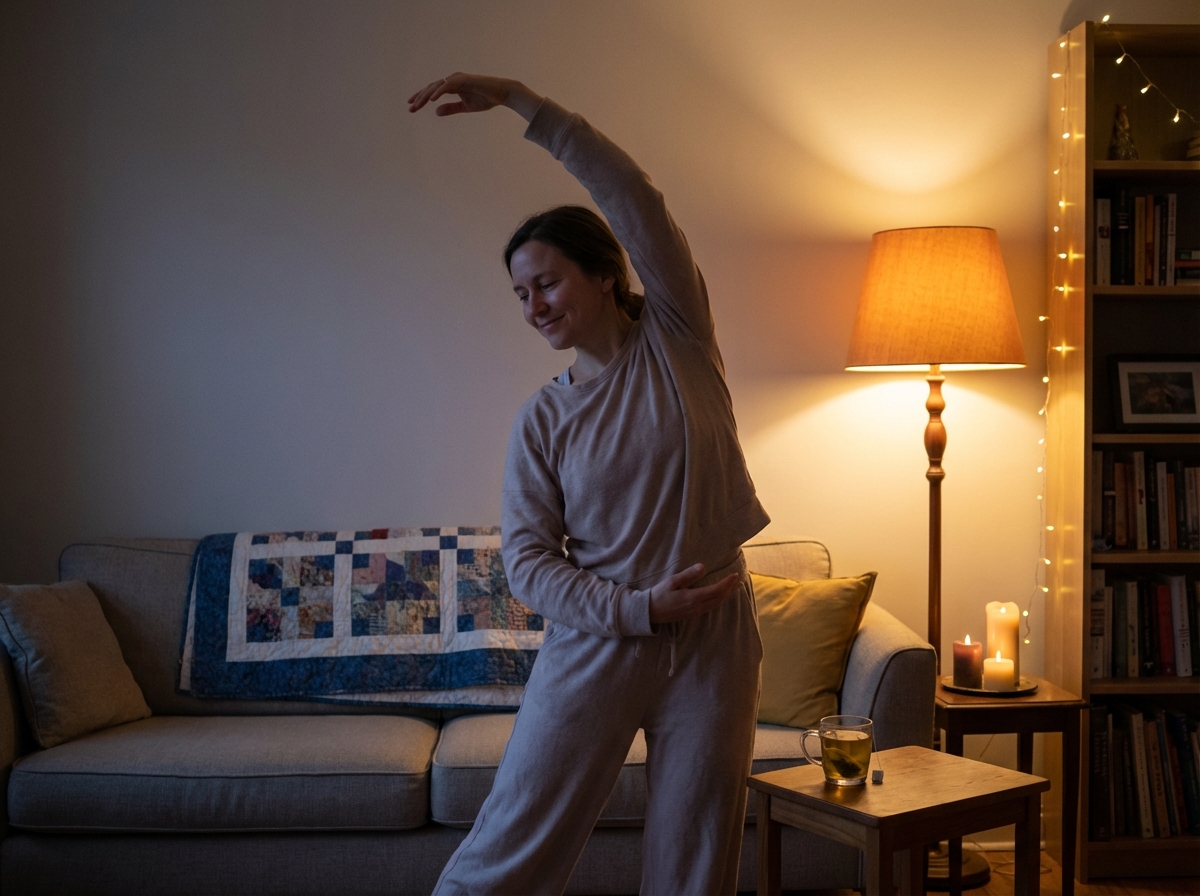
The moment that finally broke me wasn’t a dramatic sleepless night. It was the fifteenth evening in a row of lying there, bone-tired, watching the ceiling fan spin while my brain rehearsed tomorrow’s meeting agenda at full volume.
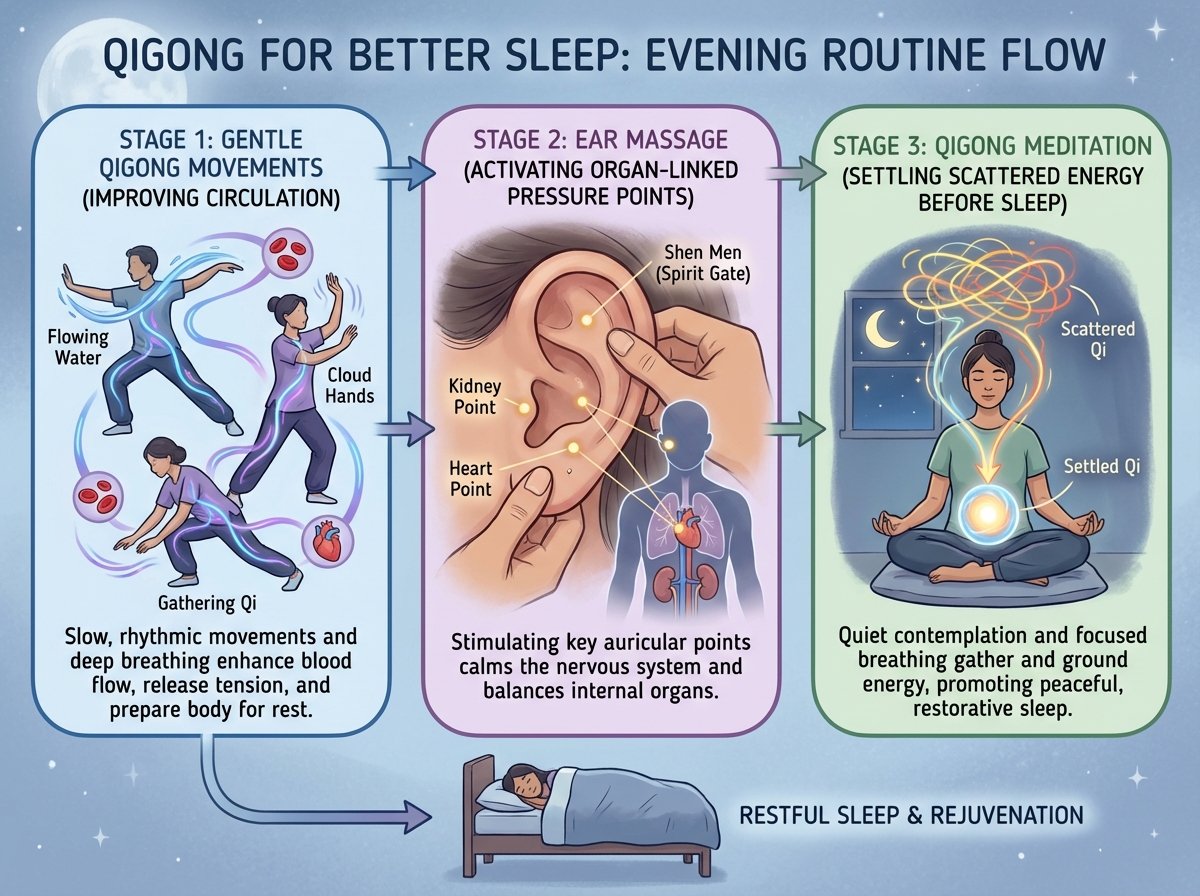
If you’re looking to learn qigong for better sleep, the short answer is this: it works not by forcing your body into sleep, but by giving scattered energy somewhere to go. Qigong — rooted in Traditional Chinese Medicine — uses gentle physical movements, targeted ear massage, and breath-anchored meditation to shift your nervous system from activation into rest. The whole sequence takes under thirty minutes, and most people notice a difference within the first week of consistent evening practice.
- Works best for people whose problem is a racing mind, not physical exhaustion — the kind of tired where your body wants to sleep but your head won’t cooperate
- The movements, massage, and meditation build on each other — skipping straight to meditation without the physical preparation usually produces weaker results
- Consistency matters more than perfection — a gentle five-minute version every night outperforms a perfect thirty-minute session twice a week
What Qigong for Sleep Actually Means
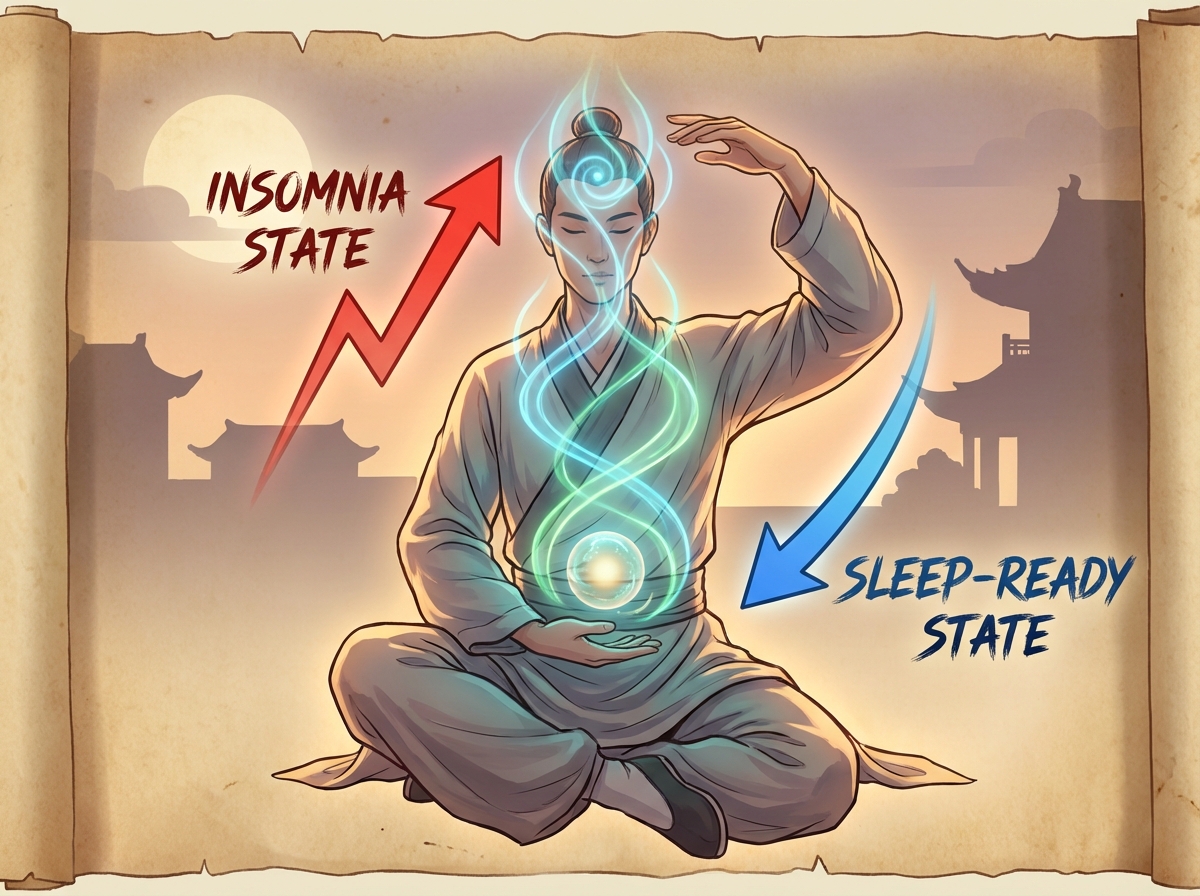
Qigong (pronounced “chee-gong”) is a practice from Traditional Chinese Medicine that works with the body’s vital energy — called qi — through slow movement, breathwork, and focused intention. Unlike yoga or stretching, the movements are designed to direct energy flow rather than build strength or flexibility. Sleep-focused qigong specifically targets the pattern TCM calls “rising qi” — energy that should be descending and settling by evening but instead stays active in the chest, head, and mind.
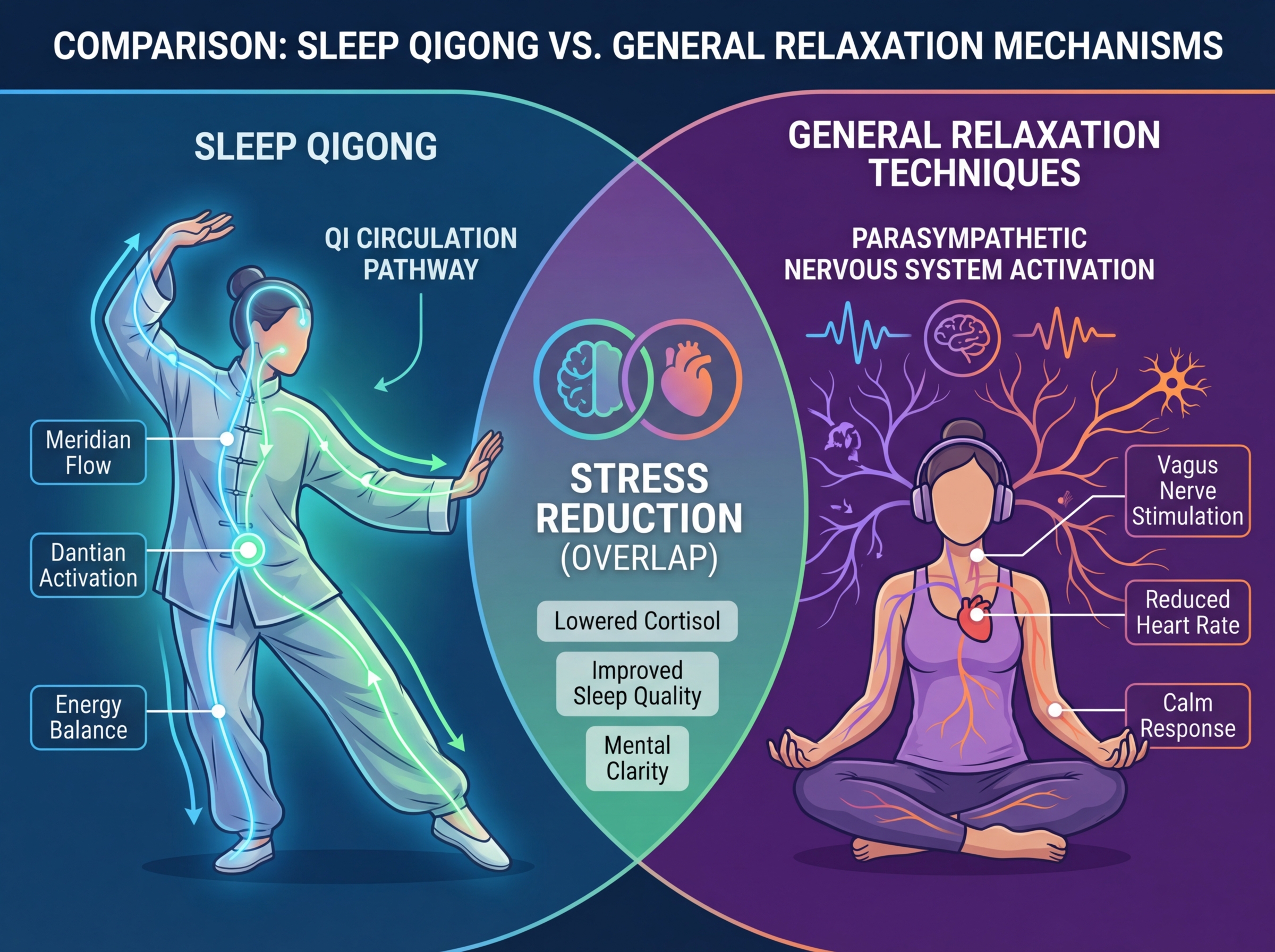
It’s worth separating this from generic relaxation exercises:
| Practice | Mechanism | Best For |
|---|---|---|
| Sleep qigong | Redirects qi downward, calms organ systems | Racing mind, scattered energy at night |
| Stretching | Releases muscle tension | Physical tightness keeping you awake |
| Breathing exercises | Activates parasympathetic response | Anxiety, elevated heart rate |
| Body scan meditation | Awareness-based relaxation | General stress, mild insomnia |
For most people who lie awake thinking, sleep qigong addresses the root that the others don’t quite reach.
Three Things That Surprised Me About This Practice
- Ear massage has direct meridian links to your kidneys and heart — two organs TCM ties directly to sleep quality.
- The sequence order is non-negotiable: movement before meditation, or the meditation barely lands.
- Guqin music — an ancient Chinese zither — has a frequency profile that genuinely feels different from white noise or generic sleep playlists.
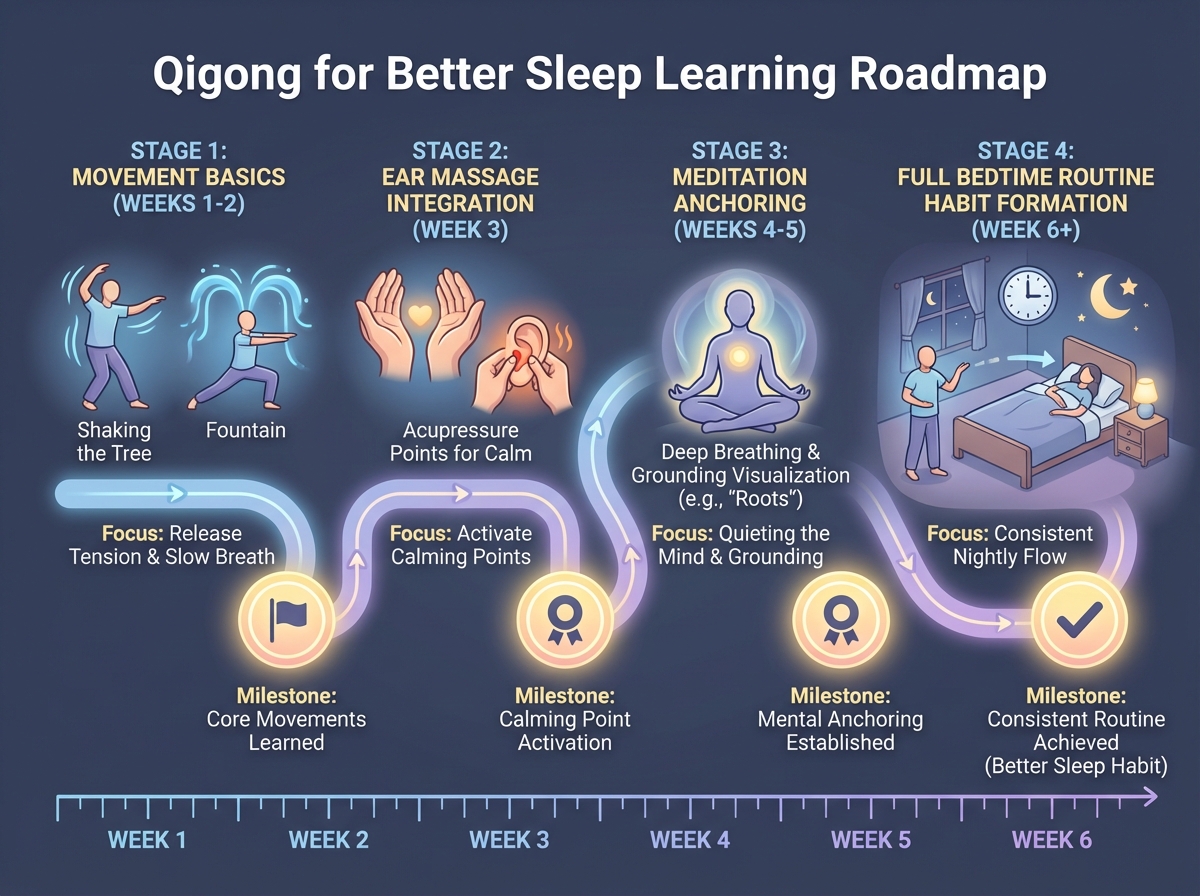
How Long It Takes to See Results
| Stage | What You’re Working On | Typical Time |
|---|---|---|
| First session | Learning the movements, calibrating breath | Day 1 |
| Early consistency | Nervous system starts recognizing the cue | Days 2–5 |
| Routine anchoring | Body begins pre-empting wind-down automatically | Week 2–3 |
| Deeper rest patterns | Sleep quality and duration noticeably shift | Week 3–6 |
| Total to sustained change | Full routine embedded as evening habit | 4–6 weeks |
The order of these stages matters more than how fast you move through them — trying to rush into deep meditation before your body trusts the routine just creates another layer of frustration. And if week three comes and goes without a dramatic shift, that’s normal; some nervous systems take longer to unlearn years of evening hyperactivation.
Why Your Energy Is Still Rising at Bedtime
The first time I read a TCM explanation of insomnia, it reframed everything. Western sleep advice focuses almost entirely on external conditions — darkness, temperature, screen time. TCM asks a different question: where is your qi right now, and which direction is it moving?
The idea is that healthy sleep requires energy to descend — settling from the head and chest downward into the body’s core. When you’ve spent a full day problem-solving, managing people, or absorbing stress, qi gets trapped in the upper body. Lying down doesn’t fix that. Your position changes but your internal state doesn’t. This is why you can be physically horizontal and completely unable to switch off.
Understanding this changed how I approached the whole evening. I stopped trying to “relax” in a general sense and started thinking about downward direction — movement that brings attention and energy toward the lower body, breath that sinks rather than floats, and sound frequencies that resonate low rather than high.
The music piece surprised me here too. Guqin has a tone that genuinely sits lower in the body than most ambient music. The first time I practiced alongside it, the difference from a generic “relaxing playlist” was immediate — less mental association with meditation apps, more association with something much older and slower.
The Movements Come Before Everything Else — Here’s Why That Matters
The biggest mistake people make when trying qigong for sleep is starting with meditation. It feels logical — meditation is calming, sleep requires calm, go directly to meditation. But if your qi is still scattered and rising, sitting still just gives your mind more room to run.
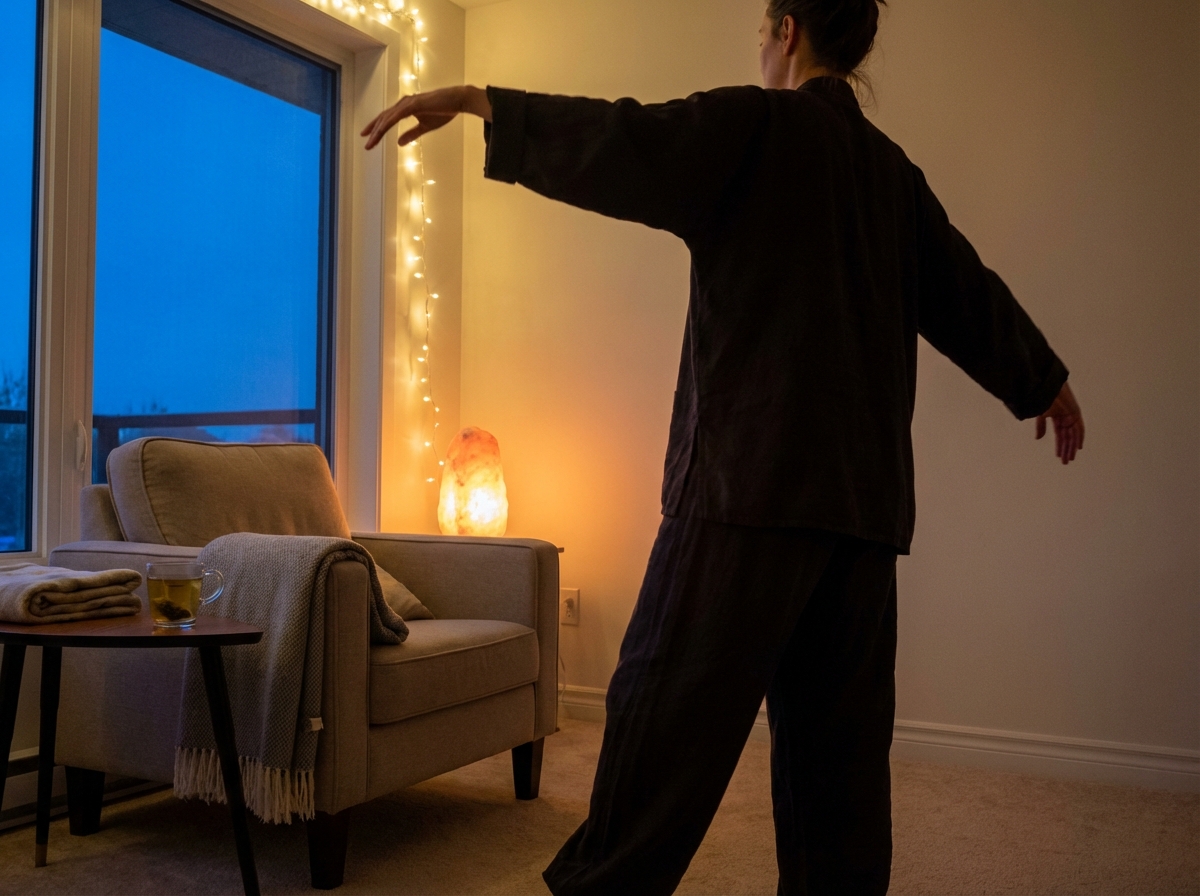
The movement section exists specifically to do the physical work that creates the conditions for meditation to land. The exercises are gentle — nothing aerobic, nothing that raises your heart rate — but they’re precise. They target circulation in areas that TCM links to sleep regulation, and they give the body a physical process to follow instead of a mental instruction to “calm down.”
When I finally stopped skipping the movements and did the full sequence in order, the meditation at the end felt completely different. There was actually somewhere for my mind to land. The physical preparation had done the heavy lifting, and the meditation became the finishing touch rather than the whole effort.
This sequencing logic carries into practice flexibility too. On nights when time is short, a shortened movement sequence plus a single meditation pass beats a long meditation session alone. The body needs the physical signal first.
What Ear Massage Does That Nothing Else Quite Replicates
I was skeptical about ear massage longer than I should have been. It sounded like a fringe addition — something included to fill out a routine, not something that actually did anything.
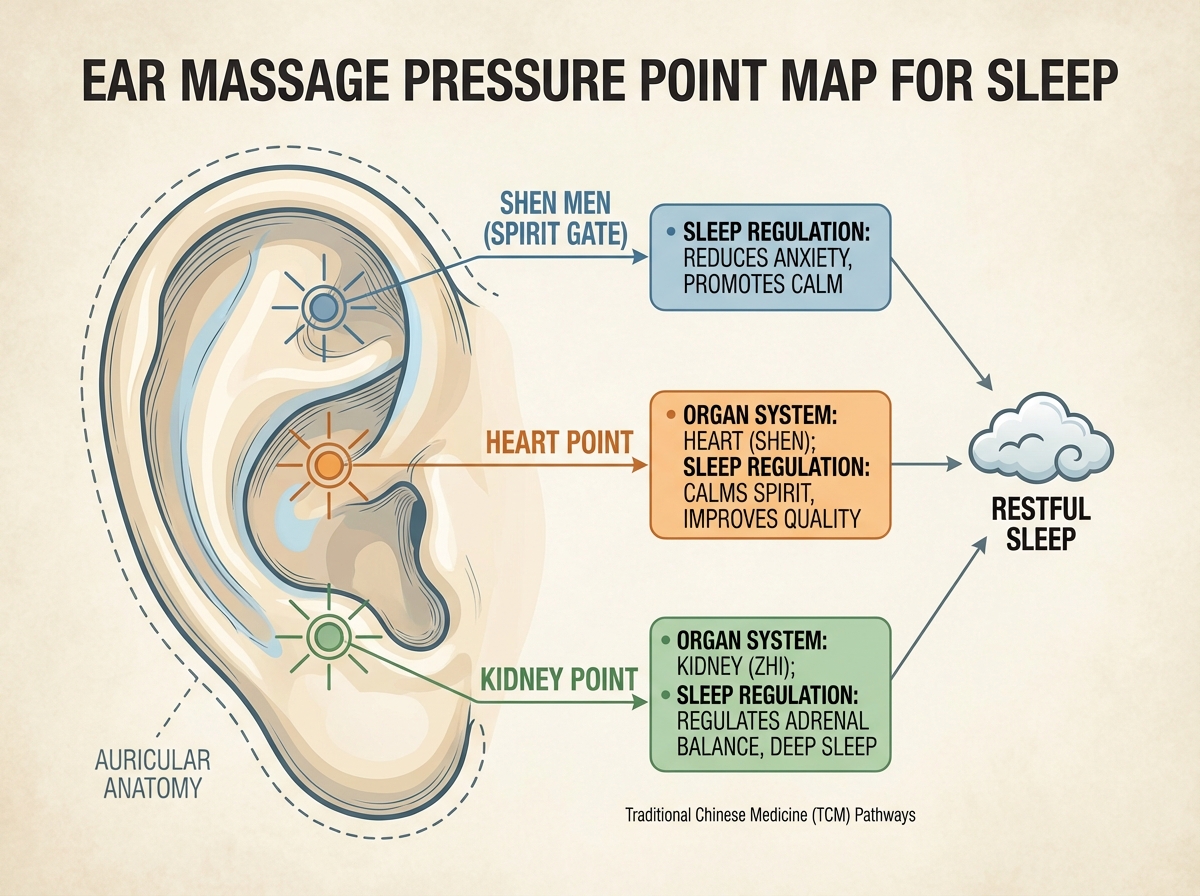
Then I learned why it’s there. In TCM, the ear is a microsystem — a map of the entire body compressed into one small structure. Specific points on the outer ear correspond directly to internal organs, and the kidney and heart points are central to sleep regulation. Stimulating these points doesn’t just feel relaxing in a general sense; it’s directing a specific signal to specific systems.
The physical sensation confirmed something was happening. There’s a particular kind of warmth that spreads across the ear and down into the jaw when you hit the right points with the right pressure. It’s different from the warmth of physical friction — it moves inward, not outward. After the first few sessions I understood why this step sits between the movements and the meditation in the sequence: it bridges the physical and the internal, shifting attention from the muscular to the systemic.
Done consistently, this became the part of the routine my body recognized most quickly as a sleep signal. Within two weeks, starting the ear massage was enough on its own to shift my state noticeably.
The Meditation Method That’s Built for Sleep, Not Productivity
Most meditation I’d tried before this was built for daytime use — cultivating presence, building focus, observing thoughts. That’s the wrong architecture for sleep. You don’t want to observe thoughts more clearly at 10pm. You want them to stop having so much traction.
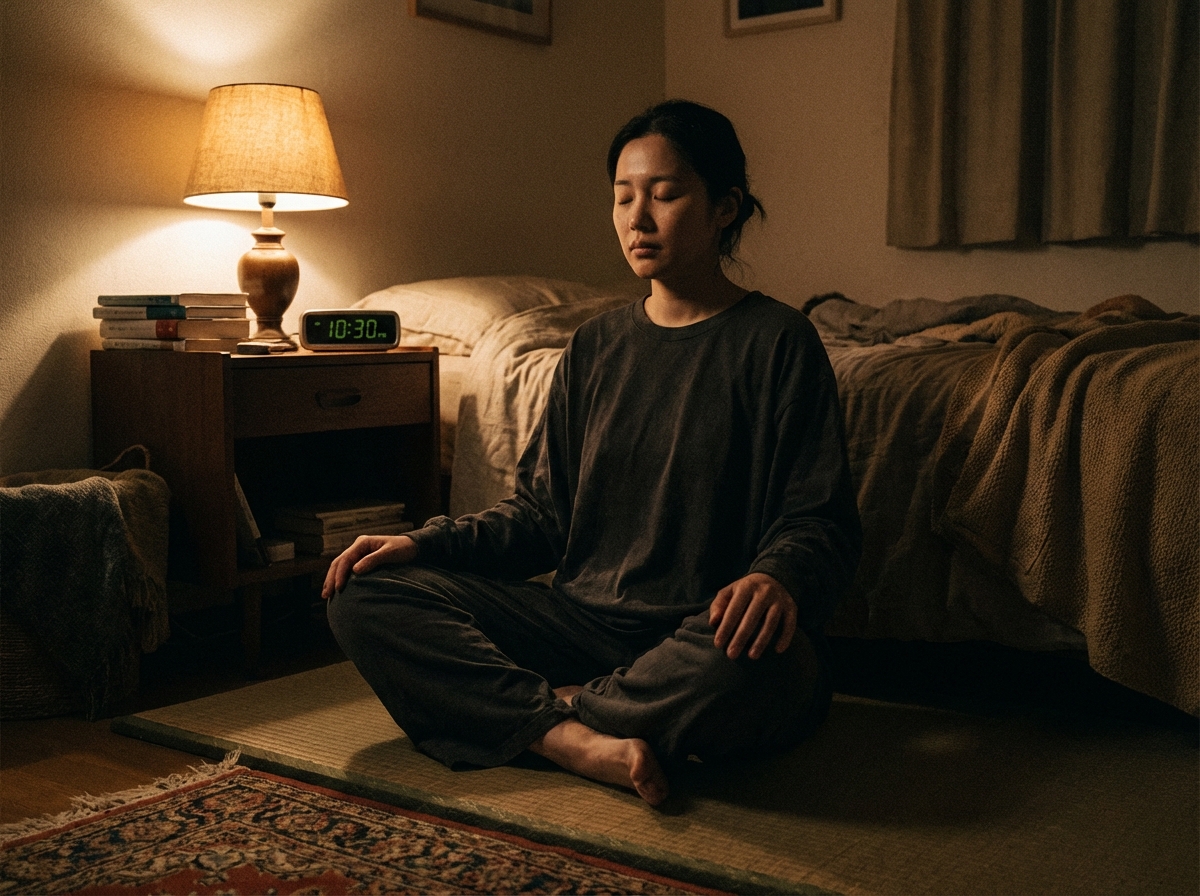
The qigong meditation approach here is fundamentally different. It works with breath and intention to anchor awareness in the body rather than the mind. Instead of watching thoughts, you give your attention a physical destination — a specific area of the body, a specific quality of sensation. The thought-stream doesn’t stop, but it loses the floor.
The repeat-session structure in the practice — running the same meditation once, twice, or three times in a single sitting — revealed something important: the second pass through is almost always deeper than the first. The first pass is your mind getting oriented. The second pass is where the actual settling happens. I now rarely do a single pass on nights when sleep feels genuinely far away.
The option to practice with or without Guqin music matters more than it sounds. Some nights the music helps because it gives your ear something to follow instead of internal chatter. Other nights silence works better because the music itself becomes something to pay attention to. Having both available means you can read the night and choose accordingly.
Building a Bedtime Routine That Your Body Actually Trusts
The full bedtime routine — movements, ear massage, meditation in sequence — becomes something different after a few weeks of consistency. It stops being a practice you do and starts being a signal your body reads.
Sleep hygiene as a concept usually gets reduced to a checklist: no screens, cool room, same bedtime. Those matter, but they address the environment. What the qigong routine addresses is the internal state you arrive at your pillow with. You can have a perfect sleep environment and still be internally wired. The routine is what shifts the internal state.
The holistic sleep hygiene approach that this practice builds includes the environment layer and the energetic layer — treating the bedroom as the final destination of a preparation process that starts thirty minutes earlier, not a space you simply enter and expect to switch off in.
After six weeks of a consistent routine, there was one night I skipped it entirely — just lay down out of tiredness. It took almost an hour to fall asleep. That was the moment I stopped thinking of the routine as something extra and started thinking of it as simply what sleep preparation means now.
Expanding the Practice Beyond Nighttime
One unexpected discovery: these techniques work during the day too, and not just as a nap aid. Midday stress — the 2pm spiral of a difficult meeting running on repeat — responds to even a five-minute version of the movement and ear massage sequence.
The underlying mechanism is the same regardless of time of day: scattered, rising energy being given a direction and a destination. The body doesn’t know it’s noon. It knows whether its qi is settled or not. This made the practice feel much more integrated into daily life rather than a bedtime-only ritual.
Taking the practice further in this direction — morning qigong for energy cultivation, midday reset routines, seasonal adjustments based on TCM principles — opens a much wider relationship with energy management. The sleep application is the entry point, but the underlying skill transfers broadly.
What to Do From Here
Do the full sequence in order, every time. Movements before ear massage before meditation — the order isn’t arbitrary, and shortcutting it produces a fraction of the result.
Practice at the same time each evening. Your nervous system learns from consistency of timing, not just consistency of content — the cue needs to arrive predictably to become automatic.
Use the music version for your first two weeks. Guqin removes the need to generate your own ambient calm — it does that work for you while you’re still learning the movements.
When meditation feels scattered, add a second pass. One run-through is orientation; two is where settling actually happens. Don’t mistake a busy first pass for the practice not working.
Give the ear massage full attention, not rush-through pressure. The warmth that moves inward is the signal you’re on the right points — that specific sensation is what you’re tracking, not coverage.
On nights you have five minutes, not thirty, do movements and one meditation only. A shortened version maintains the habit signal; skipping entirely breaks the pattern your body is learning to trust.
Notice which variation helps most — with or without music — and keep both available. Some nights your mind needs something to follow; other nights it needs space. Choosing wrong undermines an otherwise good session.
Track your first two weeks with a simple 1–10 sleep quality note. Not for data collection — for motivation. Seeing the trend moves you past the “I can’t tell if this is working” doubt that causes people to quit before the routine fully sets.
Leave a Reply