


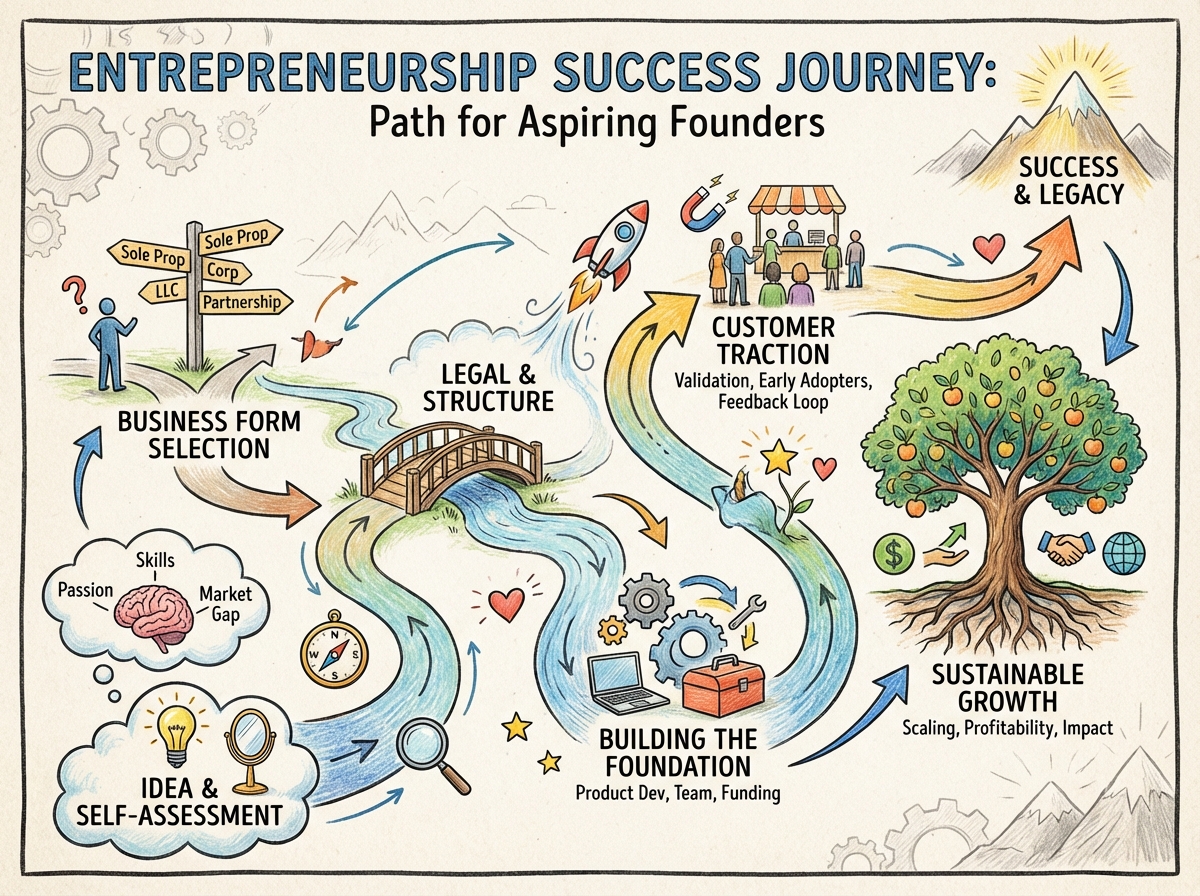
Starting a business when you have no real template for what you’re doing feels less like excitement and more like standing in a fog. You know roughly where you want to go, but every step forward reveals three more decisions you hadn’t thought about.
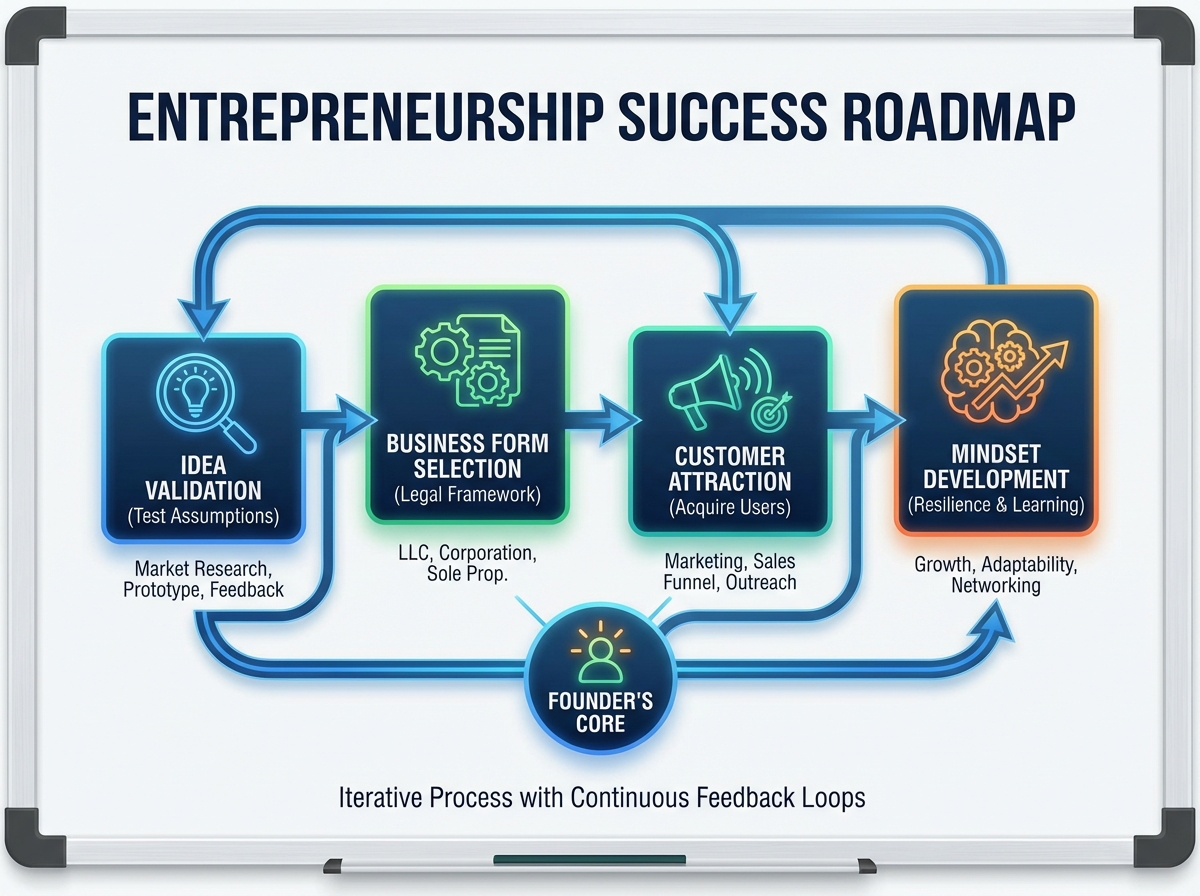
If you’re looking to learn entrepreneurship and build a business that actually survives past the first year, the path is less about secret formulas and more about understanding which fundamentals you’re currently ignoring. Entrepreneurship is the process of identifying a real problem, choosing the right structure to solve it, and building habits that keep you moving when the results aren’t visible yet. Most people who fail don’t fail because they lacked talent — they fail because they skipped the unglamorous groundwork.
- Choosing the wrong business form early can cost you in taxes, liability, and flexibility before you make your first sale
- The biggest predictor of early failure isn’t a bad idea — it’s not knowing your own strengths and blind spots as a founder
- Attracting customers is a skill with a specific process, not a result of simply “putting yourself out there”
What Entrepreneurship Actually Means (Before You Pick a Path)
Entrepreneurship is not just starting a company. It’s a specific orientation toward problems — you see gaps, you calculate whether filling them is worth the risk, and you build a system around the answer. An entrepreneur is someone who takes on that financial and operational risk deliberately, not by accident.
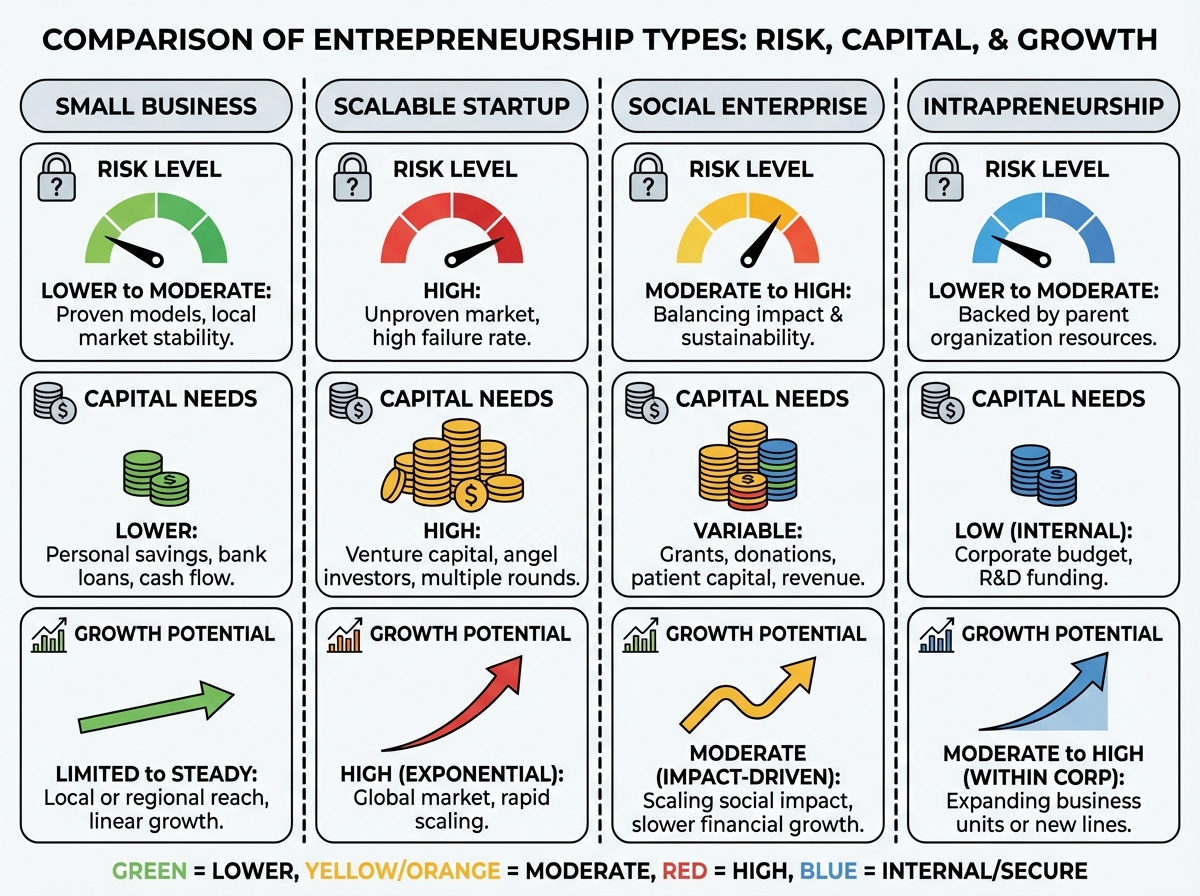
There are more forms than most beginners realize. Small business entrepreneurship focuses on local, sustainable revenue. Scalable startup entrepreneurship targets exponential growth with investor capital. Social entrepreneurship prioritizes impact alongside profit. Intrapreneurship operates inside an existing company, innovating from within. Each has a different risk profile, a different funding path, and a different definition of success — and picking the wrong one for your personality or resources is one of the most expensive early mistakes you can make.
Sharp insights worth holding onto:
- The form you choose for your business determines your legal exposure before you earn a dollar
- Most entrepreneurs pick their business model based on what sounds exciting, not what suits their capital and risk tolerance
- Understanding your own failure patterns is more valuable than any business tip you’ll ever read
How Long Does It Actually Take to Get Traction?
One of the most disorienting parts of starting out is that you have no honest timeline. Everyone tells you to be patient, but no one tells you what patient actually looks like in weeks.
| Stage | What You’re Actually Doing | Estimated Time |
|---|---|---|
| Concept & Self-Assessment | Clarifying your idea, identifying strengths/weaknesses, choosing a business form | 2–4 weeks |
| Foundation Building | Business plan, legal structure, initial product or service definition | 4–8 weeks |
| Customer Attraction | First outreach, early sales conversations, iterating on offer | 6–12 weeks |
| Stabilization | Repeatable revenue, systems in place, team or process clarity | 3–6 months |
| Total to Real Traction | 6–12 months minimum |
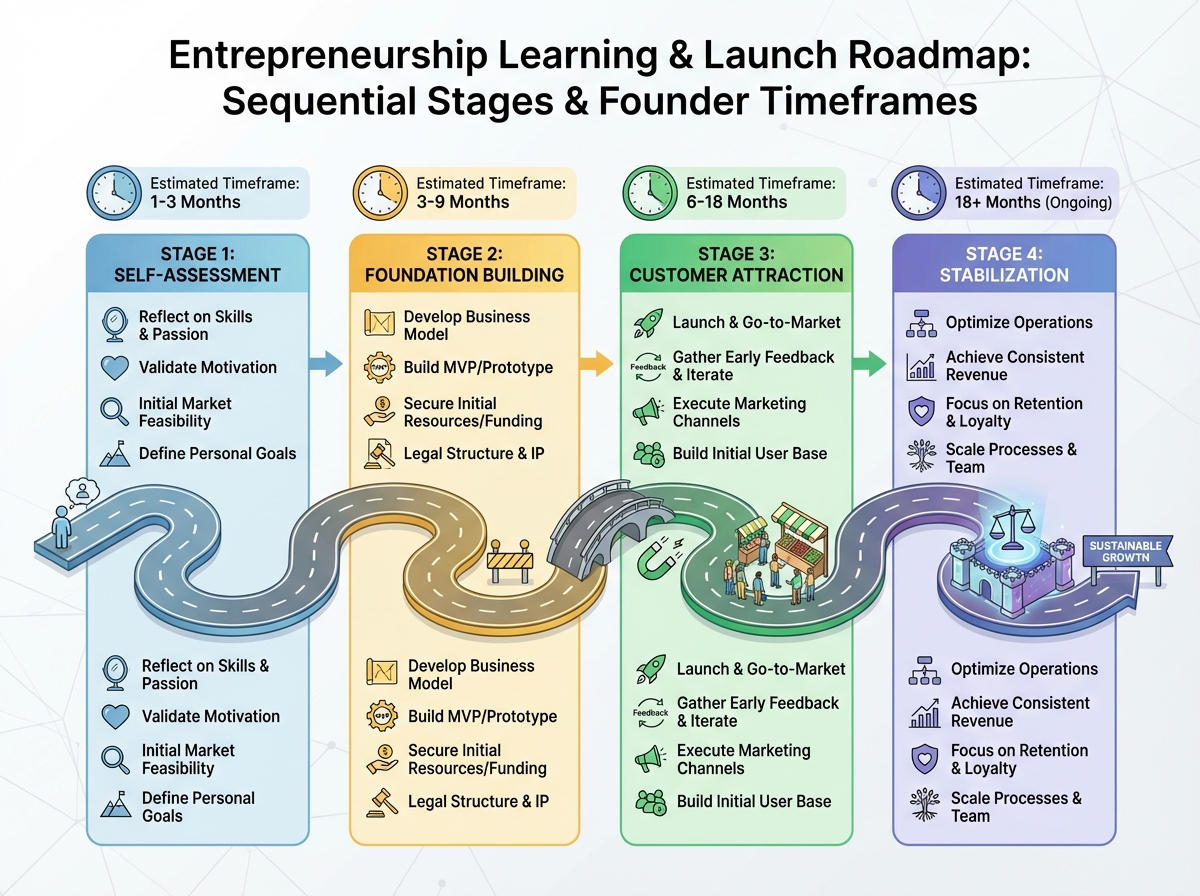
The order you move through these stages matters more than how fast you get through them. Rushing past self-assessment to get to marketing is how you end up building the wrong thing for the wrong customer at the wrong price. And if your timeline runs longer than this estimate — it’s not a sign you’re failing. It’s almost always a sign you’re being more honest about what you’re building.
The Mistake That Kills Most Startups Before They Start
The single biggest mistake people make when starting out in entrepreneurship is treating the idea as the finished product. They fall in love with what they’ve built in their head, pitch it to people who are too polite to be honest, and interpret silence as agreement.
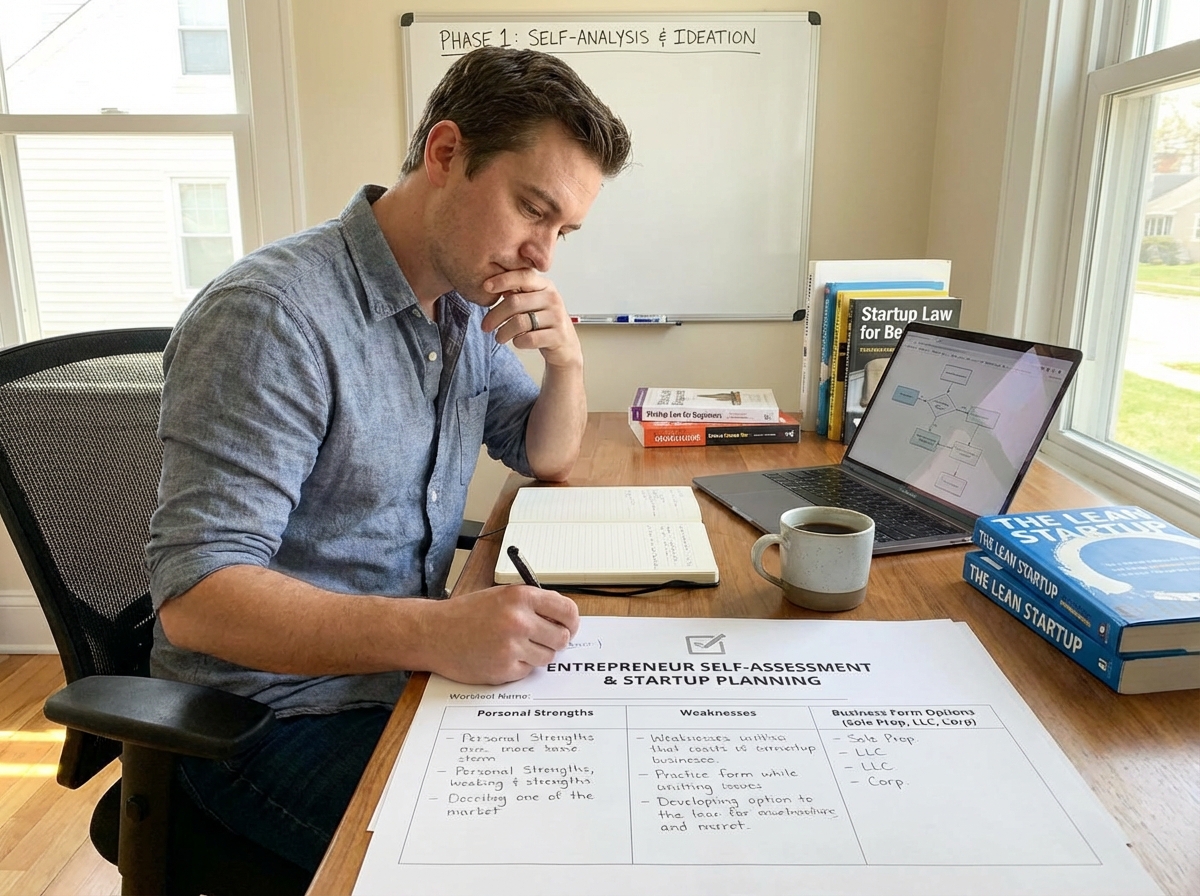
Real entrepreneurship tips for beginners almost always circle back to the same uncomfortable truth: you have to stress-test your assumptions before you spend money on them. That means talking to people who have no reason to be kind to you. It means finding one person who would genuinely pay for what you’re describing — not say they would, but actually hand over money. That gap between “sounds interesting” and “here’s my card” is where most startup ideas die.
The reason this mistake is so common is that analysis feels like progress. You can spend weeks on a business plan that gives you a sense of momentum without ever validating whether the core premise holds. Planning is only productive once you’ve confirmed there’s a real problem. Until then, it’s just organized optimism.
Picking the Right Form of Entrepreneurship for Your Situation
Most people assume they should either start a sole proprietorship because it’s simple or launch a company because it sounds serious. Neither instinct is wrong — but neither is automatically right, and the stakes are higher than they look.
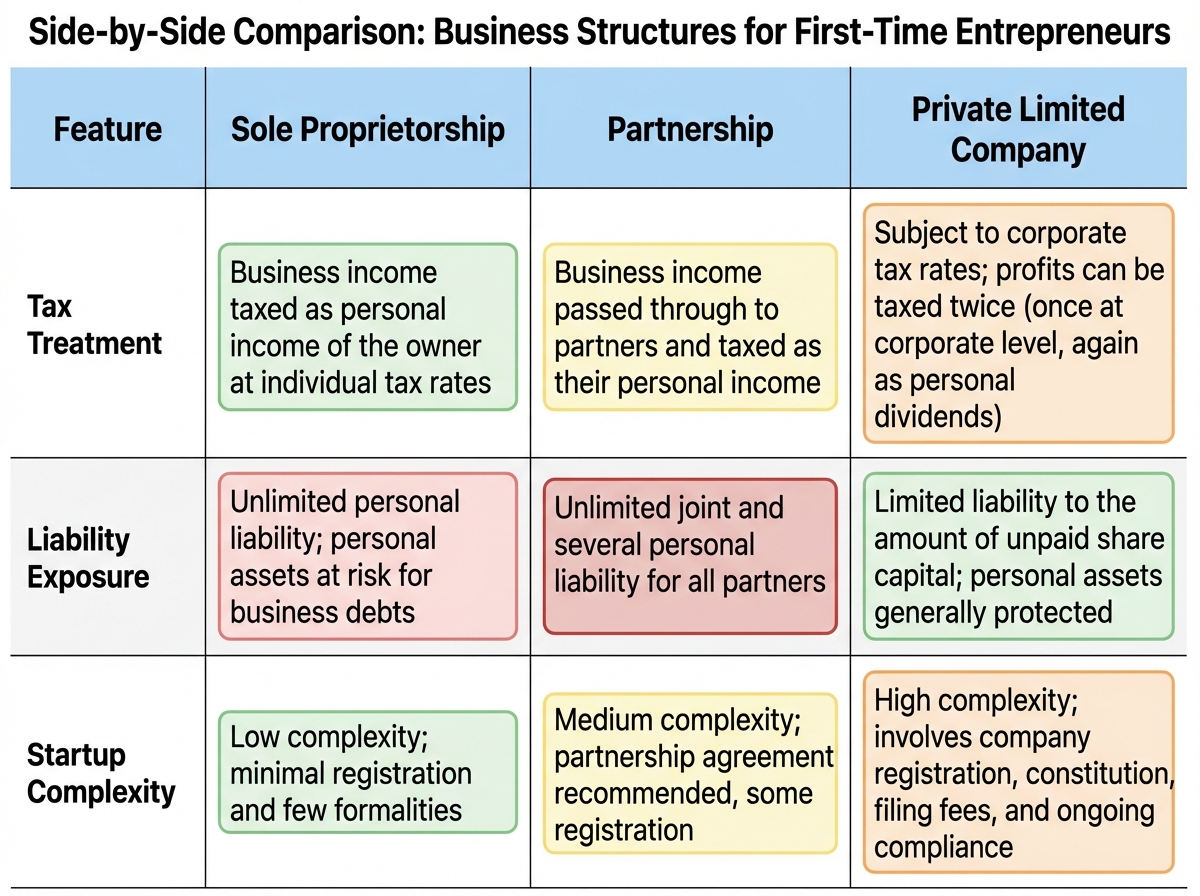
A sole proprietorship gives you speed and simplicity, but it offers zero separation between your personal finances and your business debts. A partnership creates shared accountability but also shared liability — and most partnerships fail not because the business fails, but because the founders never aligned on what “success” actually means for each of them. A private limited company adds credibility and liability protection but comes with administrative overhead that can swallow a solopreneur’s productive hours in year one.
The practical question isn’t which form sounds best. It’s: what’s the worst-case scenario for each form, and can you survive it? The entrepreneurs who choose their structure well are rarely the most legally savvy — they’re usually the ones who were honest about their risk tolerance before they made the decision.
What Successful Entrepreneurs Actually Do Differently
There’s a version of entrepreneurship advice that sounds profound and means nothing: “Stay hungry.” “Embrace failure.” “Think big.” None of that tells you what to do on a Tuesday morning when your last two outreach emails went unanswered and your cash runway is shrinking.

What actually separates entrepreneurs who build something real from those who stay stuck in the planning stage is a much more granular set of habits. They track where their customers come from — not vaguely, but specifically. They know which conversation type converts and which wastes time. They have a short list of things they will not compromise on and a longer list of things they’re genuinely willing to change. This is what entrepreneurial traits actually look like in practice — not boldness, but disciplined self-awareness applied to a real business problem.
The tips for success in entrepreneurship that hold up across industries are almost all about information hygiene. Know your numbers. Know your customer’s actual objection, not the polite version they gave you. Know where your energy goes versus where it should go. The entrepreneurs who figure this out in year one operate at a different level than those who are still guessing in year three.
How to Attract Customers When You’re Starting From Zero
Attracting customers is where most how-to-succeed-in-entrepreneurship conversations fall apart, because the advice gets vague exactly when specificity matters most.
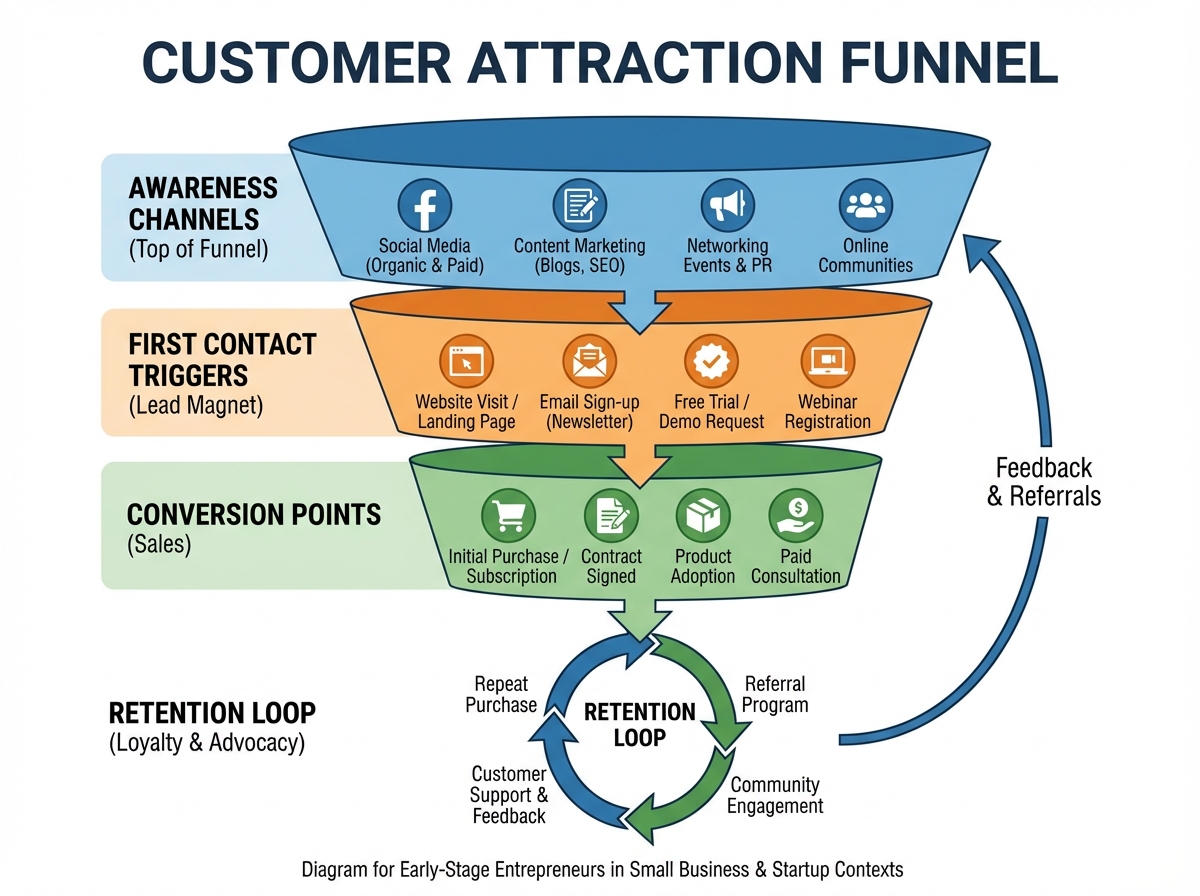
The practical version: your first ten customers almost never come from marketing. They come from direct conversations with people who have the problem you’re solving. That means identifying five to ten people who fit your target profile, having real conversations with them — not pitches, conversations — and listening for the language they use to describe their problem. That language becomes your copy, your positioning, and eventually your marketing. Skipping this step and going straight to ads or social content is how you end up producing content that nobody engages with.
Once you have a repeatable pattern — a message that lands, a follow-up that converts, an offer that people actually buy — then you scale it. Not before. The entrepreneurs who try to scale before they have a working process don’t get more customers. They get more expensive rejection.
The Moment Your Entrepreneurship Mindset Has to Shift
There’s a specific transition in the entrepreneurship journey that most people aren’t prepared for. It happens around the time your initial energy runs out and the results aren’t yet visible. You haven’t failed — but you haven’t succeeded either, and you have to keep going on nothing but your own conviction.
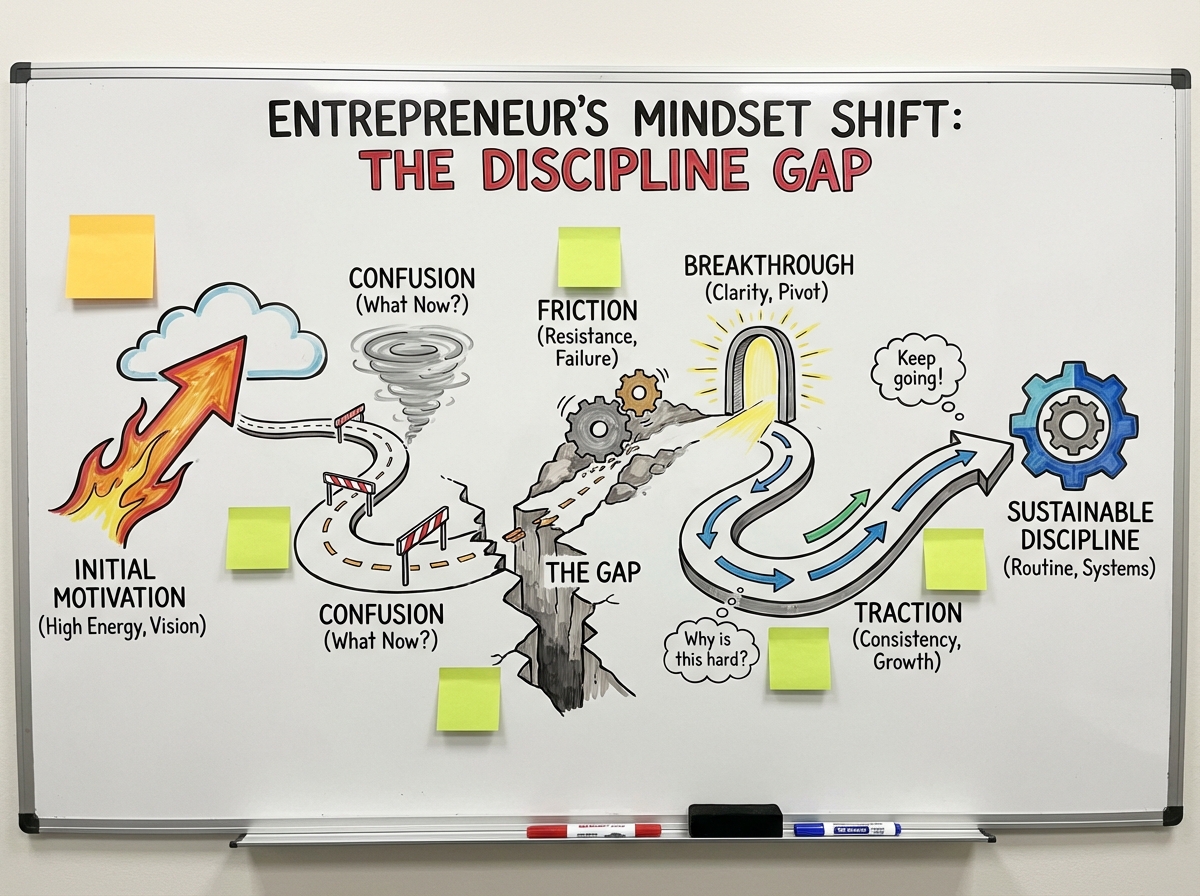
This is where having done the self-assessment work earlier pays off. If you know your strengths — genuinely know them, not just listed them on a worksheet — you have a specific set of activities to lean into when everything else feels uncertain. If you’ve mapped your weaknesses honestly, you know which gaps to address and which to outsource or partner around rather than pretend they don’t exist.
The entrepreneurs who get through this phase aren’t necessarily more resilient by nature. They’ve usually just built a clearer operating model for themselves early on. They know what they’re good at, they know what drains them, and they’ve structured their days around that knowledge rather than against it.
What I’d Tell Myself Before Starting
Looking back, the things that mattered weren’t the ones that got the most attention in the early days. The business form mattered more than the logo. The first five customer conversations mattered more than the website. Knowing my own failure patterns mattered more than any external business tip I collected.
Here’s what to do immediately, based on everything above:
- Run a brutal self-assessment before you spend any money. List your actual strengths and real weaknesses — not aspirational versions. Your business model should be built around the former and structured to compensate for the latter.
- Choose your business form based on worst-case scenarios, not best-case ones. Ask what happens to your personal finances if the business fails in form X. That answer should drive the decision.
- Talk to ten real potential customers before you write a single line of marketing copy. The language they use to describe their problem is more valuable than any positioning workshop.
- Track one specific metric that tells you whether customers are moving toward a purchase. Not followers, not page views — a number that directly correlates with revenue.
- Define what failure looks like with a deadline. If you haven’t hit a specific milestone by a specific date, you need to change something — your offer, your target customer, or your form. Vague persistence is not a strategy.
- Build your schedule around your highest-value tasks during your highest-energy hours. Most founders waste their sharpest thinking on admin and save their tired hours for strategy. Reverse it.
- Revisit your business form choice at six months. What started as a sole proprietorship for simplicity may need to become a limited company for credibility or liability protection as you grow.
- When a sales conversation doesn’t convert, ask why — out loud, to the person. Most founders accept polite rejections without digging. One honest “why not” is worth twenty new leads.
Leave a Reply