


The first time I seriously looked into naturopathy, I had a browser full of contradictory tabs and zero idea where to start. Some pages talked about herbs, others about fasting, a few about something called “vital force” that sounded either profound or completely made up. I closed the laptop and made tea — which, as it turned out, was more naturopathic than anything else I’d read that day.
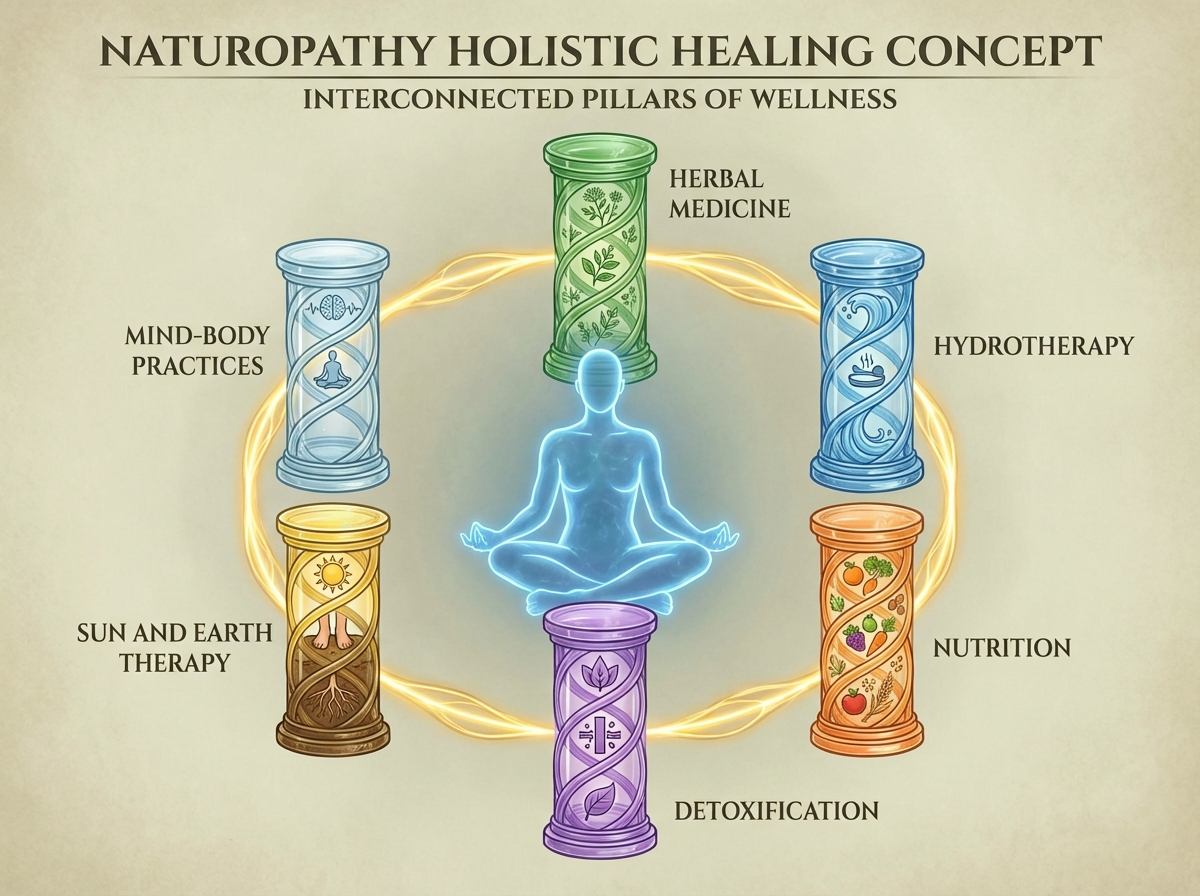
If you’re looking to learn naturopathy as a beginner, the clearest entry point is this: naturopathy is a complete health system built on the idea that the body already knows how to heal — it just needs the right conditions. That means food, water, sunlight, rest, herbs, emotional balance, and the removal of whatever is getting in the way. It is not a supplement to conventional medicine, and it is not a collection of random wellness tips. It is a coherent philosophy with specific techniques that have been applied, tested, and refined over more than a century.
- If you’ve never studied natural health before, you can still apply naturopathy principles in your home within days of learning them
- The biggest results come not from adding new supplements, but from removing the lifestyle patterns that are depleting your body’s natural healing capacity
- Naturopathy covers everything from what you eat to how you breathe — but the entry point that changes most people is understanding why they feel chronically unwell despite doing everything “right”
What Naturopathy Actually Means for Someone Just Starting Out
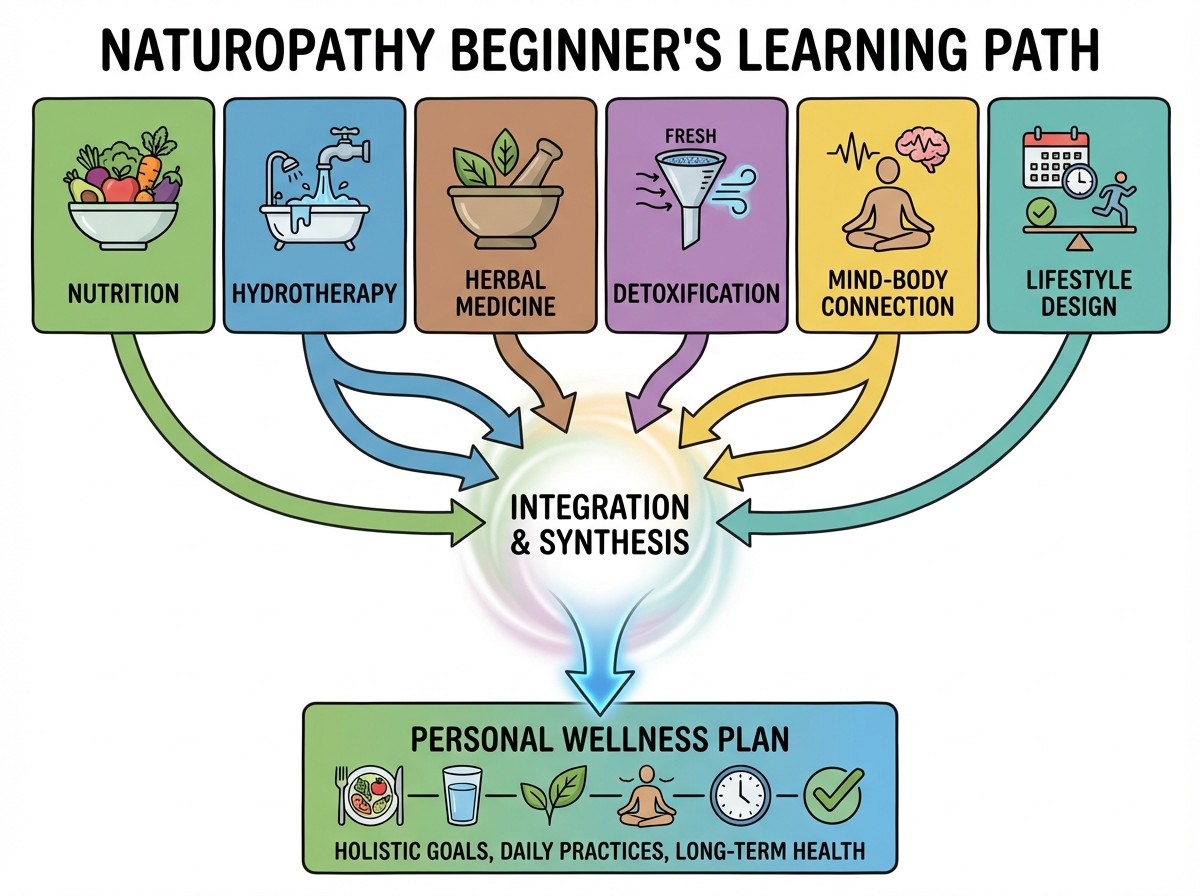
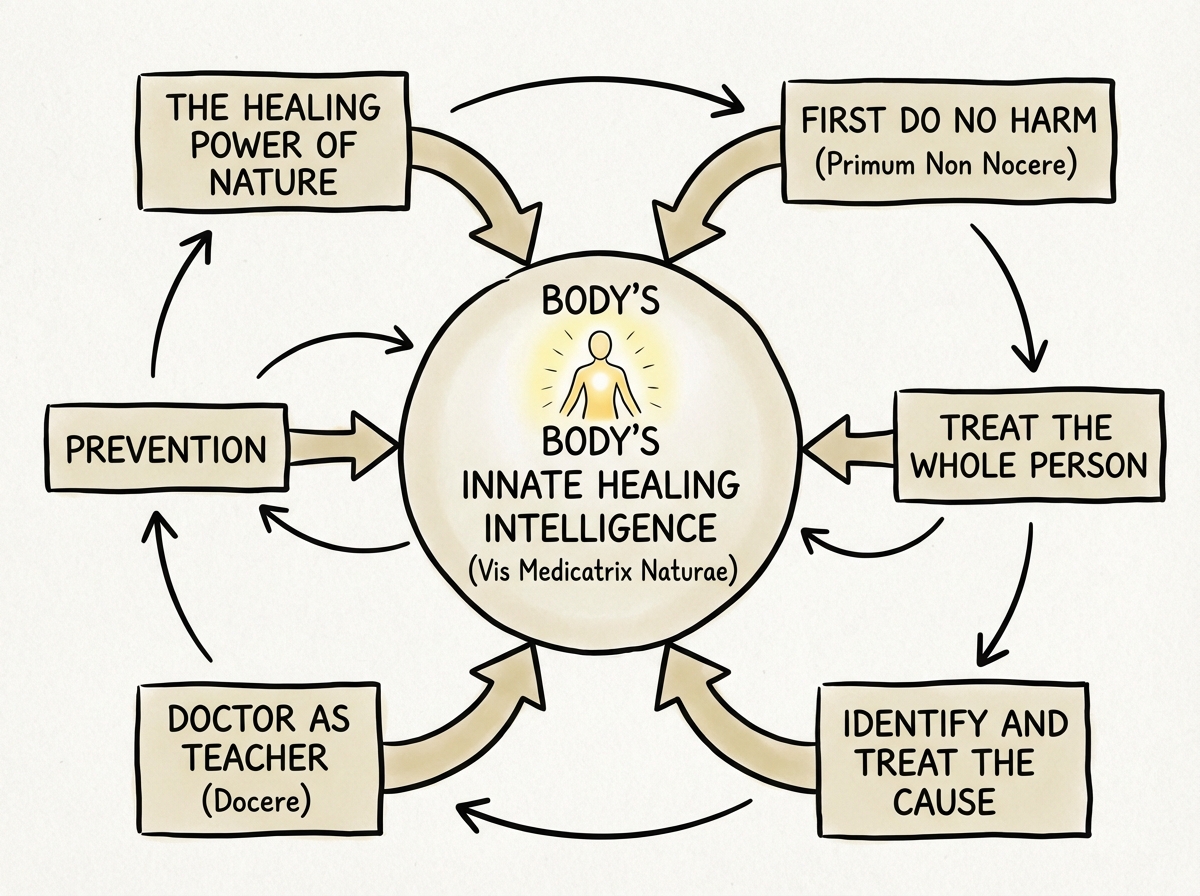
Naturopathy is a holistic healing system that treats the whole person — body, mind, and environment — rather than isolating symptoms for suppression. For a beginner, the most practical way to understand it is through its six core principles: the healing power of nature, identifying and treating the root cause, doing no harm, treating the whole person, prevention as the priority, and educating the individual to take ownership of their health. These aren’t taglines. They’re the filter through which every decision in naturopathy gets made.
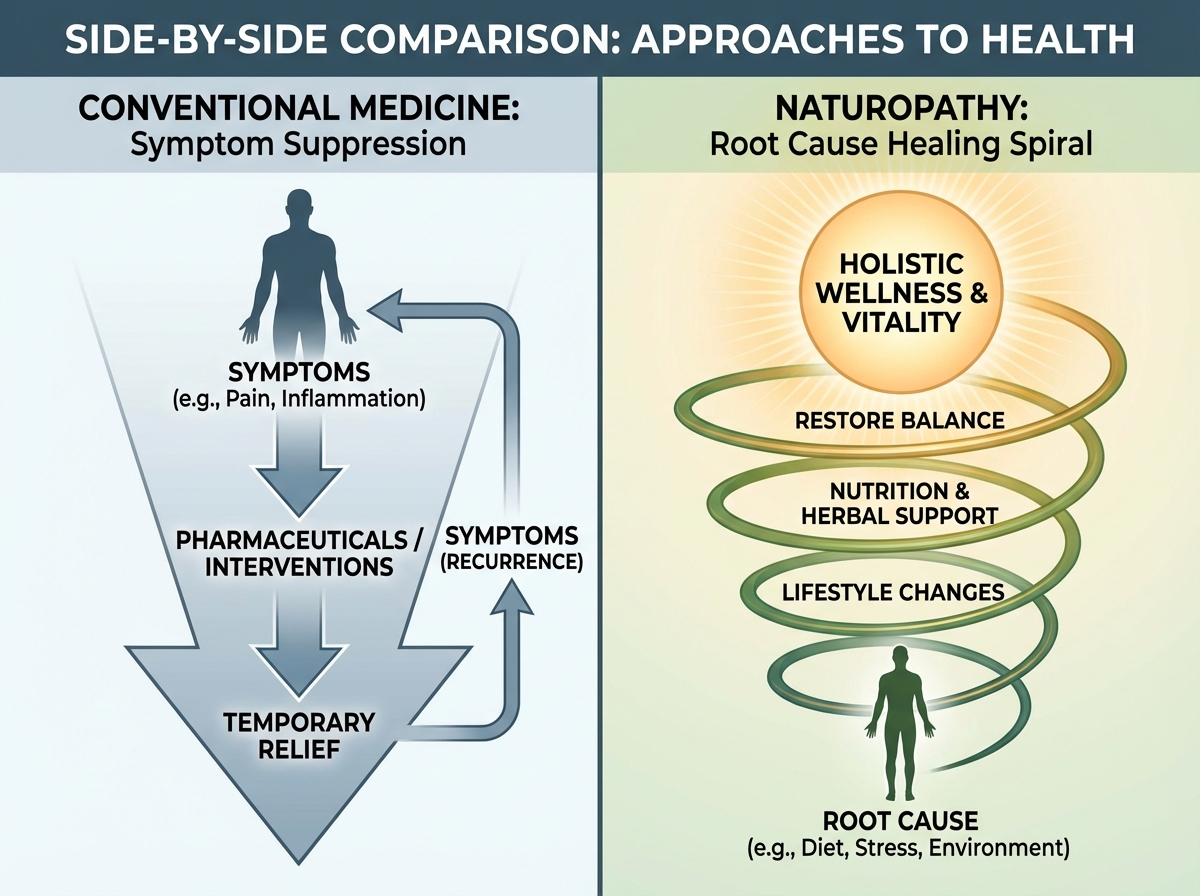
The difference between naturopathy and general wellness advice is structure. Wellness content online is fragmented — a detox tip here, a breathing exercise there. Naturopathy ties all of it together into a coherent system where each element supports the others. When you understand the philosophy behind why you’re doing something — why earthing affects inflammation, why fasting supports liver function, why breathwork shifts the nervous system — you stop guessing and start making deliberate choices.
| Approach | Focus | Tools Used |
|---|---|---|
| Conventional medicine | Symptom management | Pharmaceuticals, surgery |
| General wellness | Lifestyle optimization | Fitness, nutrition habits |
| Naturopathy | Root-cause healing, whole-person | Herbs, hydrotherapy, detox, nutrition, mind-body |
Three things that surprise every beginner:
- Water is one of naturopathy’s most powerful therapeutic tools — not a background detail
- Sun exposure is a formal naturopathic therapy with specific protocols, not just a feel-good habit
- Your emotional state directly determines how efficiently your body detoxifies
How Long Does It Actually Take to Learn Naturopathy Foundations?
| Stage | What You’re Working Through | Estimated Time |
|---|---|---|
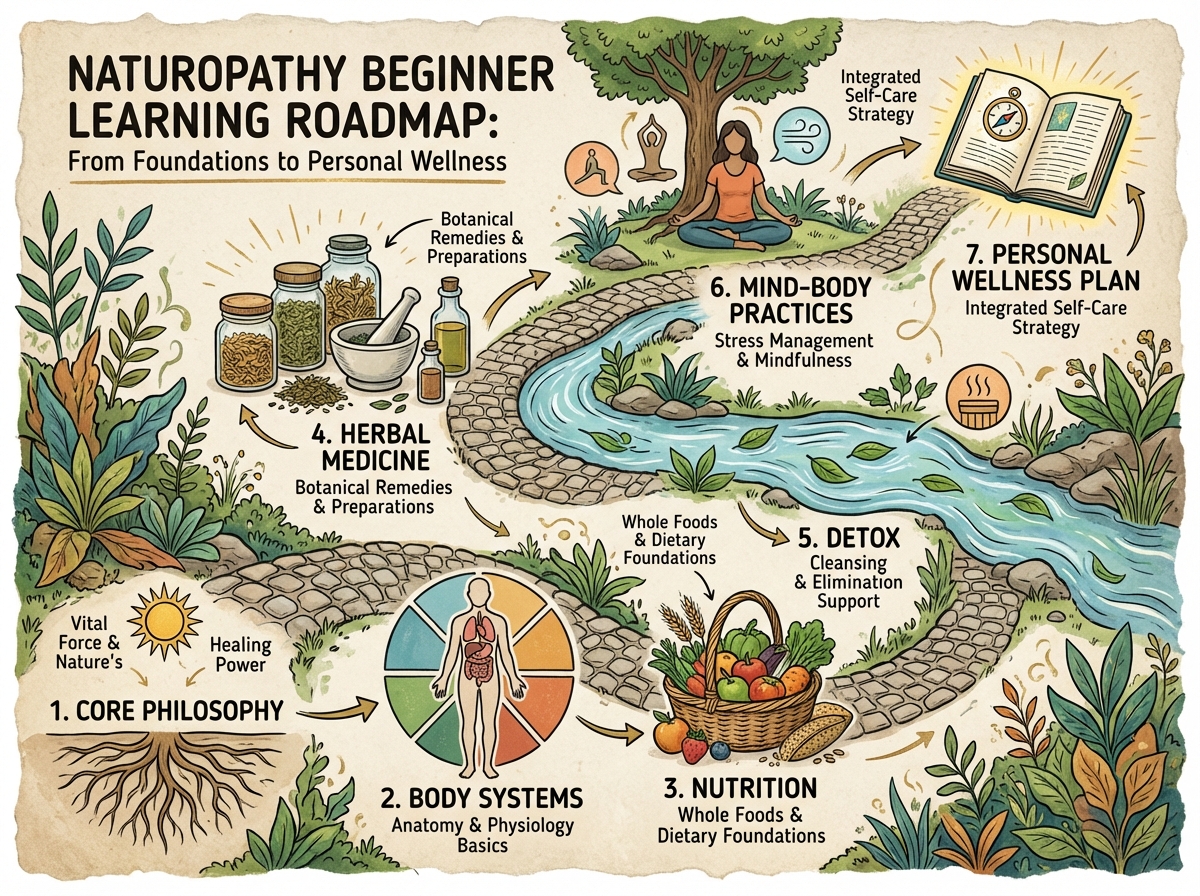
| Core philosophy | Six principles, vital force, healing intelligence of nature | 1–2 days |
| Body systems | Digestive, immune, nervous, circulatory — naturopathic view | 2–3 days |
| Nutrition & diet | Food as medicine, anti-inflammatory eating, hydration | 3–4 days |
| Herbal medicine basics | Key herbs, teas, home remedies, safe application | 2–3 days |
| Detoxification | Toxin overload signs, gentle cleansing methods, detox recipes | 2–3 days |
| Mind-body practices | Breathwork, meditation, grounding, aromatherapy | 2–3 days |
| Personal wellness plan | Applying all principles to your specific life | 2–4 days |
| Total | Full foundation understanding | 2–3 weeks |
The order you learn these in matters far more than how fast you move through them — trying to build a detox protocol before you understand the six principles is like repainting a house with a cracked foundation. And if it takes you a month instead of two weeks, you’re probably doing the harder, more honest work of actually applying it as you go.
The Moment the Philosophy Stops Being Abstract
The hardest part of starting with naturopathy isn’t the information — it’s the mental shift. Most of us have spent years thinking about health in terms of fixing problems after they appear. Naturopathy asks you to think in terms of conditions: what conditions does this body need to regulate itself, and what conditions am I currently creating that prevent that?
The concept of “vital force” is where this shift either clicks or stalls. It sounds mystical until you frame it correctly: it’s the body’s innate regulatory intelligence — the same intelligence that closes a wound, fights off a cold, or adjusts your heart rate when you stand up. Naturopathy is built on the premise that supporting this intelligence, rather than overriding it, produces durable health outcomes. Once that premise lands, the rest of the system makes immediate sense.
The six principles of naturopathy then stop being a memorization list and start functioning as a decision-making lens. “Do no harm” means choosing the least invasive intervention first. “Treat the cause” means asking what created the symptom, not what will quiet it. This is the framework that separates naturopathy from wellness trends — it gives you a way to evaluate any health choice, not just the ones explicitly listed in a curriculum.
Where Beginners Almost Always Go Wrong First
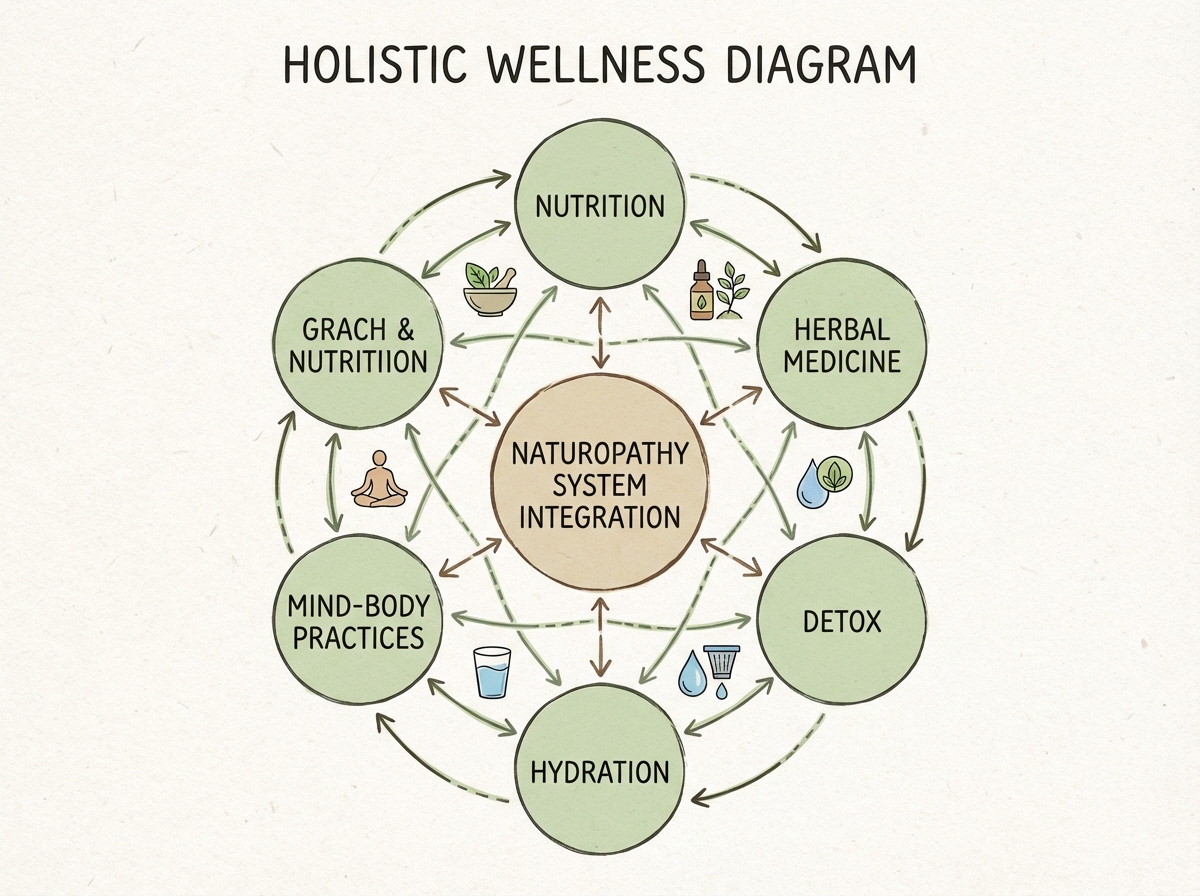
The single biggest mistake people make when learning naturopathy is treating it like a menu — picking the detox recipe they like, skipping the nutrition section because they think they already eat well, and completely ignoring the mind-body material because it feels soft. What they end up with is a disconnected set of techniques that don’t reinforce each other, and when results are slow, they conclude naturopathy doesn’t work.
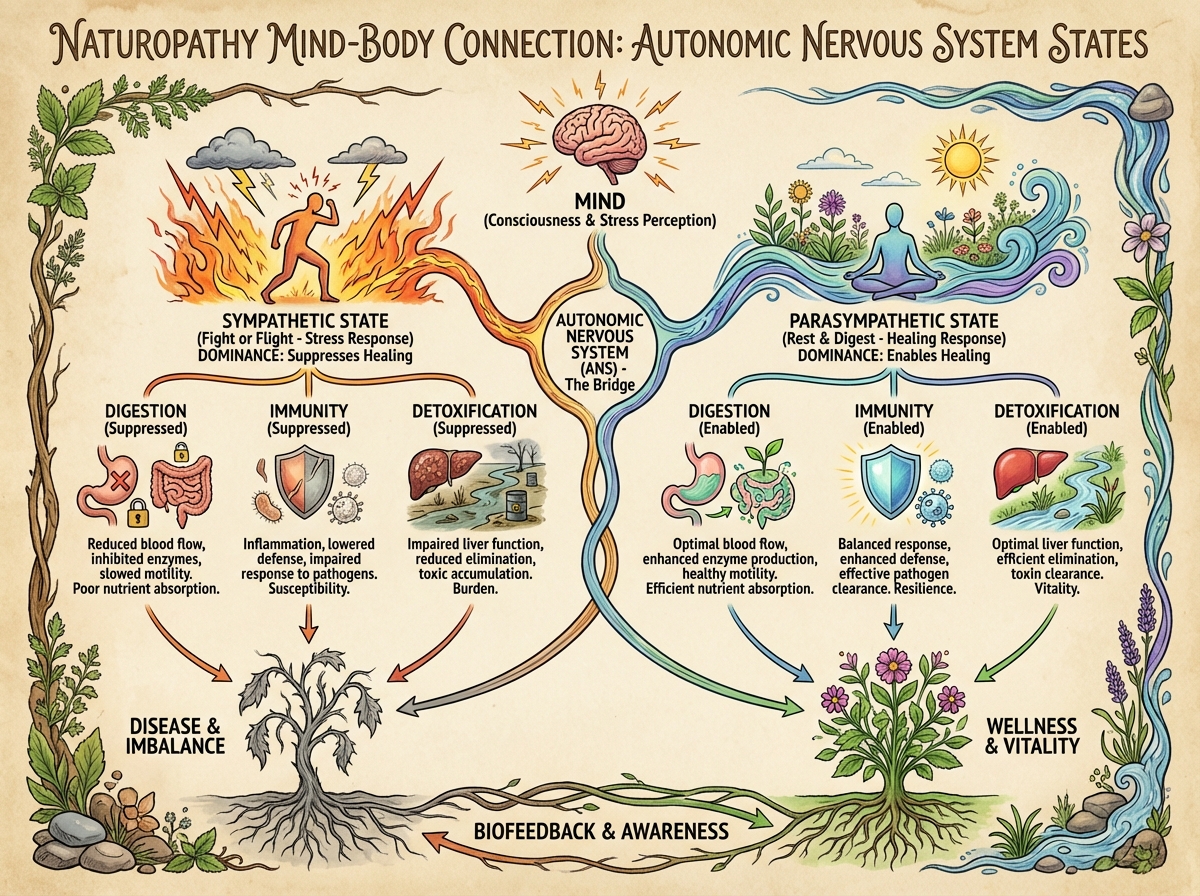
Naturopathy is a system, not a buffet. The herbs only perform the way the literature suggests when the digestive terrain is prepared through diet. The detox protocols are safer and more effective when the elimination pathways — liver, kidneys, skin, lungs — are already being supported by hydration and sleep. The breathwork isn’t optional emotional content; it’s what shifts the nervous system from sympathetic dominance (where digestion and detoxification are suppressed) to parasympathetic function (where healing actually happens).
The second mistake is expecting dramatic early results and abandoning the process when the first week feels unremarkable. Naturopathy works at the level of physiological terrain — it’s changing the conditions, not producing a drug-like response. The changes that matter most in the first few weeks are usually invisible: improved bile flow, reduced systemic inflammation, better sleep architecture, more stable blood sugar. You don’t always feel these directly. But they are the foundation everything else is built on.
What Hydrotherapy and Sun Therapy Taught Me That Nothing Else Did
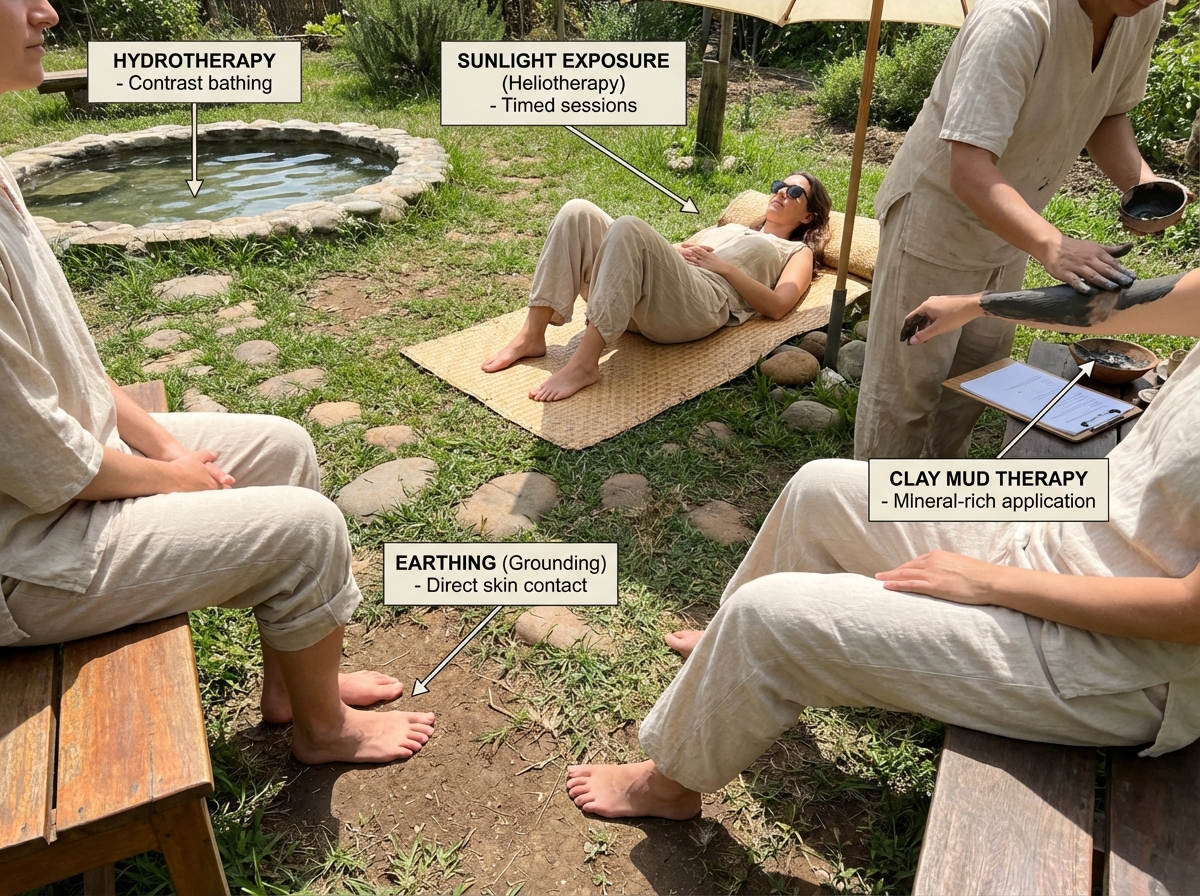
I didn’t take water seriously as a therapeutic tool until I started applying it deliberately. Naturopathy’s approach to water isn’t about hitting eight glasses a day — it’s about using water temperature, timing, and method as an active intervention. Cold water applied to specific areas after heat exposure increases circulation and stimulates lymphatic movement in ways that no supplement I’ve tried has matched for speed of effect.
Sun therapy in naturopathy is similarly misunderstood by beginners. It’s not “go outside more.” It has protocols: specific exposure windows, duration based on skin tone and season, positioning for maximum therapeutic benefit, and pairing with grounding (direct contact with earth) to amplify the physiological response. Earth walking — barefoot contact with natural ground — isn’t a poetic gesture. There’s real electrophysiology behind it, and naturopathy treats it as a formal recovery tool.
Mud therapy follows the same logic. Clay applied to the body draws out metabolic waste through the skin while simultaneously delivering minerals. It sounds premodern until you understand that the skin is a major elimination organ and that conventional personal care products actively block its function. Naturopathy doesn’t ask you to romanticize these therapies. It asks you to understand the mechanism — and once you do, they stop feeling alternative and start feeling obvious.
How Herbal Medicine Fits Into the Naturopathic Framework
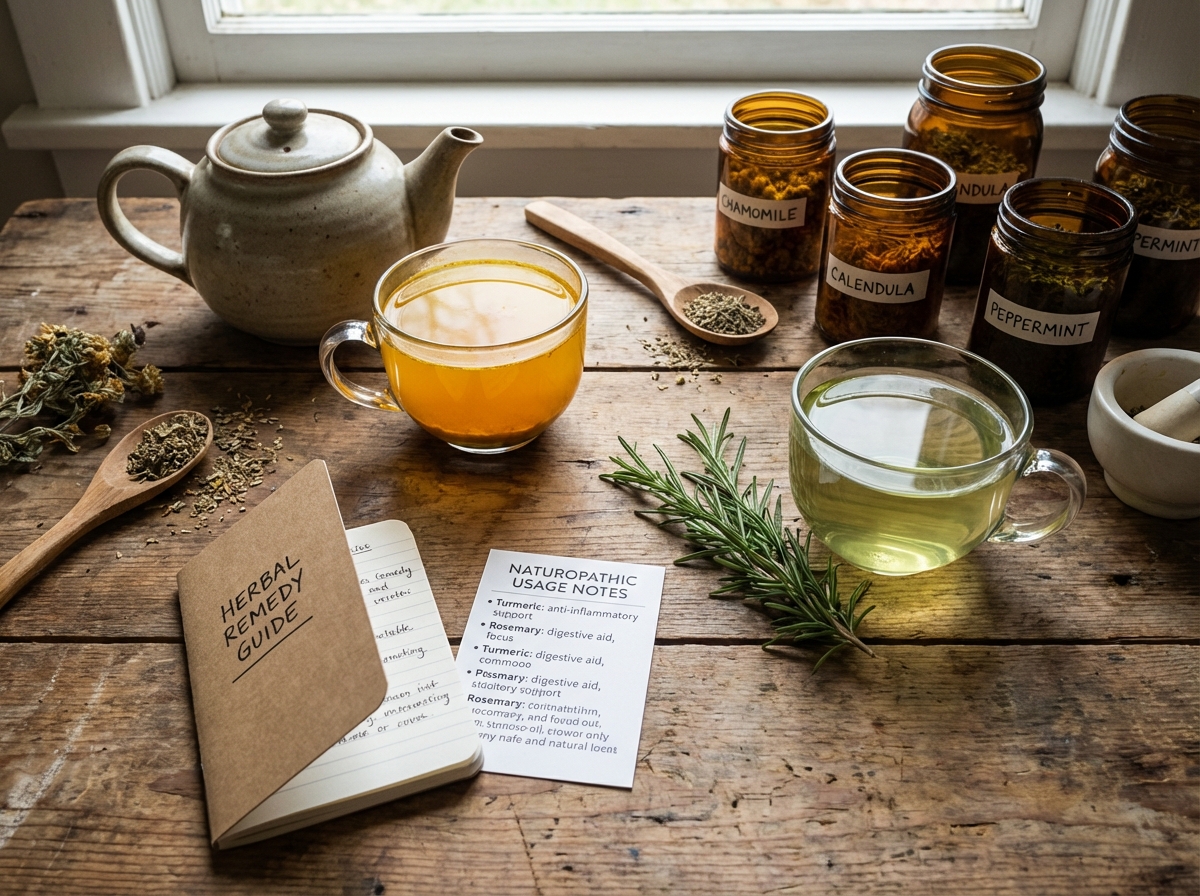
Herbal medicine in naturopathy is not herbalism. That’s an important distinction. Herbalism is the study of plants as therapeutic agents in their own right. Naturopathy uses herbs as one tool within a larger system — selected to support specific body functions, improve elimination, reduce inflammation, or regulate the nervous system, always in the context of the full picture of what that person needs.
For a beginner, the entry point is kitchen herbs and simple teas. Turmeric for its anti-inflammatory activity on the liver and gut lining. Rosemary for circulation and cognitive function. Ginger for digestive motility and nausea. These aren’t exotic — they’re accessible, safe at normal culinary doses, and effective when used consistently rather than occasionally. The naturopathic herbal toolkit starts with what’s already in most kitchens and expands from there.
The deeper learning comes when you understand how herbs interact with body systems rather than treating single symptoms. An adaptogenic herb like ashwagandha isn’t useful because it reduces cortisol in isolation — it’s useful because it supports adrenal function within a pattern of chronic stress that also affects digestion, sleep, and immune regulation. That systemic thinking is what distinguishes a naturopathic herbal approach from buying whatever supplement has good reviews.
Detoxification: What It Actually Involves and What Most People Get Wrong
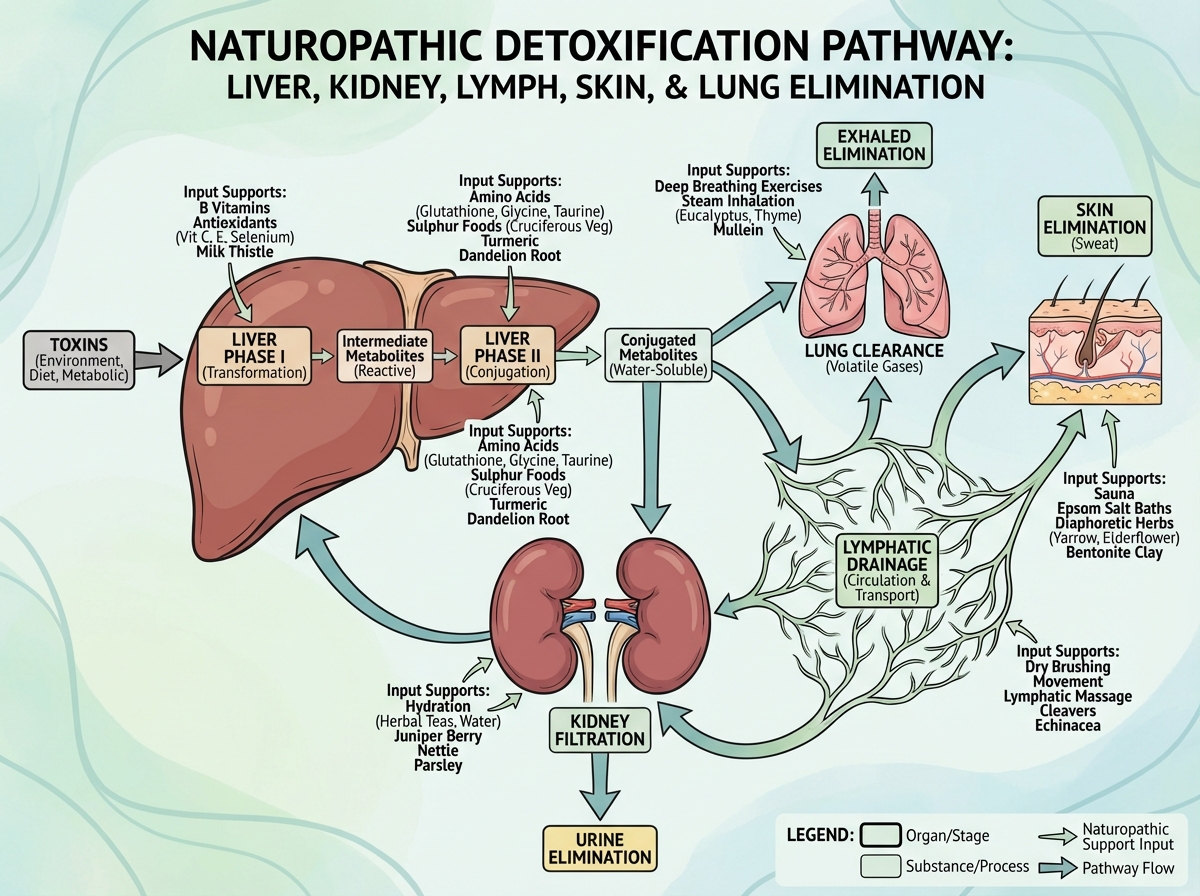
Detoxification in naturopathy is not a juice cleanse. It is the deliberate, sequenced support of the body’s primary elimination pathways so they can process and expel metabolic waste and environmental toxins at their full capacity. The liver processes toxins in two phases. The kidneys filter blood continuously. The lungs eliminate volatile compounds with every exhale. The skin secretes through sweat. Naturopathy works on all of these simultaneously — and the protocol matters.
Signs of toxin overload that naturopathy teaches you to recognize include chronic fatigue that sleep doesn’t fix, skin eruptions especially around the chin and forehead, brain fog that worsens after meals, joint pain without injury, and a coating on the tongue in the morning. These aren’t random symptoms. They’re the body’s attempt to eliminate through secondary channels when the primary ones are overwhelmed. Recognizing this pattern is a foundational naturopathic skill.
The most effective naturopathic detox approaches for beginners are also the gentlest: structured hydration with minerals, fiber-rich foods that bind toxins in the gut, light fasting windows that allow the liver to complete its processing cycles, and sweating protocols that activate the skin as an elimination organ. The fruit detox water and herbal teas aren’t decorative — they’re calculated inputs. Lemon stimulates bile. Cucumber supports kidney filtration. Mint aids intestinal motility. Every ingredient has a function.
The Mind-Body Work You Can’t Skip
Every naturopathic practitioner eventually learns that the nervous system state governs everything else. You can have a perfect diet, optimal hydration, and a solid herbal protocol — and still not heal if the autonomic nervous system is spending the majority of its time in sympathetic activation. Chronic stress doesn’t just feel bad. It actively suppresses digestion, elevates cortisol to levels that damage gut lining integrity, and shunts blood away from organs of elimination.
Breathwork is the fastest-acting naturopathic intervention for shifting nervous system state, and it’s available at zero cost, any time, anywhere. Box breathing — four counts in, four counts hold, four counts out, four counts hold — activates the vagus nerve and produces measurable parasympathetic response within minutes. It’s not a relaxation technique in the soft sense. It’s a physiological intervention with a clear mechanism.
Meditation and journaling serve a different function in naturopathy: they create the reflective space required to identify the emotional and behavioral patterns that keep driving the same physical symptoms. Many people in naturopathy discover that their chronic digestive issues correlate with specific relationship dynamics, or that their skin flares track against work stress cycles. This is the mind-body connection made specific, not philosophical — and it’s where a personal wellness plan becomes genuinely personal rather than generic.
Building a Wellness Plan That Actually Reflects Your Life
The personal wellness plan is where naturopathy stops being study material and becomes lived practice. Most people skip the planning step or treat it as homework — they fill in a template without the self-assessment work that makes the plan accurate. The result is a wellness plan that looks like everyone else’s, which means it addresses no one in particular.
An effective naturopathic wellness plan starts with honest assessment: current diet patterns, sleep quality, stress frequency, digestive function, energy levels through the day, emotional triggers, and environmental exposures. From that inventory, priorities become obvious. Someone with consistently poor morning energy and chronic skin issues has different priorities than someone managing anxiety and irregular digestion. Naturopathy is personalized medicine — the plan is the mechanism of personalization.
The practical structure of a basic naturopathic wellness routine includes morning hydration with lemon before food, a movement or grounding practice outdoors, meals built around whole foods with an anti-inflammatory focus, an herbal tea protocol matched to current symptoms, an evening breathwork or meditation practice, and consistent sleep timing. None of these are optional extras. Each one addresses a different system, and together they create the compounding conditions in which the body can regulate itself.
Looking back from a point of actual practice, the thing that surprises me most about naturopathy is how quickly it stops feeling like something you’re doing and starts feeling like something you simply are. The food choices, the morning routines, the way you respond to stress — they restructure themselves around a different understanding of what health actually requires. That shift doesn’t happen by reading about naturopathy. It happens when you try one thing, notice the result, and start trusting the system enough to go deeper.
Here’s what to do right now, specifically:
- Start your morning with 500ml of room-temperature water before anything else — this activates kidney filtration and supports liver function during its most active overnight processing window
- Replace one meal this week with a whole-food, anti-inflammatory plate — leafy greens, a quality protein source, a fat like avocado or olive oil, and no processed ingredients; notice your afternoon energy within three days
- Practice box breathing for five minutes before any meal — this shifts your nervous system into the parasympathetic state where digestion and nutrient absorption actually function properly
- Walk barefoot on natural ground for ten minutes daily — grass, soil, or sand; this is earthing, and it matters more to your inflammatory baseline than most supplements will
- Make one herbal tea daily with intention — turmeric with black pepper and a fat source (to activate curcumin absorption), or rosemary steeped for eight minutes; drink it slowly, not as a task
- Audit your personal care products for skin-blocking ingredients — synthetic fragrance, petroleum derivatives, and alcohol all suppress the skin’s elimination function; removing them opens a major detox pathway
- Keep a one-line daily log of your dominant physical and emotional state — after two weeks, patterns will appear that no self-assessment tool can surface as quickly
- Design your evening wind-down as a naturopathic intervention — dim lights 90 minutes before sleep, no screens, chamomile or valerian tea, and a brief body scan or journaling session to complete the day’s emotional cycle
Leave a Reply