


The first time I pressed my thumb into the webbing between my index finger and thumb during a splitting headache, I expected nothing. Three minutes later, the pressure behind my eyes had eased enough to think clearly. That moment rewired something in me — not because it was magic, but because it showed me how much I’d been ignoring what my own hands were already capable of.
If you’re looking to learn acupressure and pressure point healing, the honest answer is this: you don’t need formal training, expensive equipment, or years of study to start seeing real results. The system is logical, the entry points are accessible, and your body already responds to pressure in predictable ways. What you need is the right sequence — personal healing first, technique second, energy awareness third.
- If you start with techniques before clearing what’s blocking your own healing, the points won’t respond the way you expect
- Acupressure works across dozens of conditions — headaches, insomnia, stress, high blood pressure, allergy symptoms — using points you can reach on your own hands and feet
- The gap between knowing where a point is and actually feeling it respond takes about two to three weeks of consistent practice
What Acupressure Actually Is (Not What People Think)
Most beginners assume acupressure is just massage with a fancier name. It isn’t. Acupressure is a system rooted in Traditional Chinese Medicine that maps the body’s energy — called Qi — along channels called meridians. When you press a specific point on your hand, you aren’t just stimulating local tissue. You’re sending a signal along an energetic pathway that corresponds to a distant organ or system.
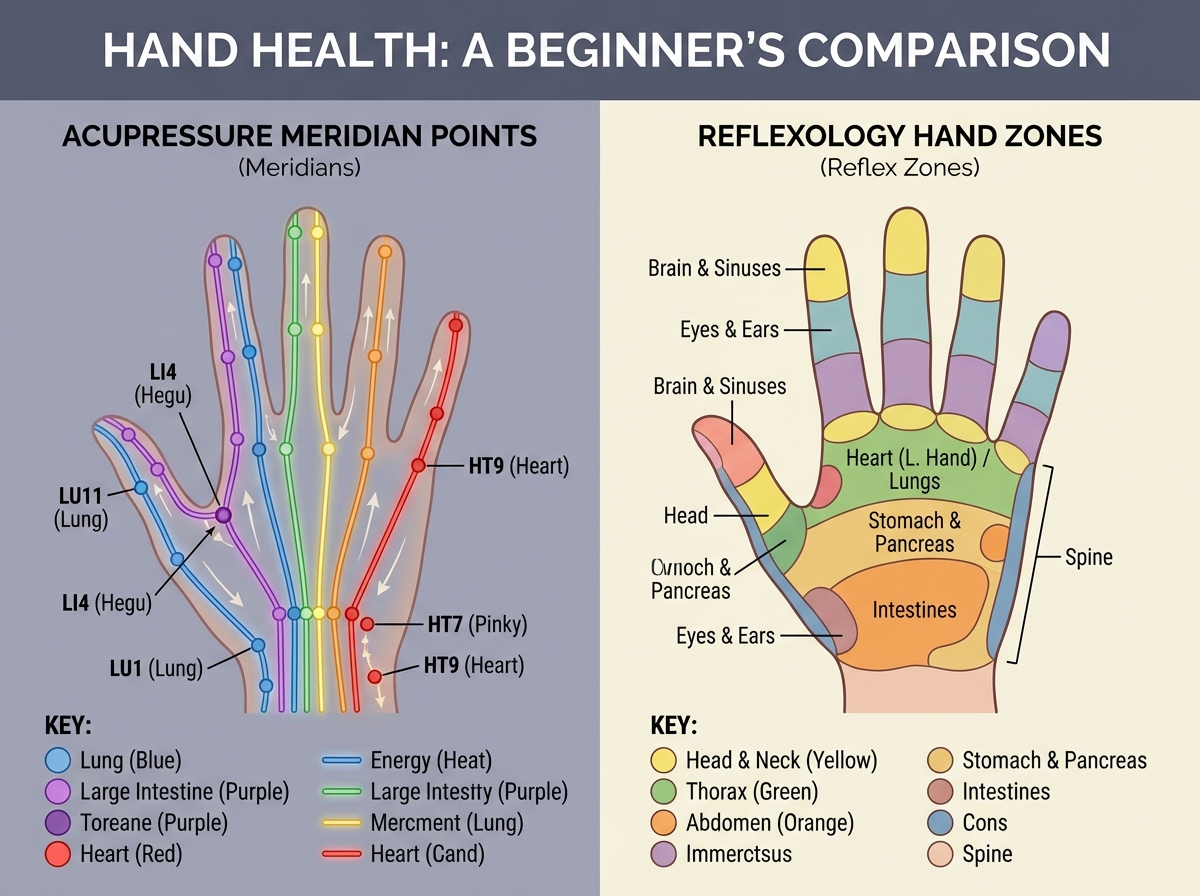
Reflexology is related but distinct. Where acupressure works along meridian lines running the length of the body, reflexology works through reflex zones — primarily in the hands and feet — where compressed maps of your entire body’s systems sit accessible at the surface. Press the right zone on your palm and you’re influencing your thyroid, your sinuses, or your colon.
Chi healing takes this one step further. Rather than using physical pressure alone, chi healing incorporates the practitioner’s own cultivated energy — their internal life force — into the treatment. It sounds abstract until you’ve felt someone hold their palm two inches above your forearm and felt warmth move up your arm without them touching you.
| Modality | Primary Tool | Target | Entry Difficulty |
|---|---|---|---|
| Acupressure | Fingertip pressure on acupoints | Meridian energy flow | Low |
| Reflexology | Thumb/finger pressure on reflex zones | Organ and system mapping | Low |
| Chi Healing | Cultivated internal energy (Qi) | Whole-body energy field | Higher — requires internal work first |
Three Things That Will Surprise You About Acupressure
- Pressing harder does not mean healing faster — sustained gentle pressure often outperforms force
- The most powerful acupressure points for insomnia are on your wrists, not your head
- You can use acupressure reflexology for headaches on your own hand in under four minutes
How Long Does This Actually Take to Learn?
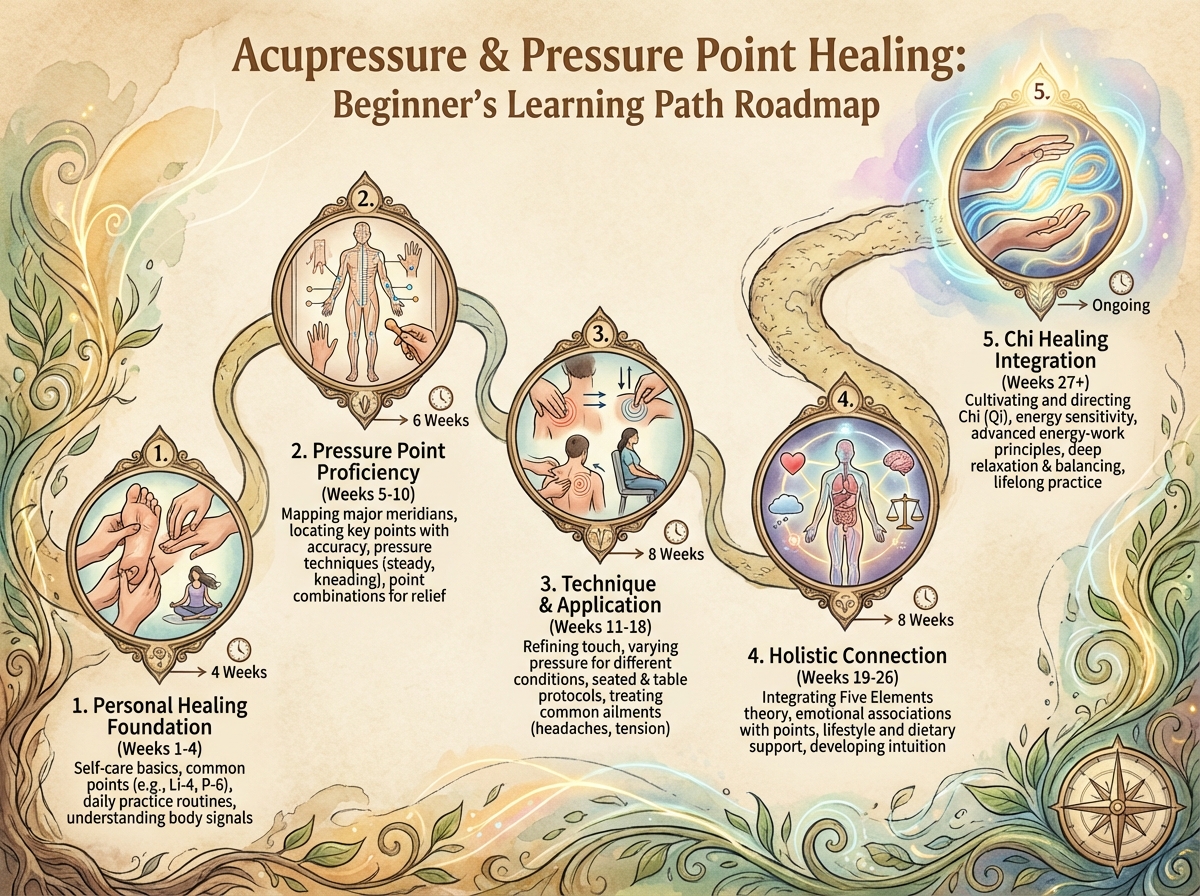
| Stage | What You’re Doing | Time |
|---|---|---|
| Personal healing foundation | Mindset, environment, diet, water, energy awareness | Weeks 1–2 |
| Pressure point introduction | Theory of meridians, acupoints, how to locate and activate them | Weeks 2–3 |
| Condition-specific techniques | Headaches, insomnia, blood pressure, stress, allergies, thyroid | Weeks 3–6 |
| Chi healing awareness | Sensing and directing internal energy | Weeks 6–10 |
| Integration and application | Using everything together, helping others | Ongoing |
| Total estimated time | From zero to confident self-practitioner | 10–12 weeks |
The sequence matters far more than the speed — someone who genuinely clears their personal healing environment before touching a single pressure point will get more from week three than someone who rushed through it. If ten weeks becomes sixteen, that’s not falling behind. That’s the practice working correctly.
Why Personal Healing Has to Come First
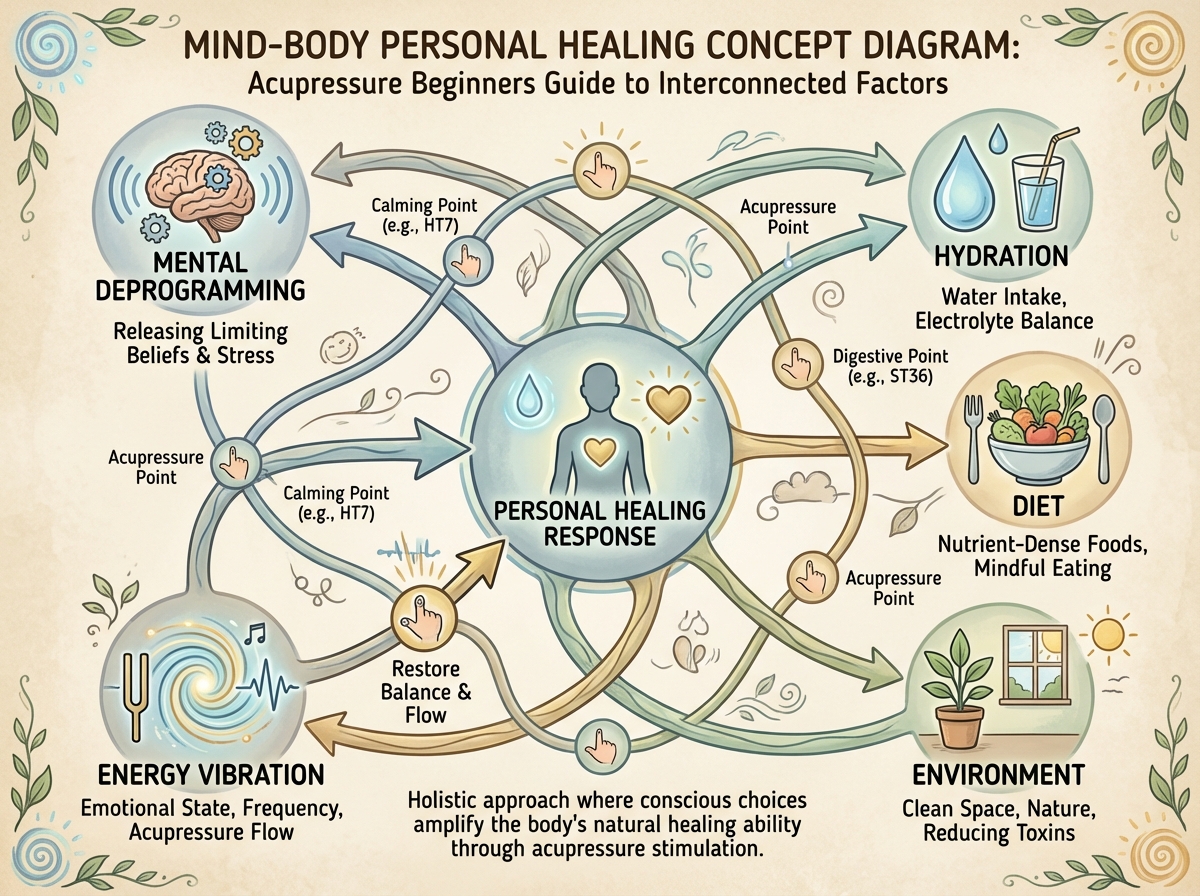
Every person who jumps straight to technique skips the part that determines whether the technique actually works. Before your hands can help anyone else — or even yourself consistently — you have to deal with what’s draining your own system. Not as philosophy. As practical cause and effect.
This means looking honestly at your environment: what you eat, what you drink, what you’re exposing yourself to daily, and — more confronting — what mental loops you’re running that you’ve never questioned. There’s a reason experienced practitioners talk about “deprogramming.” Most of what people call stress isn’t a response to their current situation. It’s a conditioned pattern they’ve been running since childhood, silently pulling energy away from every healing attempt they make.
The smallest, most underestimated piece of personal healing is water. Not drinking more of it — though that matters — but understanding that water quality and how you interact with it affects everything downstream. Sound strange? Try drinking structured, clean water consistently for two weeks alongside any other health practice and compare your results to the weeks before. The difference is not subtle.
Once you’ve actually cleaned up the internal environment — diet, mental patterns, toxic inputs, energy awareness — the pressure points respond differently. They’re more sensitive, easier to locate, and the results come faster. You haven’t learned more technique. You’ve made the system more receptive.
The Meridian System: Where People Get Lost
The biggest mistake beginners make when learning pressure point healing is treating meridian charts like a treasure map — hunting for exact coordinates, pressing, waiting for something dramatic, then feeling like they did it wrong when nothing obvious happens.
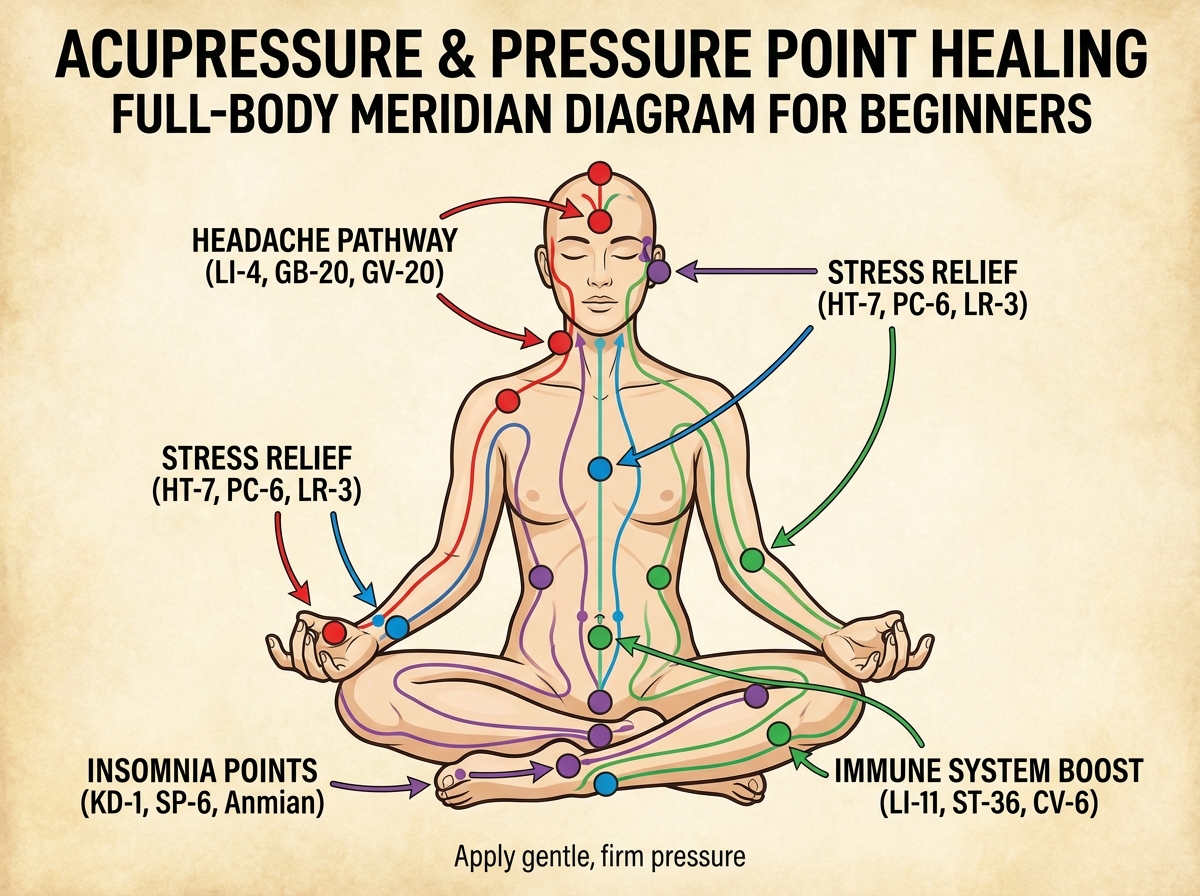
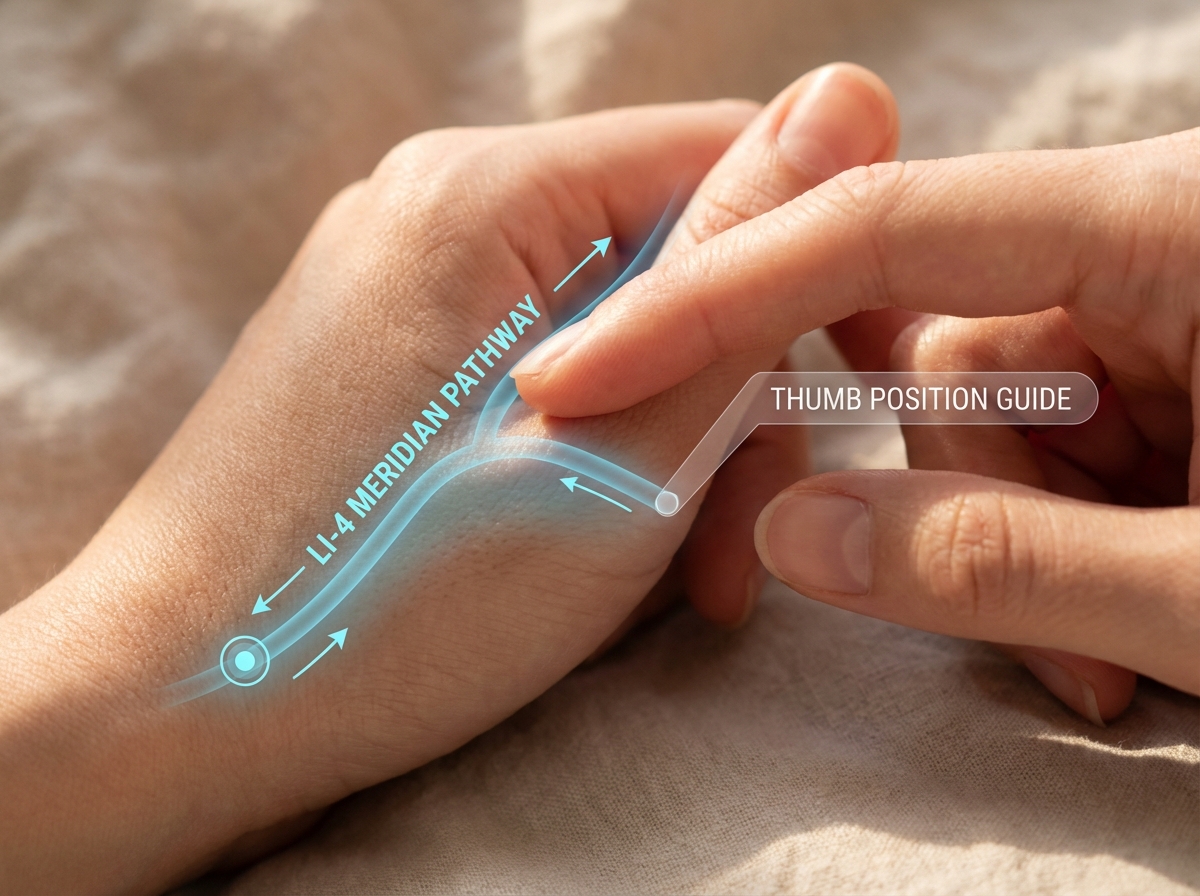
Meridians are energy highways, not fixed anatomical structures like veins. Their pathways are consistent across millions of practitioners and thousands of years of recorded observation, but what you feel at a point is information, not performance. Some points feel tense. Some ache with what practitioners describe as a “good hurt” — a soreness that releases rather than tightens. Some feel like nothing until the third session.
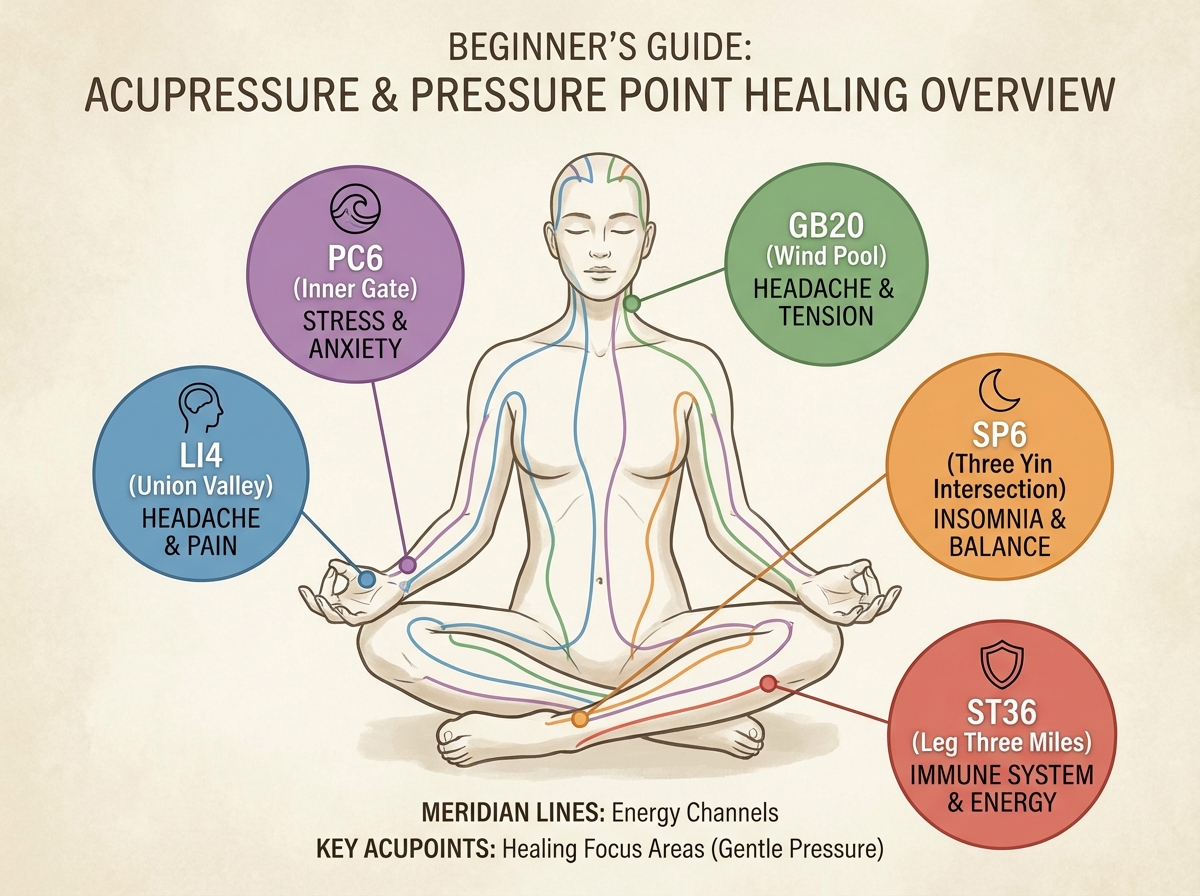
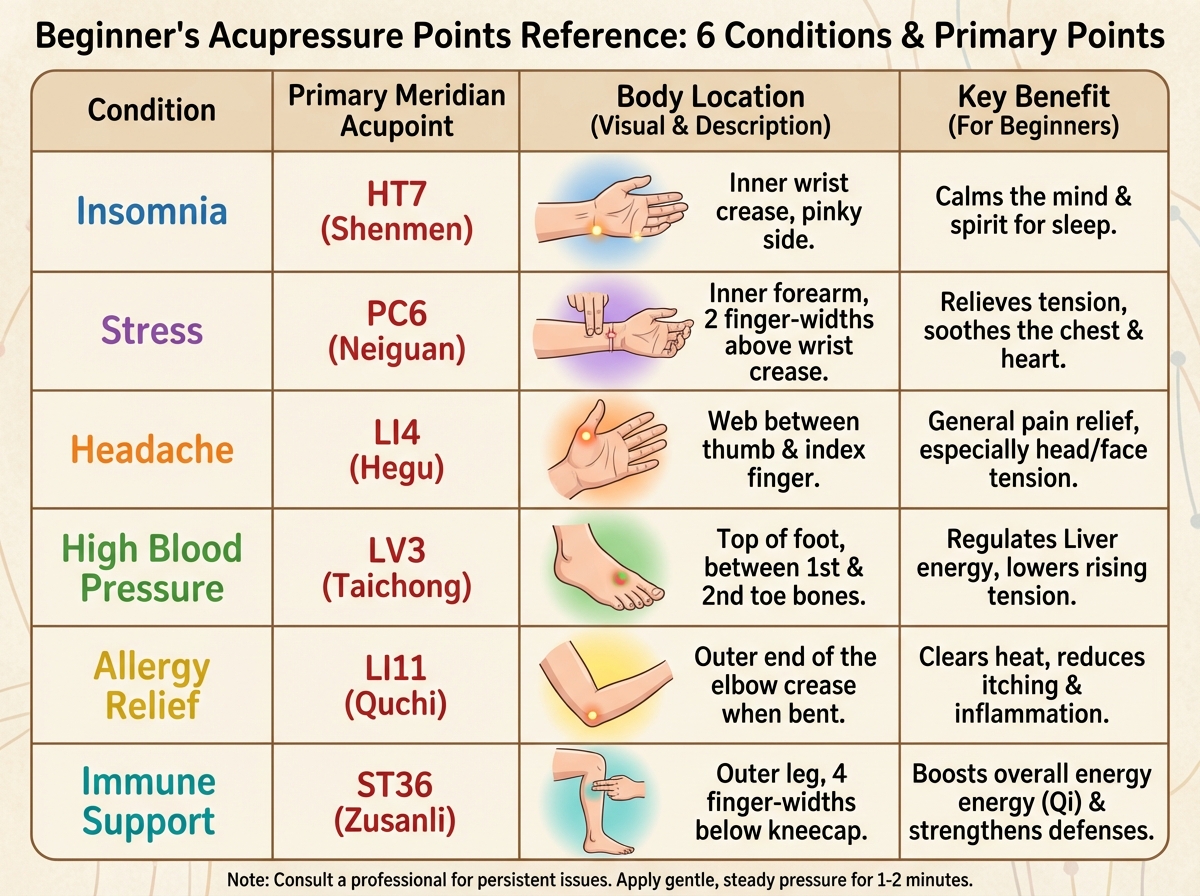
Hand reflexology for headaches — including both tension headaches and migraines — is a good place to start because feedback is immediate. The LI-4 point, located in the webbing between your thumb and index finger, influences the large intestine meridian and has been used for head and face conditions for centuries. Apply firm, steady pressure for two to three minutes, breathe slowly, and pay attention to what you feel rather than what you expect. That attention is the actual practice.
For acupressure points for stress and anxiety, the pericardium channel running from your chest down through your inner arm to your wrist is the most reliable starting point. PC6, located three finger-widths above the wrist crease on the inner forearm, is one of the most well-documented calming points in the entire meridian system. You’ll know you’re in the right place when pressure there creates a feeling of release rather than simple pain.
Learning Acupressure for Specific Conditions
Once the foundation is in place, you move into condition-specific work — and this is where acupressure pressure point healing becomes genuinely practical rather than theoretical. The range of what you can address with your own hands is wider than most beginners expect.
Acupressure for insomnia typically works through points on the heart and pericardium meridians — primarily the wrist points HT7 and PC6 — combined with points at the base of the skull and on the inner ankle. The protocol isn’t complicated: hold each point for two to three minutes before sleep, in sequence, breathing abdominally. Most people notice a difference within the first three attempts, not because they’ve mastered anything, but because the nervous system responds quickly to consistent, slow, parasympathetic input.
High blood pressure responds well to hand reflexology targeting the heart and kidney reflex zones, alongside acupoints along the pericardium and spleen meridians. Allergy symptoms — particularly seasonal — connect to the lung and large intestine meridians, with points on the face, forearms, and feet. Thyroid reflexology uses specific zones on the base of the big toe and corresponding hand positions. None of these require memorizing a hundred points. Each condition has two or three high-leverage points that do most of the work.
For motivation and energy — including using acupressure points to wake up in the morning — stomach and governing vessel points on the face and scalp deliver noticeably fast results. ST36, located four finger-widths below the kneecap on the outer edge of the shin, is one of the most tonifying points in the entire system. Practitioners have used it for energy, digestion, and immunity for centuries.
The Chakra System and Energy Healing: A Different Language for the Same Reality
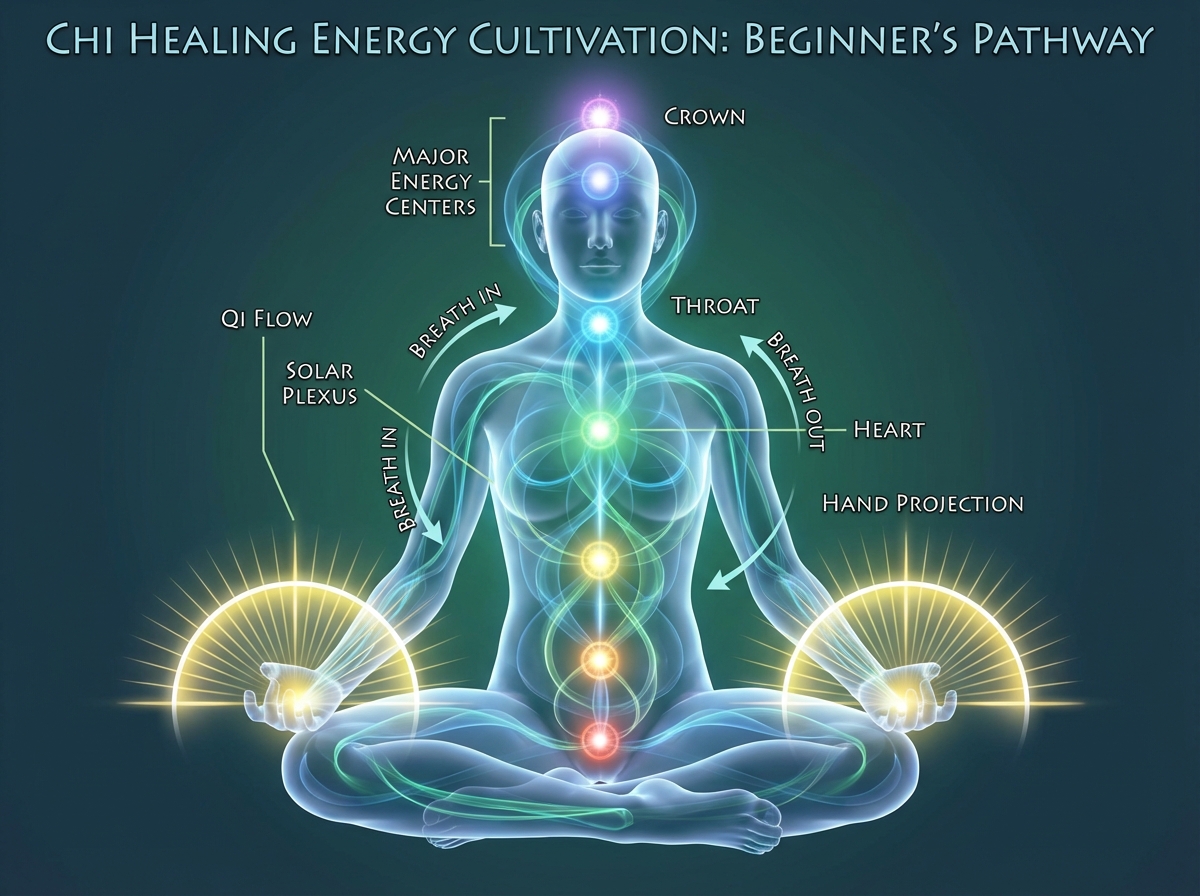
At some point in the healing arts journey, you’ll encounter the chakra system — the seven energy centers running from the base of the spine to the crown of the head, drawn from the Indian Ayurvedic tradition rather than Chinese medicine. This is where some beginners stall, unsure whether they’re supposed to pick one system or somehow merge them.
The practical answer: meridians and chakras are different maps of the same territory. One isn’t more real than the other. Chinese medicine mapped the highways; Ayurveda mapped the major intersections. If acupressure and reflexology feel more concrete and physical to you, stay there. If energy centers and vibrational awareness make more intuitive sense, go there. The body doesn’t care which vocabulary you use.
What the chakra system adds to pressure point work is a framework for understanding why emotional states block physical healing. The throat chakra and suppressed expression. The heart chakra and grief held in the chest. The solar plexus and the anxiety that lives in the gut. These aren’t metaphors to dismiss — they’re observable clinical patterns that every experienced practitioner eventually encounters. The energy and vibration layer of healing is what makes the difference between someone who gets occasional results and someone who gets consistent ones.
Chi Healing: What It Is and What It Demands
Chi healing sits at the advanced end of this system — not because the concept is complicated, but because it requires you to have actually developed something internal before you can offer it externally. You cannot transmit what you haven’t cultivated.
The practice begins with breath, posture, and the deliberate movement of internal energy through your own body. Practitioners who’ve worked with chi healing for years describe it less as a skill and more as a state — one they enter through consistent internal practice before they ever work with another person. You’ll know when it’s real because your hands begin generating heat and sensation that other people can feel without being touched.
For beginners, the most honest advice is to not rush to this layer. Build the foundation in personal healing first. Work with physical pressure points until you can feel the difference between a point that’s blocked and one that’s open. Then begin cultivating internal awareness — breath work, visualization, slow movement practices. The chi layer will become available when the groundwork is solid. Trying to access it first is like trying to run electrical current through a circuit that hasn’t been wired yet.
What to Do Right Now
Looking back at the full arc of learning the healing arts — from skepticism through the first real results to the point where you’re actually helping others — the things that mattered most were never the exotic ones. They were the unglamorous fundamentals that most people rush past.
- Start with the LI-4 point on your hand — press it firmly for three minutes during your next headache or moment of stress and simply observe what happens; this single point teaches you more about how acupressure works than two hours of reading
- Clean your internal environment before anything else — cut one inflammatory food from your daily intake and drink two more glasses of clean water daily for two weeks before judging whether any of this works for you
- Learn meridian study charts with one system at a time — the hand reflexology map is the most practical starting point because your hands are always accessible and the feedback is fastest
- Use acupressure for insomnia before you reach for anything else — hold HT7 (inner wrist crease, pinky side) and PC6 (three finger-widths above wrist crease) for two minutes each before sleep; the nervous system responds to this faster than most people expect
- Track your sessions in a simple log — write down which point you pressed, how long, and what you noticed; patterns emerge within two weeks that tell you more than any chart
- Practice on yourself first, always — before you try to help someone else with a headache or sleep issue, apply every technique to your own body so you know exactly what “correct pressure” actually feels like from the inside
- Don’t skip the personal healing layer — the Chakra system, energy awareness, diet, and environment aren’t spiritual extras bolted onto the real content; they are the real content, and the pressure points perform differently once you’ve addressed them
- Return to the basics of how to learn cupping therapy with acupoints if pressure alone isn’t giving results — sometimes the blocked area needs a different modality to open before acupressure can reach it
Leave a Reply