


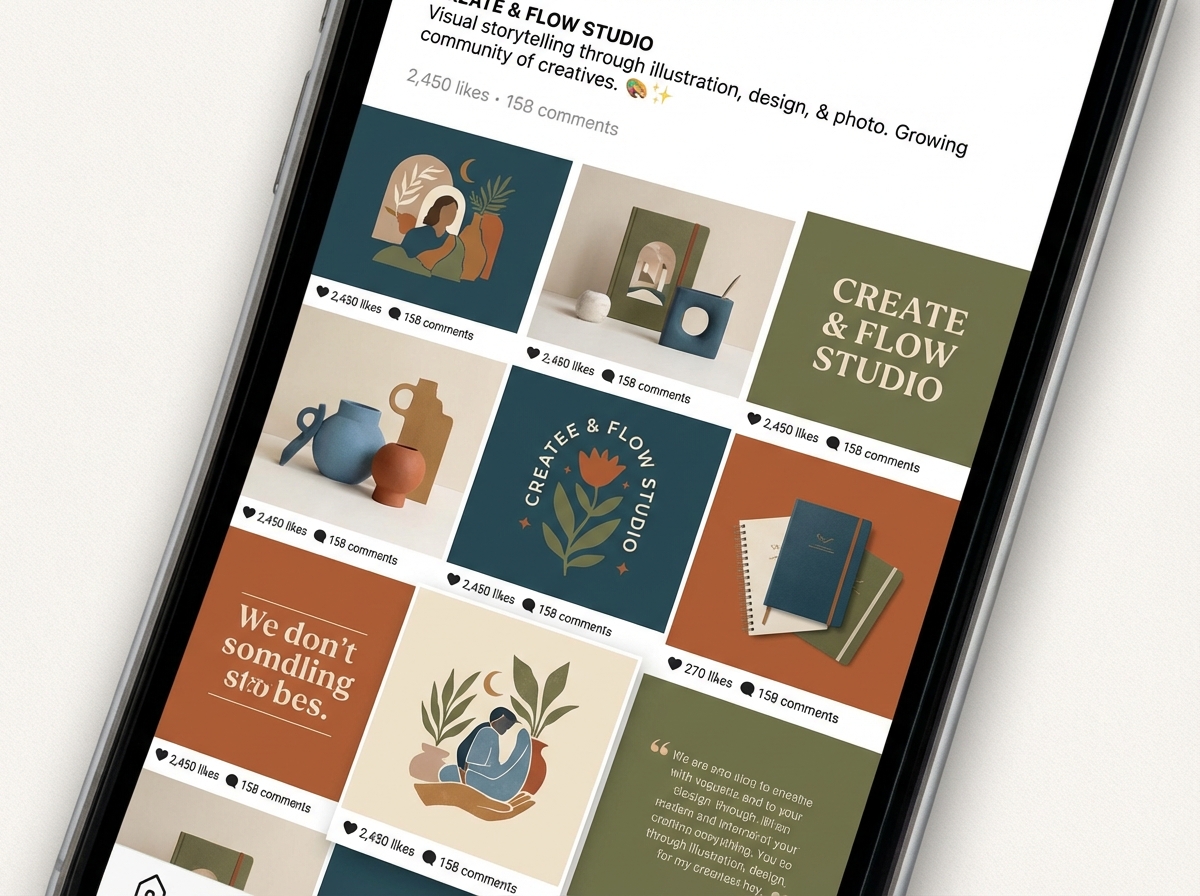
There’s a specific kind of frustration that hits when you’ve been posting your work for months and the only people liking it are your mom and three friends from college.
If you’re looking to learn Instagram marketing for your creative business, the honest answer is that the platform was practically built for visual work — but posting beautiful images alone won’t grow anything. You need a system: one that connects your aesthetic to an audience, converts that audience into buyers, and keeps you from burning out trying to post every single day.
- Instagram rewards consistency and visual identity above everything else — not post frequency alone
- The gap between a hobbyist account and a professional creative brand is almost always strategic, not artistic
- Growing followers matters less than building an audience that actually buys
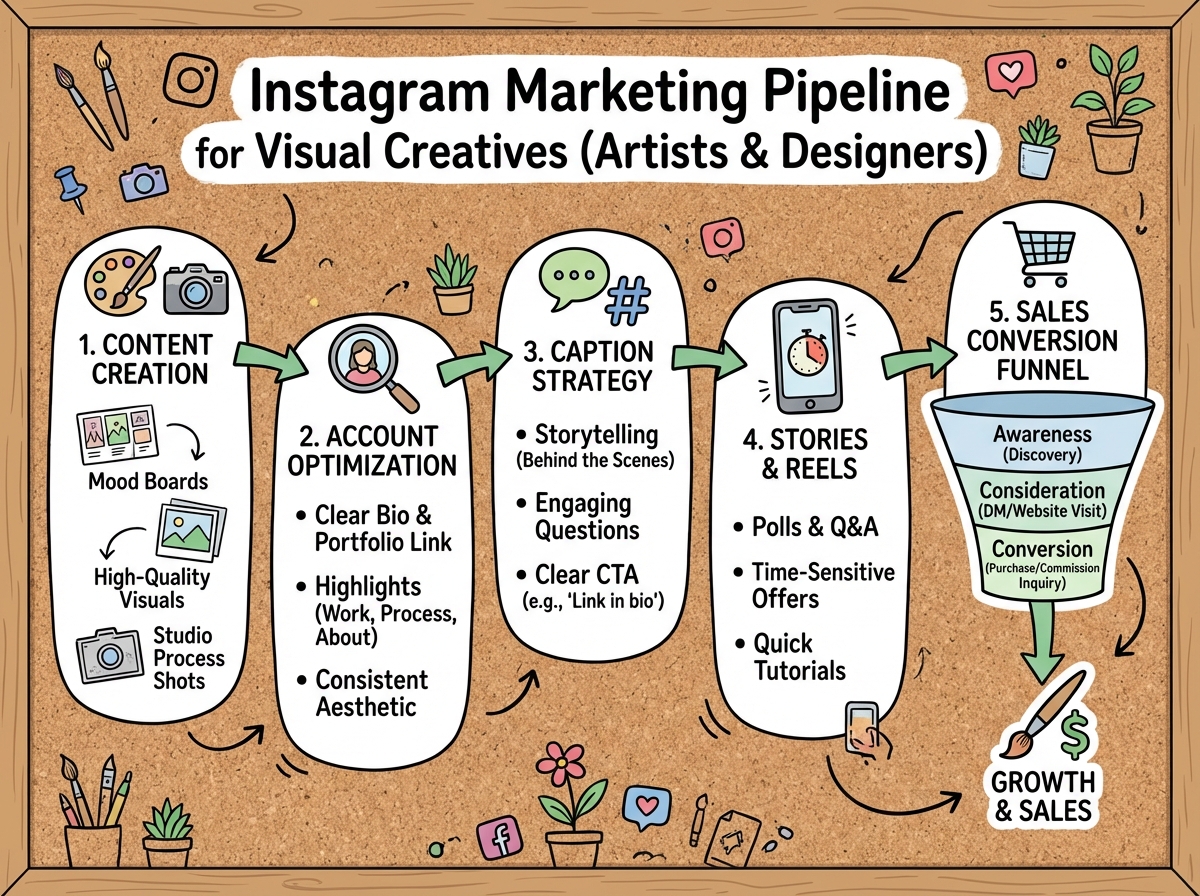
What Instagram Marketing for Visual Creatives Actually Means
Instagram marketing for visual creatives isn’t the same as general social media marketing. You’re not running ads for a SaaS product or writing threads about productivity. You’re showing work — paintings, illustrations, photographs, designs — and trying to get strangers to care about it enough to follow, engage, and eventually pay for it.
The core distinction is this: your content is your product, which means every post is simultaneously a marketing asset and a portfolio piece. That dual pressure is what makes creative Instagram feel so personal. A bad-performing post doesn’t just miss algorithmically — it stings.
| Account Type | Primary Goal | Content Style | Conversion Path |
|---|---|---|---|
| Personal Artist | Sharing work, community | Raw, behind-the-scenes | Commissions, prints |
| Designer/Illustrator | Portfolio visibility | Polished, branded | Client inquiries |
| Photographer | Niche authority | High-quality imagery | Bookings, licensing |
| Product-Based Creative | Direct sales | Lifestyle + product shots | Shop links, DMs |
Three Things Worth Knowing Before You Go Further
- Your bio is doing more conversion work than your last 30 posts combined
- Posting at peak times matters far less than posting work that earns saves
- The algorithm doesn’t punish small accounts — it punishes unclear ones
How Long It Actually Takes to See Results
| Stage | Focus | Estimated Time |
|---|---|---|
| Foundation | Bio, highlights, visual identity audit | Week 1–2 |
| Content System | Content ideas, photography workflow, caption voice | Week 3–5 |
| Growth Phase | Engagement habits, hashtag strategy, Stories rhythm | Week 6–10 |
| Conversion | Sales-driving posts, link strategy, DM flow | Week 11–14 |
| Total | From zero strategy to active sales system | ~3–4 months |
Order matters far more than speed here — skipping straight to follower growth before your visual identity is clear is the most common way to stall out. And if you’re moving slower than this, that’s fine; most people building while working or creating simultaneously take six months to feel traction.
The Personal vs. Business Account Decision Nobody Explains Clearly
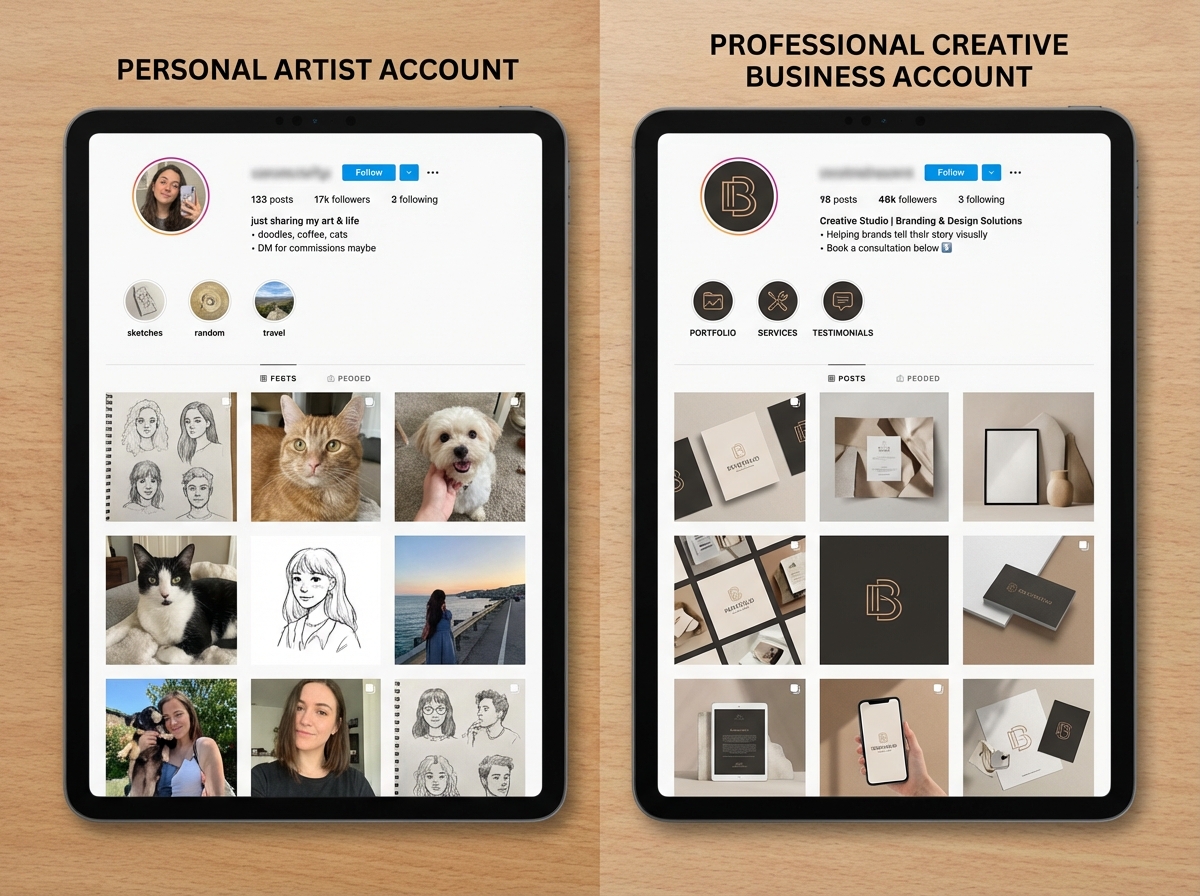
The first real decision point — and one that quietly shapes everything after it — is whether to run a personal account or a business account. Most people either stay personal out of habit or switch to business because they think it looks more professional. Neither instinct is quite right.
A business account gives you access to analytics, the ability to run ads, and a contact button. What it doesn’t give you is organic reach — that’s a myth. The algorithm doesn’t favor business accounts in feed distribution. What it does favor is engagement rate, which is a function of your audience quality, not your account type.
The real question is: do you want to look like a brand, or do you want to look like a person who makes things people want? For most visual creatives — especially early on — the answer is both, and a business account with a warm, human voice is the way to thread that needle.
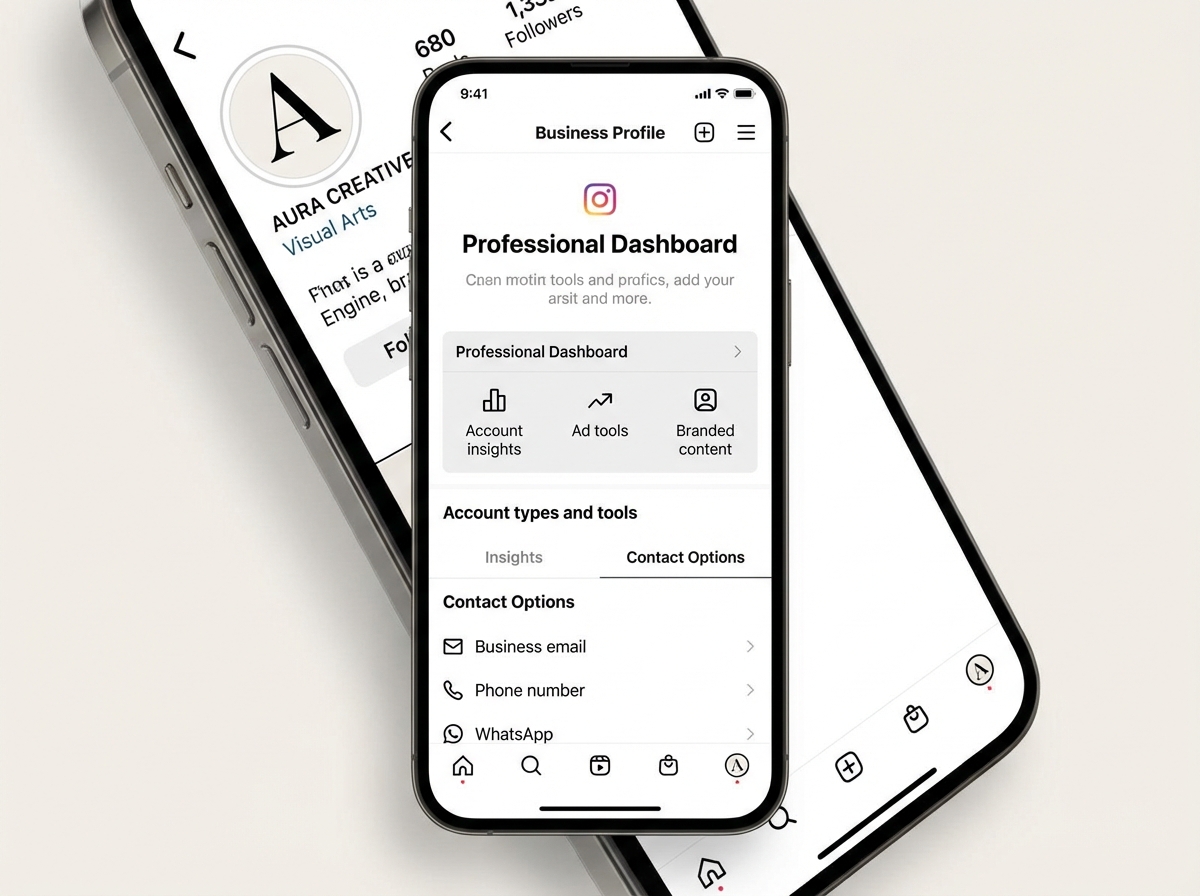
Switch to business when you’re ready to treat it seriously — not when you hit a follower count. The moment you want to understand what’s working, you need the data.
Getting Noticed When Nobody Knows You Exist
The biggest mistake people make when starting Instagram marketing as a visual creative is treating the feed like a gallery wall — posting and waiting. That’s not how discovery works here.
Instagram’s discovery mechanisms — Explore, Reels recommendations, hashtag feeds, location tags — all favor accounts that generate interaction signals. Saves and shares carry more weight than likes. Comments carry more weight than emoji reactions. That means every post decision should start with one question: why would someone save this?
For a visual creative, the most save-worthy content tends to fall into a few categories: work that stops the scroll visually, process content that shows technique, and posts that articulate something the viewer feels but couldn’t express. That last one is where captions come in — and it’s where most artists are leaving massive engagement on the table.
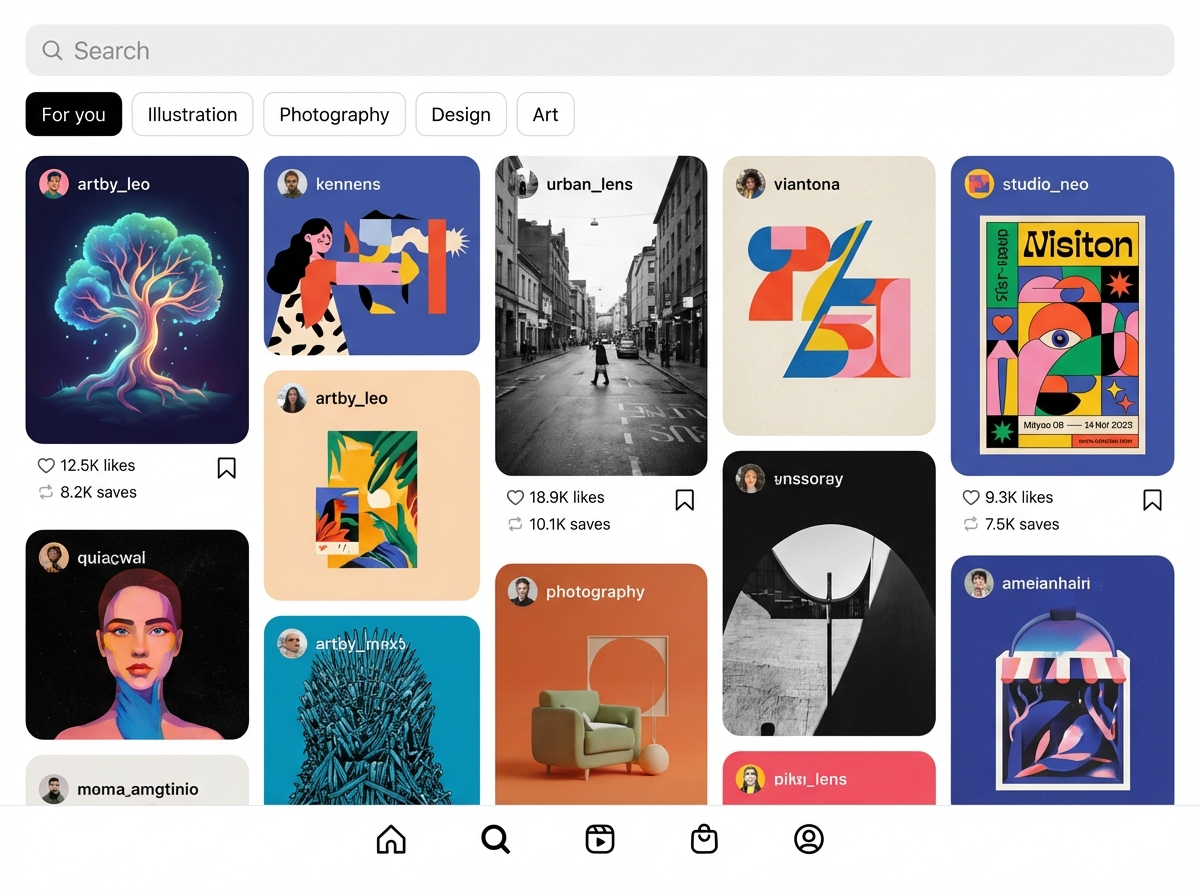
Hashtags still matter, but not the way people think. Stacking 30 broad hashtags on every post doesn’t drive discovery anymore. Ten to fifteen highly specific hashtags — mixing niche community tags, medium-specific tags, and location tags — consistently outperform the spray-and-pray approach. The goal is to appear in front of people who are already looking for exactly what you make.
Content Ideas That Don’t Drain You Dry
Content creation fatigue is real, and it hits creative people especially hard because making the work and documenting the work feel like two separate jobs. The solution isn’t a content calendar — it’s a content system that generates ideas from things you’re already doing.
Process content is the highest-leverage format for visual creatives. A time-lapse of a painting in progress, a before-and-after of a design revision, a flat-lay setup shot of your workspace — these require almost no extra creative energy because you’re already doing the work. You’re just pointing a camera at it.
Beyond process, the content categories that consistently perform for creative accounts include: finished work with a story behind it, educational micro-posts that share a technique or insight, personal moments that humanize the brand, and repurposed older work that new followers have never seen. Most creative accounts only ever post finished work — which means they’re leaving five content categories unused every week.
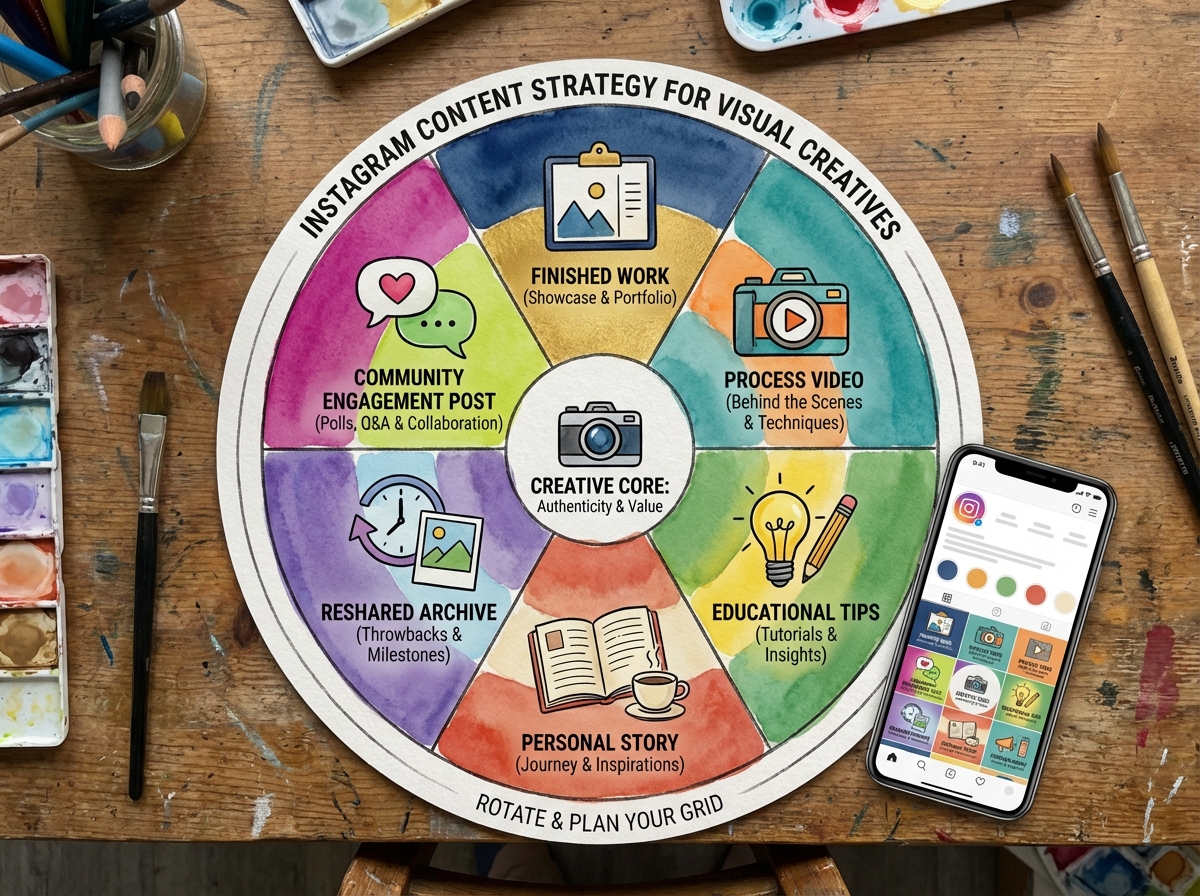
For building a sustainable marketing habit around your creative work, the key is batching: shoot content in one session, write captions in another, schedule in a third. Treating them as separate tasks — not a continuous scramble — is what separates accounts that post consistently from ones that go quiet for three weeks and then apologize in their Stories.
Photography Tips That Actually Move the Needle
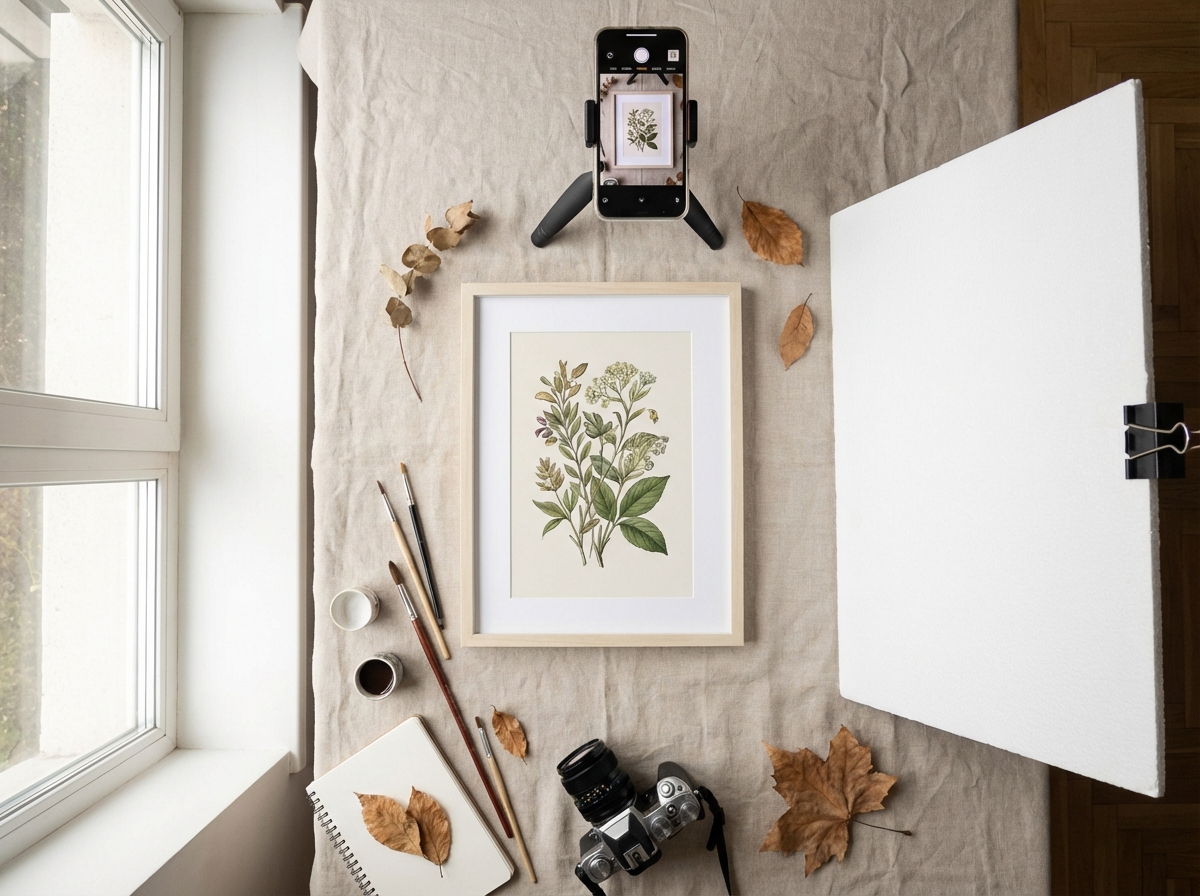
You don’t need a DSLR. You need light, a clean background, and a consistent visual identity. Those three things will make a phone photo outperform a technically perfect shot with bad styling nine times out of ten.
Natural light — specifically indirect window light — is the single most accessible photography upgrade available to any creative. Direct sunlight blows out color and creates harsh shadows. A white wall or foam board as a reflector fills in the shadow side. That setup costs nothing and works for almost any kind of visual work.
Consistency in visual style matters more than any single amazing photo. An account where every post looks like it belongs together builds a stronger brand impression than one that alternates between highly polished and casual. Pick a background palette and stick to it. Pick a shooting angle — overhead, 45 degrees, straight-on — and default to it. Variations are fine, but there should be a family resemblance across your grid.
Writing Captions That Actually Convert
Most visual creatives treat captions as an afterthought — a description of what’s in the image, maybe an emoji, a wall of hashtags. That approach works when your goal is to post. It doesn’t work when your goal is to build a business.
A caption has three jobs: stop the skip (first line), create connection (body), and invite action (close). The first line is what shows before the “more” cut-off, so it carries enormous weight. Starting with a question, a strong statement, or a specific detail from the work’s story dramatically increases tap-through rates.
The body of the caption is where you earn trust. Not through formal writing — through specificity. What was hard about this piece? What were you thinking when you made it? What do you want the viewer to feel? That kind of transparency is what turns a casual follower into someone who genuinely cares about your work and, eventually, someone who buys it.
The close should have a clear, low-friction action: “Save this if it resonates,” “Drop a comment with your favorite detail,” “Link in bio to see the full collection.” One action, not three.
Driving Sales Without Feeling Like a Sales Account
The moment that clarifies everything about Instagram and sales is when you realize that the platform doesn’t drive impulse purchases the way a marketplace does — it drives trust over time, and trust converts. That shift in expectation changes how you structure your entire approach.
For visual creatives, the highest-converting content types are: work shown in context (a print on a real wall, a design on an actual product, an illustration inside the book it was made for), client results or testimonials woven naturally into a post, and behind-the-scenes content that shows the care that goes into the work. All of these build purchase confidence — they answer the buyer’s unspoken question: “Is this worth it?”
The link-in-bio constraint is real, but manageable. Tools that allow multiple links in one landing page (or a well-maintained highlight with a swipe-up link) mean you can direct traffic to specific products, commissions pages, or shop drops without your bio becoming a paragraph of instructions.
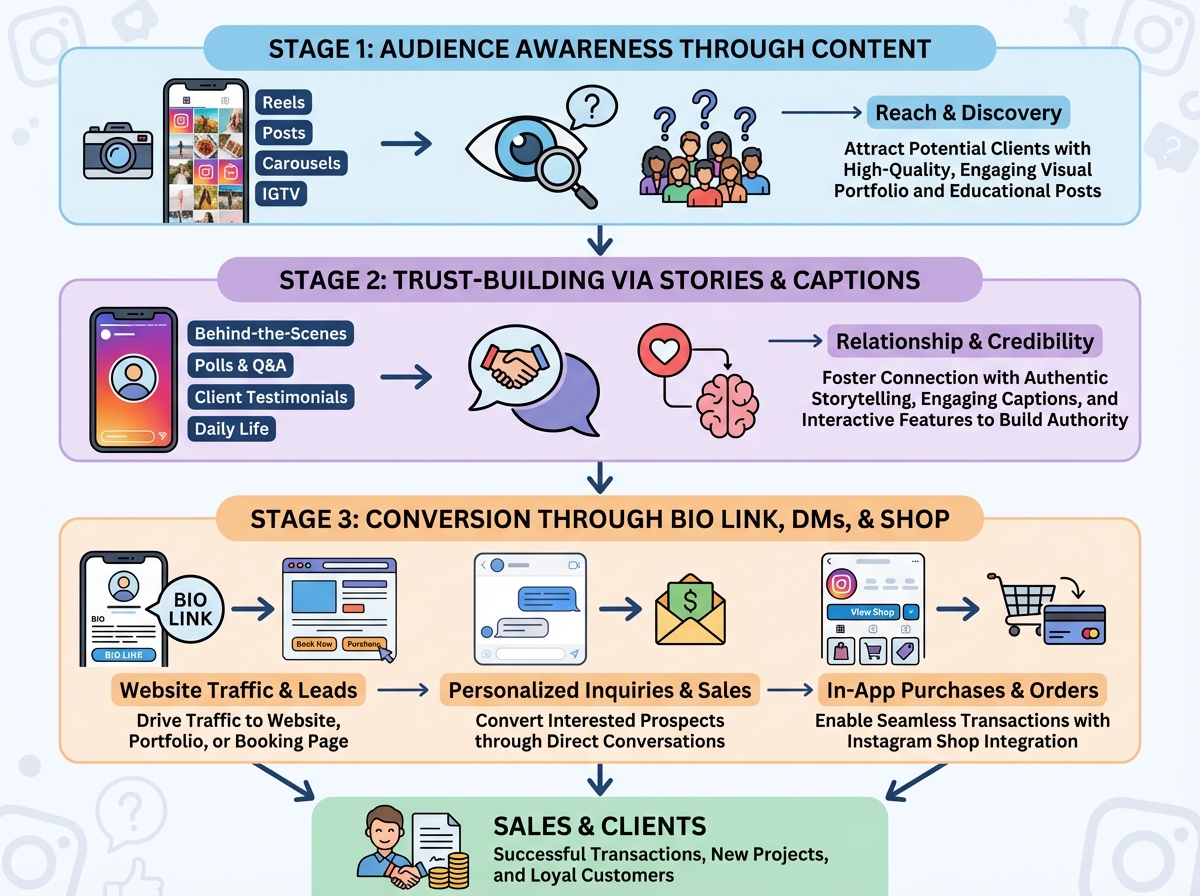
For those exploring how to set up a sales-optimized presence from scratch, the same principle applies: your public-facing presence needs to answer the question “why you” before it ever asks for money.
Using Stories Without Burning Out
Stories are the highest-intimacy surface on Instagram, and most creative accounts either ignore them entirely or treat them as a second feed — reposting the same content they already published. Both approaches miss the point.
Stories work best as real-time glimpses: what you’re working on today, a decision you’re making about a piece, a tool you just discovered, something that didn’t go as planned. That rawness is the feature, not a bug. Audiences follow brands through polish; they connect with people through imperfection.
Poll stickers, question boxes, and sliders are engagement tools — but use them when you genuinely want feedback, not as a mechanical tactic. Asking your audience which colorway they prefer, whether they’d want a print of a specific piece, or what they’re struggling with as creatives generates real signals you can actually act on.
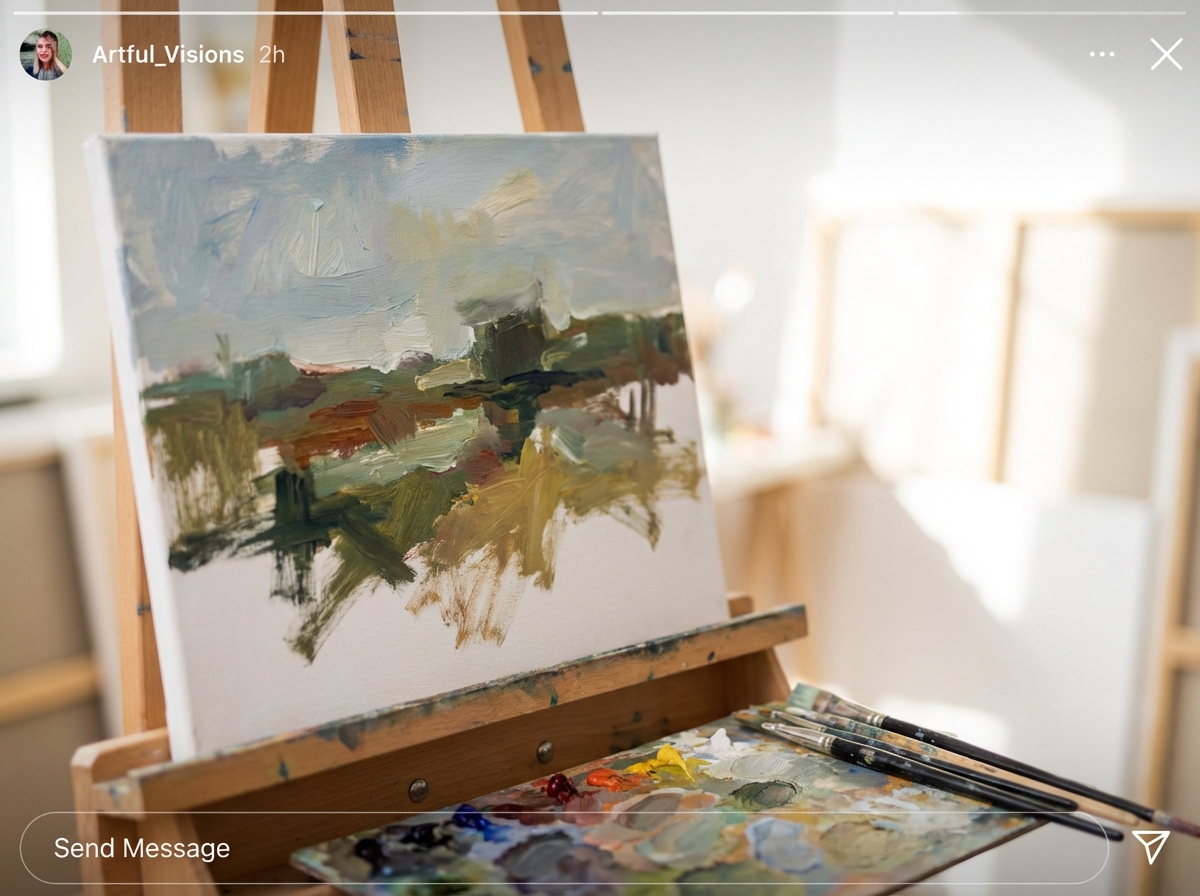
Planning and Scheduling Without Losing Spontaneity
The creative resistance to planning Instagram is understandable — scheduling posts feels like manufacturing authenticity, which feels wrong. But the alternative, posting only when inspiration strikes, produces the inconsistency that kills accounts.
The model that actually works is a loose skeleton, not a rigid calendar. Decide on your posting rhythm — three times a week, five times, whatever is sustainable — and decide roughly what content category each slot belongs to. One process post, one finished work post, one personal or educational post. Within that skeleton, you have complete freedom on what specific content fills each slot.
Batch content creation by shooting two to three weeks of photos in one session when you have a good setup going. Write captions separately, when you’re not visually fatigued. Schedule posts using native scheduling or a simple tool. That separation of creative work from logistics work is what makes consistency feel sustainable rather than exhausting.
For building a longer-term content and marketing system around your creative business, the same discipline applies: systems protect creativity by removing daily decision fatigue from the equation.
What Looking Back Actually Changes
Six months in, the accounts that have grown are almost always the ones that got clear about what they were building before they worried about growing it. Not perfectionists — just people who knew their visual identity, had something specific to say, and showed up consistently enough for the algorithm to reward them.
The follower count you had at month two won’t matter. The captions you wrote when you finally started being specific will. The posts where you showed process instead of just results will. The Stories where you let people see a decision in progress will. Those are the things that compound.
Audit your bio right now. Make sure it names what you make, who it’s for, and what someone should do next — if it doesn’t do all three, rewrite it before your next post.
Pick a background palette and hold it for 30 days. Visual consistency is how strangers recognize your work in a crowded feed — it’s the one thing that brands your account without any text.
Shoot process content the next time you make something. Set up a camera on a timer, take a flat-lay mid-process, or record 60 seconds of your hands working — this is the content category most creatives skip and most audiences love.
Write your first line before your caption. The single line that shows before “more” is your hook — if it doesn’t earn the tap, nothing else matters.
Use 10–15 specific hashtags instead of 30 broad ones. Mix niche medium tags (e.g., #watercolorillustration), community tags (e.g., #artistsoninstagram), and local tags — and rotate them to test which clusters drive the most profile visits.
Add one sale-driving post per week, alternating format. One week show the work in context (on a wall, worn, in use). Next week share a short story about a past buyer or commission. These build purchase trust without your account feeling like a shop.
Post to Stories at least three times a week, even if it’s just a photo. The algorithm surfaces accounts that use multiple surfaces — feed plus Stories — more frequently in followers’ feeds.
Schedule one month of posts in a single sitting. When content creation and publishing happen separately, the quality of both improves — and you stop posting reactively out of guilt.
Leave a Reply