


You’ve been posting for months. Maybe years. The likes trickle in, a few followers show up, and then nothing. No real traction, no income, no sense that any of it is actually working. That feeling — that hollow gap between effort and result — is where most people quietly give up.
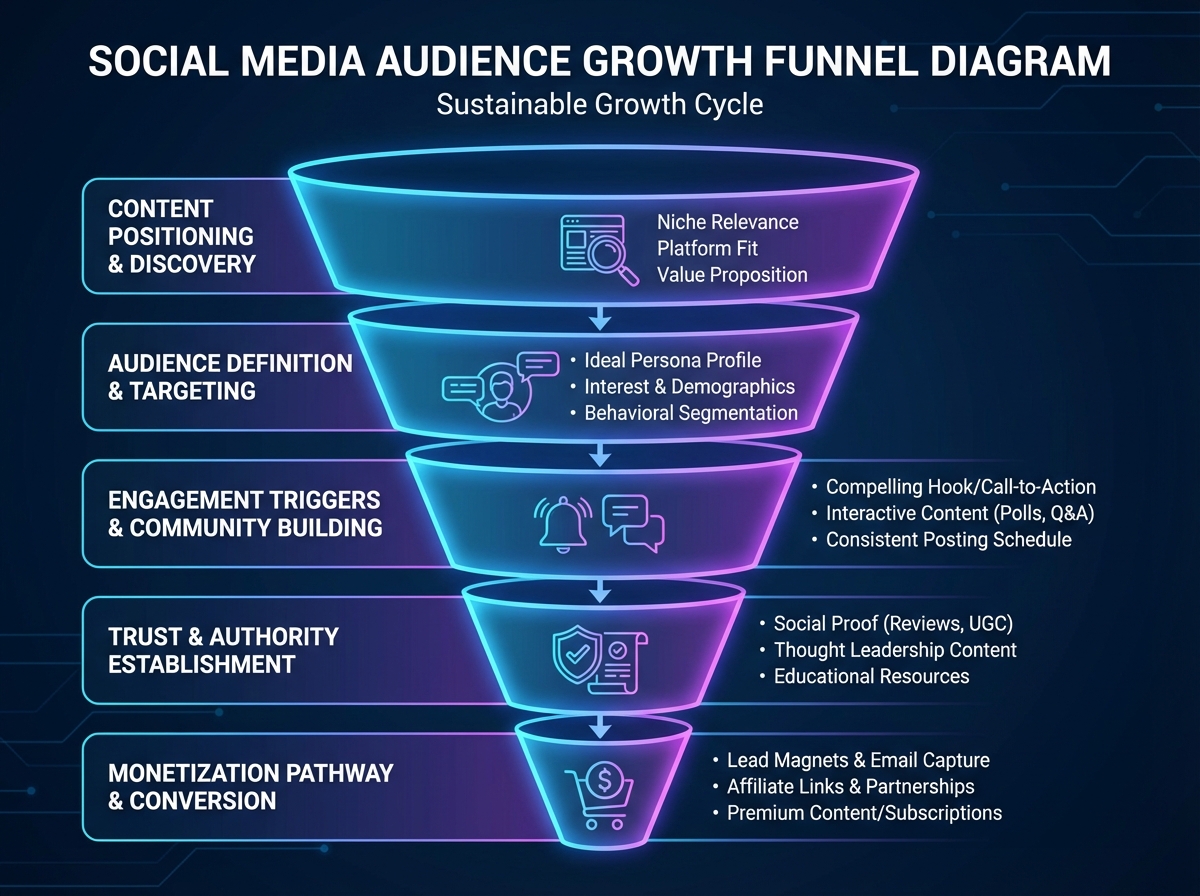
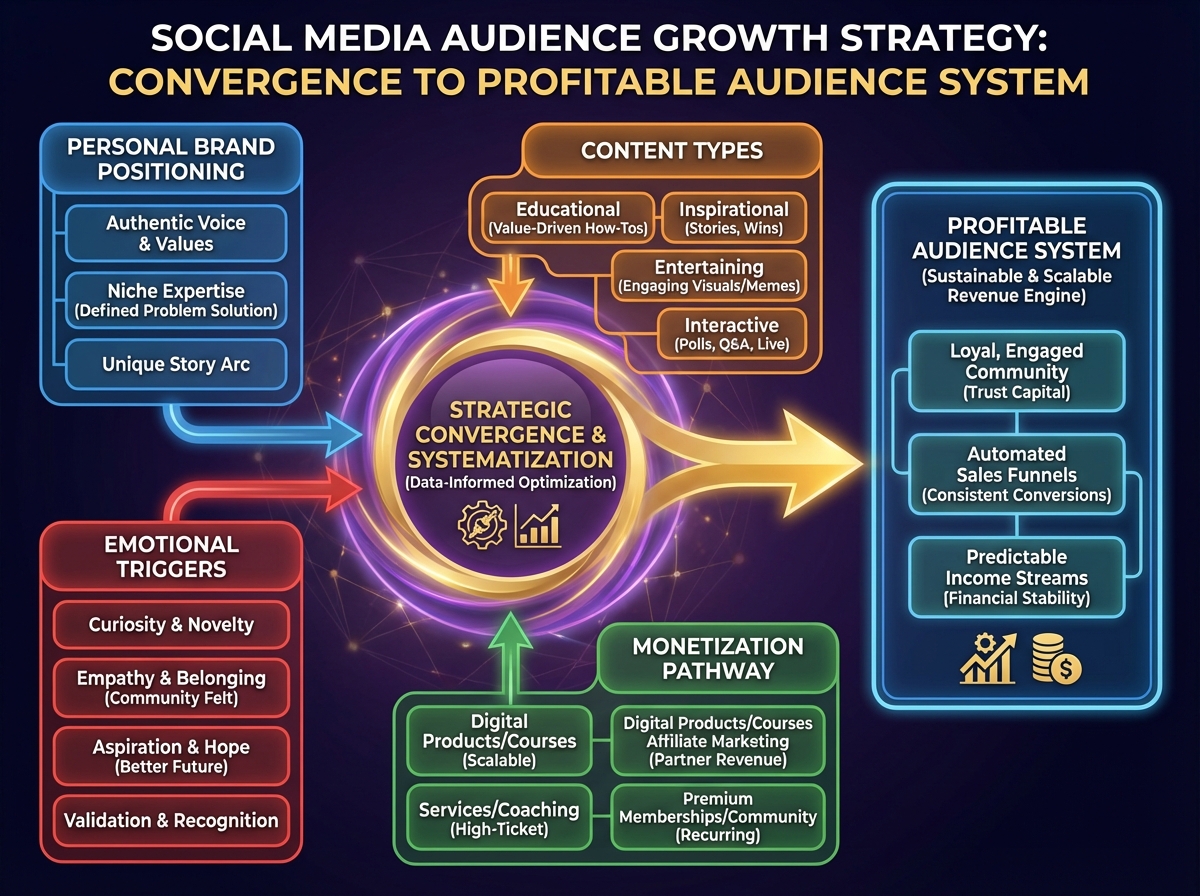
If you’re looking to learn how to grow a social media audience that generates real income, the answer isn’t posting more often or chasing trends — it’s building a presence that people feel emotionally connected to, then giving them a reason to buy. A profitable social media audience is built on three things: clear positioning, consistent emotional resonance, and deliberate monetization triggers. Without all three, follower counts stay decorative.
- You don’t need millions of followers to make money — you need the right followers who trust you enough to buy
- Most people skip positioning entirely and wonder why their content gets ignored
- Emotional connection, not virality, is what turns an audience into a customer base
What “Growing a Social Media Audience” Actually Means
Growing a social media audience isn’t about accumulating numbers. It’s about building a community of people who associate you with something specific, return to you consistently, and eventually exchange money for what you offer. The difference between a creator with 50,000 disengaged followers and one with 8,000 loyal buyers is positioning — knowing exactly who you are for, what you represent, and why someone should follow you instead of the hundreds of others in your space.
There are two types of growth worth understanding:
| Type | What It Looks Like | What It Produces |
|---|---|---|
| Vanity Growth | High follower count, low engagement | Impressions, no income |
| Profitable Growth | Smaller but loyal, high-trust audience | Sales, influence, collaborations |
The entire game is building the second type — even if it grows slower.
Three Things That Surprised Me About How Social Media Works
- Specificity attracts more people than broad appeal ever will
- Vulnerability outperforms polished content on almost every platform
- Your audience buys your identity before they buy your product
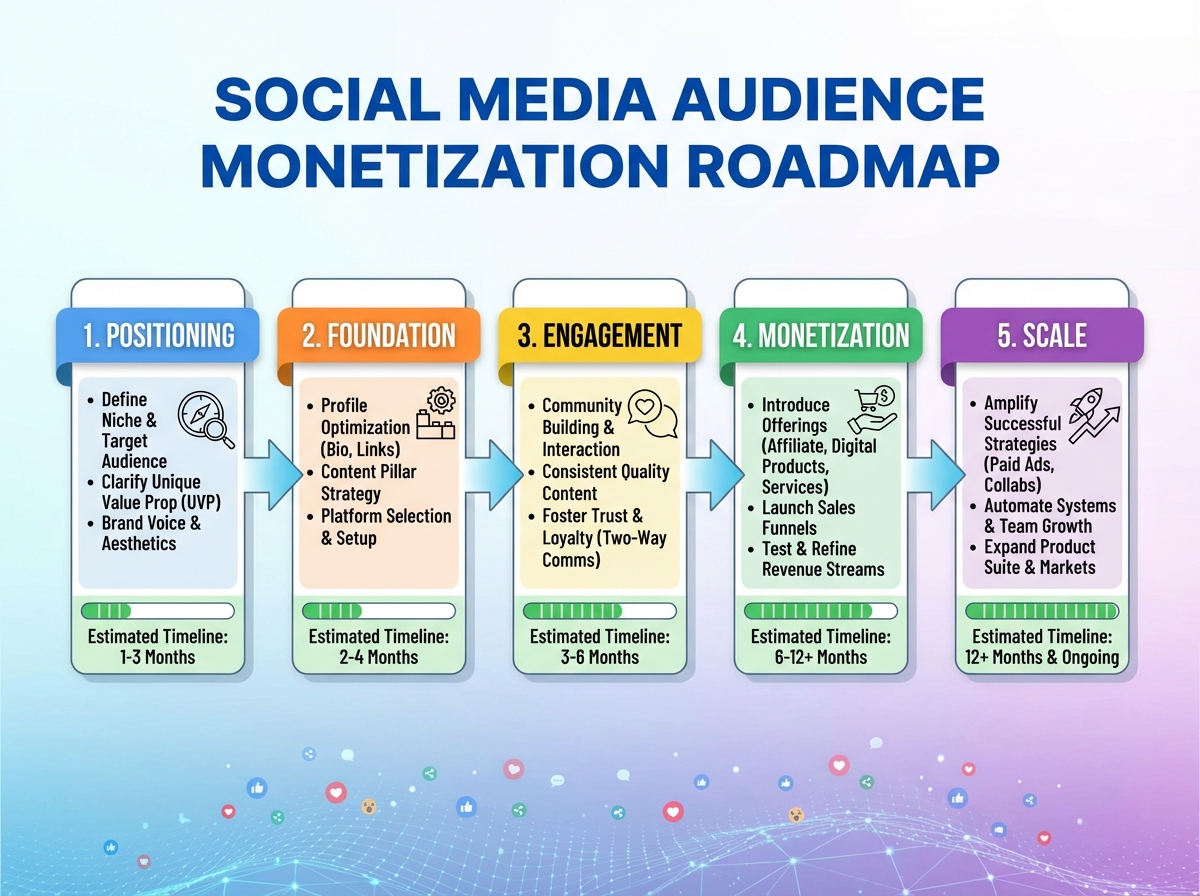
How Long It Actually Takes to Build a Monetizable Audience
| Stage | What You’re Doing | Time |
|---|---|---|
| Positioning | Defining your niche, symbolism, and voice | 1–2 weeks |
| Foundation Building | Consistent content, audience definition, metrics tracking | 4–8 weeks |
| Engagement Depth | Emotional triggers, integrity plays, community signals | 8–12 weeks |
| Monetization Activation | Attraction magnets, promotions, collaboration | 12–20 weeks |
| Total | From zero to monetizable audience | 5–6 months |
The order matters more than the speed — skipping positioning to rush content is the single most common reason people stall at a few hundred followers. And if it takes you eight months instead of five, that’s still faster than two years of posting without a strategy.
The Positioning Problem Nobody Talks About
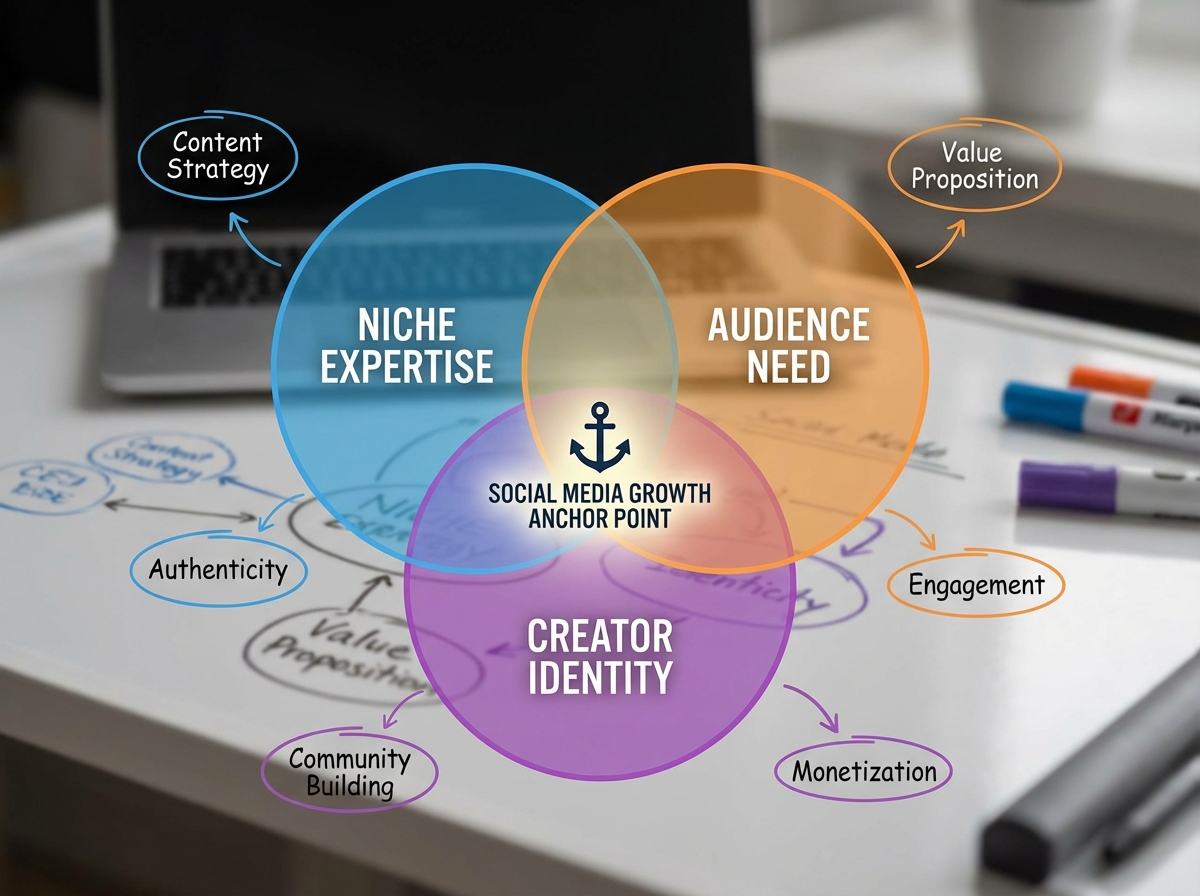
The biggest mistake people make when trying to grow a social media audience is starting with content before they’ve defined who they are on the platform. They post recipes, then motivational quotes, then business tips, then travel photos — and the algorithm can’t figure out what they are, so it stops showing their content to anyone. More importantly, the people who do land on their page can’t figure out what they’re supposed to follow them for.
Defining your specifics means committing to a lane. Not forever, but long enough for a clear identity to form around your name. What do you want people to think of when they hear your handle? What problem do you solve, what lifestyle do you represent, what knowledge do you carry that someone else genuinely needs? That clarity isn’t a tagline — it’s the invisible thread running through every piece of content you ever publish.
Your symbolisms extend this further. The colors, the phrases you repeat, the way you frame your stories, the visual signature people start to recognize — all of it is a kind of branding that happens mostly below the surface. When someone sees your post without reading your name and still knows it’s you, you’ve built something real.
Defining Your Audience Before You Try to Reach Them
Most creators think about their audience in terms of demographics: age, location, interests. That’s useful but shallow. The deeper question is emotional: what does this person feel right before they open social media? What are they hoping to find? What would make them stop scrolling and actually read?
When you know that, your content stops being a broadcast and starts being a conversation. You write captions that feel like someone is talking directly to one person — because they are. That specificity is counterintuitive; it feels like you’re narrowing your reach, but you’re actually deepening it. People share what feels personal to them, not what feels designed for everyone.
The moment this clicked for me was when a post I wrote for a very specific kind of person — someone two years into a side business, starting to doubt whether it was worth it — got shared more than anything I’d posted before. I wasn’t trying to go broad. I was trying to reach one person. Hundreds of them found it.
Feeding Your Audience Is Not What You Think It Means
Once you have positioning and audience clarity, the next wall you hit is content cadence. Not “how often should I post” — that’s the wrong question. The real question is: what kind of content does this specific audience actually need from me, and am I giving them enough of each type?
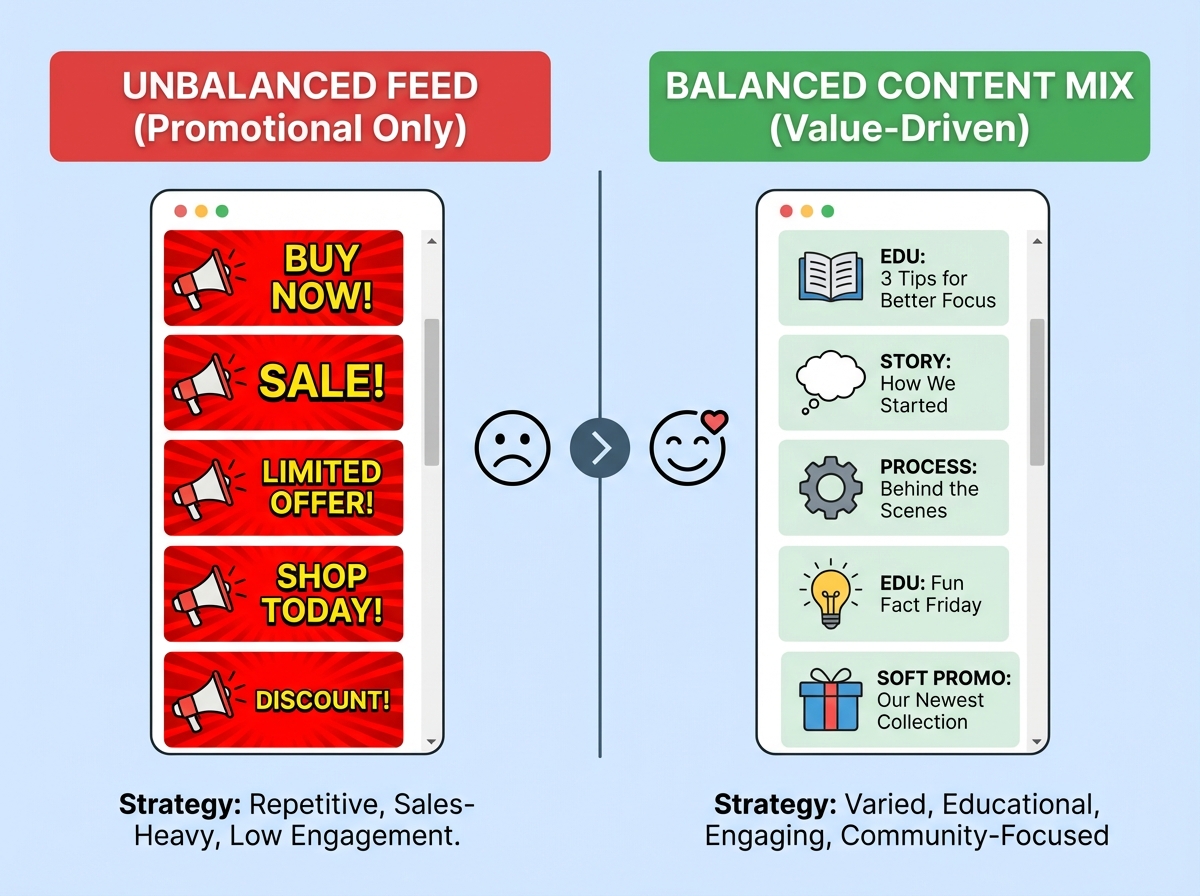
There are content types that build trust, content types that entertain, content types that educate, and content types that sell. Most people overload on one and neglect the others. A feed that’s all education feels like a textbook. A feed that’s all selling feels like a catalog. The mix is what creates the experience of a person, not a brand.
Sharing your processes — showing the work behind the work — is one of the most underused strategies for building an audience that actually cares. When people see how you think, how you make decisions, how you handle failure, they invest in your story. They show up not just for the content but for the person producing it. That investment is what eventually converts to sales.
The Emotional Triggers That Actually Build Loyalty
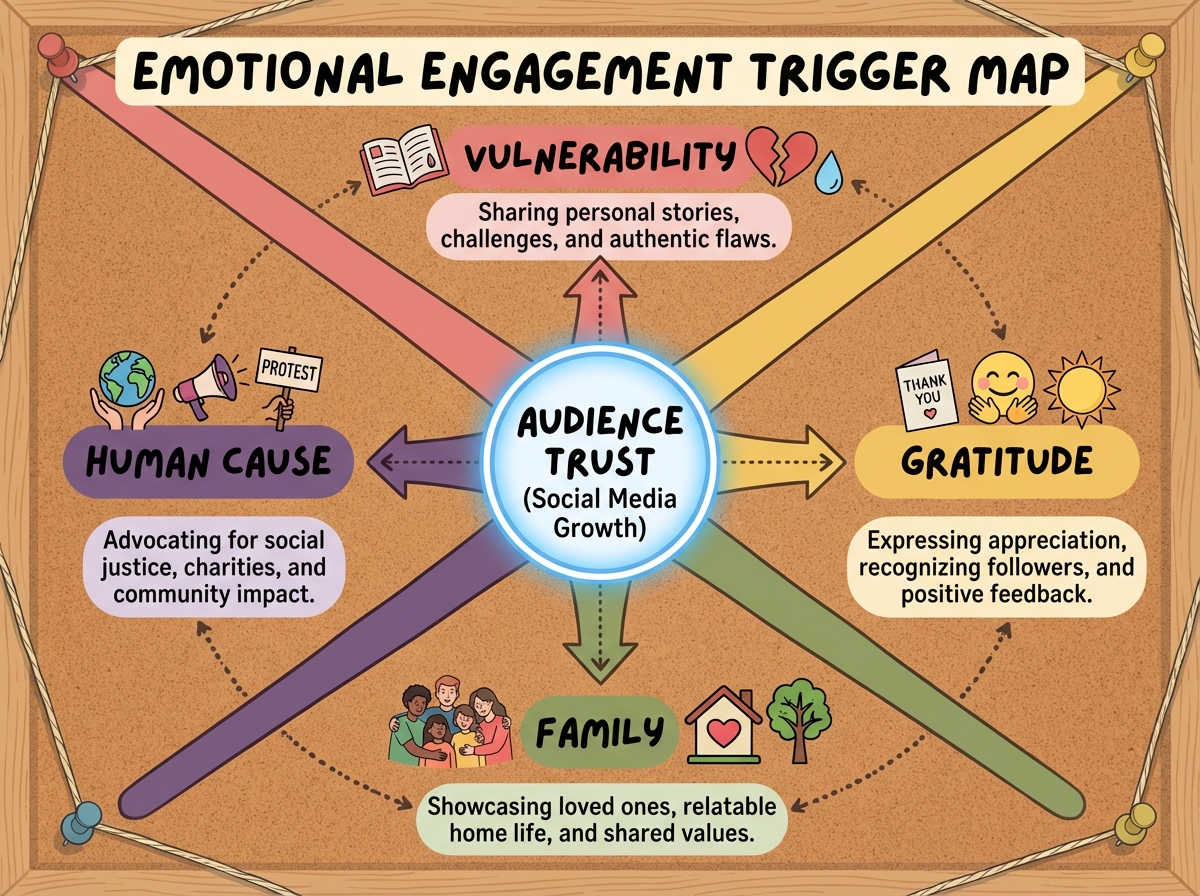
This is where growing a profitable social media audience gets counterintuitive. The things that build the deepest loyalty aren’t the most polished posts — they’re the most human ones. Vulnerability, used with intention, creates a level of connection that no amount of production value can match.
Vulnerability doesn’t mean oversharing. It means letting your audience see the real stakes of what you’re doing. The client you lost. The launch that flopped. The moment you almost quit. When you share those moments with honesty and without performing them for sympathy, people trust you in a way that smooth highlight-reel content never earns. They stop seeing you as a brand and start seeing you as someone they know.
Family and social triggers work similarly. Not because you’re exploiting sentiment, but because humans are wired to pay attention to other humans in relationship. Showing who you are in the context of your life — your values, your community, the causes you care about — makes you three-dimensional. And three-dimensional people are harder to scroll past.
Building the Bridge Between Audience and Income
A large, engaged following that doesn’t buy anything is a vanity metric with extra steps. The bridge between audience and income is built from a few specific strategies — and most creators skip them because they feel uncomfortable promoting themselves.
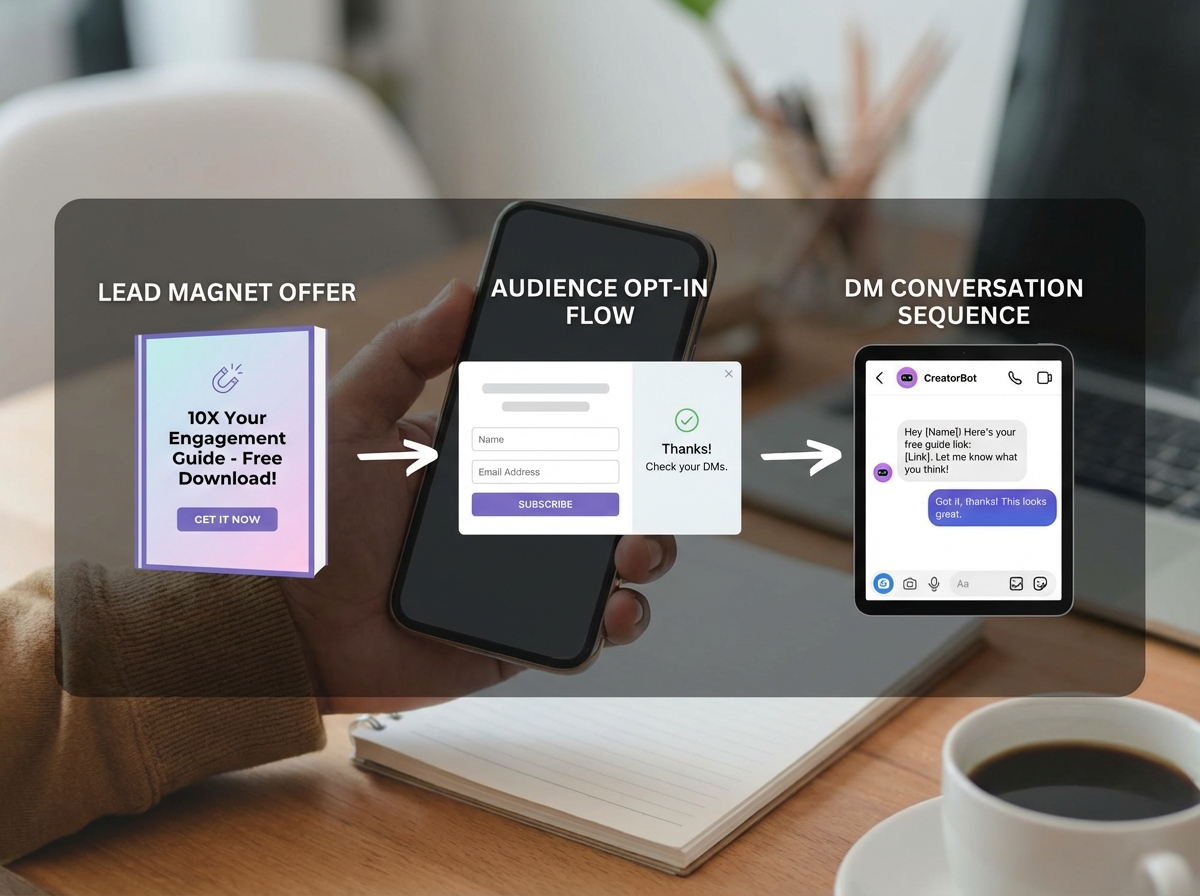
Attraction magnets are one of the clearest paths. A free resource, a challenge, a giveaway, a campaign — something that pulls people deeper into your world and gets them onto a list or into a conversation. Once someone has taken an action beyond just following you, the relationship is qualitatively different. They’ve said yes once. The second yes is always easier.
The integrity advantage is the long game underneath all of it. Every time you recommend something you actually believe in, every time you deliver more than you promised, every time you publicly support someone without expecting anything back — you’re building a reputation that compounds. The Instagram marketing for visual creatives principle applies here: what you build publicly becomes your social proof, and social proof is what converts browsers into buyers.
The Regularity and Collaboration Multipliers
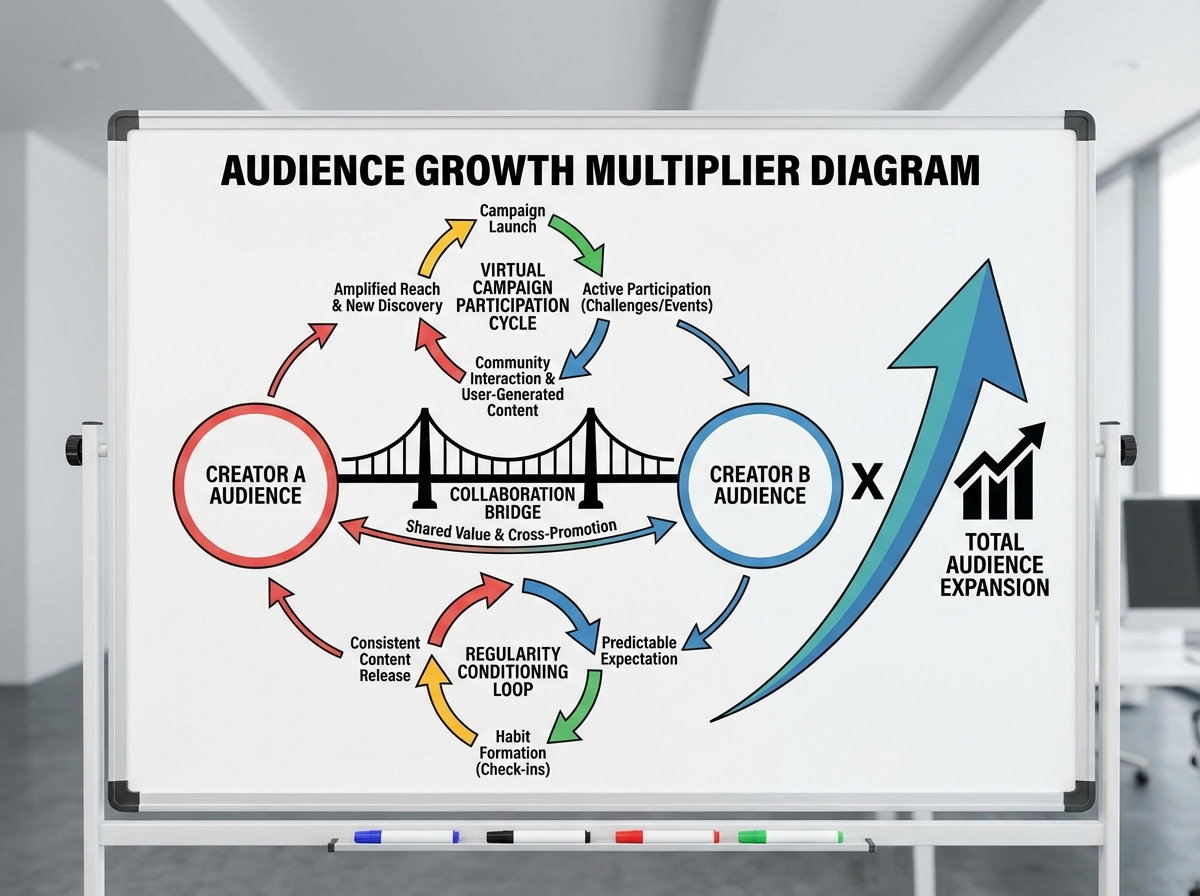
Regularity isn’t just about consistency — it’s about conditioning. When your audience knows that every Tuesday morning there’s something from you, they start to anticipate it. Anticipation is a form of relationship. It means they’re thinking about you before you’ve even posted. That’s a level of presence in someone’s life that’s genuinely hard to buy with ads.
Collaboration accelerates everything. Two creators with similar audiences who genuinely support each other’s work don’t just double their reach — they transfer trust. When someone your audience already respects tells them to pay attention to you, the credibility conversion is almost instant. This is why the strategy of unsolicited support — publicly championing other creators’ work without expecting reciprocity — eventually returns so much more than transactional cross-promotions.
Virtual campaigns and healthy competition mechanics are the amplifiers on top of a solid base. Challenges, leaderboards, public milestones — these mechanics turn passive followers into active participants. Participation creates emotional investment, and emotional investment is what makes someone feel like your success is also their success. That’s the mindset of a buyer, not just a follower.
For anyone also exploring how to turn that audience into business revenue, understanding small business marketing systems can help translate social influence into a real customer pipeline.
Public Presence and the Wealth Journey Signal
Something shifts when you start showing the journey — not the destination. Showcasing your journey of wealth doesn’t mean flaunting income; it means documenting the progression from where you started to where you’re going. People don’t just follow success. They follow becoming. The person who shows up broke and building is watched more closely than the person who shows up already arrived, because the audience can see themselves in the first story.
Public speaking — whether on lives, podcasts, panels, or even longer-form video — adds a dimension to your presence that text and static images can’t. When people hear your voice and see you think in real time, the trust formation accelerates dramatically. It’s harder to fake competence when you’re speaking unrehearsed. That’s exactly why doing it builds credibility faster than any other format.
The uncondescending advantage ties all of this together. The moment an audience feels talked down to, lectured at, or positioned below you — they leave. The creators who retain audiences for years are the ones who speak with their people, not at them. That posture, maintained consistently, is what makes someone’s content feel like a conversation with a knowledgeable friend rather than a curriculum from an expert.
Looking back on the whole arc of building a profitable social media presence, the thing that strikes me most is how simple the core is — and how easy it is to complicate it into paralysis. Here’s what I’d tell anyone starting this journey:
- Nail your positioning before you post a single piece of content — without it, all content effort is directionally random
- Track your metrics weekly, not monthly — patterns show up in the data before they show up in your gut feeling, and acting early is what separates growing accounts from stalling ones
- Share your process, not just your output — people buy from people they understand, and your process is the fastest way to make yourself understandable
- Use vulnerability as a strategy, not a confession — choose what to share based on what builds trust, not what feels cathartic to say
- Build one attraction magnet before you need it — waiting until you’re ready to monetize means you have no list, no warm leads, and no leverage
- Collaborate before it feels useful — the collaborations that compound most are the ones you started when neither party had anything obvious to gain
- Post on a schedule your audience can predict — regularity is a relationship signal, and missing it is a trust withdrawal
- Promote yourself uncondescendingly — sell the transformation, not your own superiority; the audience already knows they need help, they don’t need reminding
Leave a Reply