


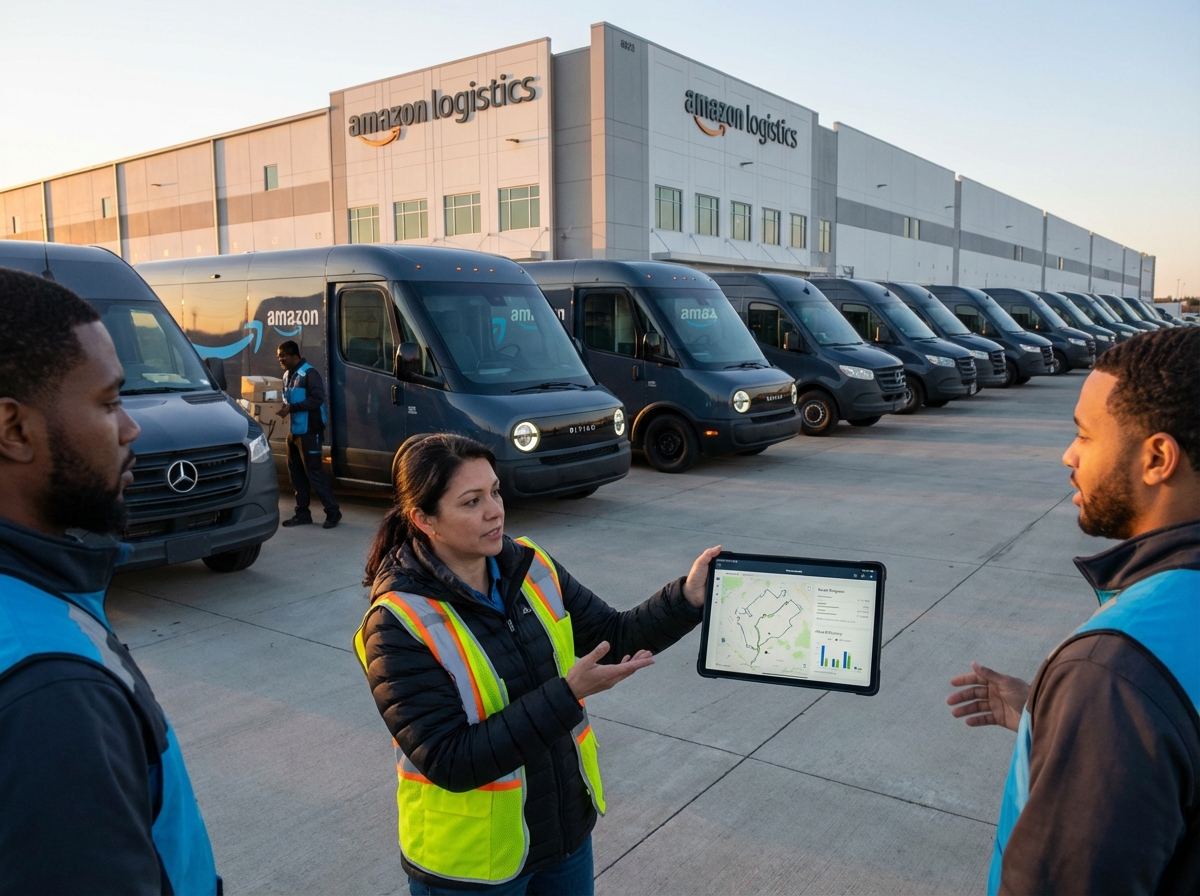
The first time I looked into starting an Amazon DSP, I thought it was a logistics play. Buy some vans, hire some drivers, collect a check. It took about two weeks of real research to understand just how wrong that framing was.
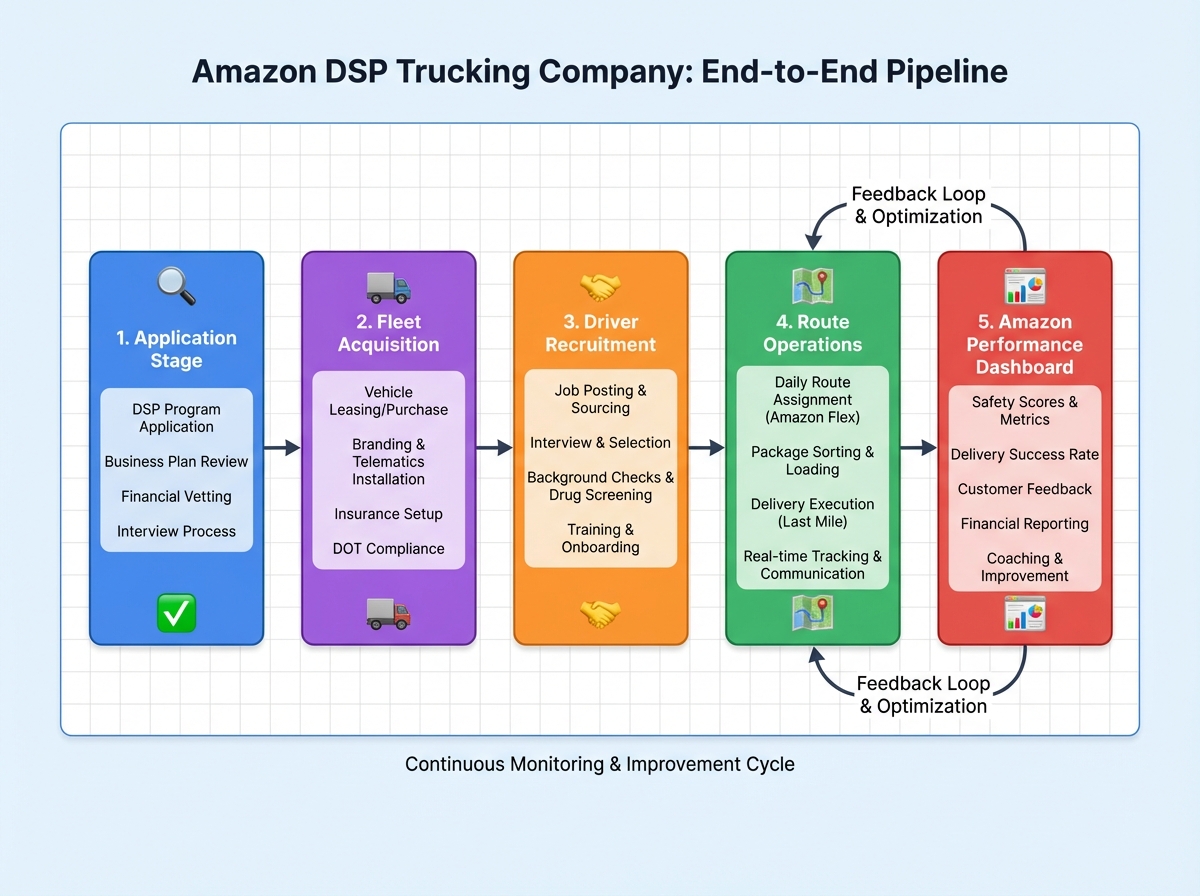
If you’re looking to learn how to start an Amazon DSP trucking company, the short answer is: it’s a people-first business that happens to use vehicles. Amazon handles your customer base, your routing technology, and your package volume — but everything that happens between your warehouse and the customer’s doorstep lives or dies on the team you build, the systems you install, and your willingness to operate hands-on every single day. DSP owners who treat it like passive income fail fast. DSP owners who show up, hire well, and manage their numbers closely can earn anywhere from $70,000 to $600,000 in their first year.
- You need at least $30,000 in liquid assets and a solid credit history before you can even apply
- Profitability hinges more on driver retention and fuel management than on route volume
- This is a full-time owner-operator model — Amazon requires hands-on daily involvement
What an Amazon DSP Actually Is
A Delivery Service Partner (DSP) is an independently owned small business that contracts with Amazon to handle last-mile delivery in a specific territory. You are not an Amazon employee. You are not a freelance driver. You are a business owner running a fleet — typically starting with five delivery vans — and employing a team of drivers who wear Amazon uniforms and operate Amazon-branded vehicles on routes Amazon assigns.
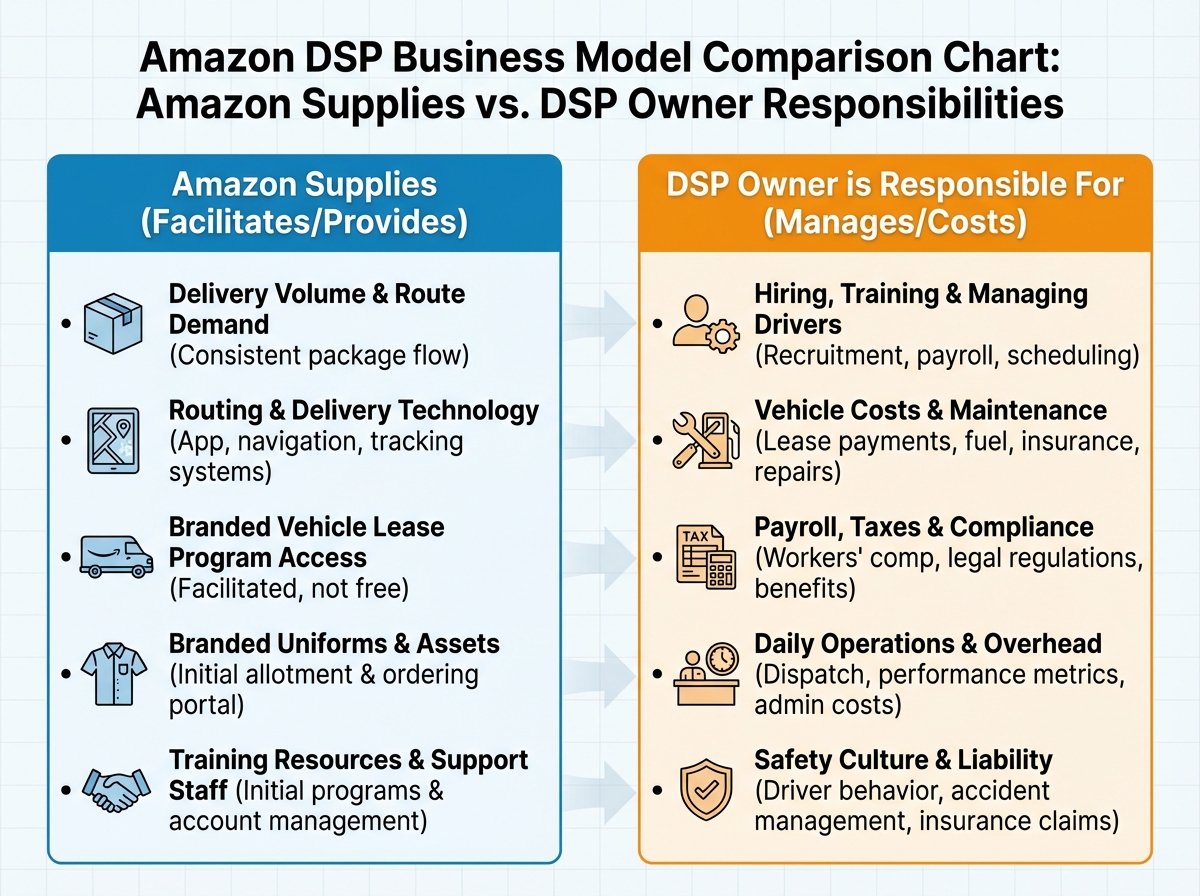
The distinction matters because it shapes every decision you’ll make. Amazon gives you route volume, logistics software, and performance metrics. You supply the leadership, the labor, the insurance, the payroll infrastructure, and the operational discipline. Think of it less like a franchise and more like a staffing-meets-logistics business running inside Amazon’s infrastructure.
| Element | Amazon Provides | You Provide |
|---|---|---|
| Package volume | ✓ | — |
| Route optimization software | ✓ | — |
| Performance dashboard | ✓ | — |
| Fleet vehicles (leased) | Negotiated deals | Lease payments |
| Drivers | — | ✓ |
| Payroll & HR | — | ✓ |
| Insurance | — | ✓ |
| Daily operations | — | ✓ |
Three Things That Catch First-Timers Off Guard
- Amazon scores your business on performance metrics daily — one bad week affects your standing
- Fleet leases are your largest fixed cost and they start before your first delivery
- Drivers don’t manage themselves; your entire reputation with Amazon rests on their behavior
How Long It Actually Takes to Launch
| Stage | What Happens | Estimated Time |
|---|---|---|
| Application & screening | Online form, financial review, interviews | 2–6 weeks |
| Approval & training | Amazon onboarding program | 3 weeks |
| Fleet setup | Lease signing, vehicle delivery | 1–2 weeks |
| Hiring first team | Recruiting, screening, onboarding drivers | 2–4 weeks |
| Insurance & payroll setup | Policies in place, system configured | 1–2 weeks |
| First live routes | Soft launch with partial fleet | Week 10–16 |
| Total to first delivery | ~3 to 4 months |
The sequence matters more than the speed — rushing the hiring phase to hit a launch date is the single most expensive mistake new DSP owners make. And if your timeline stretches to five or six months, that’s not failure; it’s thoroughness.
The Application Is Not a Formality
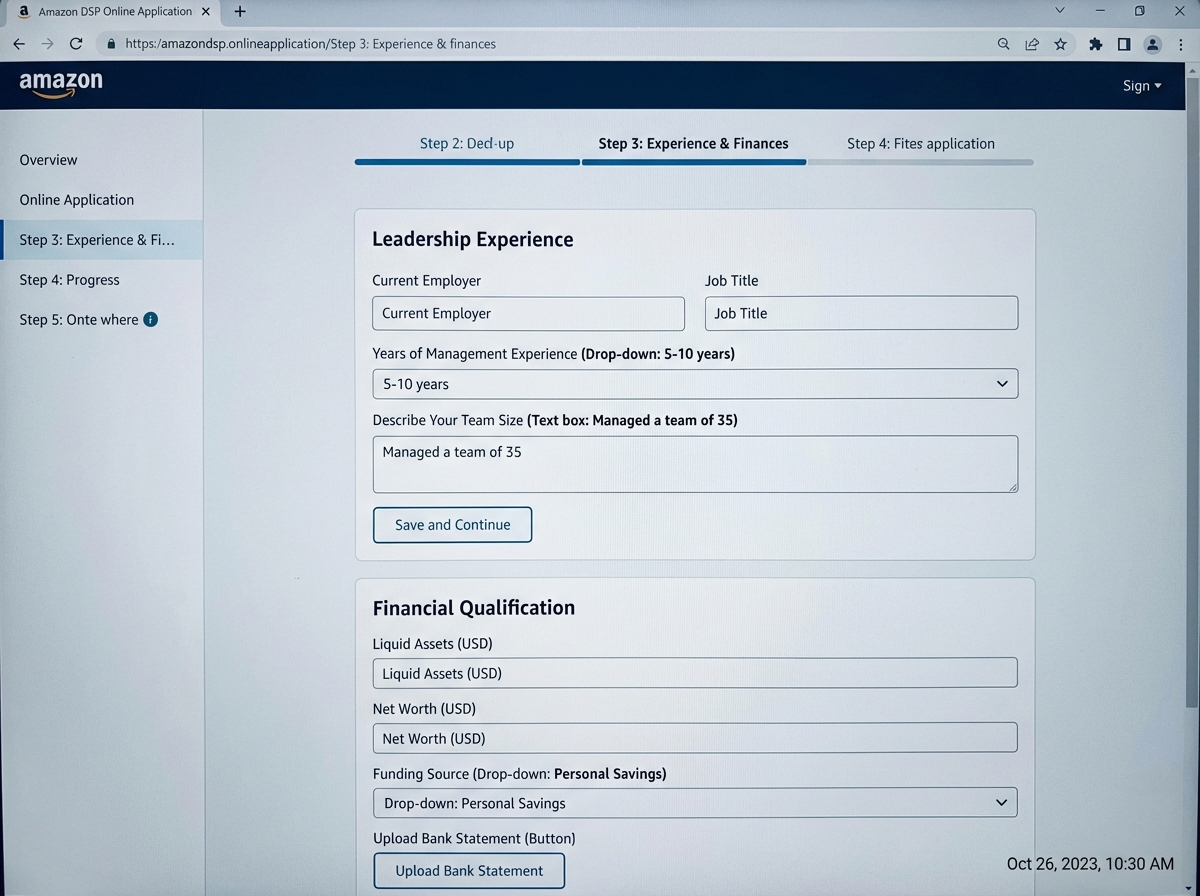
Most people treat the Amazon DSP application like a job application. They fill it out, submit it, and wait. What they don’t realize is that Amazon is running a leadership assessment underneath the logistics questions. They want to know if you’ve hired people before, if you’ve managed teams under pressure, and whether you have the financial position to absorb early operational volatility without defaulting on your lease.
The minimum bar is $30,000 in liquid assets and a clean credit history — but the candidates who move through screening fastest are those who can demonstrate actual management experience. Not theoretical. Actual. If you’ve run a team, led a shift, or owned any kind of business before, lead with that. If you haven’t, think carefully about what in your background demonstrates that you can hold people accountable and make fast decisions under uncertainty.
The application itself takes two to three hours to complete online. The questions probe your approach to team-building, your financial literacy, and your commitment to being a full-time, hands-on operator. Amazon is explicit that DSP ownership is not a side hustle — they want to know you understand that.
Building Your Fleet Without Getting Buried in Costs
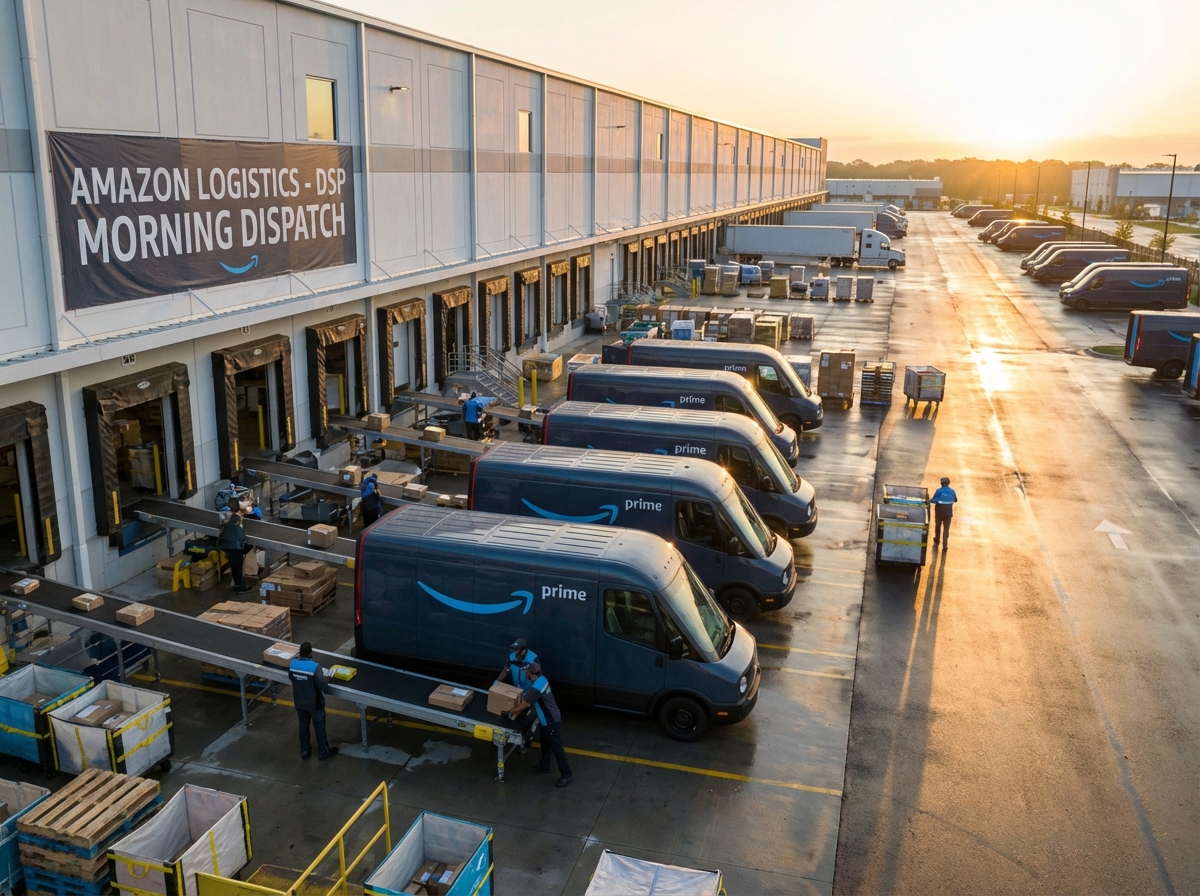
You start with five delivery vans. That’s the standard entry point for a new Amazon DSP trucking business. Amazon has negotiated lease deals with manufacturers, which lowers your barrier to entry, but those monthly lease payments start the moment the vehicles are in your possession — not the moment you’re generating revenue.
The biggest mistake people make when building an Amazon DSP fleet is underestimating fuel as a recurring operating cost. Gas isn’t a line item you round up a little in a spreadsheet. For a five-van fleet running full routes daily, fuel can easily consume 20–30% of your gross revenue depending on route geography and local prices. You need a fuel card program, a monitoring system, and ideally dedicated fueling times built into your driver schedule before you launch — not after your first month’s P&L surprises you.
As your operation grows, some owners move toward owning their fleet outright rather than leasing. That shift restructures your cost profile entirely and opens secondary revenue streams — like subleasing vehicles to other DSP owners — but it requires capital that most new operators don’t have in year one. Start with leasing, understand the cost structure, and revisit fleet ownership once you have six months of real financial data in hand.
For context on managing a small business fleet from a financial structure perspective, the same principles that apply to starting a profitable service business from scratch — separating fixed costs, managing variable expenses, and building cash reserves — apply directly here.
Hiring Is Where Amazon DSP Owners Win or Lose
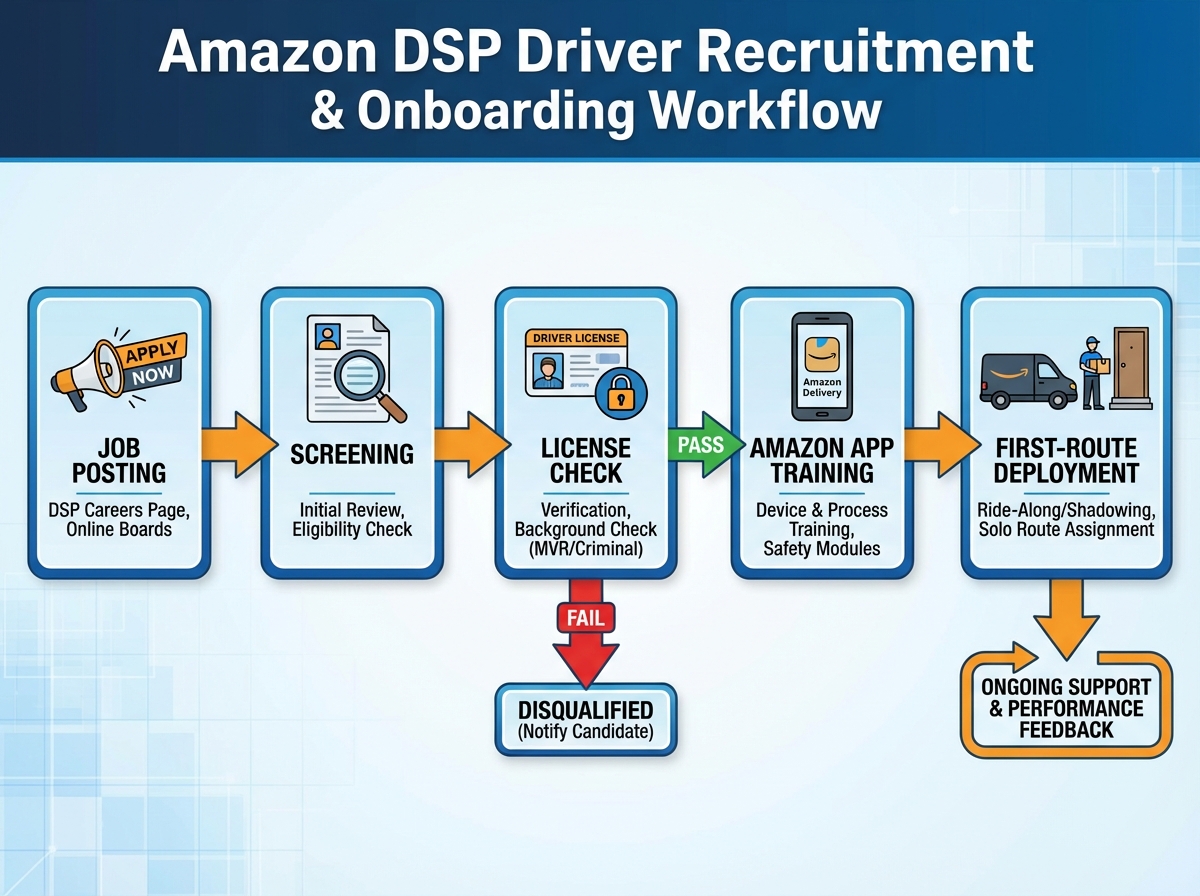
The single biggest mistake I’ve seen new DSP owners make is hiring fast and hoping for the best. You’re under pressure — your vans are ready, Amazon is assigning routes, and you need bodies in seats. So you cut corners on screening. That driver with the questionable record, or the one who seemed a little disorganized in the interview — you talk yourself into it because you’re short-staffed. Two months later, that driver is costing you safety demerits on your Amazon scorecard, and your standing in the program is taking a hit you can’t easily recover from.
Building a strong recruitment strategy for your Amazon DSP means writing job descriptions that attract reliable, customer-facing people — not just anyone who has a clean driver’s license. You don’t need CDL holders. Drivers need a standard license and a clean driving record. But beyond the legal minimum, you’re looking for people who can follow a precise digital route app, handle customer interactions without escalating problems, and show up consistently. That last one — consistency — is the trait that separates drivers who anchor your operation from drivers who create chaos in it.
Once you’ve hired, your payroll system needs to be in place before your first payday. Running payroll manually for even a small team is a time sink that will pull you out of operations. Set up a payroll platform before you hire anyone, run a test cycle, and confirm the tax withholding logic is correct for your state. The last thing you want in your first month of operations is to have a payroll error that erodes your team’s trust before the business has found its footing.
Insurance and Liability Are Not Optional Details
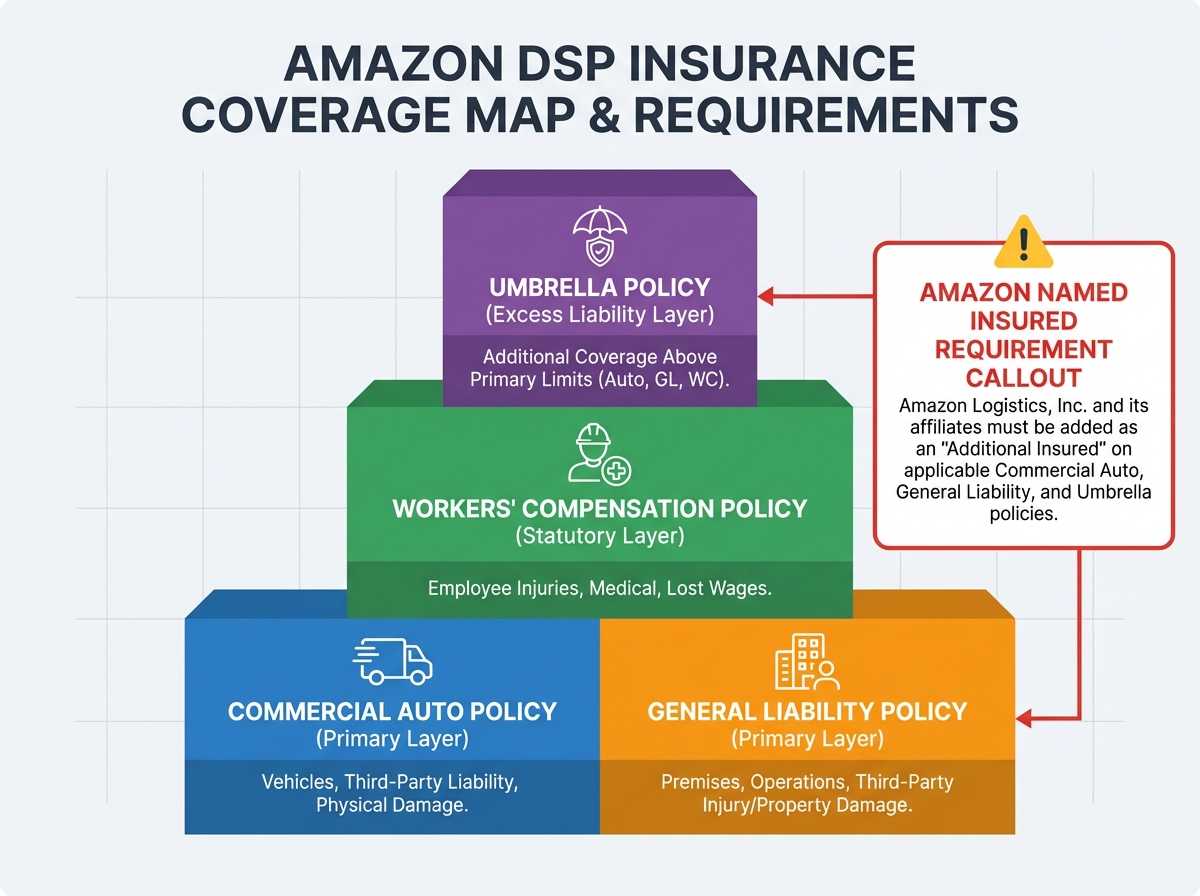
Insurance is the part of the Amazon DSP startup process that new owners most consistently underestimate. You need commercial auto coverage for your entire fleet, workers’ compensation for every driver, general liability protection for your business entity, and in many cases, umbrella coverage on top of all of it. These are not small line items.
Amazon requires proof of adequate insurance before your operation goes live, and their standards are specific. The policies need to name Amazon as an additional insured on certain coverage types — which means you can’t just hand your insurer a generic commercial auto request and walk away. You need a broker who has written policies for DSP operations before, because the language Amazon requires in those certificates matters. Going with the cheapest quote from a broker who doesn’t understand the program can get your application stalled or your policy rejected at activation.
The protection layer also extends to accident handling. Accidents happen — even with good drivers, on good routes, with well-maintained vehicles. Your protocol for what a driver does the moment a vehicle is involved in an incident needs to be documented, trained, and rehearsed before you ever put a driver on the road. Amazon tracks accident data. Your response speed and quality of incident documentation affect your standing in the program.
What Running the Numbers Actually Looks Like
Accounting for an Amazon DSP trucking company is straightforward in structure but unforgiving in execution. Your revenue comes from Amazon on a contractual per-route, per-stop model. Your costs fall into predictable buckets: lease payments, fuel, driver wages, payroll taxes, insurance premiums, and maintenance reserves. The margin lives in how tightly you manage the variable costs.
From day one, you need separate business banking — not a personal account with a mental note about which transactions are business-related. You need a dedicated fuel card program that lets you track consumption by vehicle. You need a payroll platform that handles tax withholding automatically. And you need a simple monthly P&L review where you’re looking at cost-per-route, cost-per-driver, and fuel efficiency against Amazon’s benchmarks.
The owners who build profitable Amazon DSP businesses are not financial experts. They’re operationally honest — meaning they look at their numbers every month without flinching, catch cost creep early, and make personnel and fleet decisions based on actual data rather than gut feel. That discipline, more than any single strategy, is what separates a DSP that scales from one that stalls.
If you’re thinking about the broader entrepreneurial framework behind running a business like this, understanding online entrepreneurship principles every solopreneur must know before starting will sharpen your thinking on business structure, cash flow, and owner mindset before you’re managing a team.
The Leadership Reality Nobody Talks About
There’s a version of the Amazon DSP story that gets told online that focuses almost entirely on the revenue potential. The $70,000 to $600,000 first-year range is real — but the spread in that range exists almost entirely because of the quality of the owner’s leadership, not the size of the territory or the volume of routes.
This business requires a specific type of person. You need to be comfortable making decisions quickly with incomplete information. You need to hold people accountable without burning through your team. You need to communicate clearly with Amazon, with your drivers, with your insurance broker, and with your accountant — sometimes all on the same day. And you need to do all of that while staying physically present in your operation, not managing from a distance.
The leadership quality that separates thriving DSP owners from struggling ones isn’t charisma or business school credentials — it’s consistency. Showing up at the warehouse at dispatch time. Following through on what you told your drivers. Reviewing your performance scorecard before Amazon has to bring it to your attention. These aren’t glamorous habits, but they’re the ones that compound into a business that actually works. If building a startup through systematic frameworks interests you, exploring innovation frameworks that actually work can help you develop the operational thinking this kind of business demands.
How to Apply and What to Do Right Now
Looking back, the gap between knowing about the Amazon DSP program and actually running a route is smaller than it feels from the outside — but only if you move through the stages in the right order and don’t skip the unglamorous parts.
Here’s what to do immediately, in concrete terms:
- Audit your liquid assets before you do anything else. If you don’t have $30,000 available without touching retirement accounts, start there — the application won’t move without it.
- Pull your credit report and fix any issues now. Amazon reviews credit history as part of screening. A dispute you could have resolved in 30 days shouldn’t delay your application by months.
- Document your leadership experience in writing. Before filling out the application, write a clear summary of every team you’ve managed, every hiring decision you’ve made, and every business you’ve operated. The application questions reward specificity.
- Find an insurance broker with DSP experience before you’re approved. Shopping for the right broker after approval puts you under time pressure. Find one early, understand the coverage requirements, and get a preliminary quote so there are no surprises.
- Set up a business entity and bank account before signing anything. Your LLC or S-Corp needs to exist before you sign a lease or hire a driver. Mixing personal and business finances from day one creates accounting problems that compound over years.
- Build your payroll system before your first hire. Run a test payroll cycle with dummy data so you know the platform works and the tax logic is correct before a real employee depends on it.
- Create a written accident protocol for drivers. One page. What to do, who to call, what to photograph, and what not to say. Every driver should sign it before their first route.
- Track fuel by vehicle from week one. The data you collect in your first 90 days becomes your operational baseline. Without it, you’re making fleet and staffing decisions blind.
Leave a Reply