


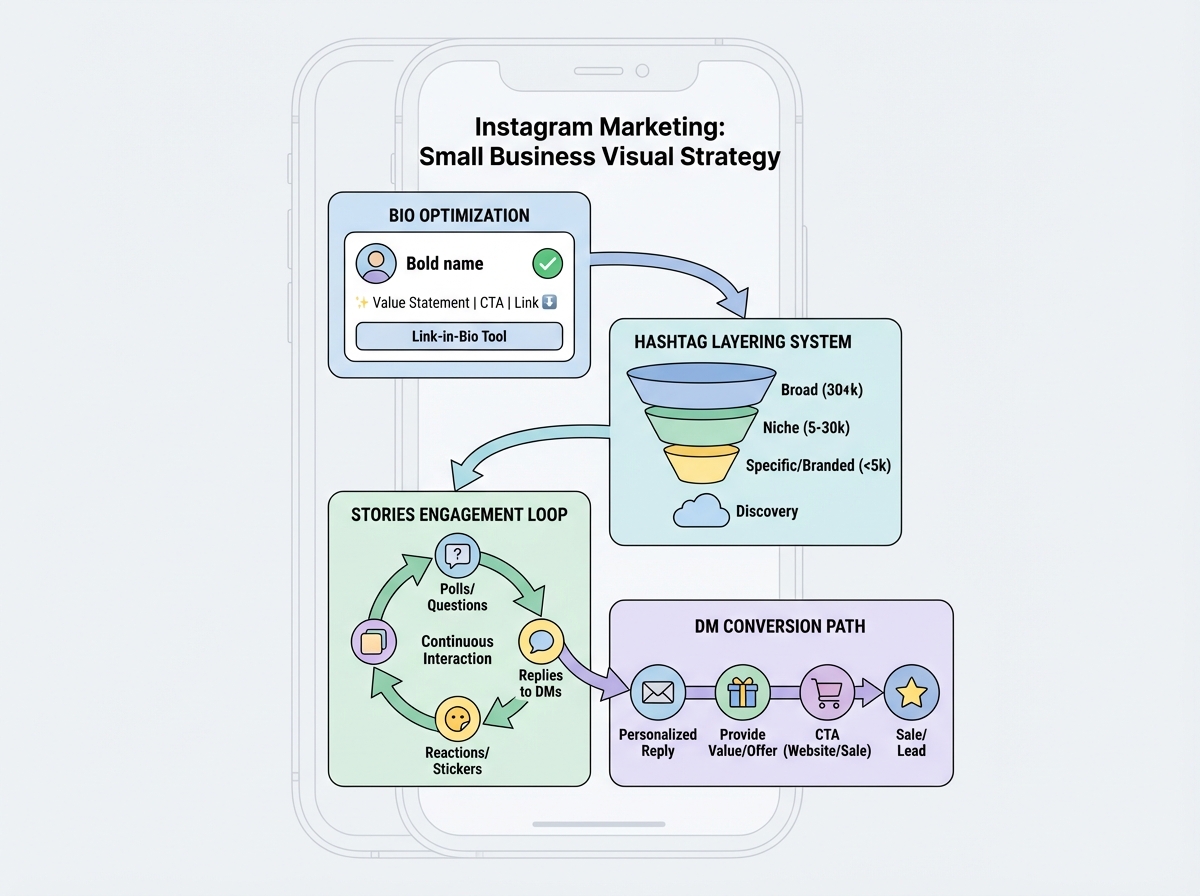
You’ve been posting for weeks, maybe months. The likes trickle in from friends and family, and every time you check your follower count, it’s basically the same number it was last Tuesday. Meanwhile, you can see other businesses in your niche pulling real engagement — comments, DMs, actual customers — and you have no idea what they’re doing differently.
If you’re looking to learn Instagram marketing for a small account, the honest answer is that the platform does work — but not the way most beginners assume. Instagram marketing for small business owners is not about going viral or posting more often. It’s about setting up the right foundation, targeting the right audience through your BIO and hashtags, and then using Stories and DMs to convert attention into actual conversations. Once those three layers are in place, growth becomes something you can control rather than something that just happens to you.
- Your BIO is your landing page — if it doesn’t speak directly to your ideal client, no amount of content will fix your engagement problem.
- Hashtag layering (mixing large, medium, and niche-specific tags) is how small accounts actually get discovered without paying for ads.
- DMs and Stories are where followers become buyers — treat them as your primary conversion tools, not afterthoughts.
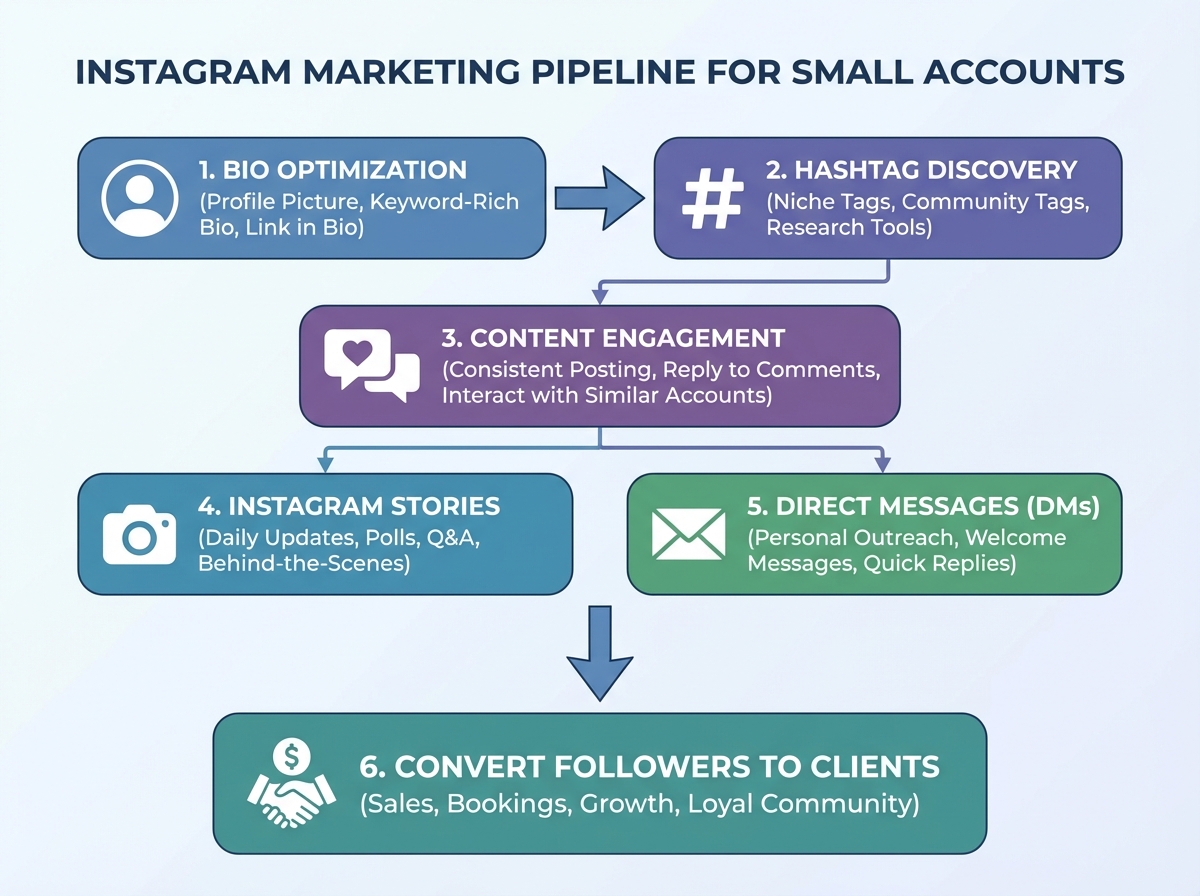
What Instagram Marketing for Small Accounts Actually Means
Instagram marketing, at its core, is using the platform’s features — profile, posts, hashtags, Stories, and direct messages — to attract the right people and move them toward a business outcome. For small accounts (typically under 5,000 followers), the dynamics are different from large creator accounts or brand pages with paid promotion budgets.
Small account Instagram marketing relies almost entirely on organic reach. That means discoverability through hashtags, profile optimization for the right audience signal, and engagement loops that tell the algorithm your content is worth showing to more people. The distinction matters because the tactics that work for a 500K account — broad appeal content, trending audio — often backfire at sub-5K where niche specificity is your only real competitive advantage.
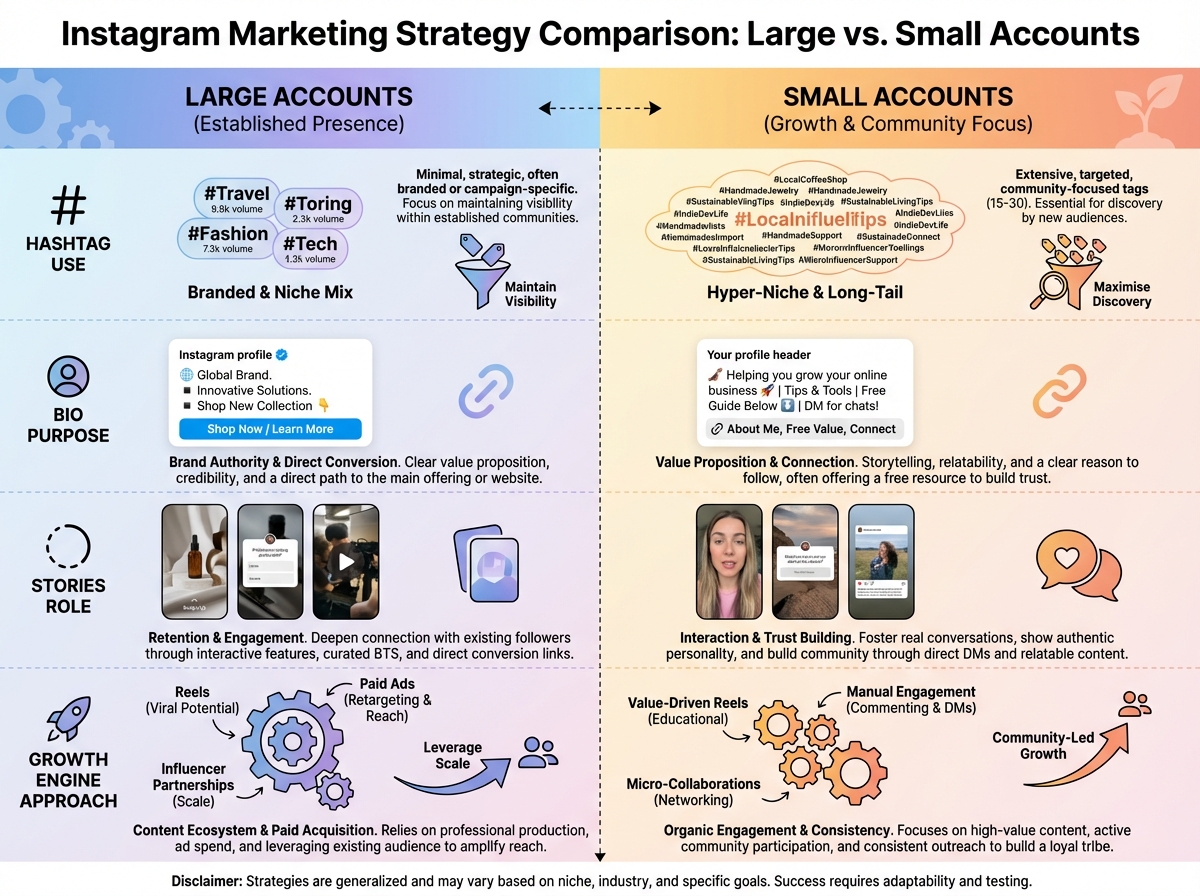
| Feature | Large Accounts (50K+) | Small Accounts (Under 5K) |
|---|---|---|
| Primary reach driver | Algorithm broad push | Hashtag discovery + engagement pods |
| BIO purpose | Brand reinforcement | Direct client conversion |
| Stories role | Entertainment | DM conversation starter |
| Hashtag strategy | Broad/trending | Layered niche-specific |
| Growth engine | Viral content | Consistent targeted engagement |
Three Things That Are Actually True About Small Account Growth
- Your follower count doesn’t determine your reach — your hashtag targeting does.
- A BIO rewritten for one specific type of client outperforms a polished aesthetic every time.
- The account that replies to every comment in the first hour beats the account that posts twice as often.
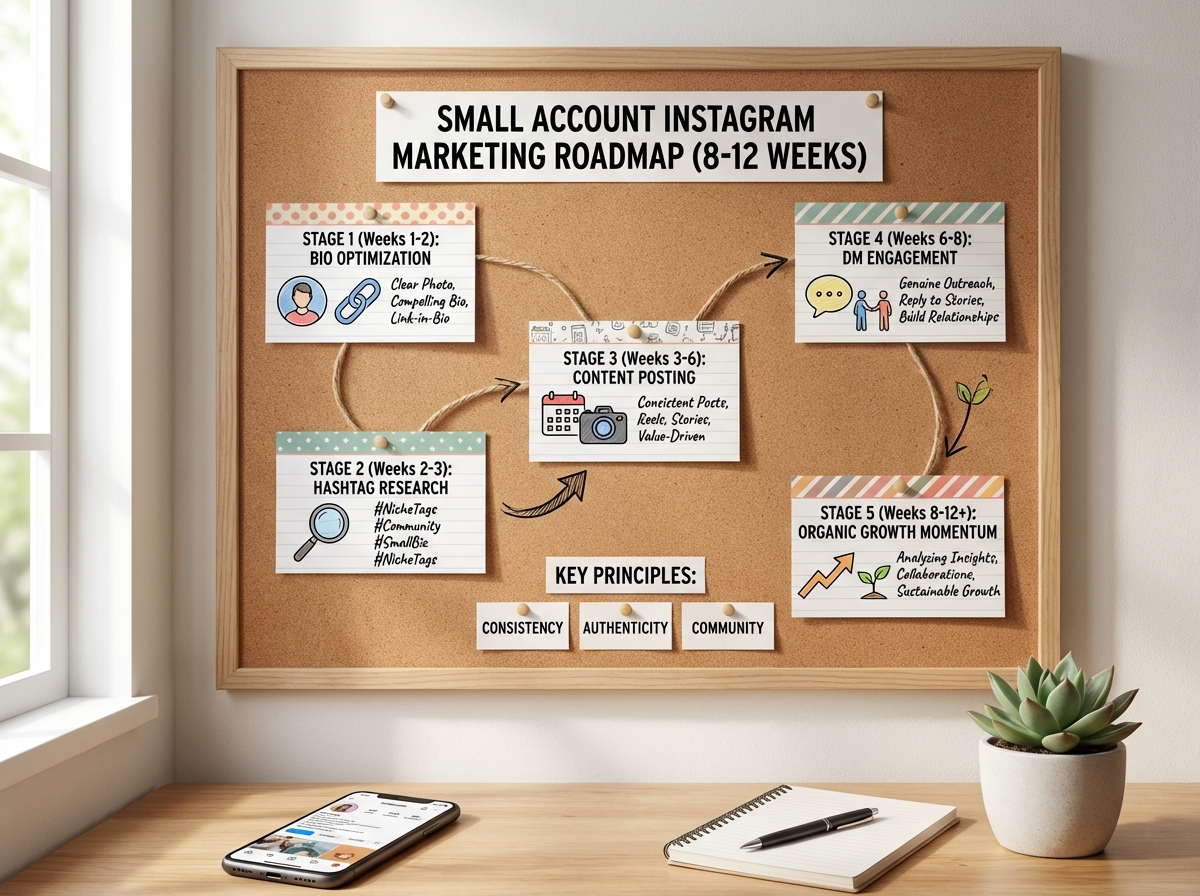
How Long It Takes to See Real Instagram Marketing Results
| Stage | What You’re Doing | Time |
|---|---|---|
| Foundation | BIO rewrite, marketing plan, niche clarity | Week 1 |
| Hashtag research | Finding layered sets for your specific niche | Week 1–2 |
| Content + engagement | Posting consistently, commenting, testing Stories | Week 2–6 |
| DM conversations | Turning engaged followers into leads | Week 4–8 |
| Visible momentum | Meaningful follower and engagement growth | Month 2–3 |
| Total | From zero strategy to consistent organic growth | 8–12 weeks |
The order you work through these stages matters far more than how fast you move. If you jump straight to posting without fixing your BIO and hashtag system first, you’re essentially building on sand — traffic arrives, finds nothing relevant, and leaves.
The BIO Problem Nobody Talks About Until It’s Too Late
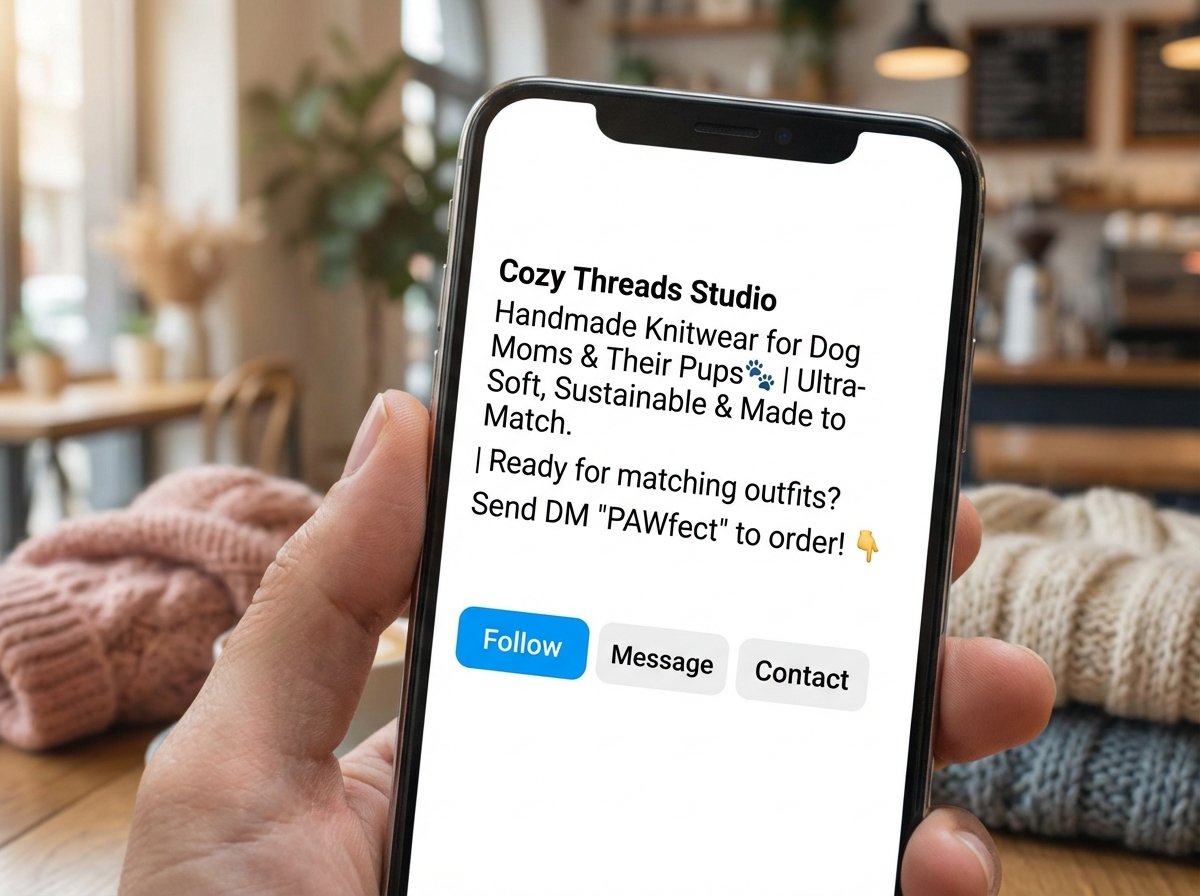
The single biggest mistake people make when starting Instagram marketing is treating their BIO like an “about me” section. They write their job title, drop an emoji or two, and leave a vague tagline that could belong to anyone in their industry. Then they wonder why they’re getting followers but no real inquiries.
Your BIO is the only piece of real estate on Instagram that’s permanently visible every time someone lands on your profile. And for a small account, most of the people landing there came from a hashtag search or an engagement interaction — which means they don’t know you yet. They’re evaluating in three seconds whether your account is for them. If your BIO says “helping people live their best life” or “passionate about business,” the answer is: probably not for me.
The version that actually works is specific. It names the exact person you help, the outcome you deliver, and what they should do next. Something like: “I help [specific type of business owner] get [specific result] — DM me [specific word] to start.” That structure does something a generic BIO never can — it pre-qualifies visitors and tells them immediately that you’re speaking to them. Rewriting your BIO to this formula is the first move, not an afterthought.
A one-page Instagram marketing plan lives right alongside your BIO work. Most people skip this because it sounds corporate. But writing down your target audience, your content pillars, your posting rhythm, and your engagement goal — even on a single sheet of paper — forces decisions you’d otherwise keep deferring. It also gives you something to refer back to when you fall into the trap of posting whatever feels convenient rather than what actually serves your growth.
The Hashtag System That Actually Gets Small Accounts Discovered
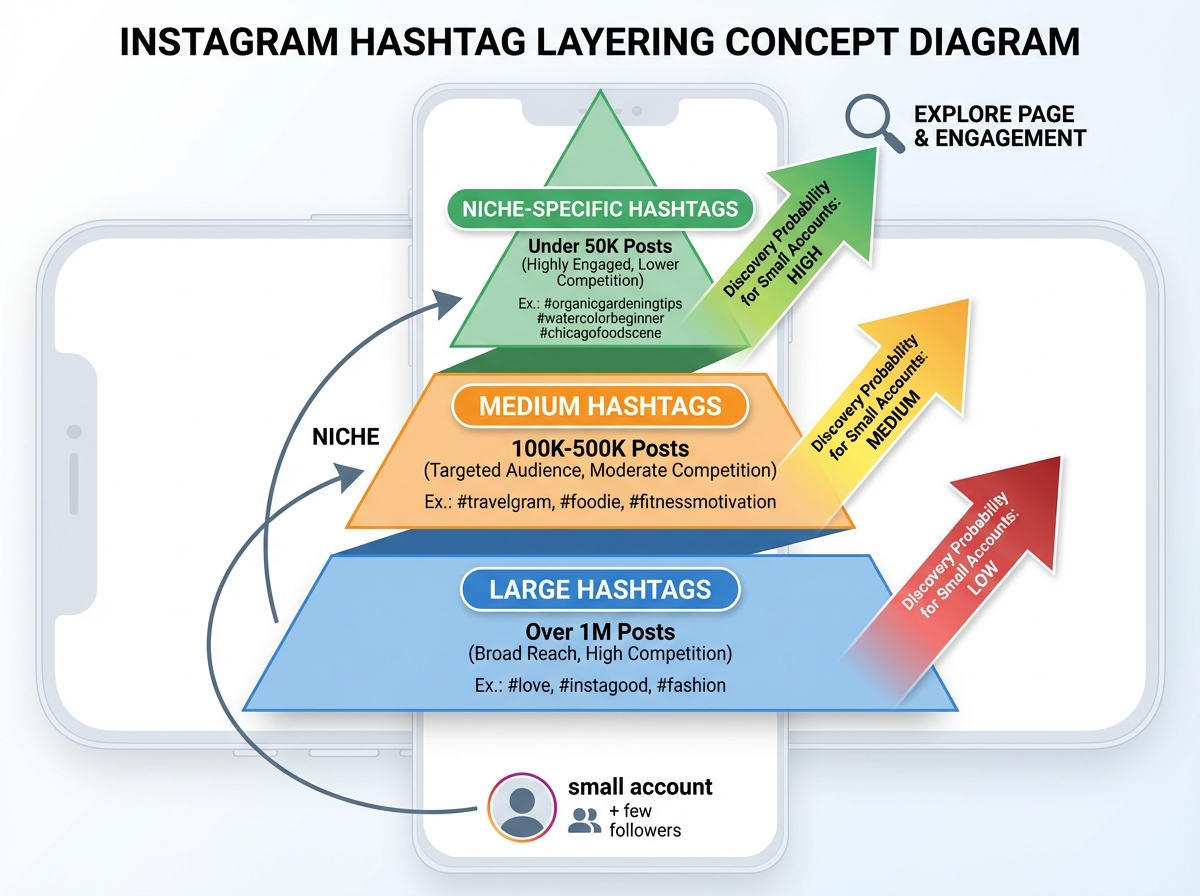
Most people approach hashtags wrong. They pick the biggest ones — #entrepreneurship, #smallbusiness, #marketing — and then wonder why their posts vanish into a feed of millions. That’s not a hashtag strategy; it’s hoping a needle finds you in a haystack the size of a continent.
Hashtag layering is the system that actually works for small accounts. The idea is to use a mix of three tiers: large hashtags (1M+ posts) for long-shot exposure, medium hashtags (100K–500K posts) where your content has a real chance of appearing in the top section, and niche-specific hashtags (under 50K posts) where your ideal client is actually browsing. For any given post, you build a set across all three tiers based on the exact content you’re sharing — not a saved block of 30 tags you paste every time.
The niche-specific tier is where the real magic happens. A food coach posting under #nutritioncoachforbusymoms with 8,000 posts has a dramatically better chance of reaching the right person than the same post buried under #health with 400 million. Finding those specific tags requires actual research — browsing from your target client’s perspective, looking at what tags appear in competitor posts, and testing which combinations drive profile visits from the right kind of account. The tools exist inside Instagram itself; you don’t need expensive third-party software to start.
One thing people don’t realize until they test it: hashtag sets need to rotate. Using the exact same 30 hashtags on every post signals repetitive behavior to the algorithm, and reach drops over time. Building three to five distinct hashtag sets for your different content types — and rotating them — keeps your posts eligible for fresh discovery.
Why Engagement Is the Lever, Not the Vanity Metric
There’s a version of Instagram engagement that feels productive but isn’t — the passive kind where you scroll, double-tap, and move on. That’s consumption, not engagement. Real engagement for a small account doing Instagram marketing for small business means leaving meaningful comments on posts in your niche, replying to every comment on your own content within the first hour, and starting genuine conversations rather than performing activity.
When you comment something substantive on a post in your niche — something that actually adds to the conversation rather than “great post!” — the person who posted sees it, their followers see it, and if they reply, their algorithm surfaces your account to people who already care about that topic. For a 300-follower account, this is disproportionately powerful. You’re essentially borrowing reach from accounts that have already built the audience you’re trying to reach.
DMs are where the real business happens, though most small account owners treat them as a last resort. Sending a direct message to someone who just followed you, who commented on your post, or who you’ve had a genuine back-and-forth with in the comments — done without a pitch — opens a conversation channel that no post can replicate. The rule is simple: add value first, always. Ask what they’re working on. Share something relevant. Let the relationship develop. The accounts that close clients from Instagram are the ones having 10 conversations a week in DMs, not the ones broadcasting to 10,000 followers.
How Instagram Stories Change the Game for Small Accounts
Stories feel low-stakes — they disappear in 24 hours, they’re casual, they don’t need to be polished. That’s exactly why they work so well for small accounts doing serious business on Instagram.
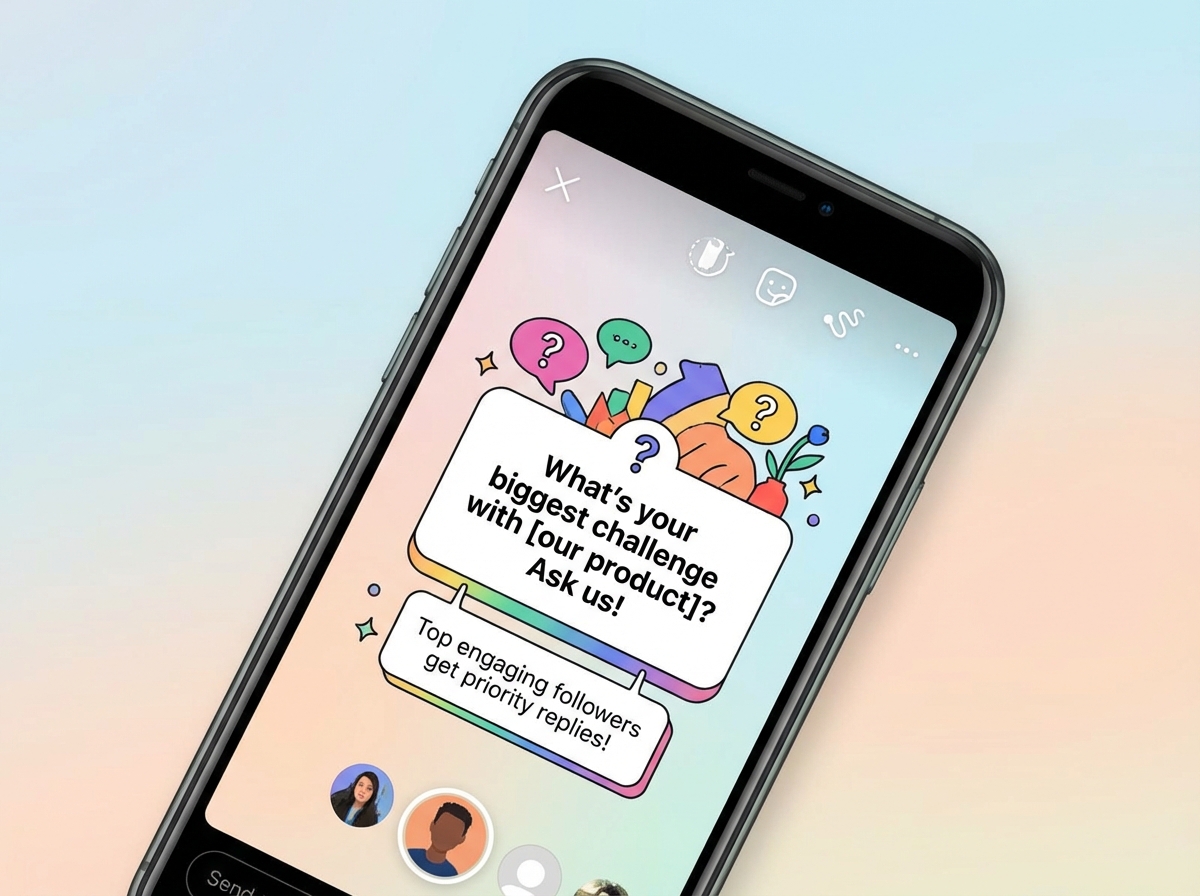
When you post a Story with a question sticker or a poll, every person who responds to it moves up in your engagement graph. Instagram’s algorithm treats DM responses as the highest-quality engagement signal on the platform. So Stories aren’t just content — they’re a mechanism for building the one-on-one connection that Instagram’s feed can’t generate on its own. A Story asking “what’s your biggest challenge with [your topic] right now?” turns passive followers into conversation partners, and conversation partners into people who actually remember you exist when they’re ready to buy.
The different account types matter here too. A personal brand account uses Stories differently than a product-based business or a service provider. Personal brands use Stories to share process, opinion, and behind-the-scenes context that makes the human being feel real. Product accounts use Stories for demonstrations, before-and-afters, and social proof. Service providers use Stories to invite questions and establish expertise through short, specific answers. Knowing which mode you’re in shapes every creative decision you make for Stories — and stops you from defaulting to content that feels like broadcasting instead of connecting.
Tools That Make the Content Side Manageable
For a small account run by one person — often the same person who runs the actual business — content creation has to be fast. The tools that solve this aren’t complicated, but most beginners waste time on the wrong ones or skip them entirely because they don’t realize how much friction they eliminate.
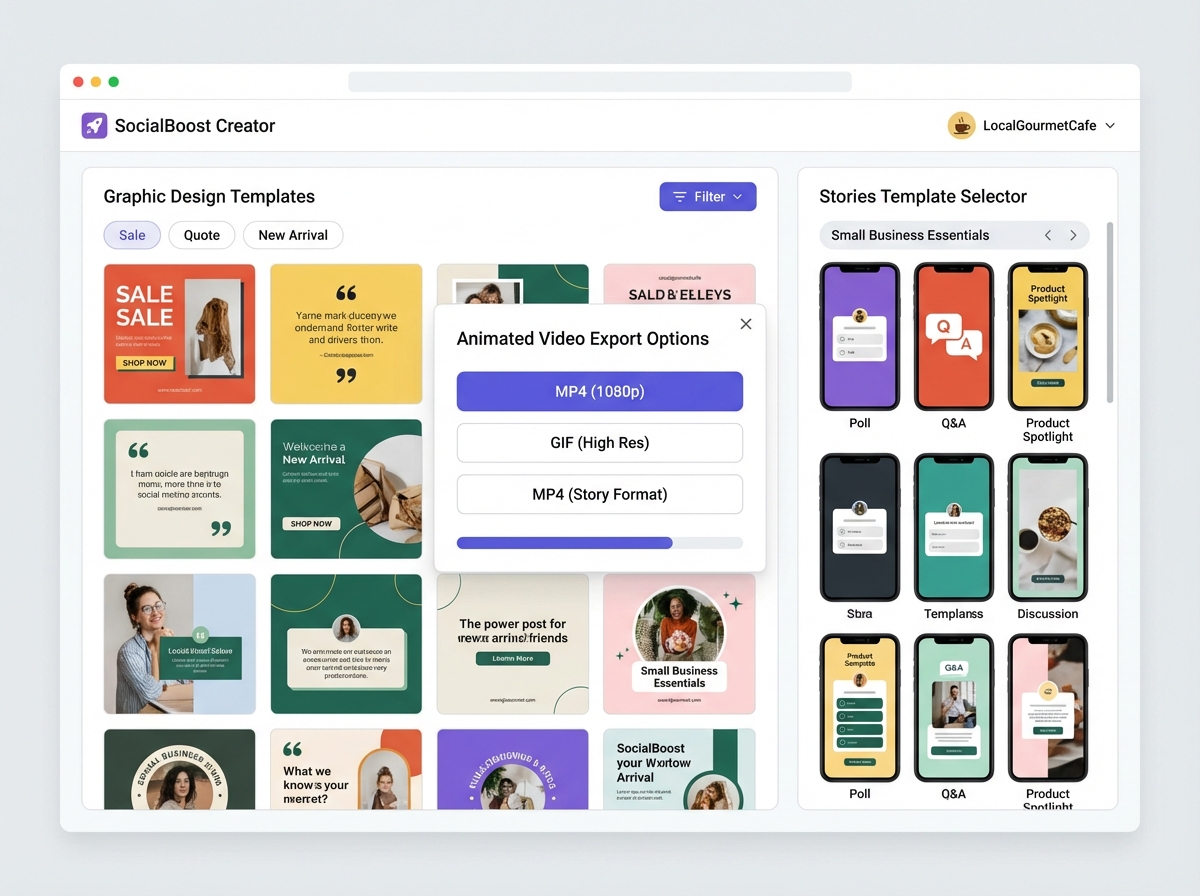
For graphics, design tools with Instagram-specific templates let you produce professional-looking posts without a graphic designer. The real goal is visual consistency — using the same color palette, font choices, and layout style across your posts so your feed becomes recognizable at a glance. That recognizability is what makes a new visitor think “this account looks legit” in the two seconds before they hit follow or leave.
For animated videos and Reels, simple animation tools lower the barrier enough that you can produce motion content without any video editing experience. The animated post that moves holds attention longer in the feed, which directly impacts the engagement rate that the algorithm uses to decide how many more people to show your content to. And for Stories specifically, there are tools built entirely for that format — animated stickers, seamless templates, countdown timers — that make your Stories feel deliberate rather than thrown together.
For learning the broader digital marketing skills that support your Instagram presence — like writing captions that actually convert — the same principle applies: use what removes friction and get it out the door. Overthinking tools is how you spend three hours on a post that needed 25 minutes.
What Knowing Pinterest Strategy Teaches You About Instagram
There’s an unexpected parallel between Pinterest marketing for affiliate income and Instagram marketing for small accounts that most people miss: both platforms reward keyword-level specificity over broad popularity, and both use a discovery engine (Pinterest search, Instagram hashtags) as the primary way new audiences find you. Understanding one makes the other click faster — because the core discipline is identical: put the right signal in front of the right person, not the biggest possible signal in front of everyone.
What Actually Shifts When It All Comes Together
There’s a specific moment that happens to most people a few weeks in. The BIO is rewritten, the hashtag sets are built, and engagement has become a daily habit rather than something you do when you remember. Then one day, a DM arrives from someone you’ve never interacted with — someone who found you through a hashtag, read your BIO, watched a few Stories, and decided you were the person they needed to talk to. They didn’t come from a viral post. They came from a system.
That’s the shift. Instagram stops feeling like a performance where you’re hoping someone notices, and starts feeling like a funnel where the right people arrive already warm. The follower count starts moving, but more importantly, the follower quality changes. The new followers are in your niche, they engage within the first day, and some of them send that DM. Everything you built — the specific BIO, the layered hashtags, the Story questions, the DM conversations — clicks into place as a single system rather than a list of disconnected tasks.
Looking back, the biggest time wasters were clear: obsessing over aesthetics before fixing the BIO, using the same hashtag block on every post, posting without a single engagement action afterward. None of those mistakes feel obvious at the start. They feel like effort. The difference between effort that builds and effort that spins in place is whether it’s connected to a system — and that system is available to anyone willing to set it up before they start posting.
Rewrite your BIO using the specificity formula — name exactly who you help, what outcome they get, and one action to take. Every day you leave a vague BIO up is a day visitors bounce without converting.
Build three distinct hashtag sets for your main content types — rotate them post by post so your reach stays eligible for fresh discovery rather than being flagged as repetitive.
Comment on 10 posts in your niche every single day — not emoji comments, but one sentence that adds something real to the conversation. This borrows reach from accounts that already have your audience.
Post one Story per day with an interactive element — a question sticker, a poll, or a fill-in-the-blank. Every reply is an algorithm signal and a door opened for a real DM conversation.
Reply to every comment on your posts within the first 60 minutes — the first hour of engagement is when the algorithm decides whether to push your post further. A 10-comment post with 10 replies signals twice the engagement of a 10-comment post with none.
Send three genuine, non-pitch DMs per week to people who’ve engaged with your content — ask a specific question related to what they commented about, and let the conversation go where it goes.
Audit your hashtag performance every two weeks — look at which posts drove profile visits from outside your existing followers, and double down on the tag sets those posts used.
Create your one-page marketing plan before your next post — write down your audience, your three content pillars, your weekly posting target, and your DM goal. Pin it somewhere visible and check it when content decisions get fuzzy.
Leave a Reply