


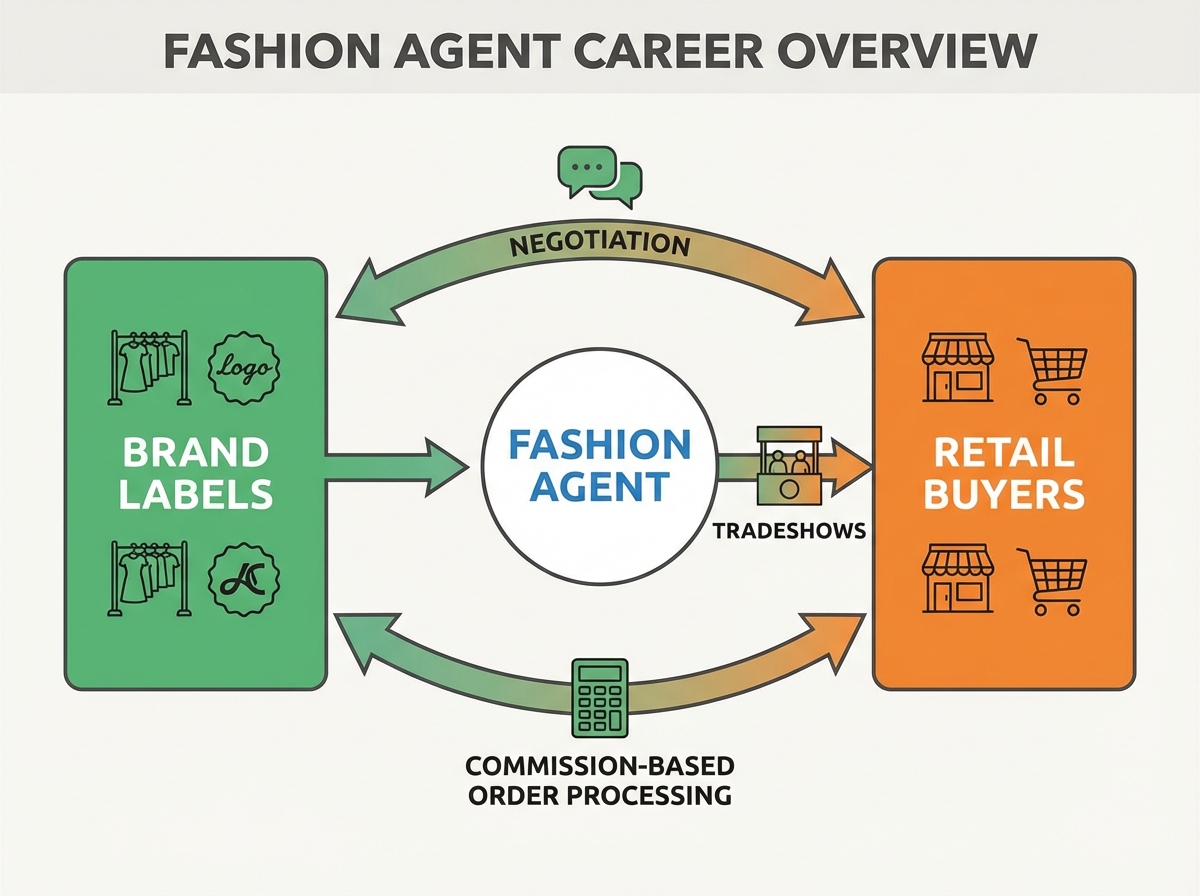
The moment someone told me a fashion agent doesn’t design anything, doesn’t style anyone, and still sits at the center of every deal that moves a collection from a showroom rack to a retail floor — I had no idea what that actually meant in practice.
If you’re looking to learn how to become a fashion agent, the honest answer is that it’s less about fashion knowledge and more about relationship architecture — knowing who buys what, when markets open, and how to get your email read instead of deleted. A fashion agent represents brands to buyers, earns commission on every order placed, and builds their business entirely on the strength of their client network and seasonal hustle.
- You don’t need a design background — you need a structured buyer database and the ability to write outreach that converts.
- The real work happens between collections: prospecting, tradeshow prep, and follow-up sequences that keep buyers engaged year-round.
- Your income scales with your portfolio of brands, not your hours — one strong season with the right clients can set your pipeline for the next two years.
What a Fashion Agent Actually Does
A fashion agent acts as the commercial bridge between a brand and the retail buyers who will stock its products. You’re not a stylist, not a designer, and not a PR rep — you’re a sales professional operating on commission, and your territory is the wholesale market. You hold contracts with brands authorizing you to sell their collections within a specific region or account type, and every confirmed order earns you a percentage.
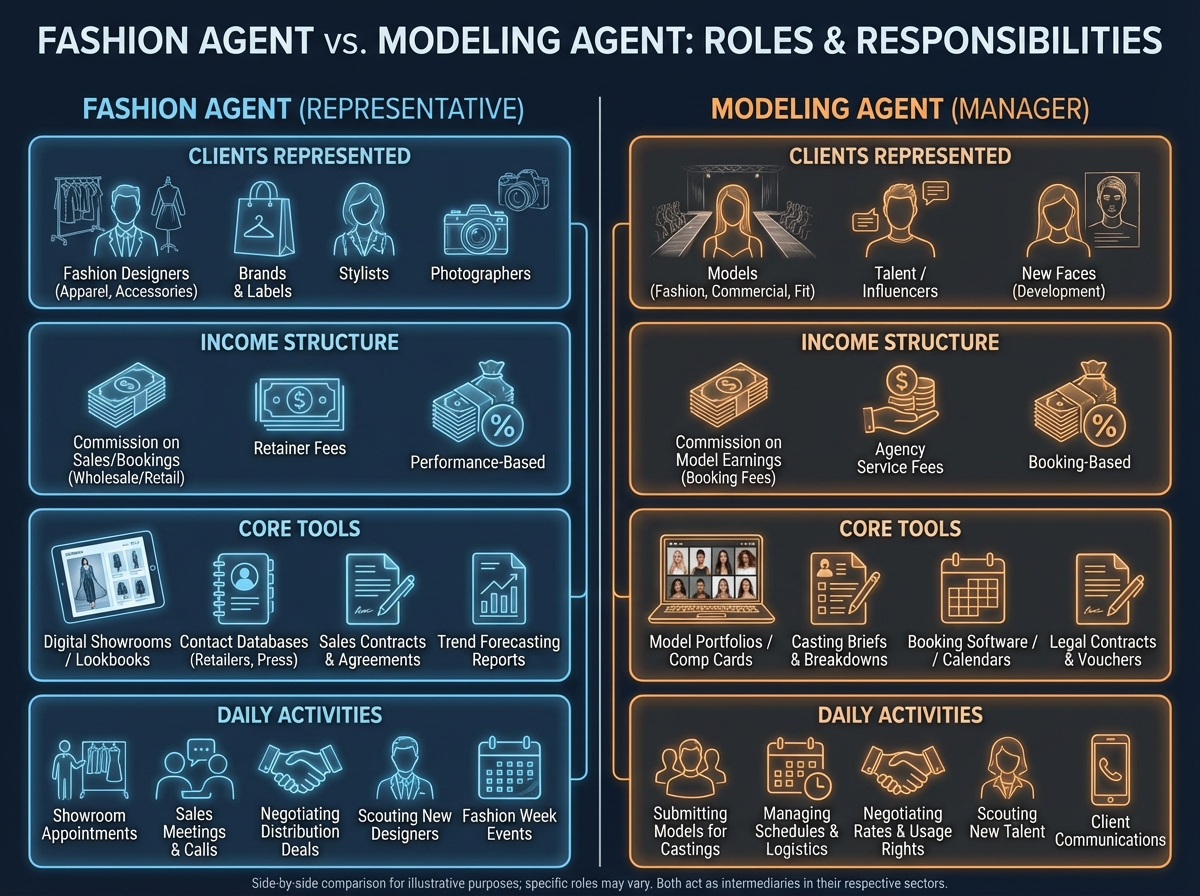
The confusion most people have early on is conflating this role with modeling agency work or talent representation. Those worlds overlap in language — everyone’s an “agent” — but the mechanics are completely different.
| Role | Represents | Earns From | Core Skill |
|---|---|---|---|
| Fashion Agent | Brands / Labels | Commission on wholesale orders | Buyer relationships + negotiation |
| Modeling Agent | Talent (models) | Booking fees / percentage of model fees | Talent scouting + casting pitches |
| Brand PR Agent | Brand image | Retainer or project fee | Media relationships + press coverage |
A fashion agent’s leverage grows with their buyer list. The wider and deeper that list — meaning different account types, different price tiers, different regions — the more valuable you become to any brand that wants to expand its wholesale distribution.
Three Things That Surprised Me About This Career
- Your first buyer relationship matters more than your first brand contract.
- Tradeshows are not for selling — they’re for confirming relationships you already built.
- A well-written outreach email outperforms cold calling every single time in wholesale fashion.
How Long It Actually Takes to Get Traction
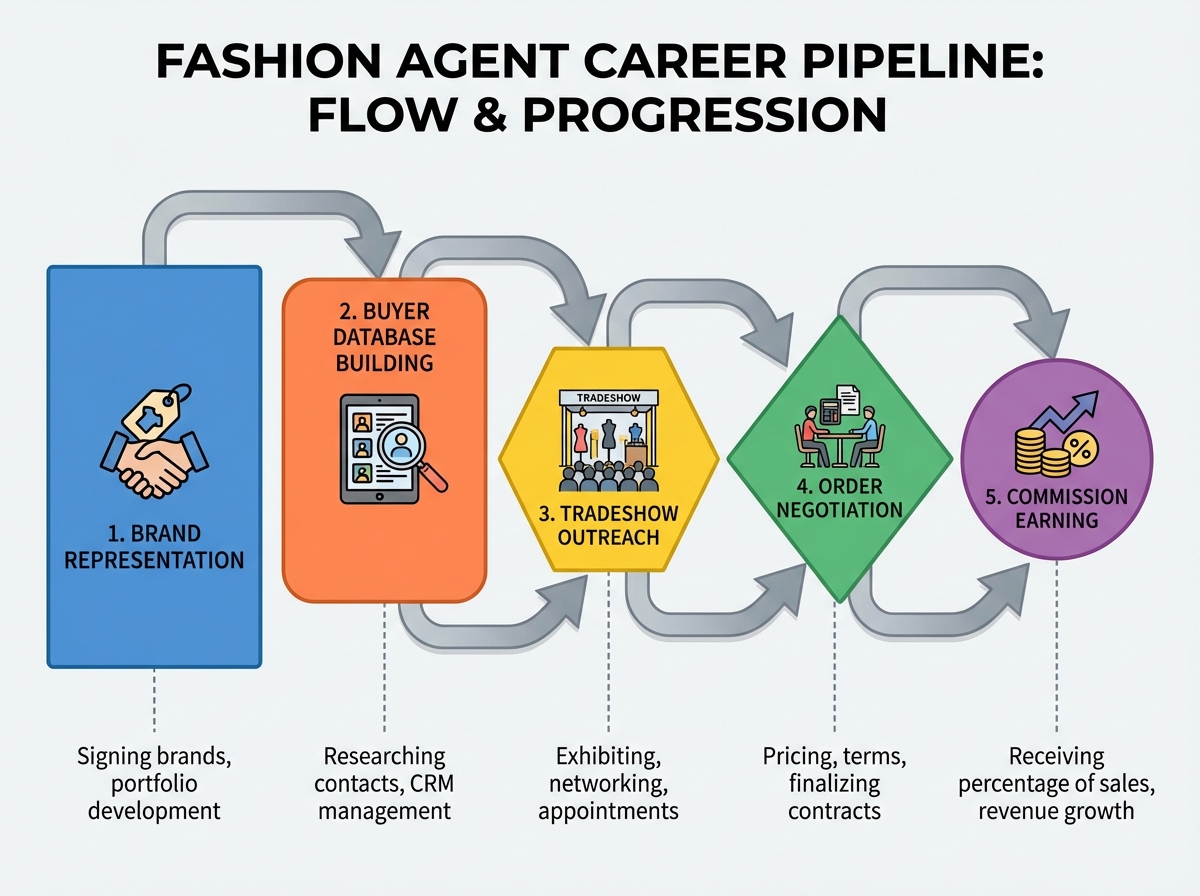
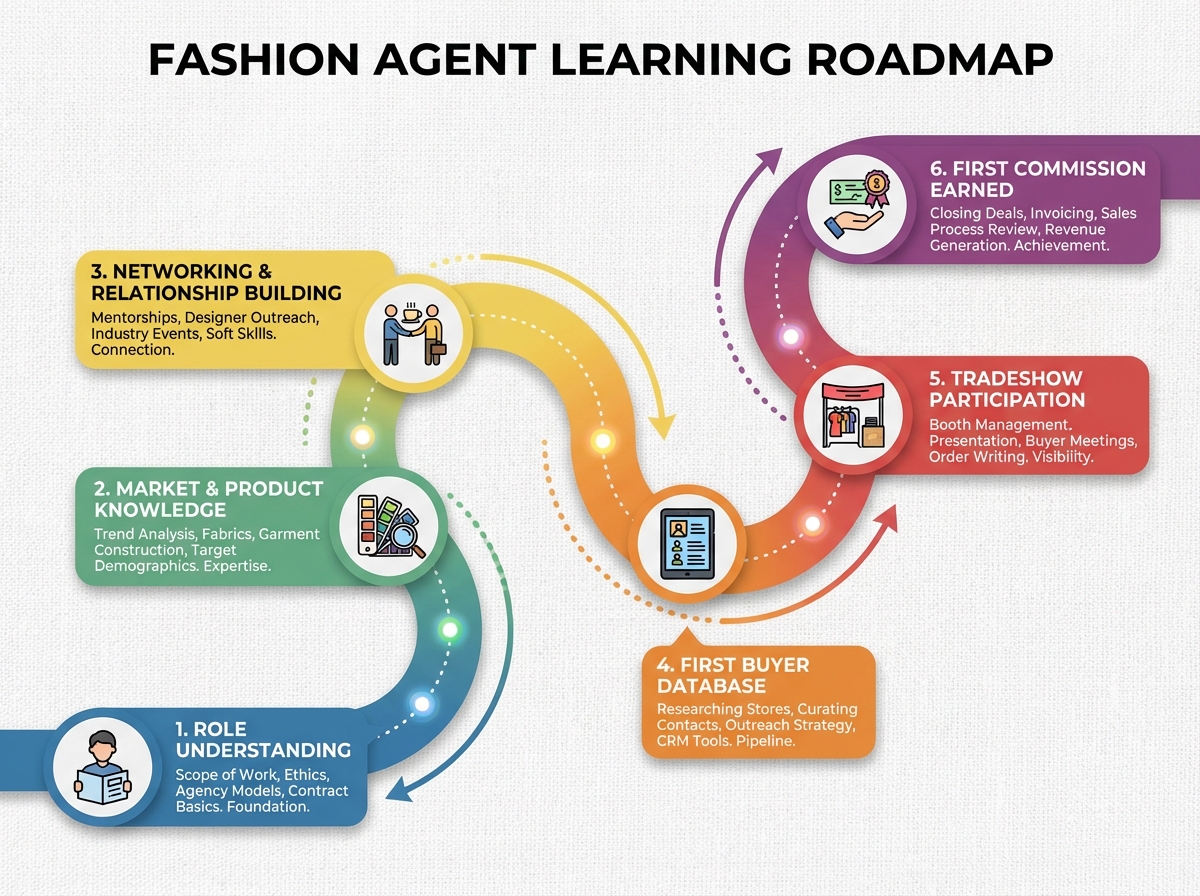
| Stage | What You’re Doing | Estimated Time |
|---|---|---|
| Foundation | Learning the agent role, understanding market types, building your first buyer spreadsheet | Weeks 1–2 |
| Prospecting | Identifying your first 50–100 target buyers, researching their buying preferences and seasons | Weeks 2–4 |
| Outreach | Writing and sending your first catching letters, following up, handling objections | Weeks 3–6 |
| First Brand | Securing your first brand representation agreement | Month 1–2 |
| First Order | Converting a buyer into a confirmed order through tradeshow or direct appointment | Month 2–4 |
| Repeatable Pipeline | Multiple brands, multiple buyers, predictable seasonal income | Month 4–9 |
| Total | From zero to functioning fashion agency | 6–9 months |
Order matters far more than speed here — skipping the database-building phase to jump straight to tradeshows is the single fastest way to waste a season. And if it takes you a year instead of six months, that’s not failure — wholesale fashion has long sales cycles by design.
The Database Is the Business
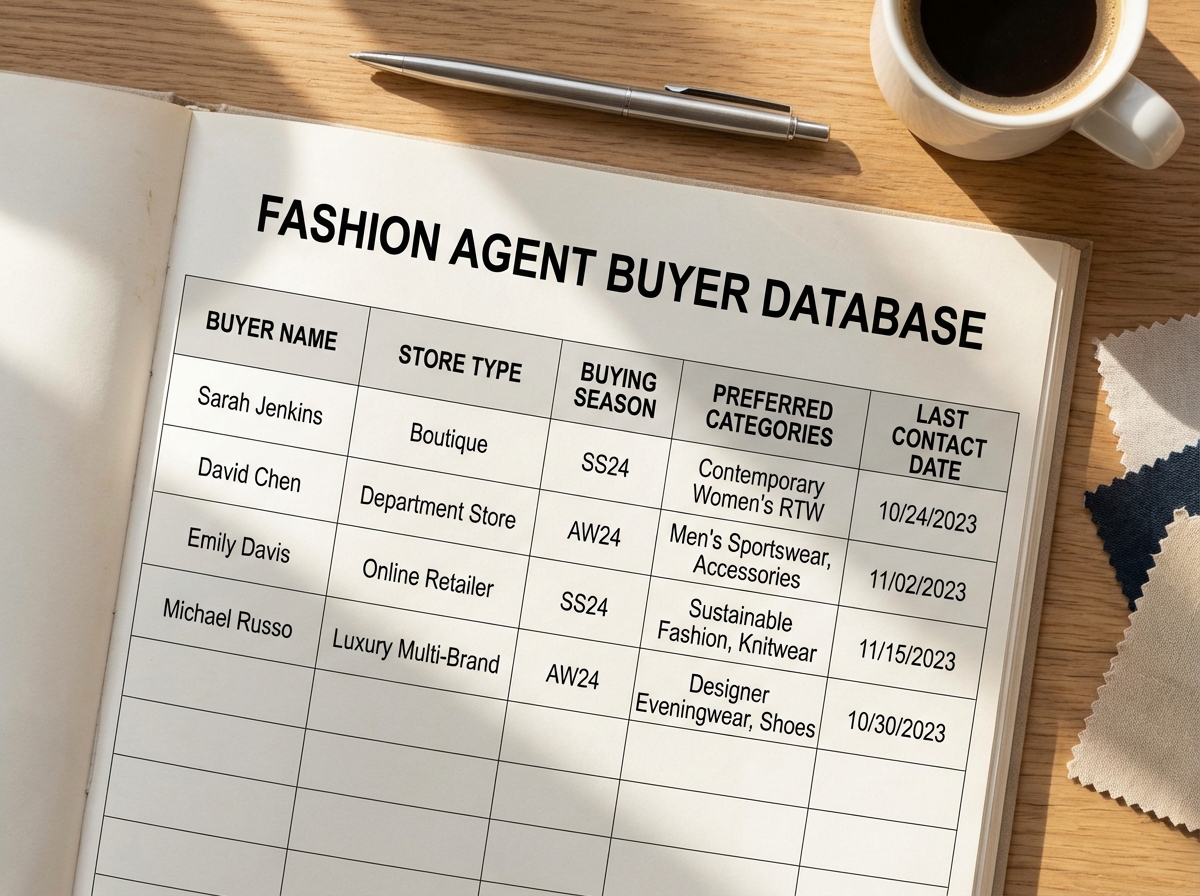
Everyone who starts in fashion agency work makes the same mistake: they think the brand relationship is the asset. It isn’t. The buyer database is the asset. Brands come and go, collections change, and contracts expire — but a well-maintained list of verified buyers with known preferences, purchase history, and seasonal windows is something you own permanently and carry with you regardless of which labels you represent.
Building that first database is tedious in a way nobody warns you about. You’re cross-referencing tradeshow directories with Instagram boutique accounts, checking which stores stock which price points, noting which buyers attended which markets last season. It’s research work, not glamour work — and it takes weeks before you have even 50 usable contacts.
The structure of the database matters as much as the size. Knowing a buyer’s name isn’t enough. You need their buying season, their preferred categories, their average order value range, and the best way to reach them. A spreadsheet with those five fields per contact is worth more than a vague list of 500 names.
Once you have even 30 solid, verified buyers in a specific niche — contemporary womenswear, sustainable accessories, resort collections — you have something a brand actually needs. That’s the moment you stop asking brands to give you a chance and start approaching them from a position of genuine value.
Finding Your First Client Without Industry Connections
The biggest mistake people make when learning how to start a fashion agency from scratch is waiting until they feel ready before reaching out to anyone. There’s no ready. The first outreach email you send will be awkward and you’ll rewrite it six times. Send it anyway.
Your first client — either a brand willing to give you a representation agreement or a buyer willing to meet with you — almost always comes from a warmer context than a cold email. Tradeshow floors, local boutique owners, Instagram DMs to small independent labels that don’t yet have European or US distribution — these are more fruitful than firing off emails to established brands with full agent rosters.
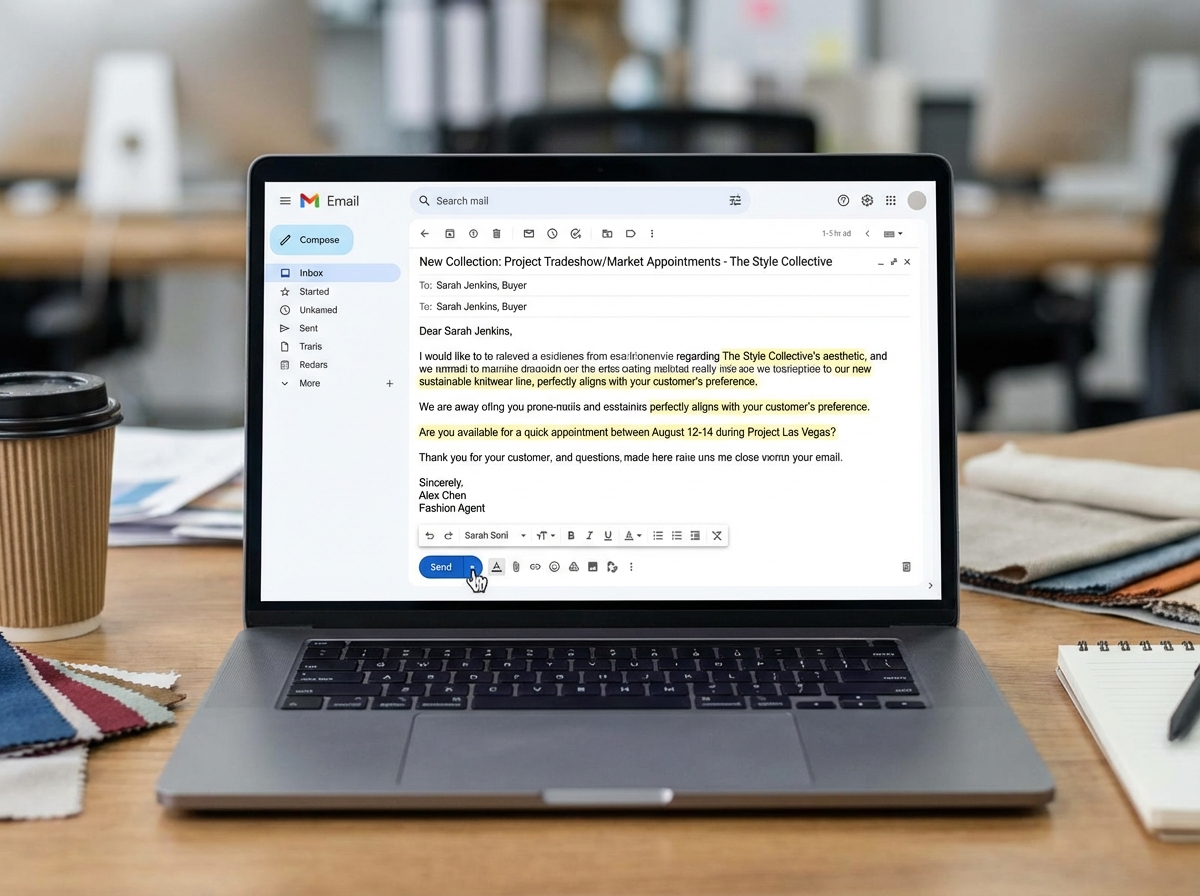
The catching letter — the outreach email you send to a buyer to introduce yourself and your brand portfolio — is a skill that takes real iteration to develop. The ones that don’t work all sound the same: a paragraph about who you are, a paragraph about the brand, a generic close asking for a meeting. The ones that work are specific. They reference the buyer’s store aesthetic, mention a collection detail that fits their current gaps, and make the ask concrete — not “let me know if you’re interested” but “I have availability for appointments during [specific market dates].” Specificity signals professionalism before you’ve earned it through track record.
For anyone serious about building a client-finding system that holds up over time, the same principles that apply to passive income from content creation apply here — consistent, value-first outreach compounds over months into a pipeline that generates inbound interest rather than requiring constant cold effort.
Markets, Seasons, and Why Timing Is Everything
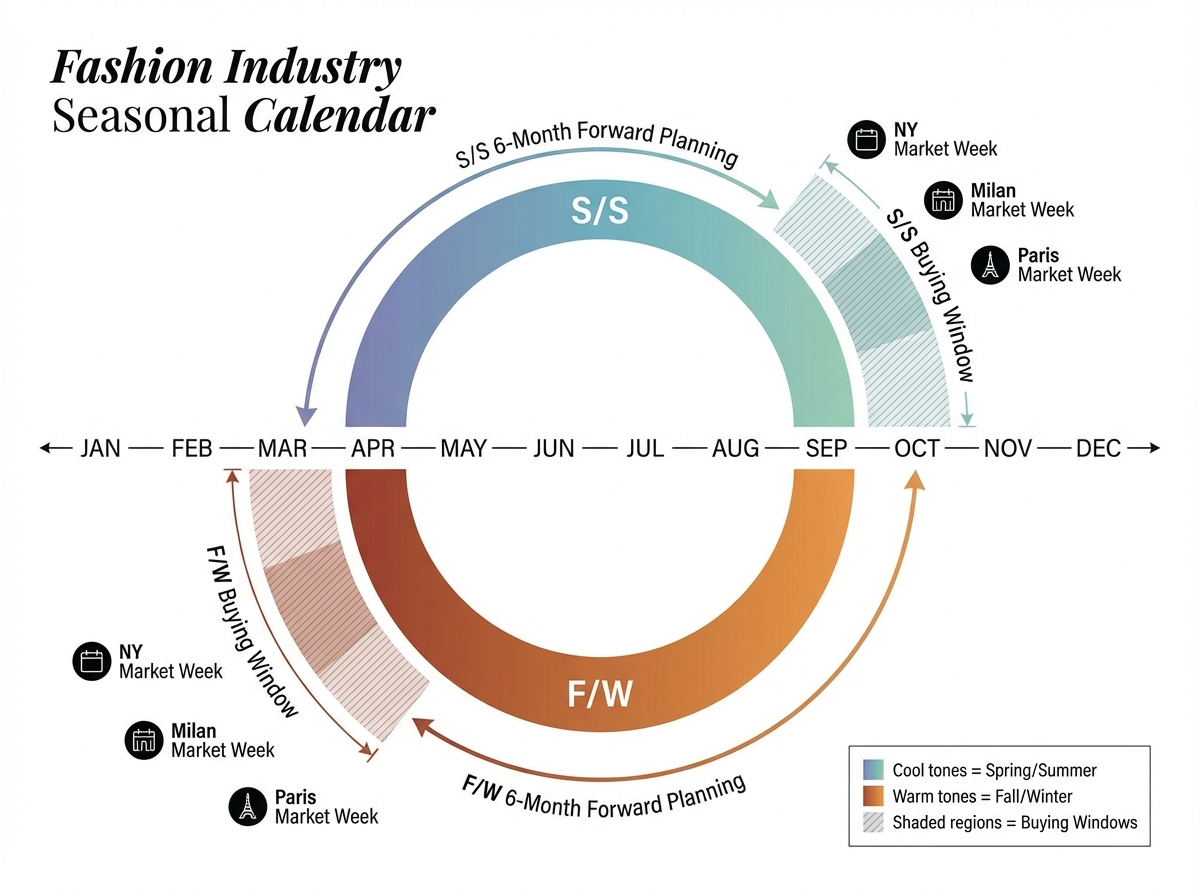
Fashion operates on a calendar that is non-negotiable and unforgiving. There are two main selling seasons — Spring/Summer and Fall/Winter — and the buying windows for each are compressed into specific market weeks in cities like Paris, Milan, New York, and Copenhagen. Miss those windows and you’re waiting another six months.
Understanding fashion market schedules is not just logistical — it changes how you structure your entire year. The work you do in October directly determines your Spring/Summer order volume. The tradeshow appointments you book in January fill your Fall/Winter commission pipeline. Everything runs on a two-season forward cycle, which means a fashion agent is always simultaneously closing one season and planting seeds for the next.
Tradeshows and showrooms serve different functions that beginners often conflate. A tradeshow is a multi-brand event where buyers come to you — it’s high-volume, fast-paced, and requires that your buyer pipeline already be warm before you arrive. A showroom is a curated, appointment-based environment where you control the pace and can spend real time with a buyer. Both matter, but the showroom appointment is where actual selling happens. The tradeshow is where you confirm interest that you cultivated months earlier.
Email Marketing That Actually Moves Buyers
At some point, you’ll have a small but real buyer list and you’ll want to communicate with them regularly — new arrivals, lookbook drops, tradeshow schedules, appointment openings. This is where most new fashion agents either go silent (because they don’t know what to send) or become noise (because they send too much without a strategy).
The most effective email sequences in fashion wholesale are short, visual-first, and tied to a specific action. A lookbook drop email doesn’t need three paragraphs of copy — it needs one clean sentence that frames the collection, one strong image, and a single clear CTA. Buyers receive dozens of these. The ones they open and act on feel like they were written by someone who knows them, not by someone running a bulk campaign.
Frequency matters more than most people realize. Once a month minimum during off-season; weekly or biweekly during market season. The agents who stay top-of-mind are the ones who show up consistently, not the ones who disappear for four months and then flood inboxes with urgency emails two weeks before a tradeshow.
For a deeper look at the technical side of structuring outreach that converts, the same frameworks behind Instagram marketing for small accounts apply directly — consistent presence, specific value per touchpoint, and a clear ask at the right moment in the buyer’s decision cycle.
How a Fashion Agent Actually Gets Paid
Commission rates in fashion wholesale typically range from 10% to 20% of the net order value, depending on the brand category, market, and your agreement terms. That sounds straightforward until you realize that your income is entirely event-driven — it spikes during market season and goes quiet in between if you don’t manage your pipeline deliberately.
The order process itself is something new agents underestimate in complexity. An order confirmed at a tradeshow isn’t money in your account. There’s an order form, confirmation from the brand, delivery timelines to track, and often follow-up if a buyer reduces or cancels part of their order before shipping. Your commission is tied to what actually ships and gets paid — not what gets confirmed in an excited conversation on a tradeshow floor.
Building a portfolio of three to five brands across complementary categories — say, one contemporary womenswear label, one accessories brand, and one emerging designer — gives you both stability and cross-selling opportunities with the same buyer. A boutique that buys your womenswear label is already a warm relationship for an accessories pitch. That leverage is how solo agents start to build something that resembles a real agency rather than a one-brand hustle.
The same compounding logic that makes how to build a startup using innovation frameworks relevant here — early structural decisions about which brands to take on and which buyer segments to focus on determine the ceiling of your business far more than how hard you work in any single season.
What I’d Do Differently from Day One
Looking back, the clearest pattern I see is that the agents who build fast, durable businesses make structural decisions early — and the ones who struggle spend years in reactive mode, chasing individual opportunities without a system underneath them.
Here’s what actually matters, in the order it matters:
- Build your buyer database before you approach a single brand. A spreadsheet of 50 real, categorized buyers with known preferences is a stronger pitch to any label than a beautiful agent website with zero track record.
- Choose your niche by buyer behavior, not by what you love aesthetically. If contemporary womenswear buyers are more reachable, more accessible at local tradeshows, and more willing to meet new agents — that’s your niche, regardless of your personal taste.
- Write your catching letter from the buyer’s perspective, not yours. What does this buyer need right now? What gap in their floor plan does your brand fill? Answer those questions and the email writes itself.
- Track every market date in your calendar six months out. Missed market windows are unrecoverable. The agents who show up consistently at the right times win regardless of how polished their pitch is.
- Follow up exactly three times before moving on. One initial outreach, one follow-up one week later, one final close tied to a specific deadline (“I have one appointment slot left during Capsule”). Three touches is professional. Four starts to damage relationships.
- Negotiate your commission rate before the first order, not after. Once a buyer places an order at an understood price, changing the terms is awkward at best and relationship-ending at worst.
- Show up to tradeshows with appointments already booked. Walking the floor hoping to meet buyers is a waste of an expensive trip. Every tradeshow attendance should have a minimum of five confirmed appointments before you arrive.
- Treat every no as market research. When a buyer declines, ask why — what brands are they already carrying? What’s their minimum order? What season are they currently buying? That conversation is worth more than the rejection stings.
Leave a Reply