


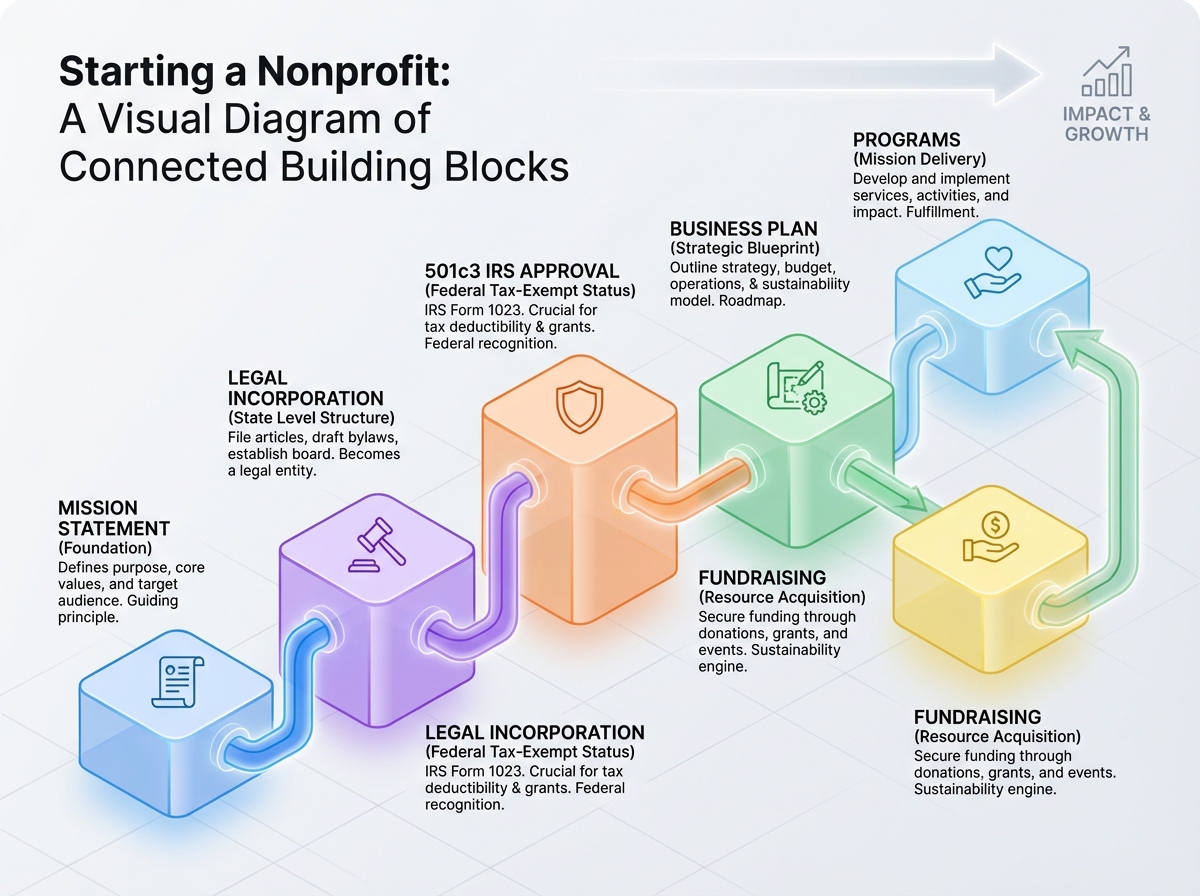
The paperwork wasn’t the hard part. The hard part was realizing I had no idea what I was actually building — not until I was three months in, staring at a half-finished IRS application and a budget that didn’t add up.
If you’re looking to learn how to start a nonprofit, the honest answer is that it’s not as impossible as it looks — but it’s not as simple as filing a form either. Starting a nonprofit means standing up a legal entity, writing a business plan serious enough to attract grants, designing programs that produce measurable outcomes, and building a fundraising engine from scratch — usually with no staff, no budget, and no roadmap. The organizations that survive their first two years are the ones that treat this like a business from day one, not a passion project with paperwork.
- Starting a nonprofit requires incorporating your entity, obtaining an EIN, and submitting IRS Form 1023 or 1023-EZ — the full process can take 3–12 months from start to approval
- Without a written business plan and a clear fundraising model in place before you launch, most early-stage nonprofits stall within 18 months
- The mission comes first, but the structure — legal, financial, operational — is what keeps it alive
What a Nonprofit Actually Is (And What It Isn’t)
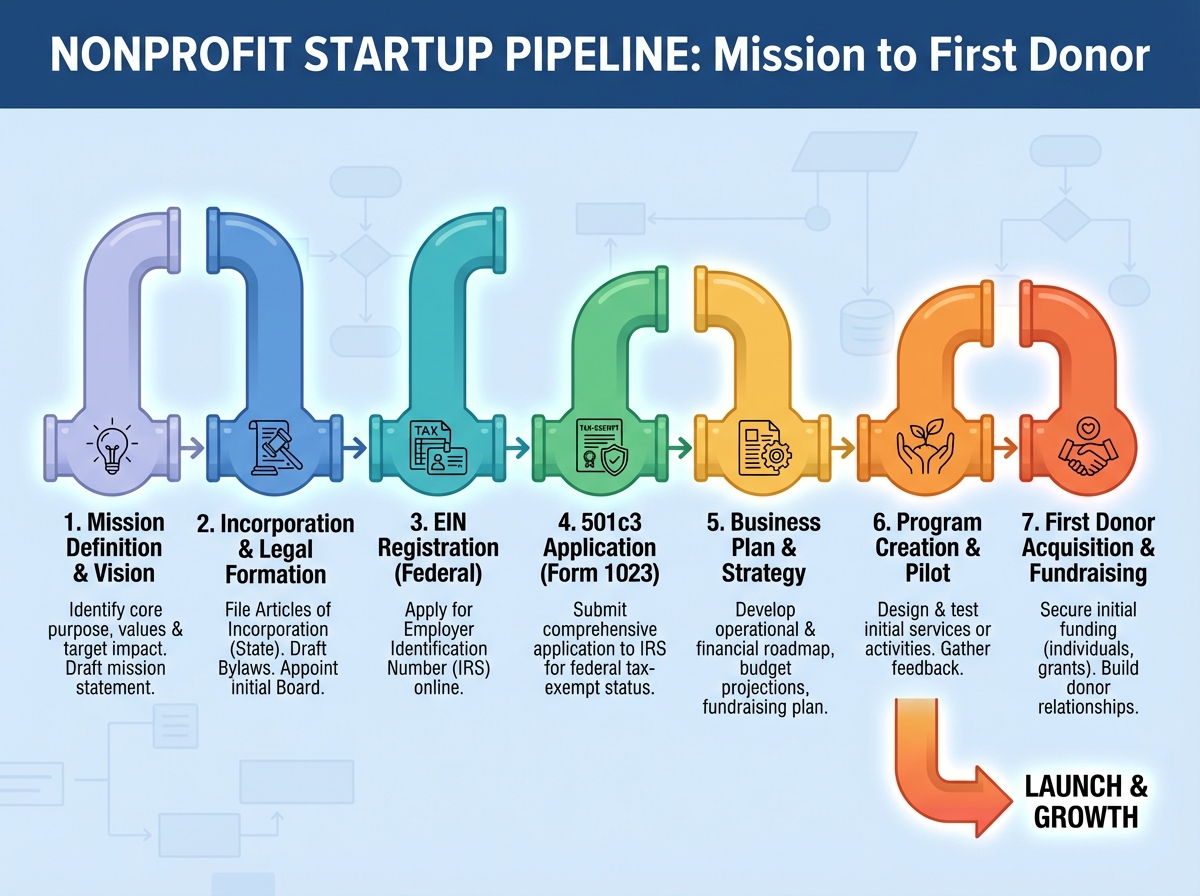
A nonprofit is not a charity that operates on goodwill and donations alone. It’s a legal entity — typically structured as a corporation — that exists to serve a public purpose rather than generate profit for owners or shareholders. The 501(c)(3) designation is the IRS classification that grants federal tax-exempt status, meaning the organization pays no federal income tax on revenue used for its mission, and donors can deduct their contributions.
There are meaningful distinctions between the types of tax-exempt organizations:
| Type | Purpose | Donor Tax Deductibility |
|---|---|---|
| 501(c)(3) Public Charity | Broad public benefit (education, religion, poverty, arts) | Yes |
| 501(c)(3) Private Foundation | Grant-making, typically family-funded | Yes, with limits |
| 501(c)(4) | Social welfare, civic leagues | No |
| 501(c)(6) | Trade associations, chambers of commerce | No |
Most founders are building a 501(c)(3) public charity — that’s the structure covered here.
Three Things Nobody Tells You Before You Start
- Your mission statement controls everything — a vague one will kill your grant applications before they’re read
- The 1023-EZ form is only available to organizations projecting under $50,000 in annual gross receipts for the first three years
- Donors give to outcomes, not intentions — if you can’t describe your program’s impact in one sentence, you’re not ready to fundraise
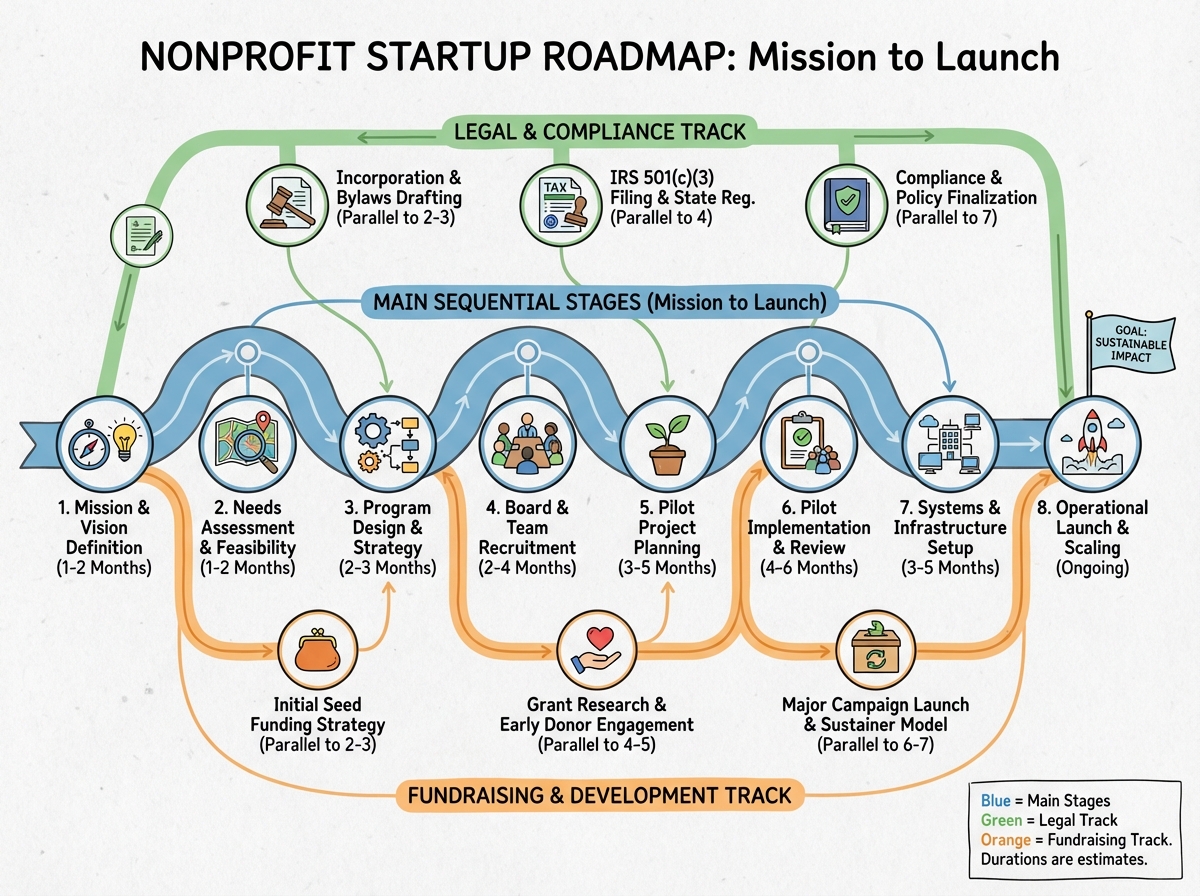
How Long the Process Actually Takes
| Stage | Content | Estimated Time |
|---|---|---|
| Mission and market research | Define purpose, identify need, validate demand | 1–2 weeks |
| Business plan | Executive summary, programs, financials, marketing | 2–4 weeks |
| Legal incorporation | Articles of incorporation, bylaws, board setup | 1–2 weeks |
| EIN registration | IRS online application | 1 day |
| 501(c)(3) application | Form 1023 or 1023-EZ preparation and submission | 2–6 weeks to prepare |
| IRS review and approval | Federal processing time | 3–12 months |
| First programs launch | Program design, reporting structure, software setup | Concurrent or post-approval |
| First fundraising push | Donor outreach, grant applications, campaigns | Ongoing from month 1 |
| Total to operational status | 6–14 months |
The order you do this in matters more than the speed. Rushing through the business plan to get to the IRS filing is the most common way to create problems you’ll spend a year fixing. Being slower than this estimate is normal — organizations with part-time founders routinely take 18 months to reach their first full operational year.
Starting With the Mission — and Why Most People Get This Wrong
The biggest mistake people make when starting a nonprofit is writing a mission statement that sounds good but doesn’t constrain anything. Something like “to empower communities and create positive change” is not a mission — it’s a mood. A real mission tells you what population you serve, what problem you’re solving, and what method you’re using. Without that precision, every decision downstream becomes a negotiation.
Before anything — before the IRS, before the bank account, before the logo — you need to sit with the actual problem you’re trying to solve and ask whether a nonprofit is the right vehicle for it. Some problems are better addressed by a for-profit social enterprise or a community group. A nonprofit makes sense when your work genuinely serves a broad public benefit, when you’ll depend on donations and grants rather than product revenue, and when the tax-exempt structure gives you access to funding that otherwise wouldn’t exist.
Conducting real market research before you incorporate is not bureaucratic busywork — it’s the foundation of your grant strategy. Funders want to see that you understand the landscape: who else is doing similar work, where the gaps are, and why your approach is distinct. If you can’t answer those questions before you launch, you’ll be answering them under pressure after.
For founders who want to think beyond nonprofits and explore the broader landscape of mission-driven business structures, online entrepreneurship principles for solopreneurs can provide useful frameworks for operationalizing any kind of purpose-driven organization.
Writing a Business Plan That Actually Raises Money
Most first-time nonprofit founders either skip the business plan entirely or write something so generic that it reads like a template with names swapped in. Neither approach survives contact with a serious funder. A nonprofit business plan is not a formality — it’s the document that tells a grant committee, a major donor, or a government agency whether you’ve actually thought through what you’re doing.
The plan needs to move through your executive summary (one page, mission and impact at the top), your programs and services (what you’ll do and who it serves), a marketing plan that specifies channels and goals, a SWOT analysis that takes your weaknesses seriously, and financial projections built on real assumptions — not round numbers that feel ambitious. The financials section trips up more founders than any other because most people starting nonprofits are not accountants, and projecting startup expenses alongside a revenue ramp for a new organization requires a level of specificity most people haven’t thought through yet.
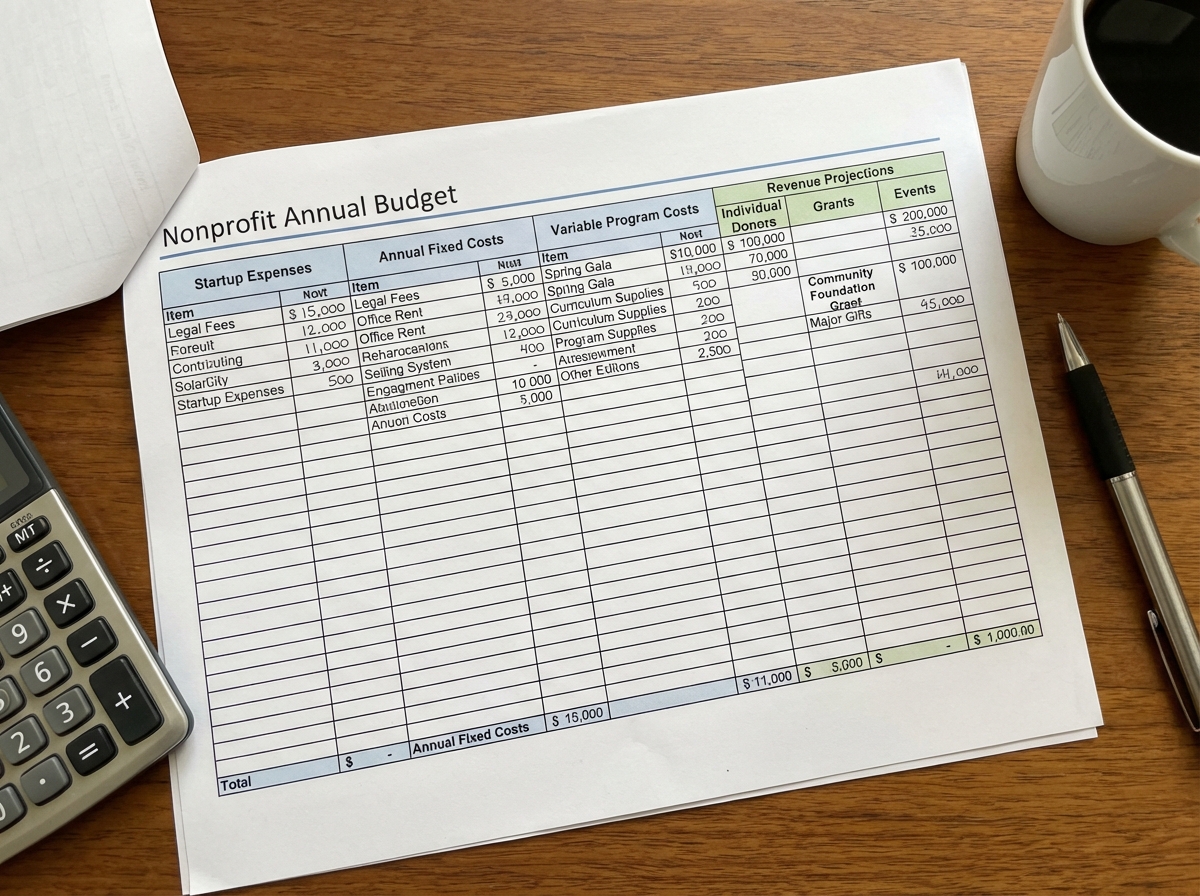
A useful framework is to separate your fixed costs — rent, software, insurance, staff salaries — from your variable costs that scale with program delivery. Your startup expenses are a separate line from your ongoing operating budget, and funders want to see both. When you build this honestly, the plan does something surprising: it tells you what your fundraising minimum is. You stop guessing about how much money you need and start working backwards from real numbers.

The Legal Entity: What You’re Actually Filing and Why It Matters
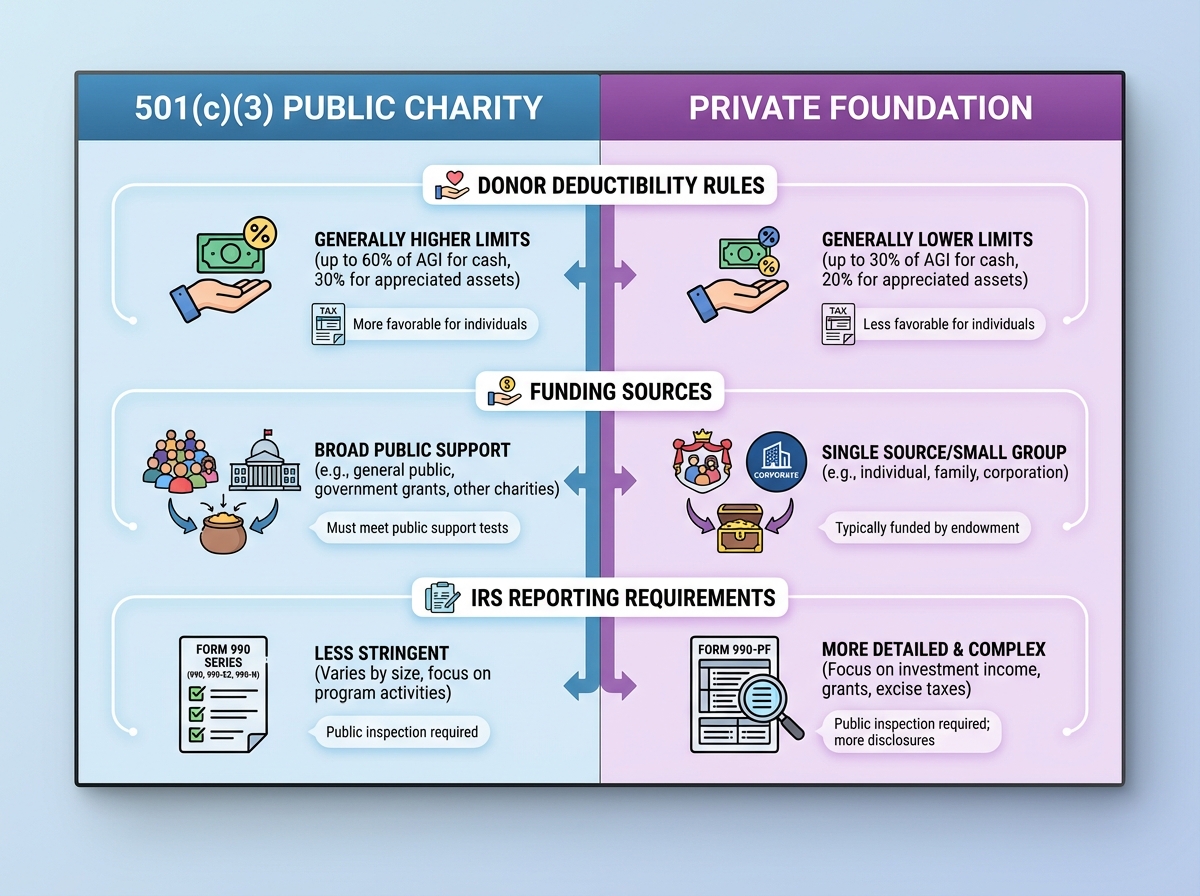
Incorporating your nonprofit means filing Articles of Incorporation with your state — the document that formally brings your organization into legal existence. Before you can file anything with the IRS, you need to exist as a legal entity in your state. After incorporation, you apply for an EIN (Employer Identification Number) through the IRS — this takes one day online and is required before you can open a bank account, hire anyone, or file taxes.
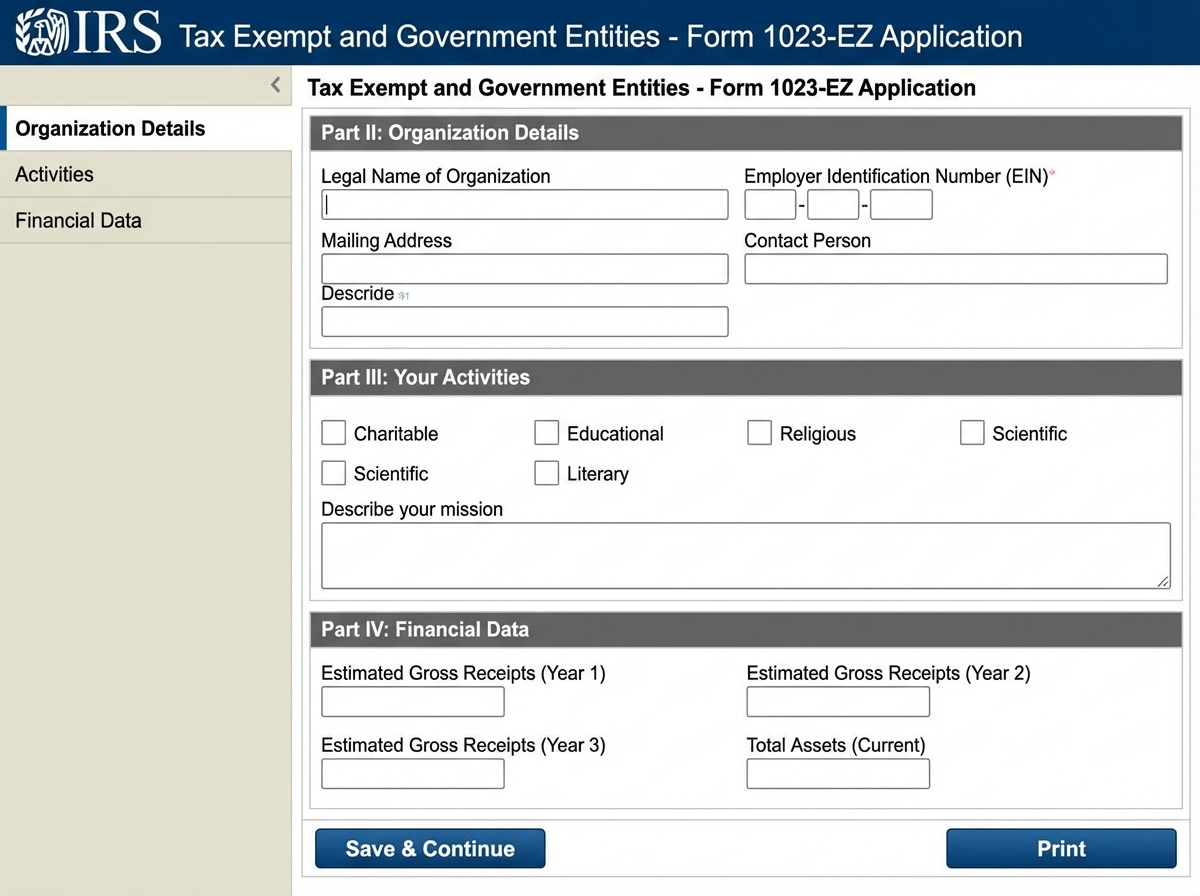
The 501(c)(3) application comes next. Smaller organizations projecting under $50,000 in annual gross receipts for their first three years can use Form 1023-EZ, which is a streamlined online form with a $275 filing fee. Larger organizations — or those that want the most credible approval — use the full Form 1023, which carries a $600 fee and can run 50+ pages once you include attachments. [web:22] IRS processing times range from two weeks to six months depending on application type and current IRS volume, so submitting early matters.
What catches people off guard is the compliance calendar that begins the moment you’re approved. Annual reporting requirements — Form 990 for most nonprofits — are not optional, and missing them for three consecutive years results in automatic loss of tax-exempt status. Understanding that from day one changes how you set up your recordkeeping.
Designing Programs That Funders Actually Want to Fund
A program is not a list of activities. It’s a structured intervention with a defined population, a measurable output, and a theory of change that explains why your approach produces the outcome you’re claiming. That distinction sounds academic until you’re writing your first grant application and the funder asks for a logic model.
Starting with one program — not three, not five — is the right move for most early-stage nonprofits. Spread too thin, you can’t demonstrate impact in any one area. One well-designed program with strong reporting gives you something to show: how many people you served, what changed for them, and what it cost per outcome. That data becomes your fundraising asset for the next grant cycle.
Capacity considerations belong in your program design from the start. If your program relies on volunteer labor, you need a plan for when that labor isn’t available. If it relies on a single staff person, the funder will ask what happens if that person leaves. These aren’t edge cases — they’re the questions every serious funder asks, and having thought through them before you’re in the room signals that you’re building something real.
How to Start a Nonprofit Fundraising Strategy That Doesn’t Stall
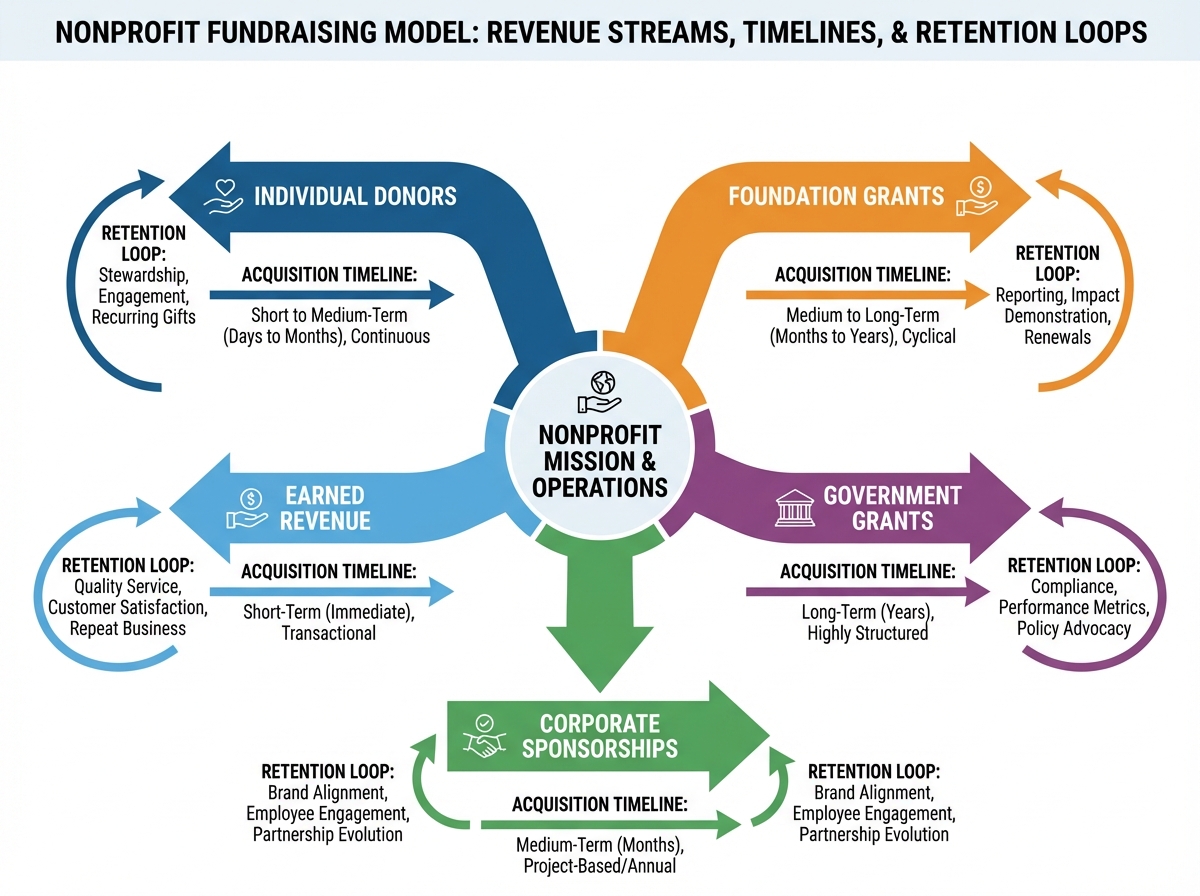
Most new nonprofits start fundraising by doing the thing closest to them — usually asking people they know for money. That’s not wrong, but it’s not a strategy. A fundraising model is a structured approach to generating revenue from specific donor segments through specific channels with specific acquisition and retention tactics. Without that structure, you’re just hoping.
The dominant fundraising models for early-stage nonprofits include individual donor campaigns, foundation grants, government grants, corporate sponsorships, and earned revenue from fee-for-service programs. Each has different acquisition requirements, timelines, and sustainability profiles. Individual donors are the fastest to acquire but the hardest to scale without donor management systems. Government grants take the longest to secure — 6–12 months from application to funding in many cases — but provide the largest unrestricted funding blocks. [web:20]
Donor retention is where most organizations lose money they don’t realize they had. Acquiring a new donor costs five to ten times more than retaining an existing one, yet most nonprofit marketing budgets are oriented entirely toward acquisition. Building a retention sequence — thank-you calls, impact reports, year-end updates — into your fundraising calendar in year one changes your financial trajectory in year two and three.
For nonprofits that want to think about digital fundraising channels seriously, how to grow a social media audience that actually makes you money offers frameworks directly applicable to building an online donor base.
Budgeting Before You Have Revenue
Building a nonprofit budget before you have revenue feels like guessing — and in some ways it is. But the discipline of forcing every assumption into a number changes the way you plan. You stop thinking in vague terms about what you “might” need and start working out what it actually costs to serve 100 people versus 500.
The budget structure that works for most early nonprofits separates startup expenses (one-time costs to get operational) from your annual operating budget (recurring revenue and expenses). Within the annual budget, you project revenue by source — grants, individual donations, events — and map expenses into fixed and variable buckets. Monthly budgeting lets you track variances early, before a missed grant or delayed donation becomes a crisis.
Making revenue projections for a nonprofit with no financial history requires conservative assumptions and a clear articulation of your fundraising plan. If you’re projecting $80,000 in foundation grants in year one, you need to be able to show which foundations, why you qualify, and what your application timeline looks like. Funders and board members will probe exactly that.
Marketing a Nonprofit to the People Who Will Actually Fund It
Nonprofit marketing is not the same as charity marketing. You’re not just trying to generate warm feelings — you’re communicating impact to specific audiences who will donate, volunteer, apply for services, or partner with you. Those audiences have different messages, different channels, and different decision-making criteria.
The SWOT analysis in your marketing plan is the most underused tool in nonprofit strategy. Done honestly, it reveals whether your positioning is actually defensible — whether you’re saying something distinct in a crowded space or just adding another organization with a similar name and a similar pitch. Most nonprofits skip the SWOT or fill it in with safe observations that don’t challenge anything. The ones that use it to surface real competitive gaps end up with sharper messaging and stronger grant narratives.
Measuring marketing goals from the beginning matters more than most founders expect. If you don’t baseline your website traffic, email list size, and social following in month one, you have nothing to show growth against in month twelve. Funders increasingly ask for audience metrics as a proxy for organizational credibility. Establishing those baselines early — even when the numbers are small — gives you a trajectory to report.
What You Can Do Right Now
Looking back, almost everything that was hard became easier once I treated the nonprofit like a real business — with financial discipline, a strategy, and an honest accounting of what I didn’t know yet. The mission was never the question. The structure was.
- Write a one-paragraph mission statement that names your population, problem, and method — then test it by asking: could someone else use this sentence for a different organization? If yes, rewrite it.
- Run a Google search for existing nonprofits in your cause area before you incorporate — understand the landscape you’re entering and identify your actual differentiation, not just your aspiration.
- File for your EIN the same week you incorporate — it takes one day online and unlocks your ability to open accounts, accept donations, and apply for grants immediately.
- Write your startup expense budget before you touch the 1023 form — knowing your first-year financial picture determines which application you use and what your projections need to show.
- Choose one fundraising model to master first — individual donors if you have a strong personal network, foundation grants if you have a specific program ready to fund — then build out others in year two.
- Set up your donor tracking system before you take your first donation — a simple spreadsheet or entry-level CRM from day one prevents the chaos of reconstructing donor history later.
- Design your first program with reporting built in — define what you’ll measure, how you’ll collect data, and what the output looks like before you launch, not after.
- Read the Form 990 instructions once before you file your first year — understanding what you’re accountable to report changes how you keep records from the start.
Leave a Reply