


You’ve finished an intro Python course. You can write a loop, you understand what a function does, and you haven’t crashed a script in a while. So you decide to sit the PCEP-30-02 exam — and then the first practice question stops you cold. Not because you don’t know Python. Because you’ve never been asked to read Python under pressure, predict its output in 90 seconds, and move on.
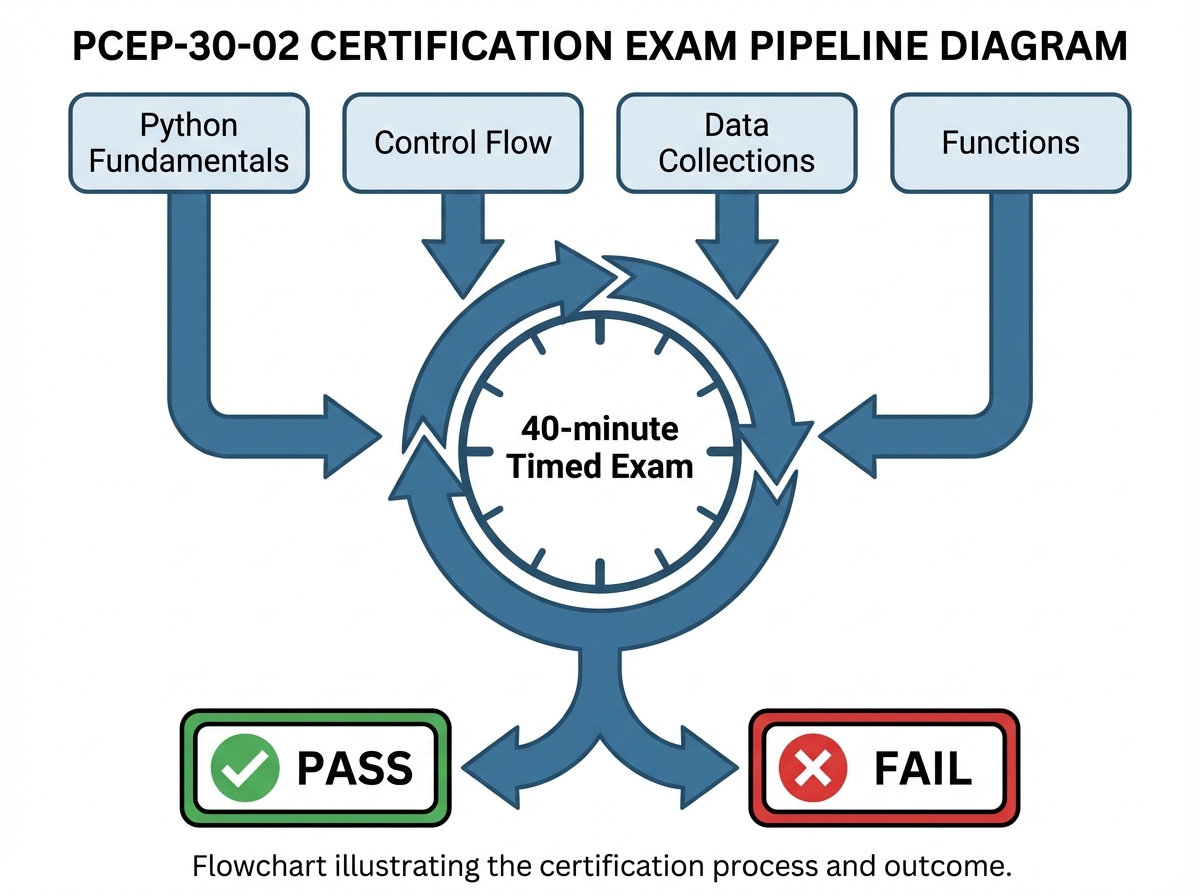
If you’re looking to learn PCEP exam preparation, the honest answer is that knowledge alone won’t carry you through. The PCEP-30-02 is a 40-minute, 30-question exam built around one skill above all others: reading code fast, tracing it accurately, and not second-guessing yourself. Most people who fail aren’t missing Python knowledge — they’re missing exam fluency, and those are two completely different things to build.
- You can know Python reasonably well and still fail if you haven’t practiced timed code tracing under realistic exam conditions.
- The biggest gains come not from studying new material, but from drilling the exact question formats the exam uses until your pattern recognition is automatic.
- Career switchers and students who treat practice tests as diagnostic tools — not just performance checks — consistently outperform those who study passively.
What the PCEP Certification Actually Tests
The PCEP — Certified Entry-Level Python Programmer — is the Python Institute’s foundational certification, sitting at the very beginning of their certification ladder below PCAP and PCPP. It’s not a hard exam in terms of concept depth, but it is a precise exam. It tests whether you understand how Python behaves, not just what its syntax looks like.
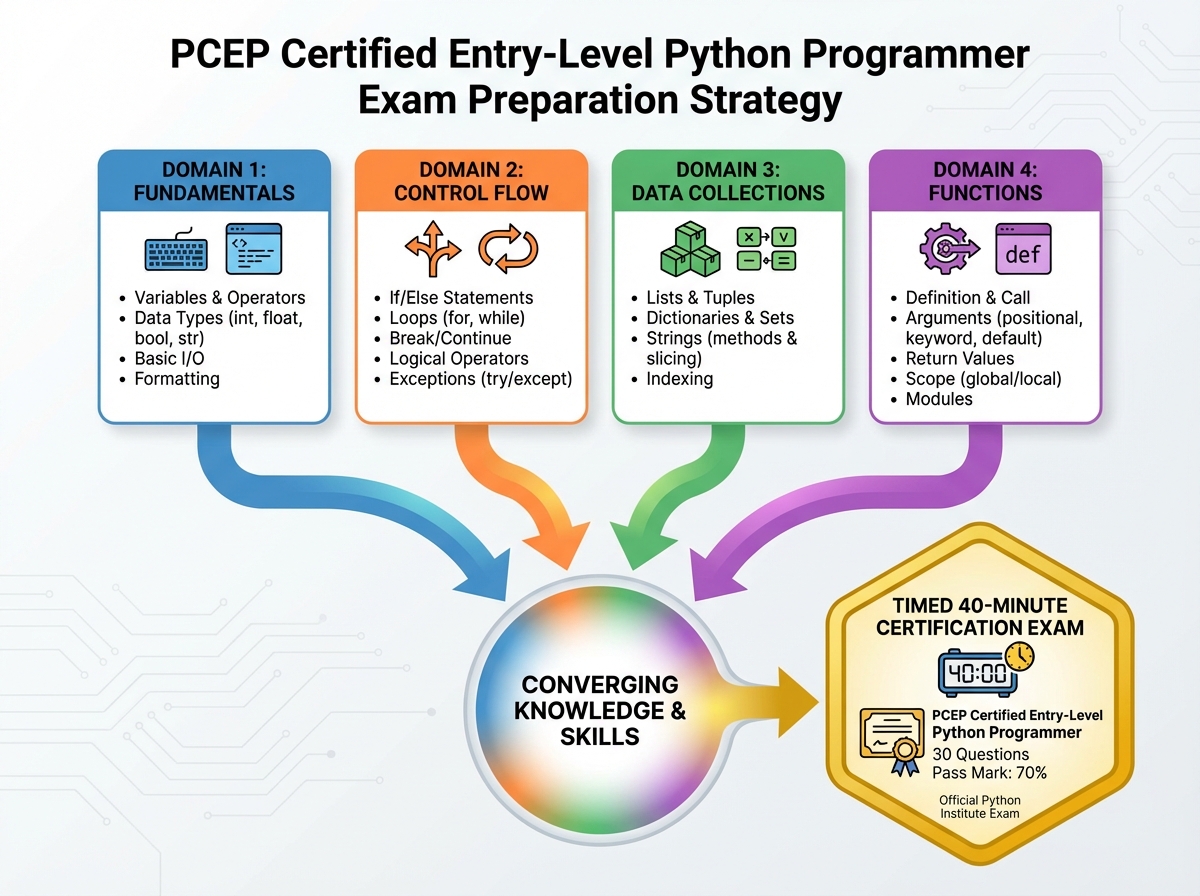
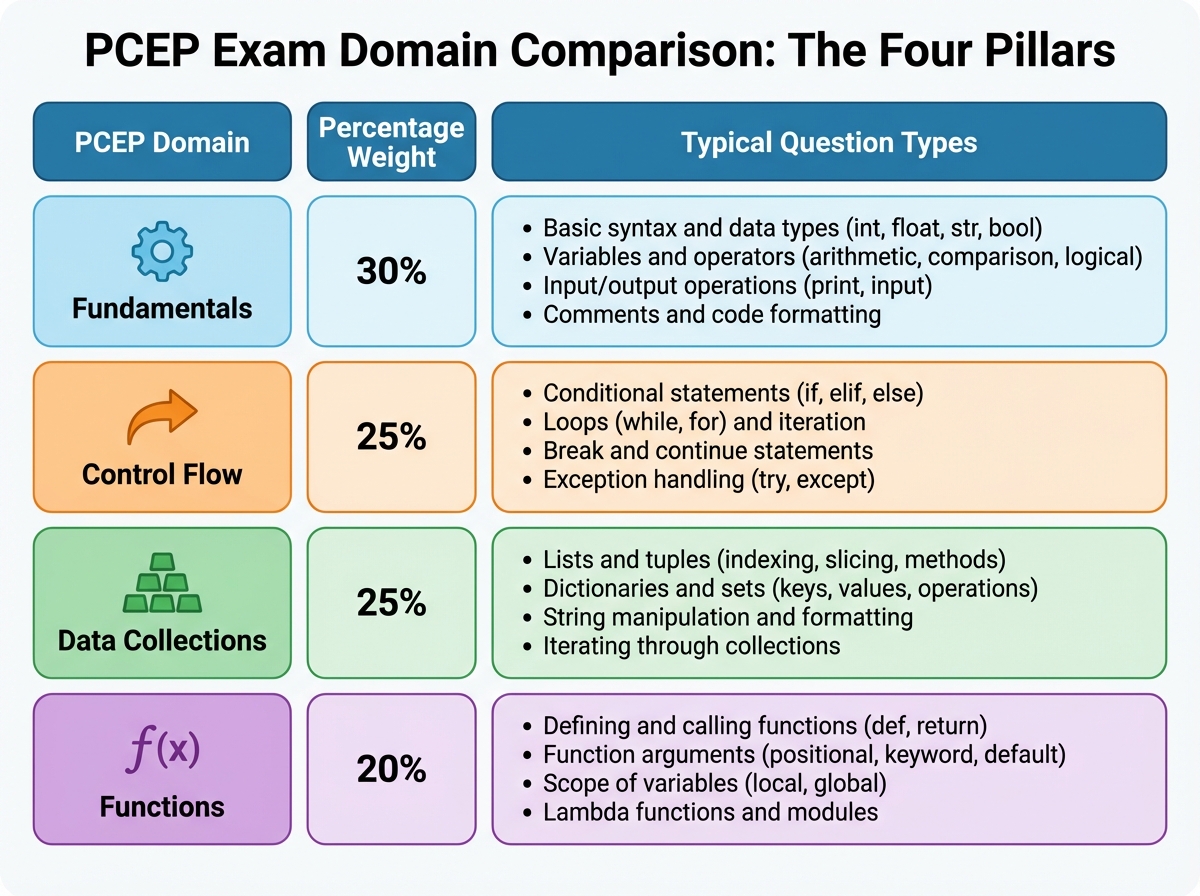
The four exam domains are: computer programming fundamentals (hardware/software concepts, how Python is interpreted and executed), control flow (conditionals, for and while loops, break and continue), data collections (lists, tuples, dictionaries — their indexing rules, slicing behavior, and built-in methods), and functions and exceptions (scope, parameter passing, basic error handling). None of these topics are advanced. Every one of them has specific edge cases that the exam will probe.
Three things that separate PCEP from casual Python knowledge:
- The exam cares about exact output — off by one space, wrong boolean, unexpected
Nonereturn — and all four answer options are plausible - Time pressure is real: 40 minutes for 30 questions means roughly 80 seconds per question, including reading, tracing, and selecting
- Questions are designed to exploit the gaps between “I think I know this” and “I actually know this”
Sharp Insights
- Mutable default arguments in functions will appear on the exam and almost everyone gets them wrong the first time.
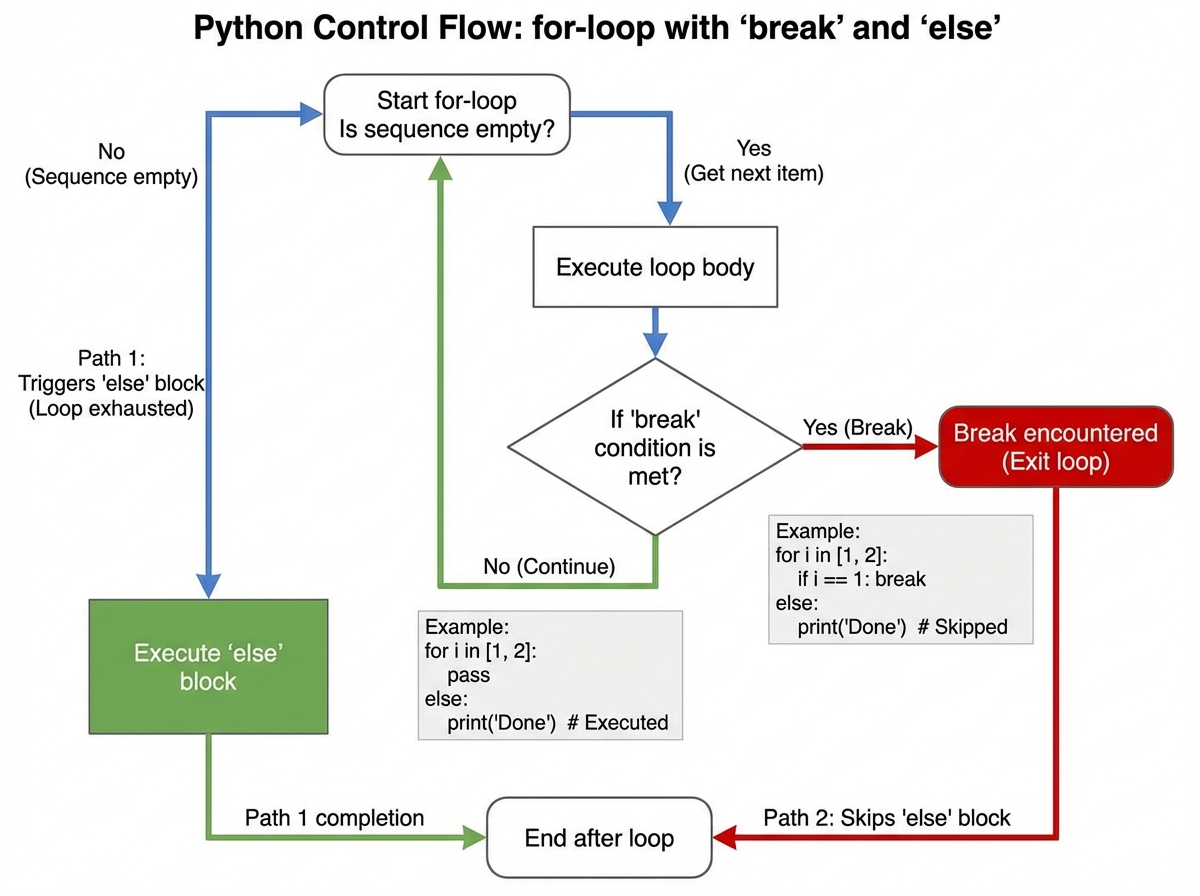
elseon aforloop is legal Python — and one of the PCEP’s favorite tricks.- A list slice with a step of
-1doesn’t just reverse — it changes what indices are included.
How Long PCEP Preparation Actually Takes
| Stage | Content | Time |
|---|---|---|
| Foundation review | Python syntax, data types, operators, basic I/O | 3–5 days |
| Control flow drilling | if/elif/else, for/while loops, break/continue/pass | 3–4 days |
| Data collections deep dive | Lists, tuples, dicts — indexing, slicing, methods | 4–5 days |
| Functions and exceptions | Scope rules, parameter types, try/except basics | 3–4 days |
| Practice test cycle (5 full tests) | Timed exams + targeted review of every wrong answer | 5–7 days |
| Total | Full preparation cycle | 18–25 days |
Order matters more than speed here — rushing into practice tests before the foundation review is solid means you’re reinforcing confusion, not building accuracy. And if it takes you 30 days instead of 25, that’s completely normal; the exam isn’t going anywhere, and one extra week of clean drilling is worth more than rushing in underprepared.
The Thing Nobody Warns You About: Exam Logic vs. Python Logic
When I started prepping for PCEP, I assumed that because I could write Python, I could read Python. Those are not the same skill. Writing code, you have an IDE, autocomplete, and the ability to run it and see what happens. On the exam, you have a block of code, four answer choices, and a clock.
The exam asks things like: what does this specific slice return, what happens when this loop hits a break inside an else clause, what is the value of this variable after three iterations. These aren’t trick questions — but they require you to execute code mentally, step by step, without skipping. The moment you skim a line because you think you know what it does, you’re vulnerable.
The realization that changed everything for me was treating every question as a trace exercise, not a recognition exercise. Don’t read the code looking for what it looks like. Read it like an interpreter — assign variables, follow branches, count iterations. Slow down to speed up.
Where Control Flow Questions Catch Everyone
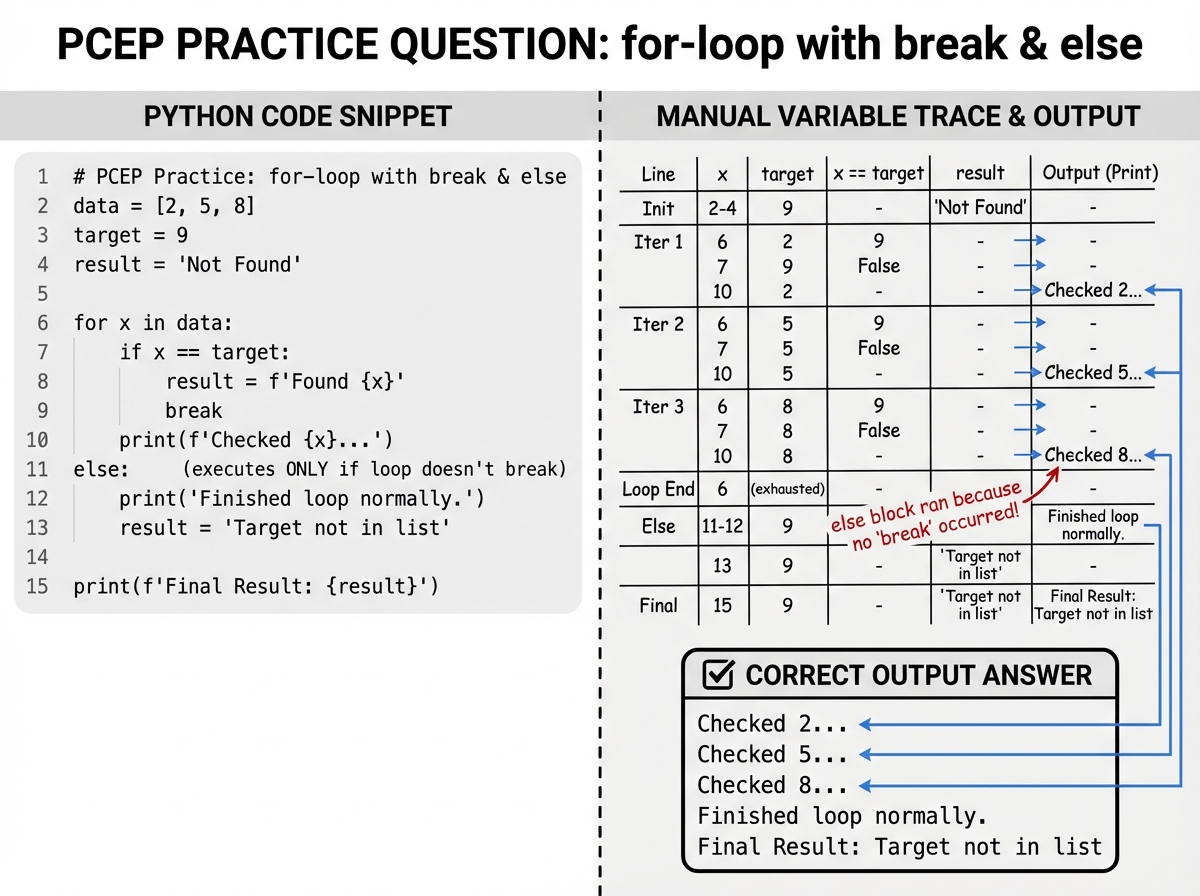
The biggest mistake people make when studying PCEP control flow is memorizing the syntax without understanding the execution model. You know that for i in range(5) iterates five times. But do you know exactly what happens when a break fires inside that loop — and why the else block doesn’t execute? Most beginners have a vague sense of it. The exam needs precision.
The for/else and while/else constructs are almost always on the exam in some form. The rule is simple: the else block runs if the loop completed without hitting a break. But under time pressure, with a five-line loop and a nested if, that rule requires you to trace every possible path before answering. Candidates who practiced this pattern dozens of times before exam day move through it in 30 seconds. Candidates who studied it once move through it in three minutes — and they’re already behind.
break, continue, and pass are another cluster where people lose points unnecessarily. They look simple. They are simple. But the exam puts them inside nested structures and asks about the outer loop’s behavior, and that’s where assumptions collapse.
Lists, Tuples, and Dictionaries: The Precision Problem
Data collections are where the exam gets genuinely surgical. You might know that lists are mutable and tuples aren’t. But the questions don’t ask you that directly — they show you code that mutates a list inside a function and ask you to predict the original list’s state afterward. Or they show you a dictionary being iterated while keys are referenced, and ask which value gets returned.
Slicing is its own category. my_list[1:4] feels intuitive until the exam adds a step parameter: my_list[::2], my_list[1:-1:2], my_list[::-1]. Each one requires a mental model of how Python constructs the result — start, stop, step, direction. The off-by-one errors in slicing are exactly what the exam options are designed to exploit. Three of the four choices will be slices that are almost right.
For anyone coming from a different language, Python’s list methods — .append(), .insert(), .pop(), .remove(), .index(), .sort() — behave with their own specific edge cases. .remove() removes the first matching value, not all of them. .pop() with no argument removes the last element. .sort() modifies in place and returns None. These details are all exam fodder.
Leave a Reply