


The blank canvas was never my real problem. I could sit down and paint for hours. The problem was the blank moment before that — the one where I had no idea what I was actually trying to say.
If you’re looking to learn how to sell paintings online, the technical side is only half of it. The other half — the part nobody talks about — is learning to develop original work that has something to communicate, photograph it properly, write about it in a way that doesn’t sound like a school essay, and then put it in front of the right people. That’s the full arc, and every step in between has its own wall you’ll need to break through.
- Concept development comes before everything — without an idea rooted in something real, your marketing has nothing to carry
- Photography and writing are not afterthoughts; buyers make decisions based on both before they ever see the physical work
- Social media for artists works differently — it’s not about follower counts, it’s about building enough trust with the right small audience
What “Selling Your Art” Actually Means for a Painter
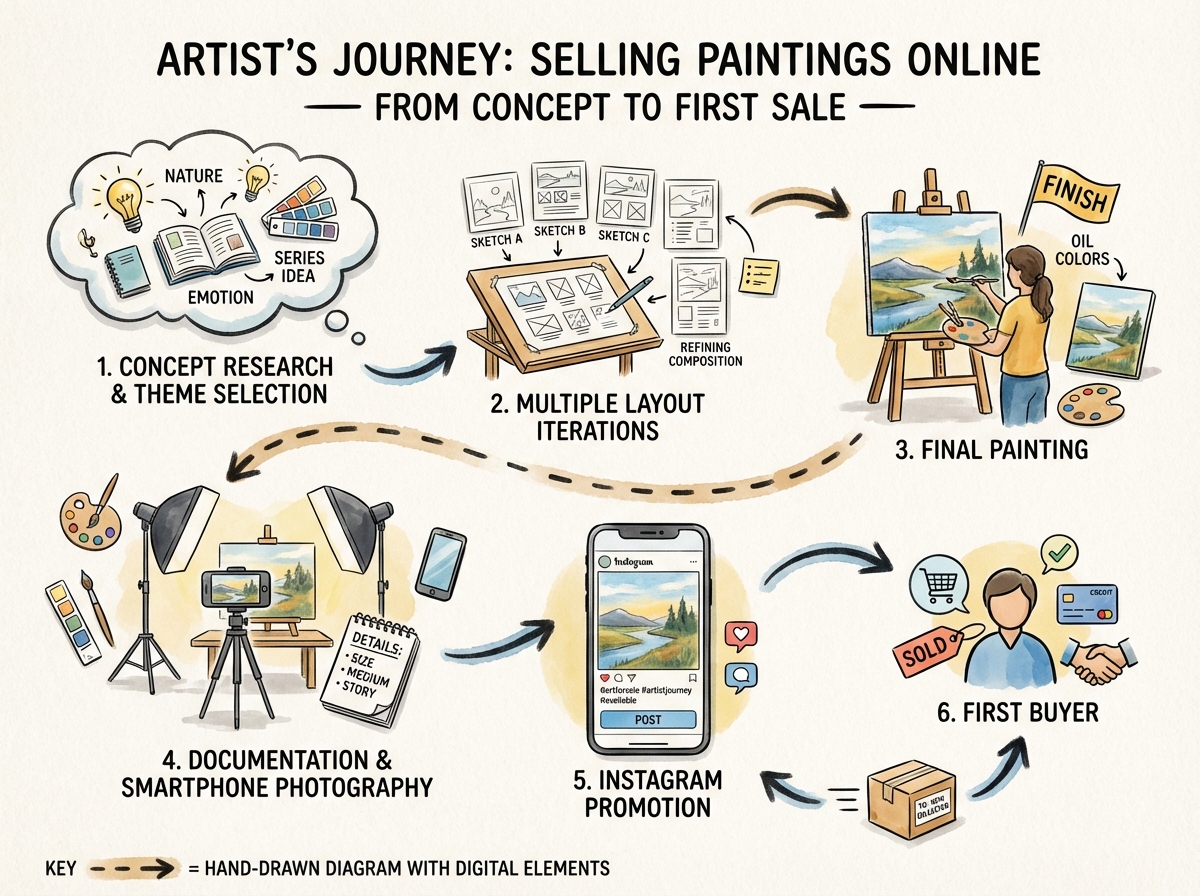
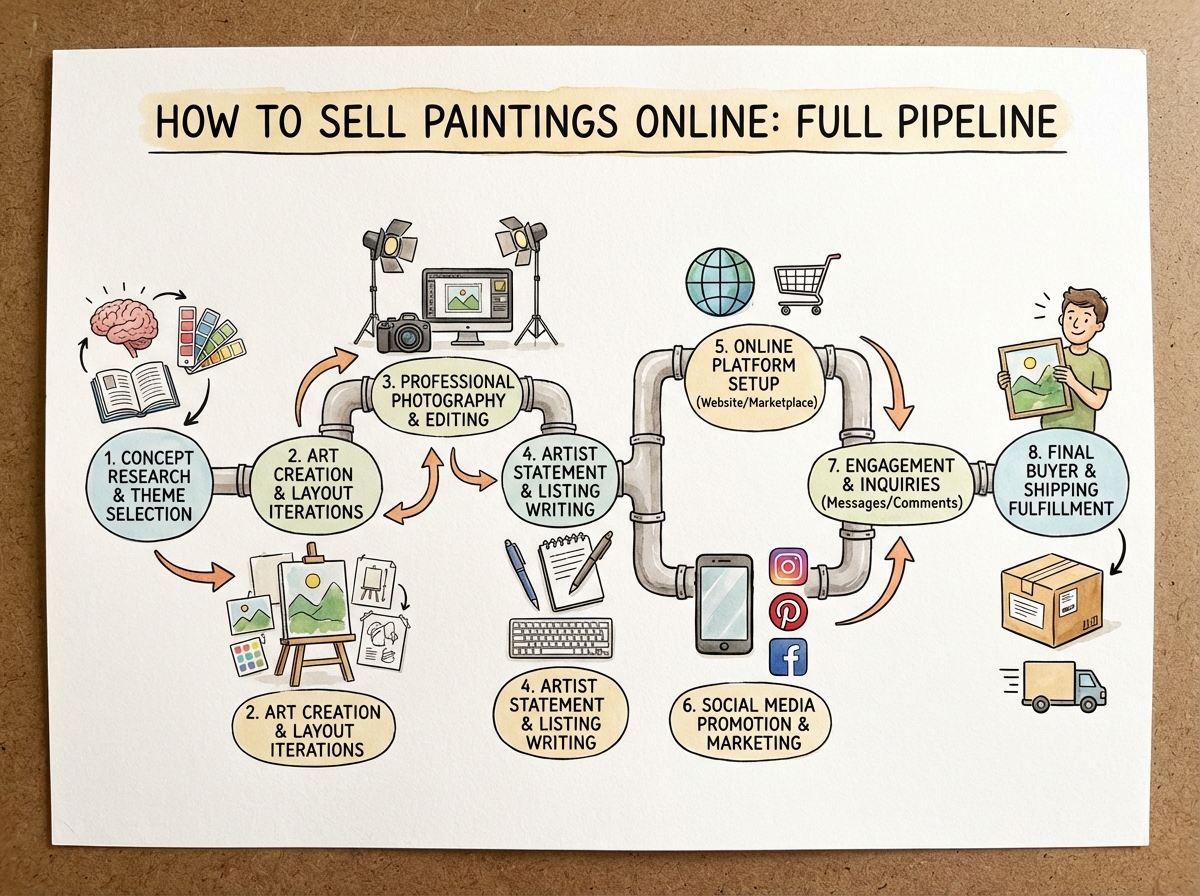
When most artists say they want to sell their work, they mean they want someone to buy a finished painting. But selling paintings online is actually a chain of decisions that starts the moment you decide what to paint. The concept, the execution, the documentation, the writing, the visibility — each one either strengthens or weakens the link before it.
For painters specifically — not digital artists, not printmakers — the challenge is distinct. You’re selling one-of-a-kind physical objects to people who can’t touch them. That means your image quality, your description, and your context-building have to do the work that a gallery wall normally does.
The three roles no one tells painters they’ll need to play:
- Conceptual artist — developing ideas that have depth and intent, not just aesthetic appeal
- Art director — photographing and presenting the work so it reads well on a screen
- Writer — communicating the idea behind the work in plain language without sounding pretentious
How Long the Real Learning Curve Actually Takes
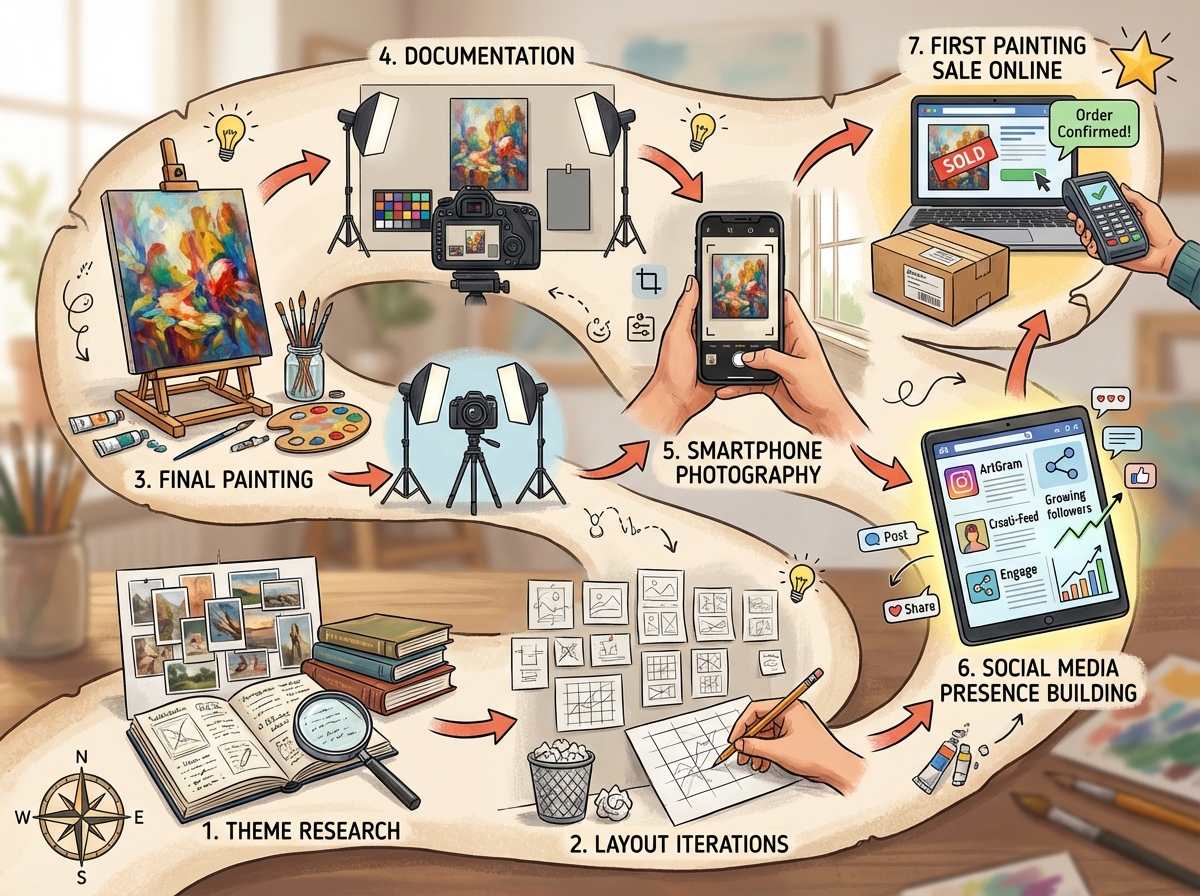
| Stage | What You’re Working On | Time |
|---|---|---|
| Theme & Research | Identifying a meaningful subject, doing background research, understanding your own intent | 1–2 weeks |
| Layout Iterations | Creating multiple rough compositions before committing to a final layout | 1–3 weeks |
| Final Painting | Executing the actual work with intention behind every decision | 2–6 weeks |
| Documentation | Writing your artist statement, art description, bio, and resume | 3–5 days |
| Photography | Learning to shoot and edit artwork using only a smartphone | 2–3 days |
| Building Presence | Getting feedback, connecting with audiences, setting up social profiles | Ongoing (2–4 weeks to first traction) |
| First Sale | Social media promotion, gallery outreach, or direct DM sales | 2–8 weeks |
| Total | Concept to first buyer | 2–4 months |
The order matters more than the speed — jumping to promotion before your documentation is strong is the most common way to waste months of effort. And if it takes you longer than this estimate, you’re probably spending more time on your actual paintings, which is rarely a mistake.
The Question That Comes Before the Painting
The biggest mistake painters make when they start thinking about selling their work is treating concept development as an afterthought. They paint what feels comfortable — a landscape, a portrait, a still life — and then try to figure out how to market it afterward. That process is backwards, and it’s why so much beautiful work sits unseen in studios.
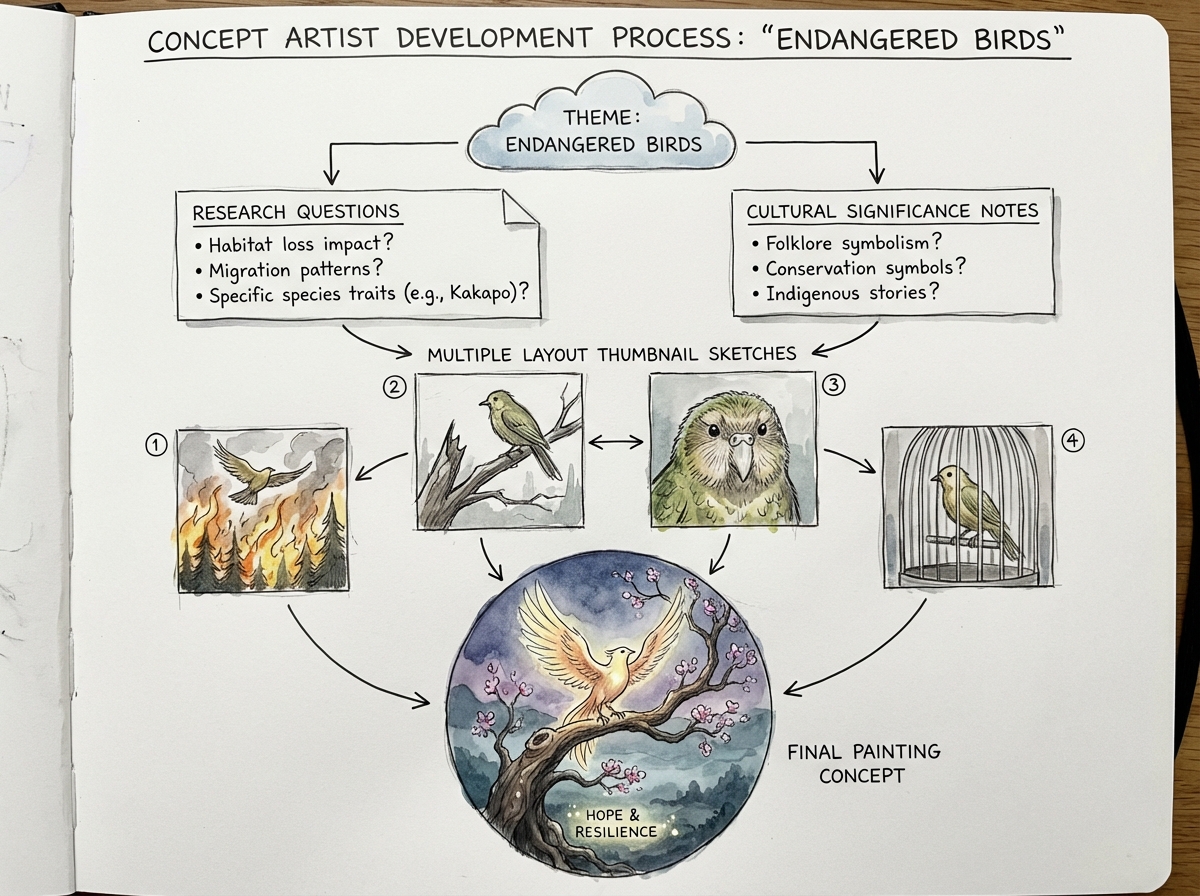
Developing a concept means asking yourself why this subject and not another. Not in a philosophical way — in a specific, almost journalistic way. When I started working on a series about birds, the first question wasn’t “what should the bird look like?” It was “why does this bird matter, and to whom?” Researching vultures — their ecological role, how they’re perceived culturally, what their decline would actually mean — gave me something to paint toward. The painting stopped being a picture of a bird and became a statement about something.
The research phase feels slow and non-creative when you’re in it. You’re reading, taking notes, looking at reference material, sitting with questions that don’t have obvious answers. But every hour spent here shows up in the final work in ways that buyers — and viewers — can feel even if they can’t name.
Why Iterations Matter More Than the Final Painting
Once you have a concept, the instinct is to commit to it immediately — pick a composition and start painting properly. Every experienced painter I’ve spoken to has made this mistake at least once. The layout you fall in love with on the first day is almost never the strongest one.
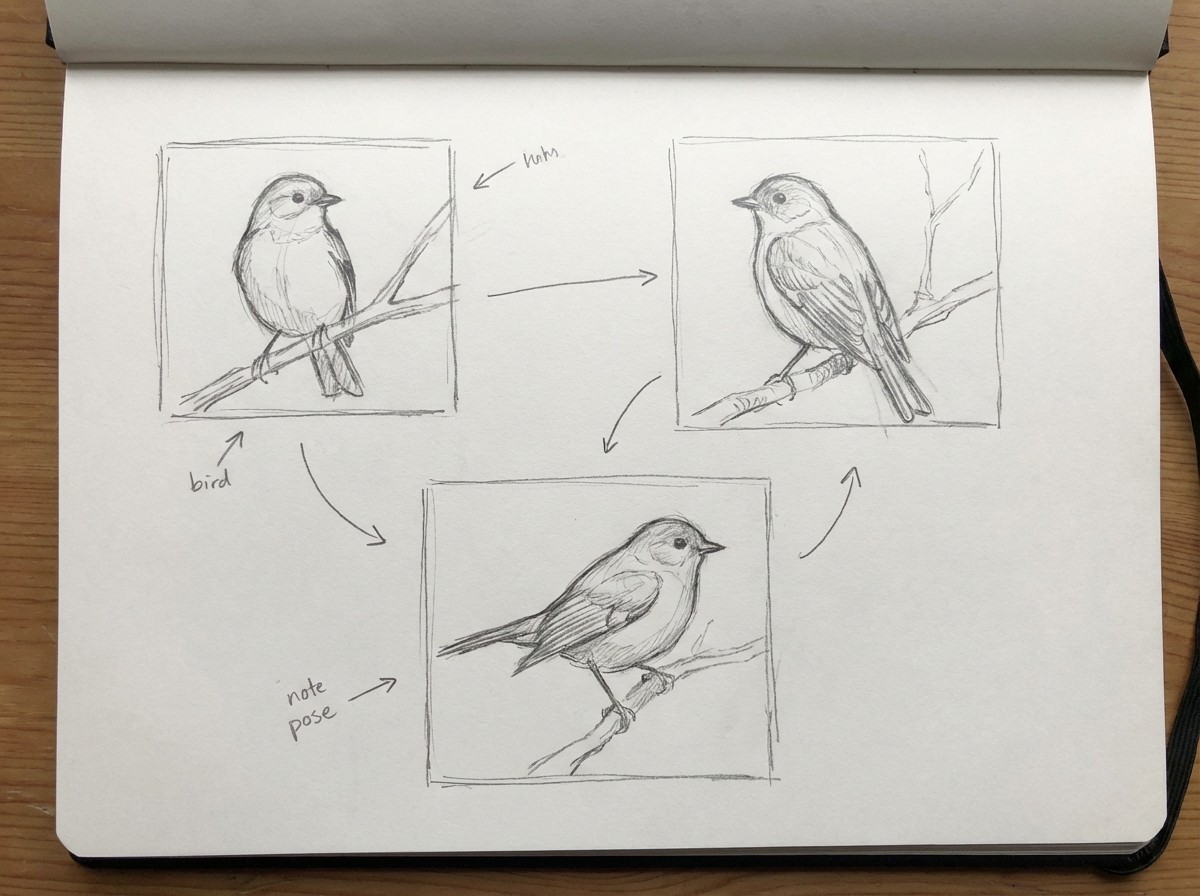
Working through multiple iterations — five or six rough layouts of the same subject — does something that no amount of final-polish work can replicate. It forces you to separate the idea from your attachment to a particular execution of it. By the third layout, you start seeing your own blind spots. By the fifth, you often find a composition you wouldn’t have imagined on day one.
This is especially true when you’re working with a subject that has strong visual conventions — birds in profile, elephants facing forward, the predictable angles everyone defaults to. Pushing past those defaults is uncomfortable. It’s also where the interesting work happens. An owl painted from below, or cropped so only part of the face fills the frame, communicates something that the standard three-quarter view simply doesn’t.
Writing About Your Work Without Losing Your Mind
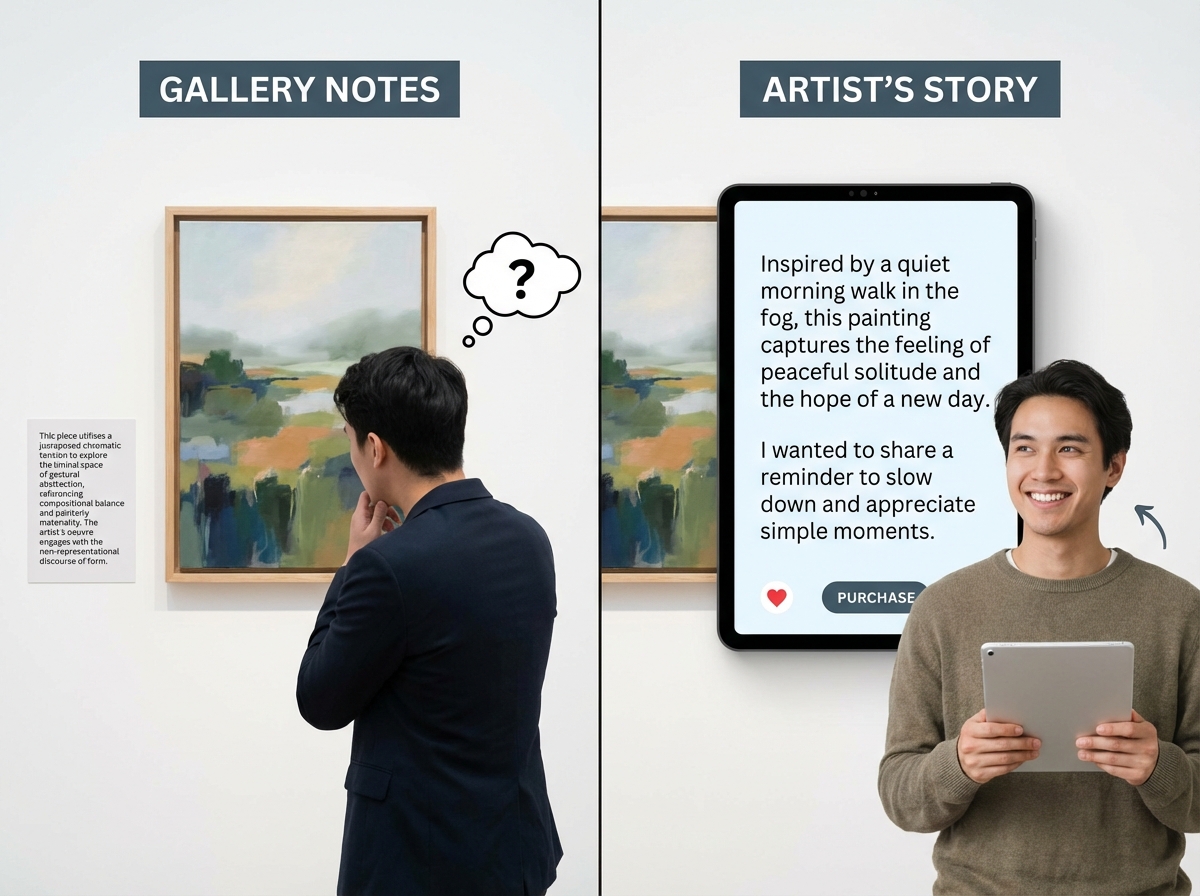
This is the section most painters dread, and the dread is justified — writing about art is genuinely hard. The problem is that most artists try to write about their work the way they’ve seen it done in gallery catalogs: abstract, distant, full of words like “explores” and “interrogates” and “challenges the viewer.”
The writing that actually connects with people — and gets paintings sold — is much more direct. It answers three questions: What made you paint this? What does the subject mean to you, and why should it matter to someone else? What do you hope someone feels when they stand in front of it? That’s your art description. That’s also the core of your artist statement.
The title of a painting does work that the image alone can’t. “Bird Study No. 3” tells a viewer nothing. A title that gestures at the painting’s actual meaning gives the viewer a frame before they even look closely. Getting that right often takes longer than you’d expect, and it matters more than most artists admit.
For Instagram marketing for visual creatives, the way you write captions and titles directly affects how your work is discovered — the algorithm rewards captions that people engage with, and people engage with writing that sounds like a human being, not a press release.
How to Photograph Paintings on a Phone Without Looking Amateur
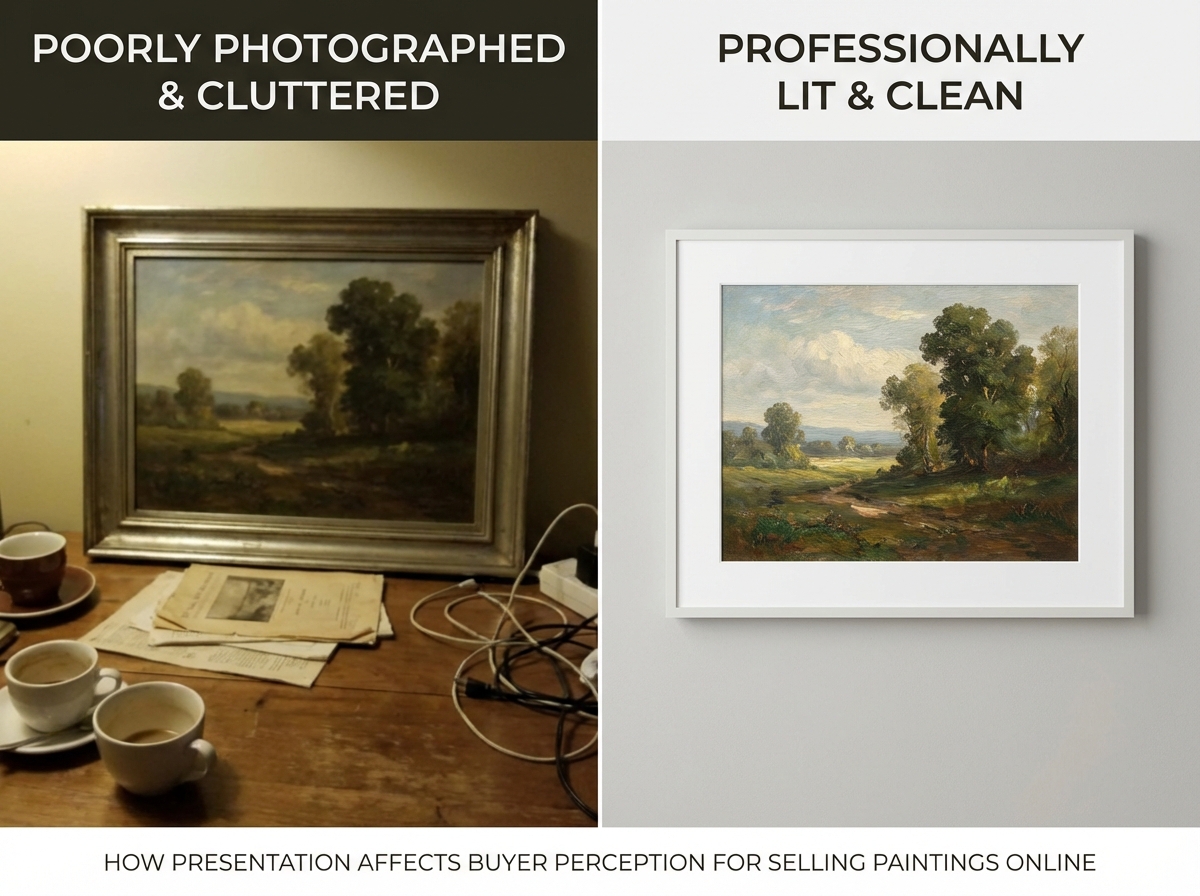
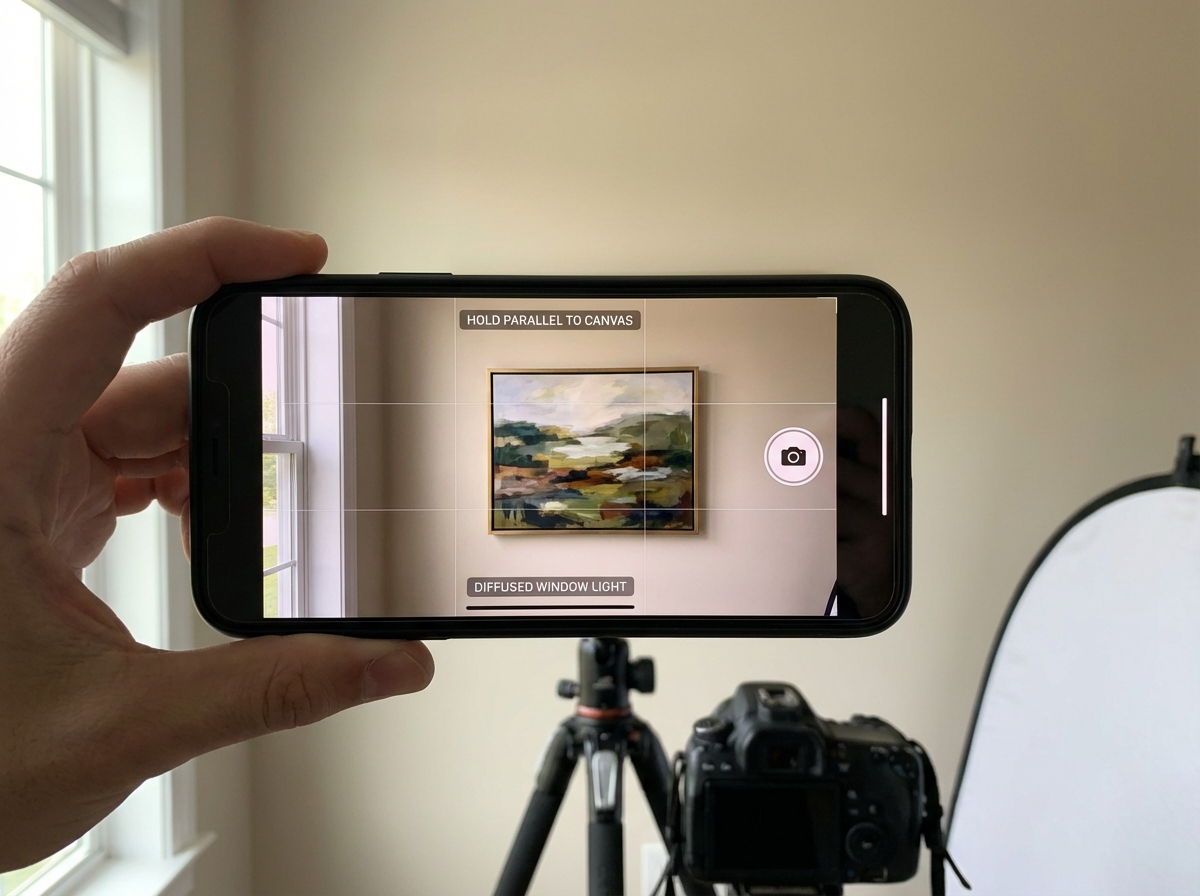
Poor photography is the single most avoidable reason paintings don’t sell online. I’ve seen genuinely beautiful work listed on social media with shadows falling across the canvas, color shifts from warm indoor lighting, and a corner of a coffee table visible in the frame. The buyer’s eye goes straight to those distractions before it has a chance to land on the painting.
You don’t need a camera. A modern smartphone, even a mid-range one, is capable of producing images that look professional — but only if the light is right. Diffused natural light from a large window, painting hung flat against a neutral wall, no direct sunlight hitting the surface, camera held parallel to the canvas so there’s no perspective distortion. Those four conditions get you 80% of the way there.
Editing matters too. Correcting white balance so the colors in the image match the colors in the actual painting is not optional — it’s the difference between a buyer trusting you and a buyer feeling deceived when the physical work arrives. Cropping to remove all background noise, adding a clean watermark that doesn’t obscure the image, keeping the file size high enough that it looks good on a large screen — none of this takes long, and all of it signals that you take your work seriously.
Building an Audience Before You Try to Sell Anything
The mistake that costs artists the most time is trying to sell before they’ve built any trust. Posting a painting with a price tag and expecting buyers to appear is like opening a restaurant with no signage and no reviews and wondering why no one walks in.
Feedback is the bridge between making work and selling it. Getting responses from real people — through Instagram comments, Facebook groups, direct emails to people whose opinion you respect — tells you which pieces land and which ones don’t. More importantly, it builds a small audience that feels invested in your work before you ever ask them to buy it. The first sale almost always comes from someone who has been watching your process for a while.
Working under or alongside a more established artist is one of the fastest ways to compress this timeline. Observing how they talk about their own work, how they handle inquiries, how they price and present — that knowledge is almost impossible to pick up from reading alone. It also opens the door to their network, which is worth more early on than any number of followers.
This connects directly to how you grow a social media audience that actually makes you money — the artists who convert followers into buyers are the ones who share the process, not just the result.
Getting Your First Exhibition and Making It Count
A solo exhibition sounds intimidating until you realize that a well-curated Instagram profile is an exhibition — one that’s open 24 hours a day and accessible to anyone in the world. The principles that make a physical show work apply equally to how you present your work digitally: coherent theme, consistent framing, writing that guides the viewer through the work in a particular order.
For physical shows, the relationship with a gallery starts with an email. A proper catalog — not just a folder of JPEGs, but a formatted document with artist statement, artwork titles, dimensions, materials, and pricing — makes the difference between a gallery taking you seriously and a gallery not responding. Most artists skip the catalog and wonder why their cold outreach goes nowhere.
Social media promotion for an exhibition isn’t just announcements. It’s the lead-up: the work-in-progress images, the story behind the pieces, the moment when you hang the first painting on the wall. By the time the show opens, the people who’ve been following that process already feel like they’ve been part of it.
How to Actually Sell Paintings Online Using Social Media
Facebook and Instagram work differently for artists, and treating them the same is a waste of effort. Facebook’s strength is community — groups, local networks, people who share a specific interest in the subject matter of your work. A series of paintings about urban birds, for example, will find a natural audience in wildlife conservation groups, city nature communities, and local arts pages.
Instagram is a discovery platform — it rewards visual consistency and process content. The accounts that sell work on Instagram are not the ones with the most polished feeds. They’re the ones where the artist shows up regularly, responds to comments, and makes the viewer feel like they’re watching something real happen. A story reel of a painting going from first layout to final work outperforms a single polished image almost every time.
Pricing is its own subject, but the principle that matters most when starting out is this: price based on what the painting cost you — in time, materials, and the research and thought behind it — not based on what you fear someone might pay. Underpricing signals low confidence, and low confidence is visible to buyers even when they can’t articulate why.
If you want to deepen the business side of what you’re building, understanding online entrepreneurship principles every solopreneur must know gives you a framework for turning consistent art sales into something more durable.
Looking back at what actually moves the needle when learning to sell paintings online, none of it is the part beginners spend the most time worrying about. The style, the technique, the medium — those matter, but they’re not what separates artists who sell from artists who don’t. What separates them is everything that happens before and after the painting itself.
Start with a question, not a subject. Ask yourself why you want to paint a particular thing, and keep asking until you find an answer that has some tension in it — that’s where the concept lives.
Do at least four layout iterations before starting the final painting. The first two are warm-up. The third is where habit breaks down. The fourth is where something unexpected usually appears.
Write your art description in three sentences before you write it properly. What is it? Why did you make it? What do you want the viewer to feel? Expand from there — but don’t start with a blank page.
Use a window, not a lamp, for artwork photography. Overcast daylight is the most forgiving light source for capturing true color without harsh shadows.
Edit your photographs on your phone before posting anywhere. Correct the white balance, straighten the crop, check that the colors on screen match the colors in real life. This takes five minutes and matters enormously.
Post process content, not just results. A rough sketch posted with a genuine explanation of what you’re trying to figure out will get more engagement — and build more trust — than a finished painting posted with a price tag.
Build your artist resume before you think you need it. Gallery opportunities, commissions, and collaborations often come with short notice. Having a formatted resume with your statement, skills, and background ready means you respond quickly, which reads as professional.
DM ten people who’ve commented positively on your work and ask what they noticed. Not to sell to them — to understand what’s actually landing. That information is worth more than any analytics dashboard.
Leave a Reply