


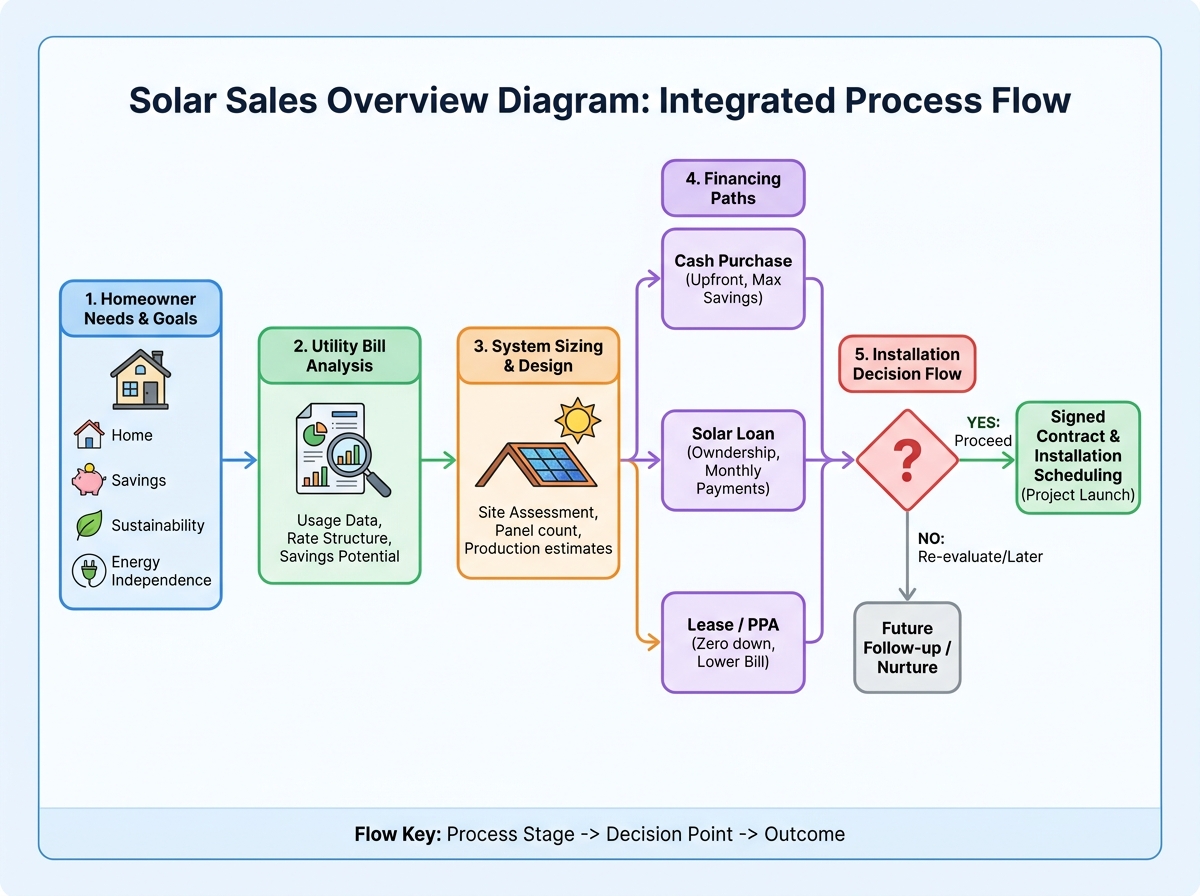
I remember realizing I did not need more hype about clean energy. I needed a straight answer on whether solar sales was a real career, what I had to know to sound credible, and where beginners usually burn time and money.
If you’re looking to learn solar sales, start by understanding three things in order: how residential solar actually works, how a system is sized around a homeowner’s usage, and how to speak about savings, financing, and fit without sounding like a brochure. What finally made solar sales click for me was seeing that the job is less about pushing panels and more about translating roof constraints, utility rules, and homeowner concerns into a decision someone can trust.
- You do not need deep technical expertise to start solar sales, but you do need enough system knowledge to avoid sounding vague.
- The fastest progress comes from learning solar basics, target market fit, and system sizing in that order.
- Most beginners stall because they chase scripts before they can explain net metering, backup, or financing clearly.
What is solar sales for beginners?
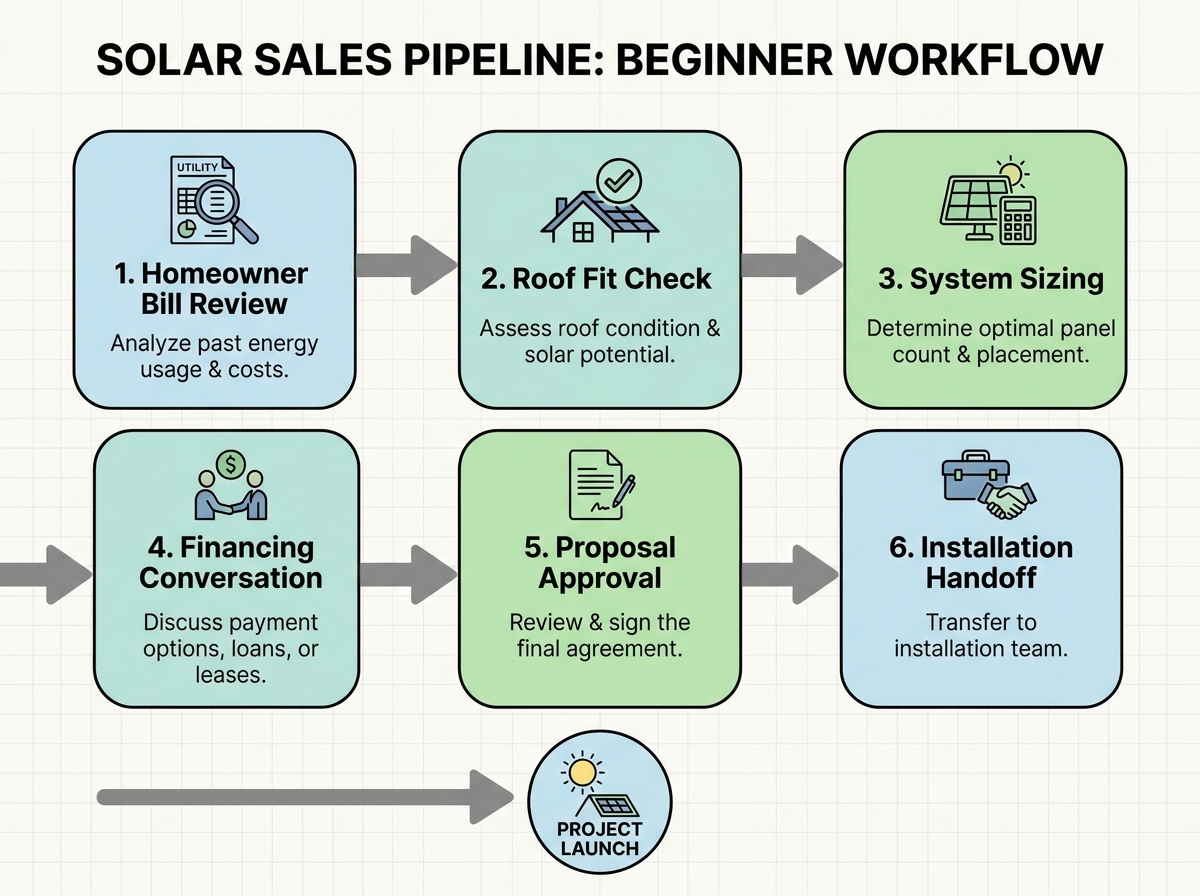
Solar sales is the work of helping a homeowner or business decide whether a solar system makes financial and practical sense for their property. For someone new to green energy, that means learning to connect utility bills, system components, roof reality, and financing choices into one honest recommendation.
| Part of the job | What it really means |
|---|---|
| Product knowledge | Knowing panels, inverters, net metering, backup, and basic energy flow |
| System thinking | Estimating system size from usage instead of guessing from roof appearance |
| Customer fit | Understanding which homeowners are a real match and which are not |
| Career side | Knowing how companies hire, what skills matter, and where beginners get misled |
Sharp insights
Solar buyers ask about bills before they ask about panels.
Net metering confusion kills trust faster than price does.
A bad-fit roof can waste an entire sales call.
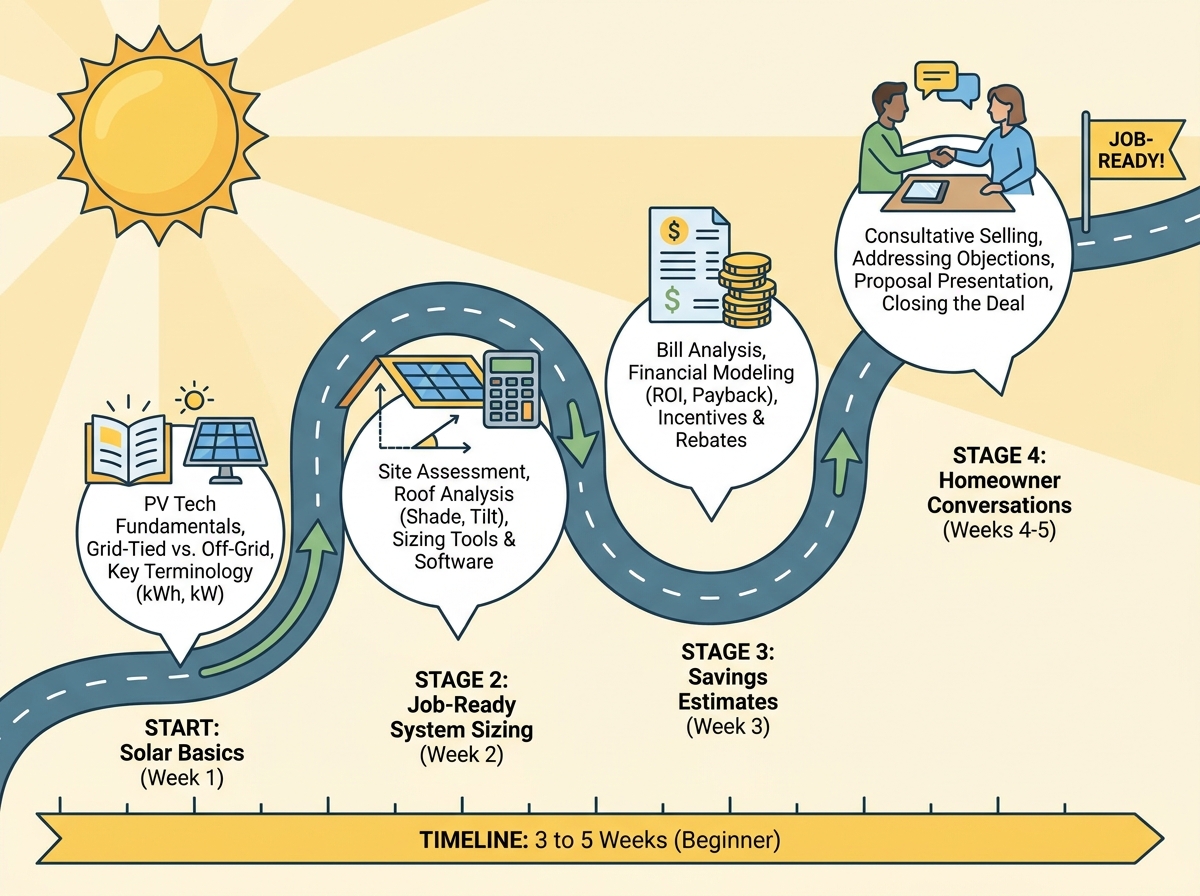
How long solar sales takes to learn
| Stage | Content | Time |
|---|---|---|
| Getting oriented | Solar basics, components, energy flow, common terms | 3-5 days |
| Learning the conversation | Target market, homeowner objections, industry norms, career expectations | 1-2 weeks |
| Understanding the numbers | How to size a solar system, estimate savings, discuss financing | 1-2 weeks |
| Becoming job-ready | Practice proposals, mock calls, application prep, realistic expectations | 1 week |
| Total estimated time | Functional beginner-level solar sales readiness | 3-5 weeks |
The order matters more than the speed because each later conversation falls apart if the earlier concepts are shaky.
If you take longer than this, that is normal; most people slow down when the numbers stop feeling abstract and start affecting real homeowner decisions.
I thought solar sales was mostly persuasion
At the beginning, I assumed solar sales would be one long exercise in confidence. Learn the pitch, memorize a few talking points about clean energy and savings, and figure the rest out later. That illusion lasted right up until I tried explaining how power moved through a system and realized I was leaning on phrases that sounded polished but meant nothing.
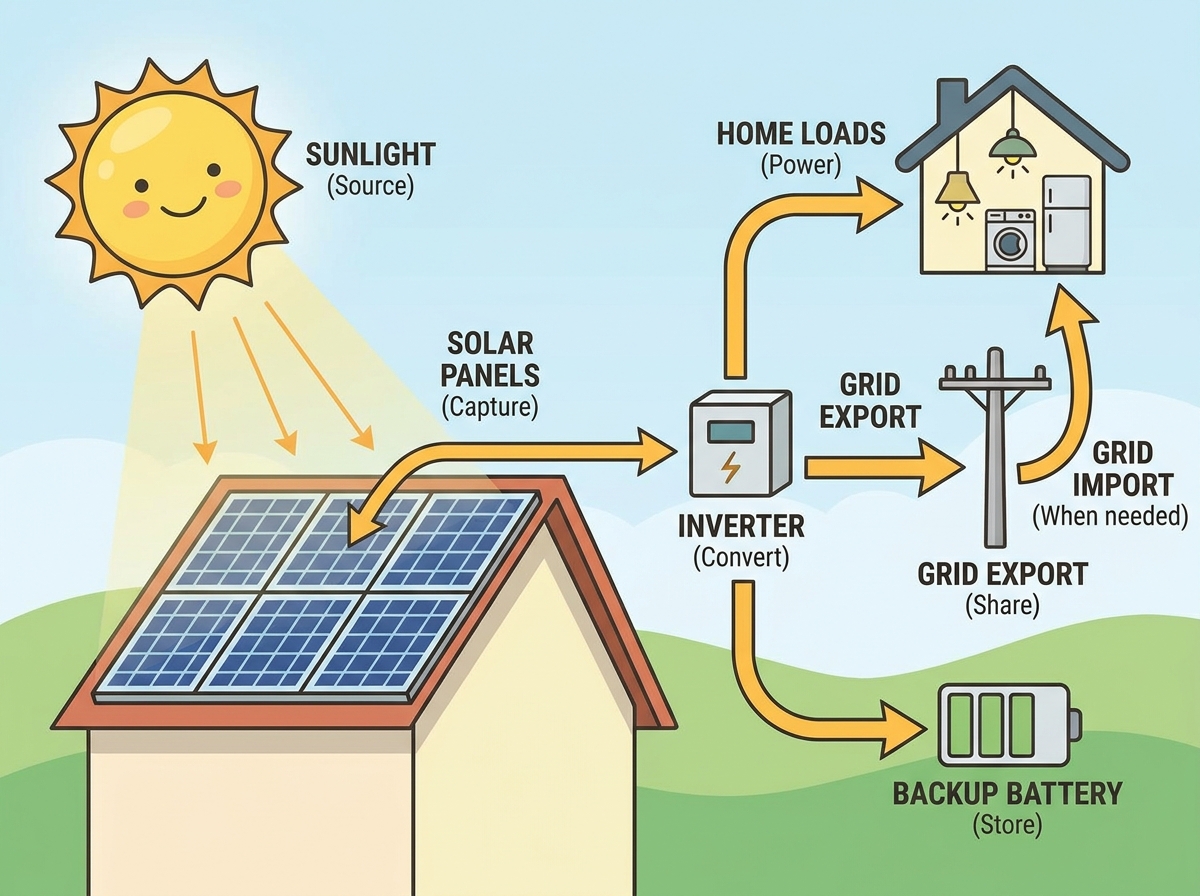
The first real shift happened when I stopped treating the hardware as background. Panels, inverters, domestic hot water ideas, backup options, and utility interaction were not technical side notes. They were the reason a homeowner could tell within two minutes whether I understood what I was offering or whether I was just dressing up a commission conversation.
That changed my pace. I spent less time trying to sound smooth and more time making sure I could explain a basic setup without hiding behind jargon. Once I could do that, the conversation got quieter and strangely easier because I was no longer performing confidence; I was answering the actual thing in front of us.
Net metering and backup stopped feeling like side notes
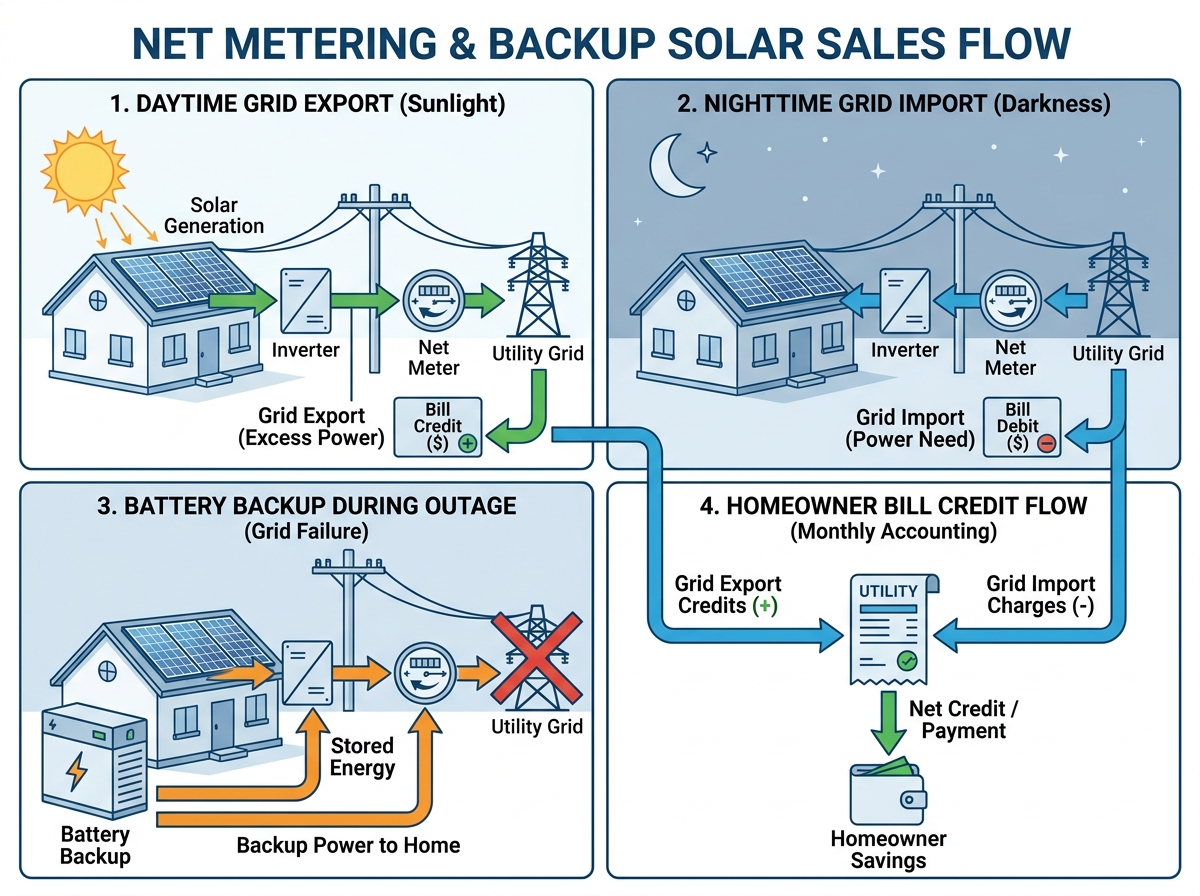
I used to treat net metering like a footnote, something to mention quickly before moving on to the more exciting part about savings. That was a mistake. The moment a homeowner asks what happens when they produce extra energy or what happens during an outage, your answer either steadies the whole conversation or exposes every weak spot in it.
The breakthrough for me was seeing that people were not just buying lower bills. They were trying to understand how their home behaves after solar goes in. Net metering, backup, and expectations during grid loss are not add-ons in the conversation. They are the part that keeps the system from feeling like a black box.
That is also where I started to see overlap with broader home-upgrade conversations. If you have ever looked at video marketing for small business, you know clarity beats charisma when the buyer is skeptical. Solar sales works the same way: when the explanation is concrete, resistance drops without you forcing it.
The target market was narrower than I expected
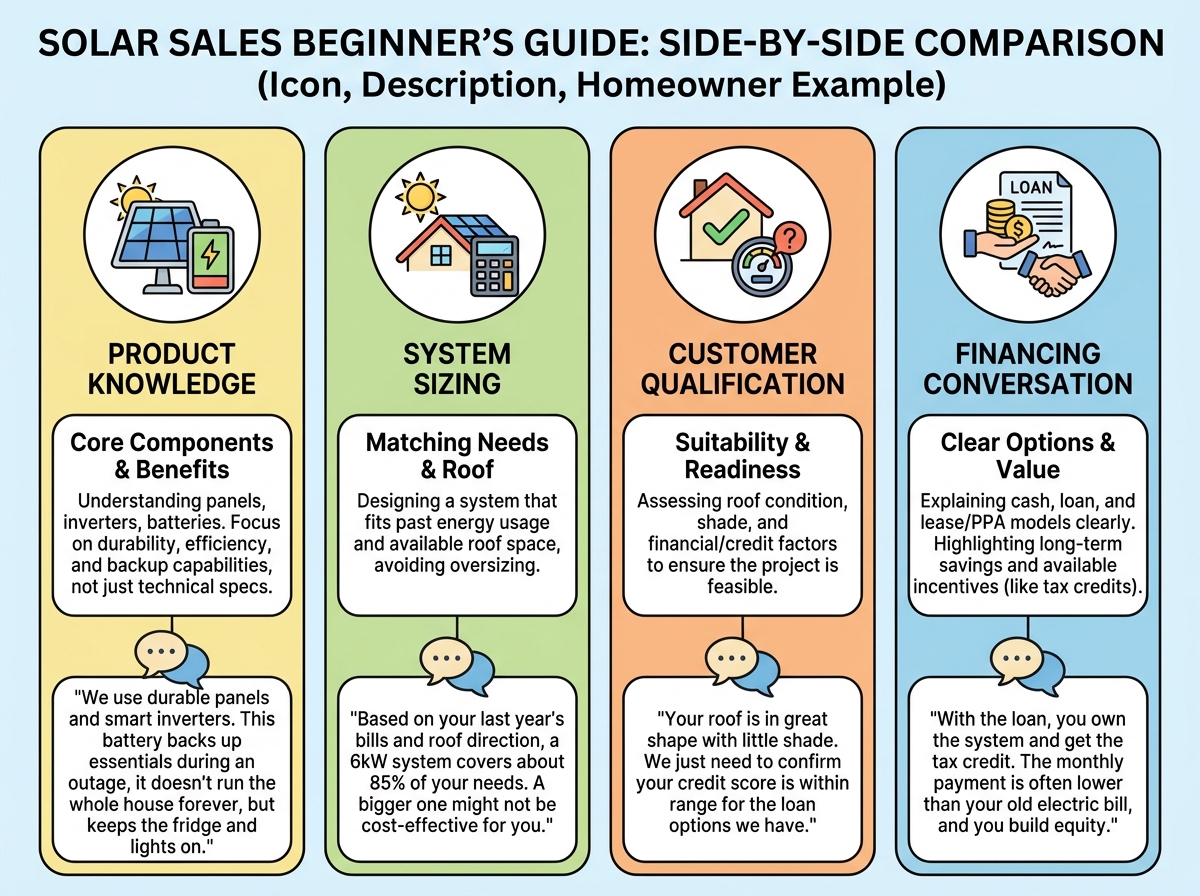
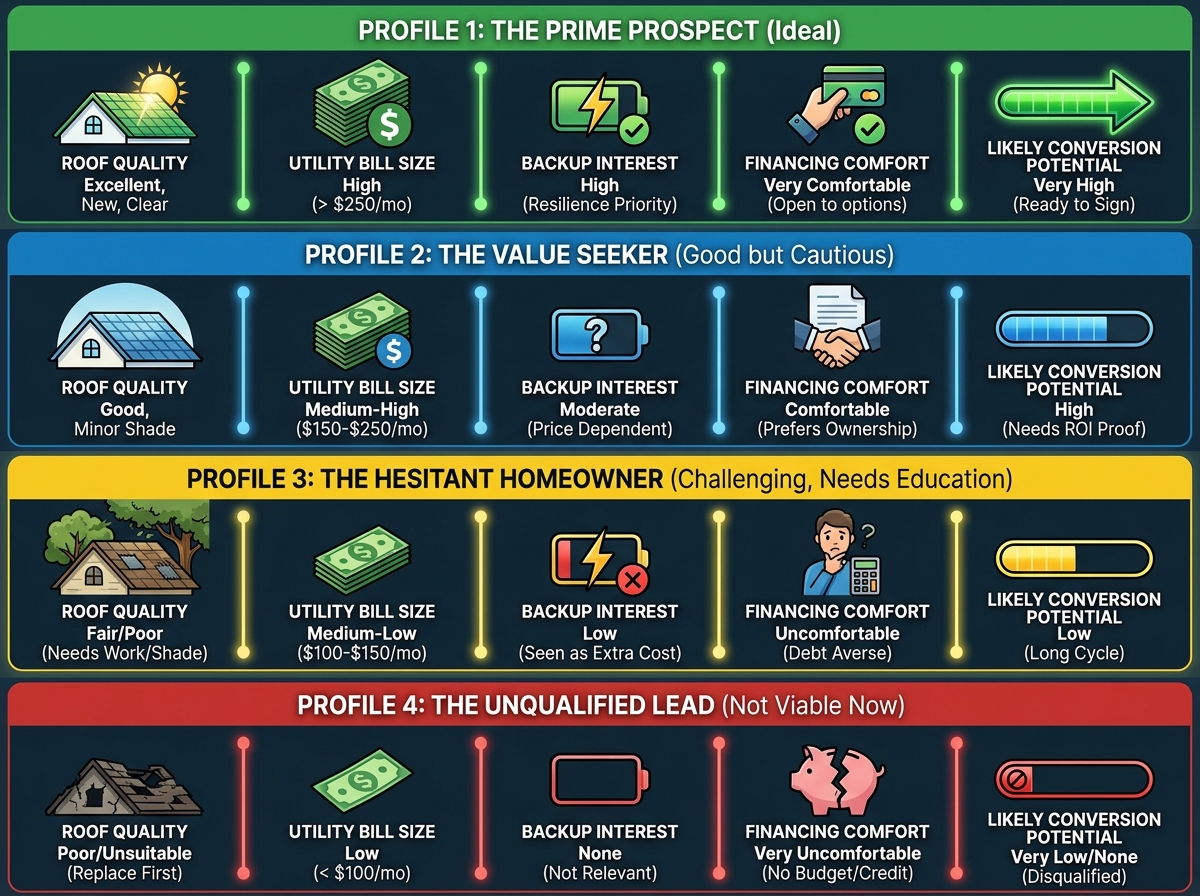
One of the hardest early lessons was realizing that not every interested homeowner is actually a good solar lead. I wasted time talking to people who liked the idea of solar but had the wrong roof orientation, too much shade, unclear utility savings potential, or no appetite for the financing structure that would make the project possible.
When I got more honest about target market fit, everything improved. The right conversation was not “How do I convince more people?” It was “Who can this genuinely help right now?” Homeowners considering solar are not one group. Some care about bill stability, some about backup, some about long-term home value, and some simply want the lowest monthly number they can get.
That changed how I listened. Instead of leading with a canned solar pitch, I started listening for house condition, bill pattern, and decision style. The people who were a fit moved forward faster, and the people who were not a fit stopped becoming these exhausting maybe-deals that dragged on for weeks.
The biggest mistake in solar sales is talking price before fit
The biggest mistake people make when learning solar sales is trying to discuss savings before they understand system fit. I made this mistake early, and it always produced the same awkward moment: I would speak in broad numbers, the homeowner would ask one specific question about their roof or usage, and the entire frame of authority would collapse.
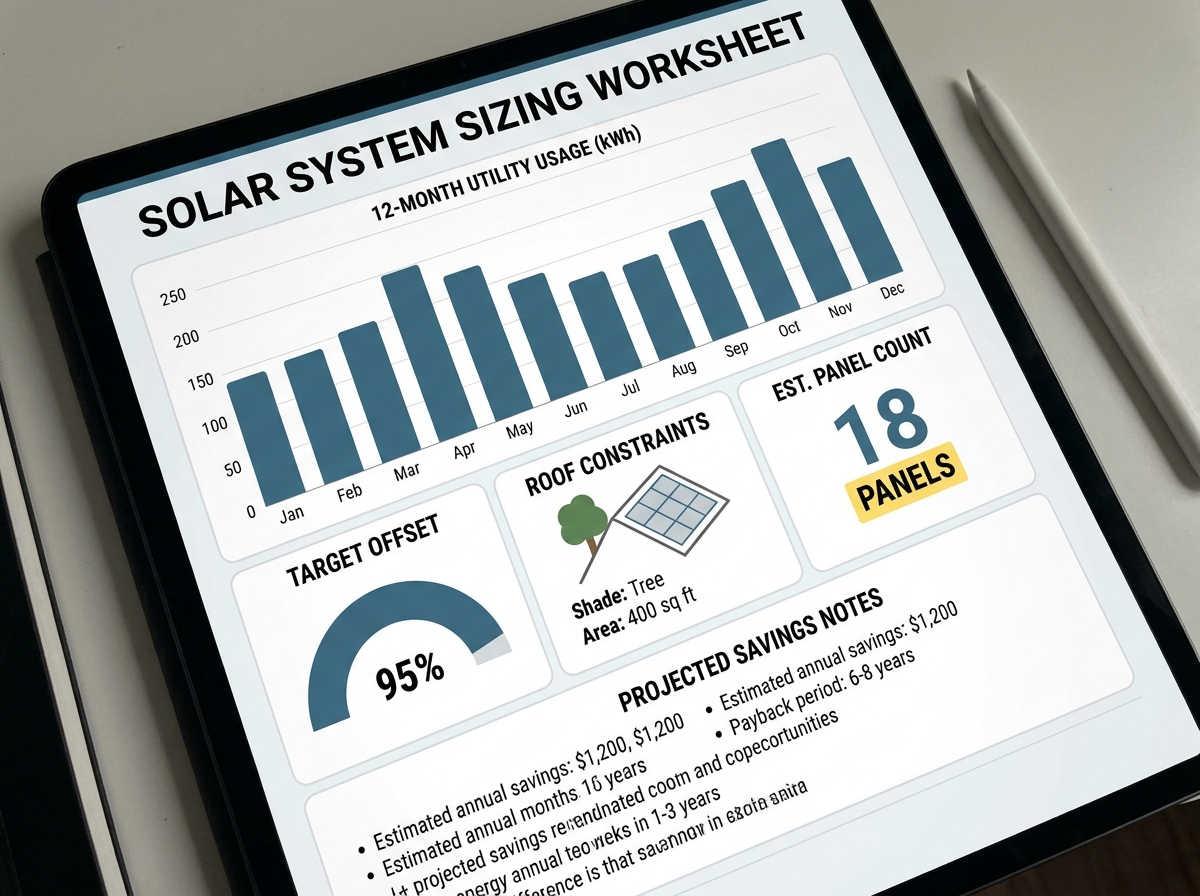
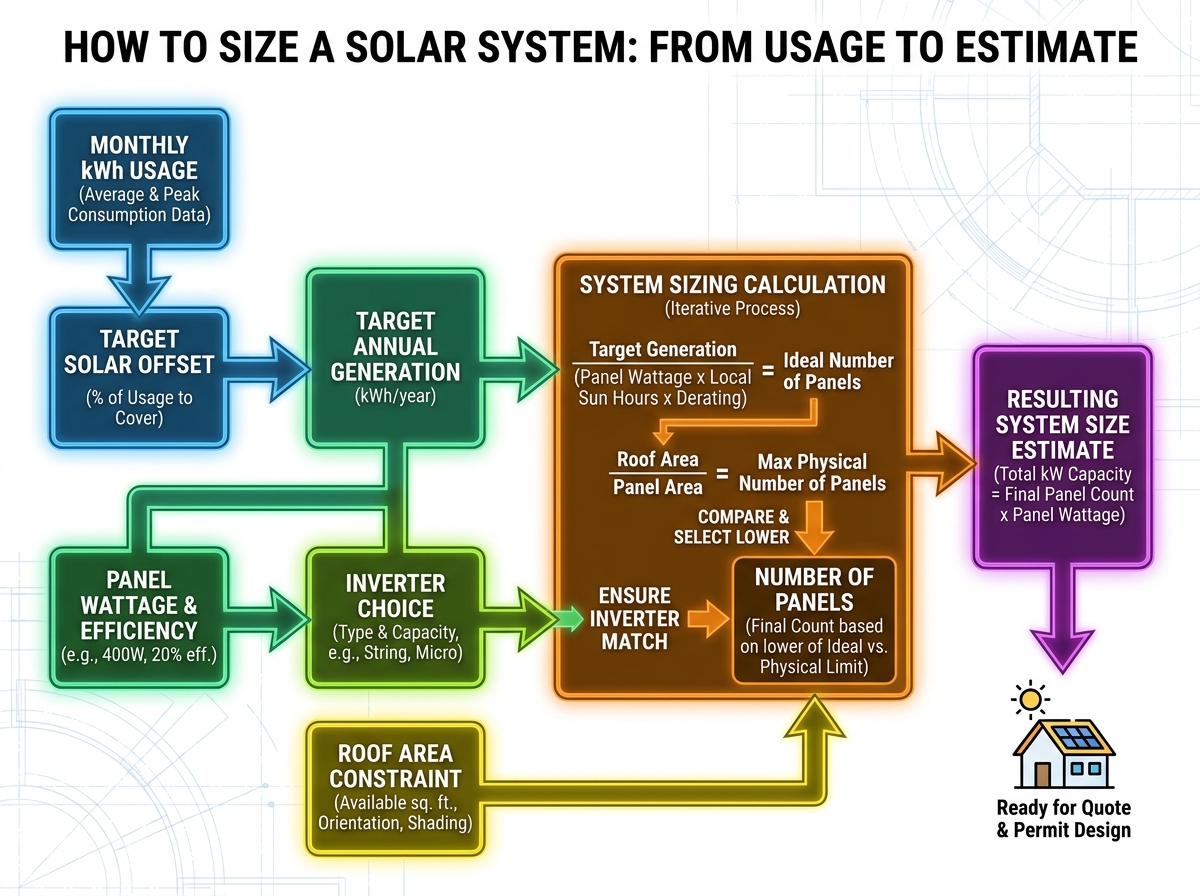
Learning how to size a solar system fixed more than the math. Once I understood that sizing starts with energy consumption, not panel count fantasies, I could finally connect the homeowner’s utility history to system output in a way that felt grounded. Load first, then equipment, then constraints. That order matters because it forces your recommendation to come from the home rather than from the offer.
The same thing happened with savings. They stopped being promotional language and became a set of assumptions I had to respect. If usage is inconsistent, if financing changes the monthly picture, or if utility policies reduce the value of excess generation, the numbers have to reflect that reality. That honesty made me better at python and excel integration style thinking even outside solar: inputs first, outputs second, no skipping the middle.
Learning how to size a solar system changed everything
Before this part clicked, system sizing felt like something done by software behind the curtain. I assumed a rep only needed rough instincts and the proposal tool would handle the rest. But once I started tracing how usage history becomes a recommended system size, I saw why so many beginner conversations sound detached from the actual home.
Sizing made the job concrete. You look at consumption, think about offset goals, factor in roof limitations and component choices, and then ask whether the proposal still makes sense financially. Suddenly, the conversation has edges. You cannot hide behind enthusiasm when the house tells a different story.
That was also the moment solar sales stopped feeling like a pure sales role and started feeling more like translation. You are translating energy behavior into a system people can live with. If you enjoy that kind of structured thinking, the move into adjacent skills like how to build a startup using innovation frameworks that actually work feels less random than it sounds, because both require you to move from messy inputs to a defensible decision.
The solar career conversation was more uneven than advertised
I wish I had understood earlier how uneven the solar career path can feel from the outside. On one end, you see talk about freedom, income, and fast growth. On the other, you run into vague job listings, compensation structures that are hard to compare, and a lot of noise from people selling access, secrets, or status.
What helped was getting brutally practical about what companies actually want. They want someone who can learn fast, speak clearly, handle objections without getting slippery, and stay composed when details get messy. They do not need a beginner to be an engineer. They need someone who can earn trust without inventing certainty.
Once I accepted that, applying for solar roles felt simpler. I stopped trying to present myself as an instant expert and focused on showing I could understand the product, talk through homeowner concerns, and keep the numbers straight. That shift made the industry feel less like a gated world and more like a place where clear thinking actually has value.
What the disadvantages actually feel like up close
This is the part people soften too much. The disadvantages are real: long sales cycles, confused homeowners, policy complexity, financing friction, deals that die late, and the emotional whiplash of thinking a conversation went well only to watch it disappear after one family discussion or one roof inspection issue.
I found that the hardest part was not rejection by itself. It was the uncertainty created by partial progress. A homeowner says they love the savings, then stalls over backup. Another wants the environmental win, then gets nervous about financing. Another looks ideal on paper and turns out to have a roof that turns the entire proposal into a compromise.
Strangely, this is also where solar sales became more stable for me mentally. Once I accepted the obstacles as part of the real job instead of as signs that I was doing it wrong, I stopped chasing perfect conversations. I started looking for honest fit, cleaner explanations, and fewer surprises. That mindset did more for my results than any script ever did.
Looking back, what actually mattered
Looking back, learning solar sales was not about becoming louder or more persuasive. It was about becoming harder to shake when the conversation got specific. Once I understood the system, the target market, the numbers, and the disadvantages well enough to talk plainly, solar sales stopped feeling slippery and started feeling like work I could actually stand behind.
- Read twelve months of utility bills first so your solar sales conversation starts from usage, not guesses.
- Explain net metering out loud in plain English because if you cannot say it simply, the homeowner will feel the gap.
- Ask about outage expectations early since backup interest changes both the conversation and the system path.
- Disqualify shade-heavy or poor-fit roofs quickly to protect your time and avoid fake momentum.
- Practice one system sizing example by hand so proposal software stops feeling like magic.
- Separate savings from financing in your explanation because beginners often blur them and lose credibility.
- Write down the three homeowner motives in each call so your follow-up reflects their real reason, not your favorite pitch.
- Learn the disadvantages well enough to say them calmly because confidence in solar sales comes from clarity, not omission.
Leave a Reply