


The first time I stared at a Java class file and had no idea why everything had to live inside a class, I almost closed the editor and walked away. Not because Java was hard — because nobody had told me why it was structured that way.
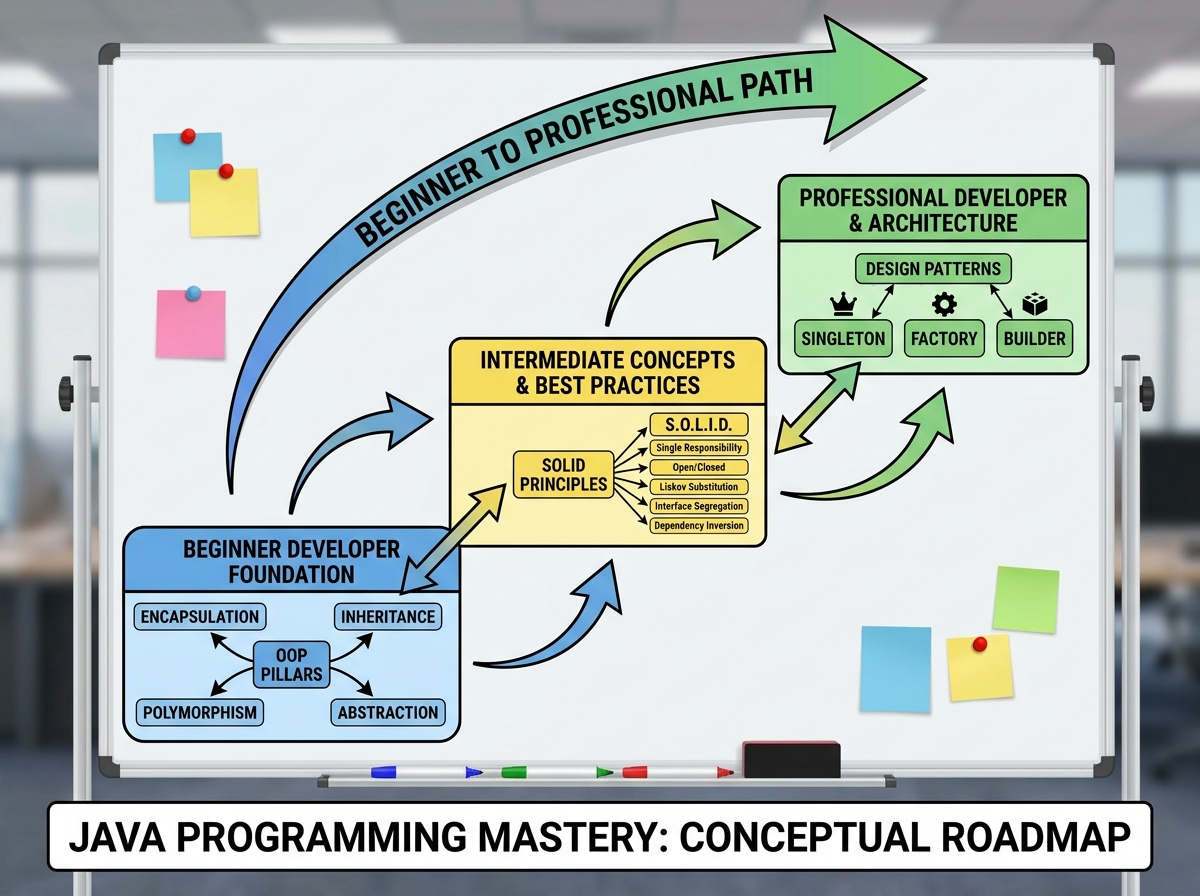
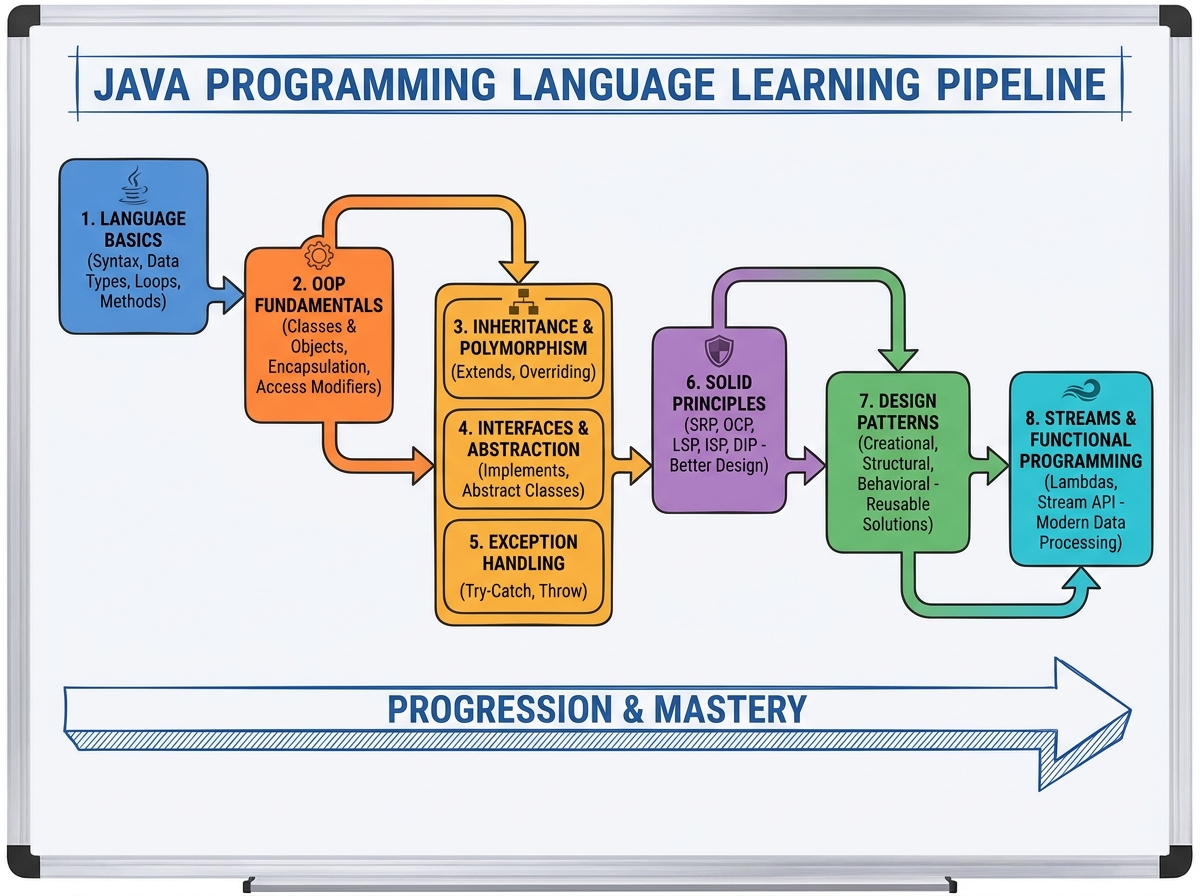
If you’re looking to learn Java programming, the honest answer is this: Java rewards you for learning it in the right order. Start with the language mechanics, build your object-oriented thinking, then layer in design principles and patterns — and suddenly the entire ecosystem starts to make sense. Skipping steps doesn’t save time. It costs you months of confusion later.
- Java’s OOP model isn’t just syntax — it’s a design philosophy that changes how you structure every problem you’ll ever write code for.
- Beginners who rush past encapsulation and inheritance almost always hit a wall when they reach interfaces and polymorphism — because those concepts depend on the earlier ones being internalized, not just memorized.
- Once SOLID principles click, you stop writing code that works and start writing code that lasts.
What Java Programming Actually Is (and Why It Trips Beginners Up)
Java is a statically typed, object-oriented programming language that compiles to bytecode and runs on the Java Virtual Machine (JVM), making it platform-independent. For a beginner or professional transitioning into backend development, that sentence sounds intimidating. In plain terms: you write Java code once, and it runs on any operating system that has the JVM installed — Windows, Linux, Mac.
But the bigger distinction that catches beginners off guard isn’t the platform-independence. It’s that Java forces you to think in objects from day one. There’s no writing a quick five-line script outside a class. Everything belongs somewhere, everything has a type, and the compiler will tell you in very blunt terms when you’ve gotten it wrong.
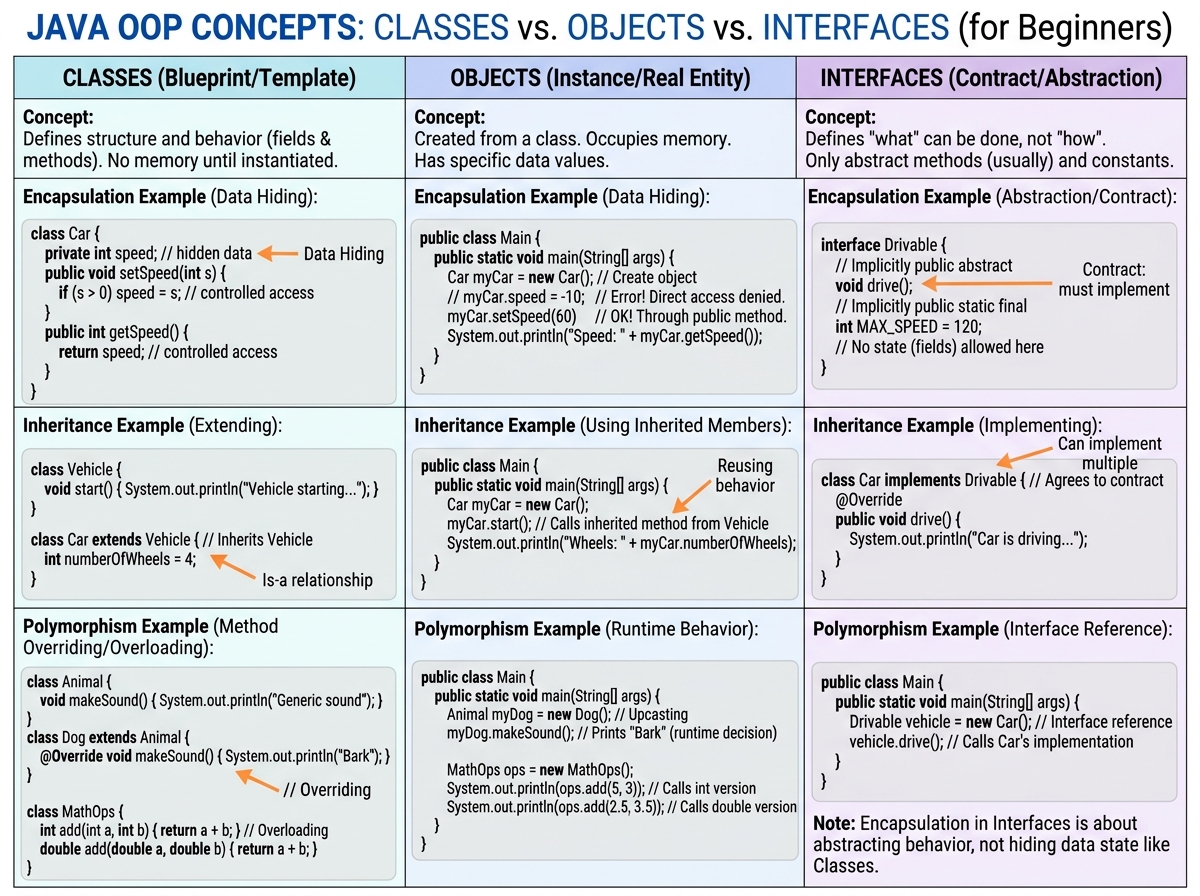
| Concept | What Beginners Think It Is | What It Actually Is |
|---|---|---|
| Class | A template or blueprint | A user-defined type that bundles state and behavior |
| Object | An instance of a class | A live entity in memory with its own data |
| Interface | An abstract class | A contract that enforces behavior without dictating implementation |
| Inheritance | Code reuse | A way to model “is-a” relationships and enable polymorphism |
| SOLID | Design rules | A set of principles that make systems maintainable as they grow |
Three Things That Surprise Every Java Beginner
- Static members belong to the class, not to any object — calling them through an instance is legal but misleading.
Stringin Java is immutable; every “modification” silently creates a new object in memory.- An interface with a default method is not the same as an abstract class — and the distinction matters the moment you design loosely coupled code.
How Long It Actually Takes to Learn Java Programming
| Stage | Content | Estimated Time |
|---|---|---|
| Language Basics | Operators, branching, loops, arrays, functions | 1–2 weeks |
| Object-Oriented Programming | Classes, encapsulation, inheritance, polymorphism | 2–3 weeks |
| Abstract Classes & Interfaces | Abstraction layers, loose coupling | 1–2 weeks |
| SOLID Principles | SRP, OCP, LSP, ISP, DIP applied to real code | 1–2 weeks |
| Exception Handling & I/O | Checked/unchecked exceptions, file streams, serialization | 1 week |
| Collections & Generics | Lists, Sets, Maps, type-safe data structures | 1–2 weeks |
| Lambda, Streams, Design Patterns | Functional style, Builder, Singleton, Factory, Facade, Proxy | 2–3 weeks |
| Total | Full Java programming foundation | 9–15 weeks |
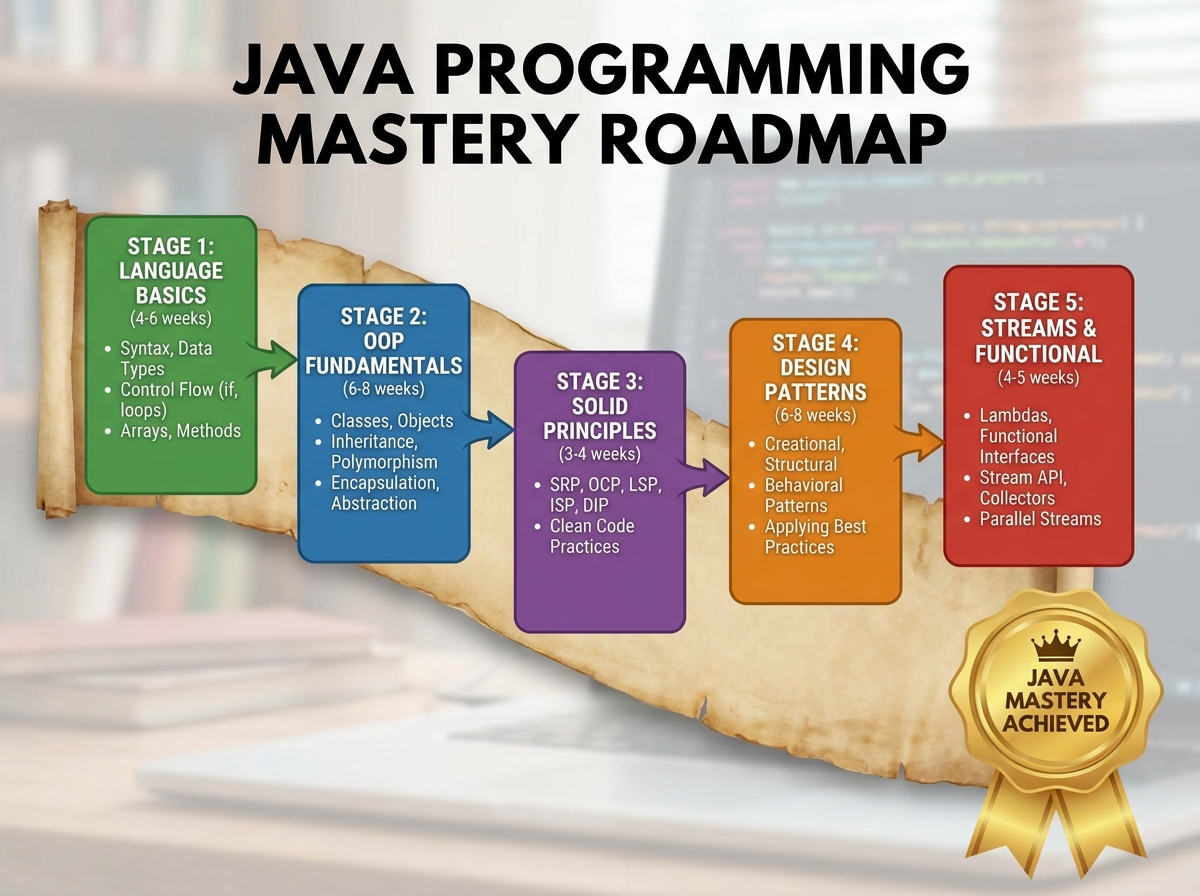
The order matters far more than the pace. Someone who deeply understands encapsulation before touching inheritance will absorb polymorphism in a weekend. Someone who rushed through both will spend three weeks confused by dynamic binding.
And if it takes you longer than 15 weeks — that’s not failure. That’s the sign you’re actually thinking through what you’re writing, not just copying examples.
The Part Nobody Warns You About: Language Basics Feel Deceptively Easy
Variables, operators, loops, and arrays in Java feel familiar if you’ve touched any language before. You write a for loop, print to the console, declare an array — and you think you’ve got it. That’s exactly when most beginners make the mistake that costs them later.
They treat this phase as a checkbox. “Done with basics, moving on.” But Java’s basics aren’t just syntax — they include the static keyword, method signatures, how arrays are passed by reference, and how multidimensional arrays actually live in memory. Skip the nuance here, and when you hit method overloading or constructors, you’ll be debugging things that feel like magic.
The moment things clicked for me in this phase wasn’t writing Hello World. It was implementing a manual array search — having to think through the index logic, handle edge cases, write a method that accepted an array as a parameter. That’s when the mechanics stopped being theoretical and started feeling like actual programming.
If you’re also interested in building a deeper programming foundation, how to learn Python basics fast walks through a similar beginner-to-practical progression for Python, which pairs well with Java for understanding language paradigms side by side.
Object-Oriented Programming Is Where Java Actually Begins
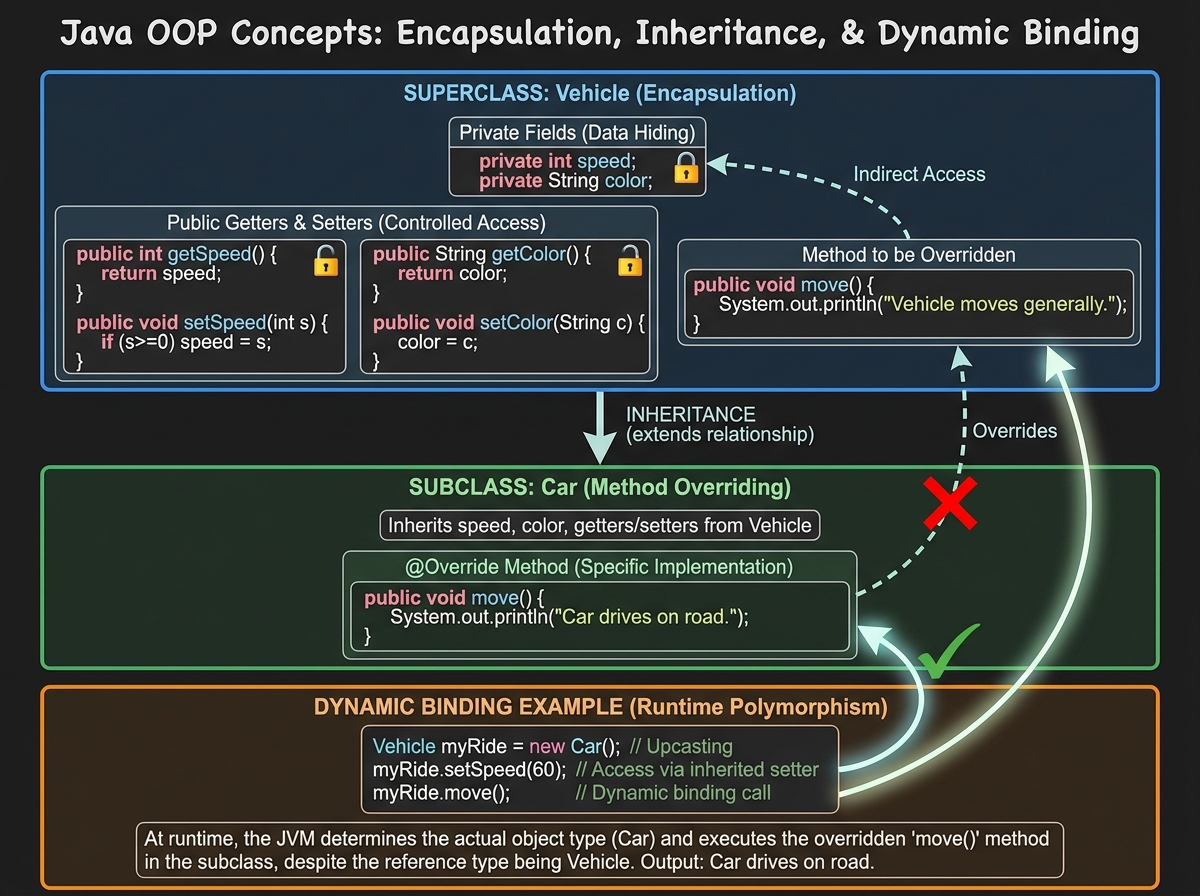
The biggest mistake people make when learning Java OOP is treating classes as fancy containers for functions. They define a class, put some methods in it, add a few fields, and call it encapsulation. It isn’t. Encapsulation means the class controls access to its own data — the fields are private, the logic for changing them lives inside the class, and nothing outside can reach in and flip a value without going through a defined interface.
Inheritance is where it gets genuinely interesting — and genuinely dangerous if you misuse it. The natural instinct is to inherit everything. If class B shares some behavior with class A, just extend it. But Java is telling you something important with instanceof checks and dynamic binding: that relationship needs to mean something semantically, not just structurally. If you’re extending just to reuse code, you want composition, not inheritance.
The breakthrough in OOP — the one that made everything after it easier — was understanding this. That reference variable isn’t just a convenience. It’s how an object refers to itself, how constructor chaining works, and how you pass the current instance to another method. Once you feel this as a living reference rather than a keyword, constructors and initializers start making complete sense.
Abstract Classes and Interfaces: The Wall Most Beginners Hit
This is the exact point where I watched three colleagues give up on Java in the same week. Not because they didn’t understand the syntax — they understood it fine. They couldn’t see why you’d ever choose one over the other, or what problem abstraction was actually solving.
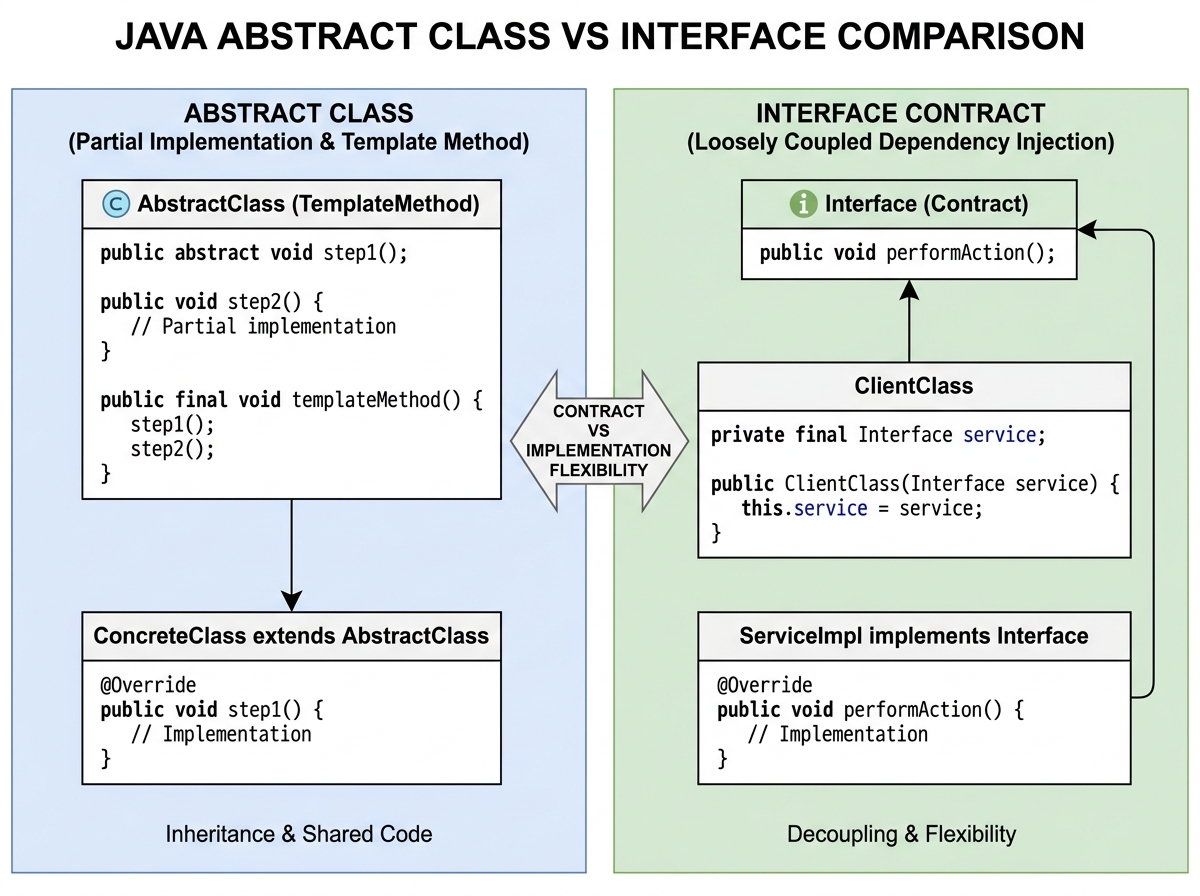
An abstract class is a partial implementation. It says: “Here’s the skeleton, you fill in the rest.” An interface is a contract. It says: “Whatever you are, you will be able to do these things.” The Template Method pattern — where an abstract class defines the skeleton of an algorithm and subclasses fill in the specific steps — is the perfect illustration of when abstract classes earn their place.
Interfaces become essential the moment you care about testability and loose coupling. When your class depends on an interface rather than a concrete class, you can swap implementations without touching the code that uses them. This isn’t theoretical — it’s the difference between code that can be tested in isolation and code that drags its entire dependency tree into every test you write.
SOLID Principles: When Java Goes from Working to Professional
SOLID isn’t a beginner topic, even though it’s often placed in beginner curriculums. It’s a topic that only makes sense once you’ve written enough code to feel the pain it solves.
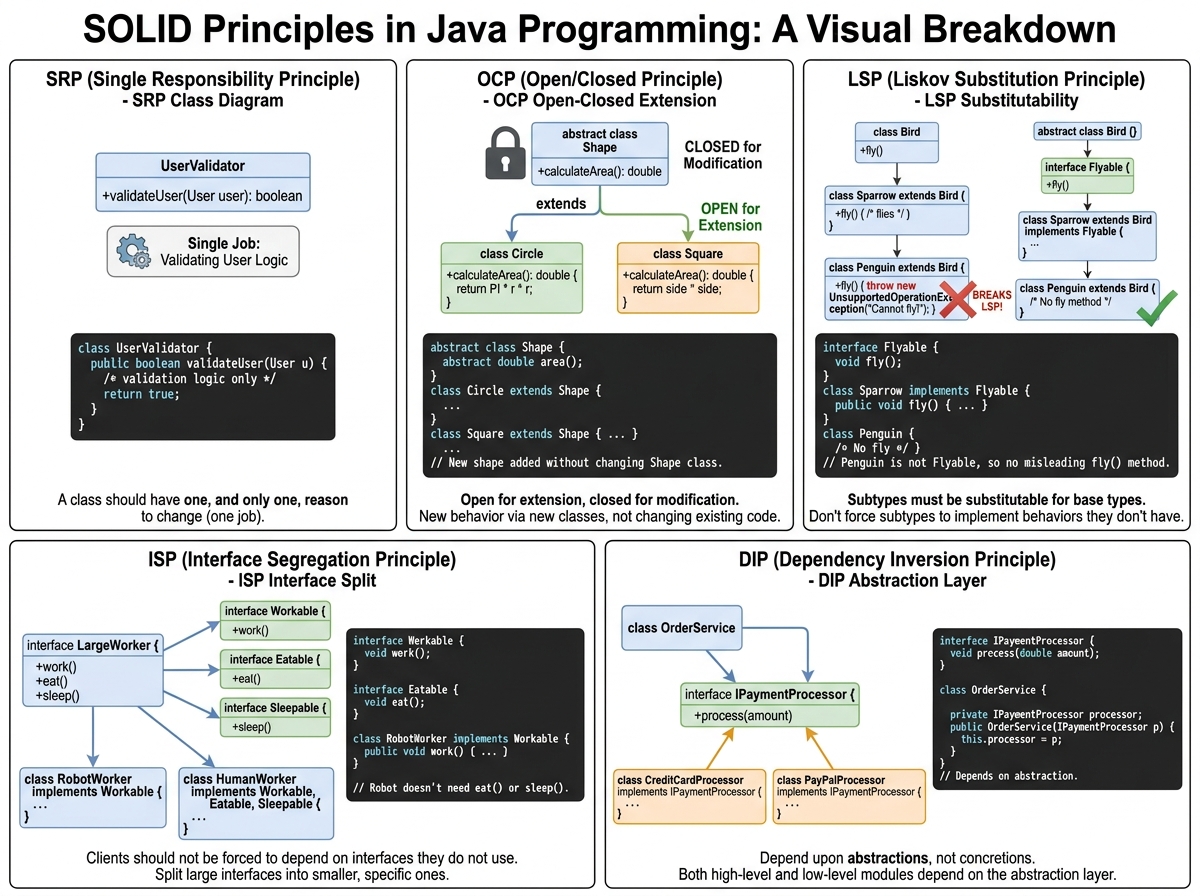
The Single Responsibility Principle feels obvious until you’re staring at a 400-line class that handles user authentication, sends emails, writes to the database, and formats output. You didn’t build it that way on purpose — it grew that way because every new requirement felt like it “belonged” to that class. SRP is the discipline of asking, before you add anything: is this really this class’s job?
The Dependency Inversion Principle is the one that changes how you architect systems. High-level modules should not depend on low-level modules — both should depend on abstractions. In practice: your business logic class should not instantiate a database connection directly. It should accept an interface, and the actual database class should implement that interface. This is what makes Java code that scales. It’s also what makes Java code that doesn’t break when requirements change — which, as anyone who’s shipped production software knows, they always do.
Exception Handling and I/O: The Unglamorous Work That Separates Real Developers
Every beginner writes code that assumes everything works. The file exists, the network responds, the user enters a valid number. Real Java development is mostly writing code for when things don’t work.
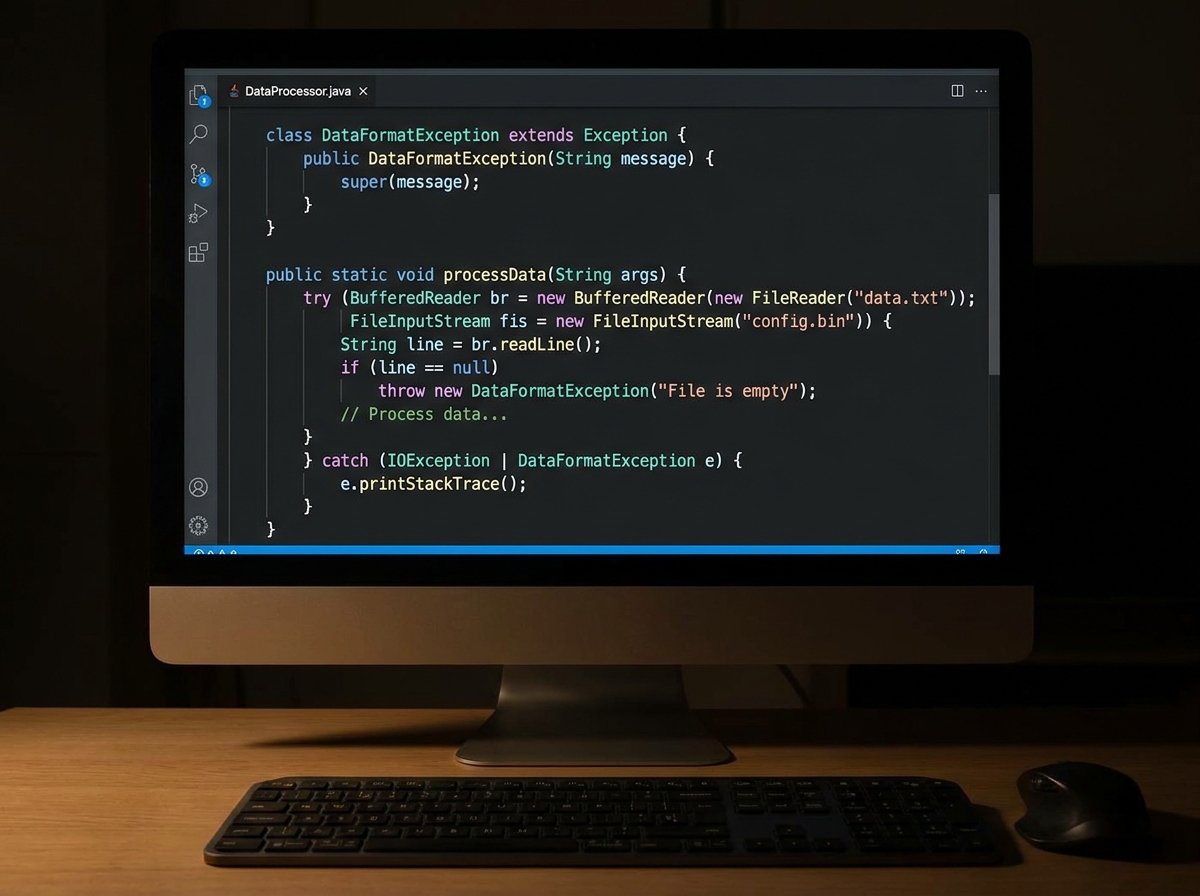
Java’s exception handling system forces you to think about failure paths explicitly — checked exceptions especially. You can’t just call a method that reads from a file and ignore the fact that the file might not exist. The compiler won’t let you. That friction is a feature, not a bug. It’s making you handle reality.
The try-with-resources pattern is where I first saw how elegant Java could be about resource management. Instead of managing finally blocks to close streams manually — which everyone forgets to do correctly under pressure — you declare the resource inside the try statement and Java closes it automatically when the block exits. Object serialization and deserialization, sitting at the end of this section, is the moment you realize Java treats object state as something that can be written to disk and read back — which opens an entirely different category of problems to solve.
Collections, Generics, and Lambda: Where Java Becomes Expressive
Collections in Java are where data structure theory becomes daily reality. The choice between a HashSet and a TreeSet isn’t academic — it determines whether your lookup is O(1) or O(log n). The decision to override equals and hashCode correctly is the difference between a working HashMap and one that silently loses entries.
Generics feel uncomfortable at first. The angle-bracket syntax looks foreign, and type erasure — the mechanism that makes generics compile-time-only — feels like a limitation. But once you write a generic stack implementation, the value becomes visceral: one class that works correctly for any type, enforced at compile time, with zero casting and zero ClassCastException surprises at runtime.
Lambda expressions changed the way I wrote Java more than any other single feature. The shift from anonymous inner classes to a single-line lambda isn’t just cosmetic — it changes how you think about passing behavior. Combined with the Streams API, it means you can express “filter this list, transform each element, collect the results” in three lines that read almost like English. That expressiveness is not just about brevity — it’s about code that communicates intent rather than just mechanics. For developers coming from a scripting background, how to learn computer science with Python and Jupyter Notebooks is a useful complement for understanding functional thinking across languages.

Design Patterns: The Vocabulary of Experienced Java Developers
Design patterns are not rules you follow. They’re solutions to problems you’ve already felt. If you’ve never hit the problem, the pattern won’t make sense — and forcing it into your code before you understand why it exists will make your code worse, not better.
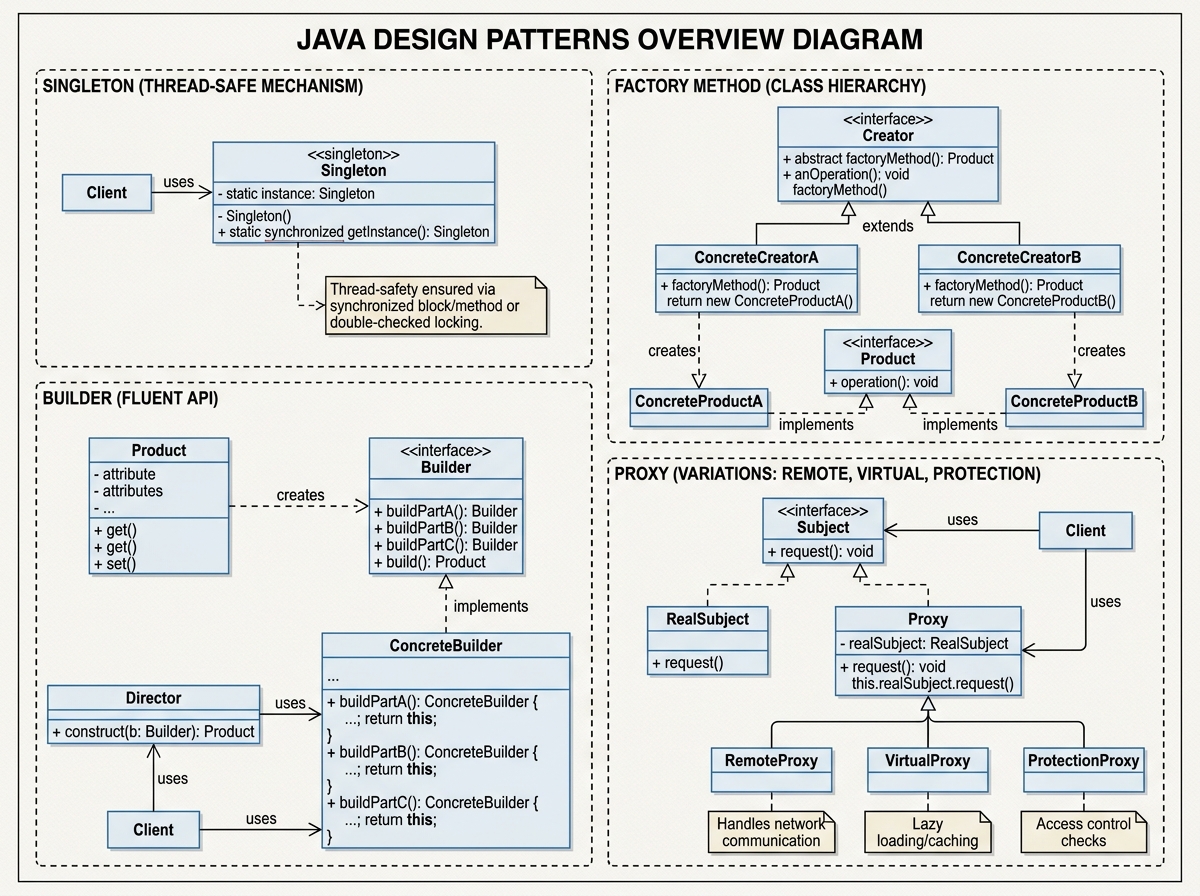
The Singleton pattern is the one most beginners implement incorrectly on their first try. A basic Singleton is easy. A Singleton that handles thread safety and survives reflection and survives serialization is a completely different problem. Each of those attack vectors requires a different defense — double-checked locking, enum-based implementation, readResolve override. Working through each failure mode teaches you more about Java’s concurrency model and object lifecycle than almost anything else.
The Proxy pattern — particularly the distinction between remote, virtual, and protection proxies — is where design patterns stop feeling like patterns and start feeling like architecture. A virtual proxy defers expensive object creation until the object is actually needed. A protection proxy controls access based on permissions. These aren’t just clever tricks — they’re the structural vocabulary that senior Java developers use when they talk about how a system is built.
If you’re also thinking about how to structure technical knowledge to build a career, how to build a startup using innovation frameworks explores how systems thinking applies beyond code.
Looking Back at What Actually Mattered
I spent too long in the shallow end — running syntax examples without ever building anything complete enough to break in an interesting way. The turning point wasn’t a breakthrough moment of understanding. It was the first time I had to go back and refactor something I’d written. That’s when SOLID stopped being a checklist and became a tool for thinking.
Java teaches you to be specific. Every type declaration, every access modifier, every interface contract is the language asking: do you actually know what this thing is and what it should do? That specificity, annoying at first, becomes the foundation of everything else.
Here’s what to apply immediately:
- Write every class with a single stated purpose from the start — decide what the class is responsible for before writing a single method, because retrofitting SRP onto an existing class is painful.
- Override
equalsandhashCodetogether, always — putting an object into aHashMaporHashSetwithout overriding both creates bugs that are nearly invisible until production. - Use
try-with-resourcesfor every IO operation — not just for files; anything that implementsAutoCloseableshould live inside a try-with-resources block. - Learn the difference between composition and inheritance by writing both for the same scenario — build the same feature with an
extendsrelationship, then rebuild it using a field reference; the design difference will become obvious. - Read the stacktrace before you search the error message — Java’s exception messages are precise, and the stack trace tells you the exact call chain that led to the failure; most beginner debugging time is wasted searching StackOverflow for problems the stacktrace already explained.
- Implement at least one design pattern from memory without looking it up — Singleton, Builder, or Factory; the act of recalling the structure under pressure is what converts “I’ve seen this” into “I can use this.”
- Build a small project that uses Collections, exception handling, and at least one design pattern together — isolated examples create isolated knowledge; a project forces the concepts to interact with each other.
- Treat the Streams API as a second language inside Java — write every collection transformation twice, once with a for loop and once with streams, until the stream version becomes your default instinct.
Leave a Reply