


The first time I tried to sell a product online, I built a Shopify store, added 40 products, ran a $50 Facebook ad, and got exactly zero sales. Not one. I refreshed the dashboard for three days straight before I finally accepted what had gone wrong.
If you’re looking to learn ClickFunnels dropshipping, the honest answer is that it works — but only once you stop thinking like a store owner and start thinking like a funnel builder. A ClickFunnels dropshipping business doesn’t compete with Amazon on selection; it wins on a single irresistible offer, delivered through a focused sales funnel that guides a cold visitor into a paying subscriber before they ever leave the page.
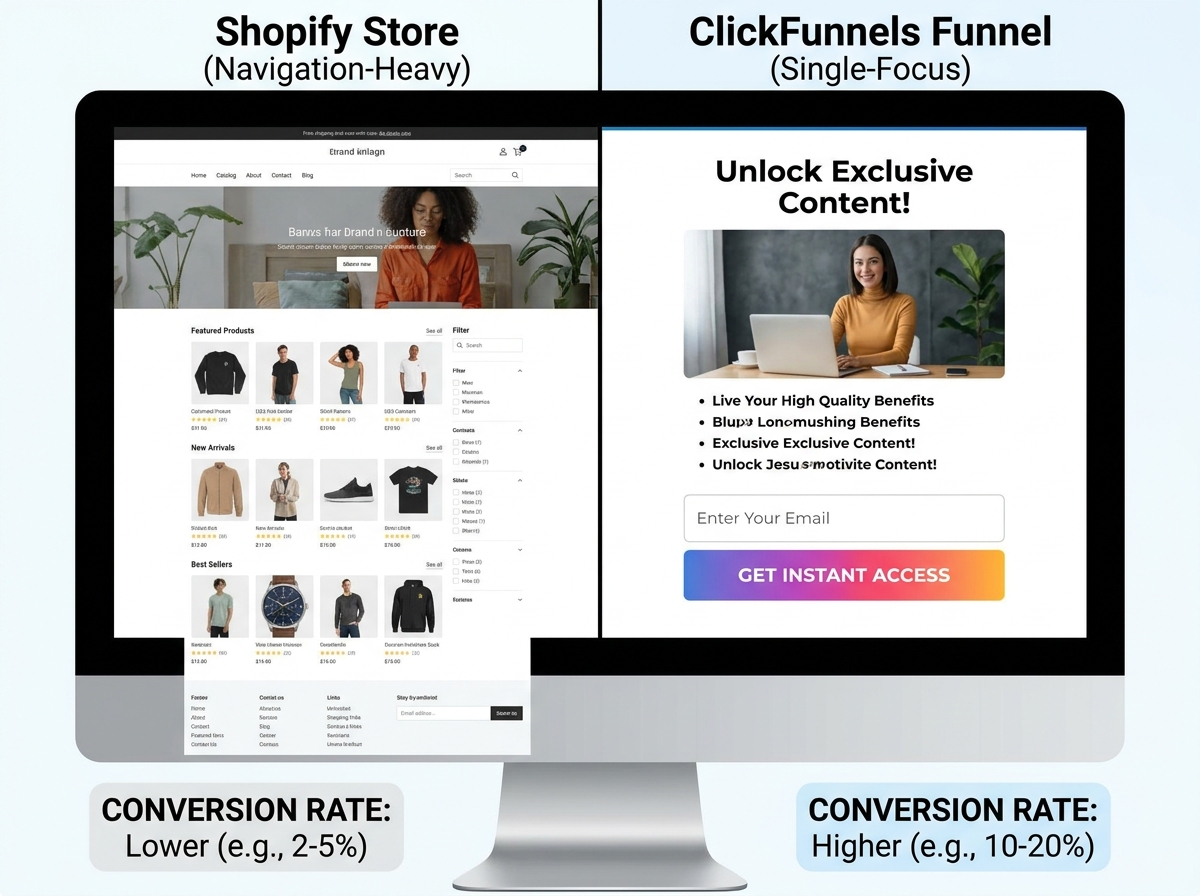
- ClickFunnels dropshipping beats traditional stores because every page has one job: convert — no distractions, no navigation menu sending buyers somewhere else.
- The subscription model is what separates $500 months from $10,000 months — you earn once from ads but collect revenue every month from the same customer.
- Niche depth matters more than product count — owning one specific audience is more profitable than serving everyone.
What ClickFunnels Dropshipping Actually Means
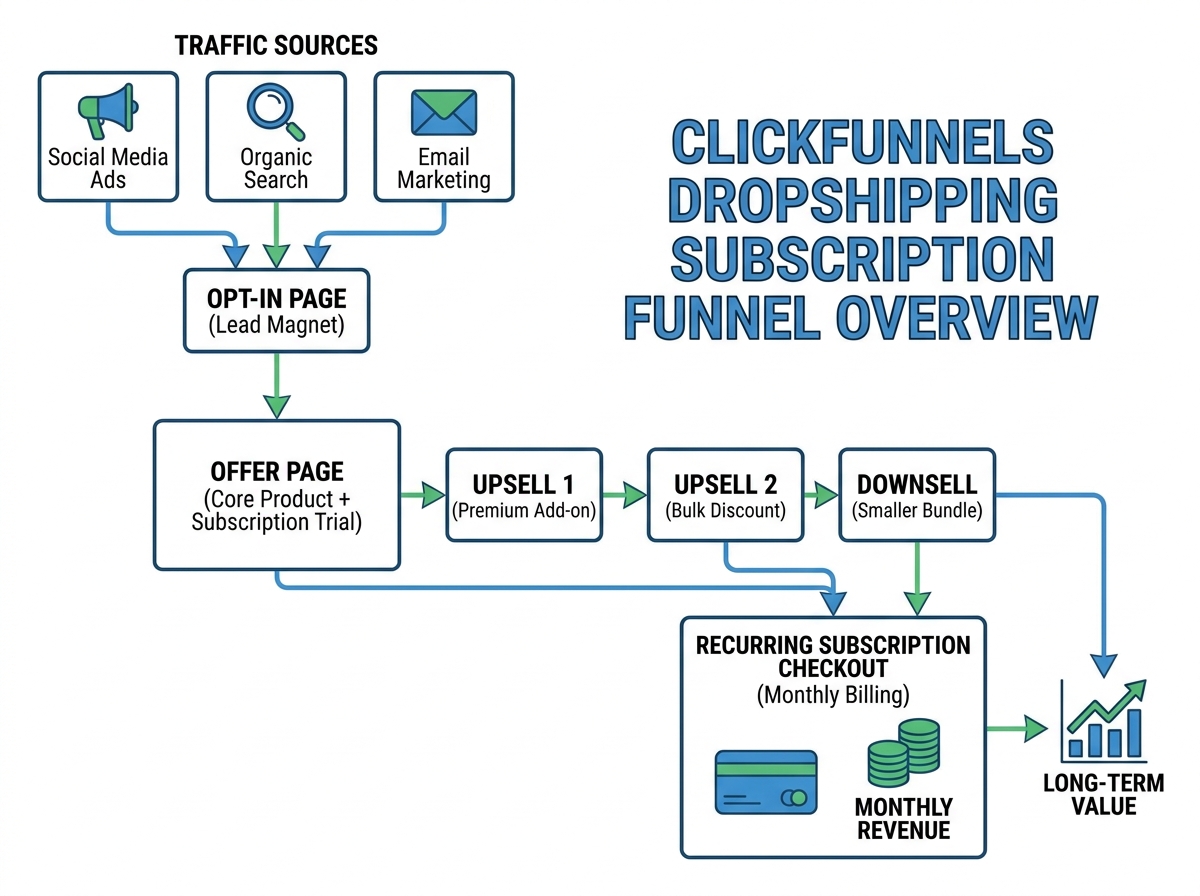
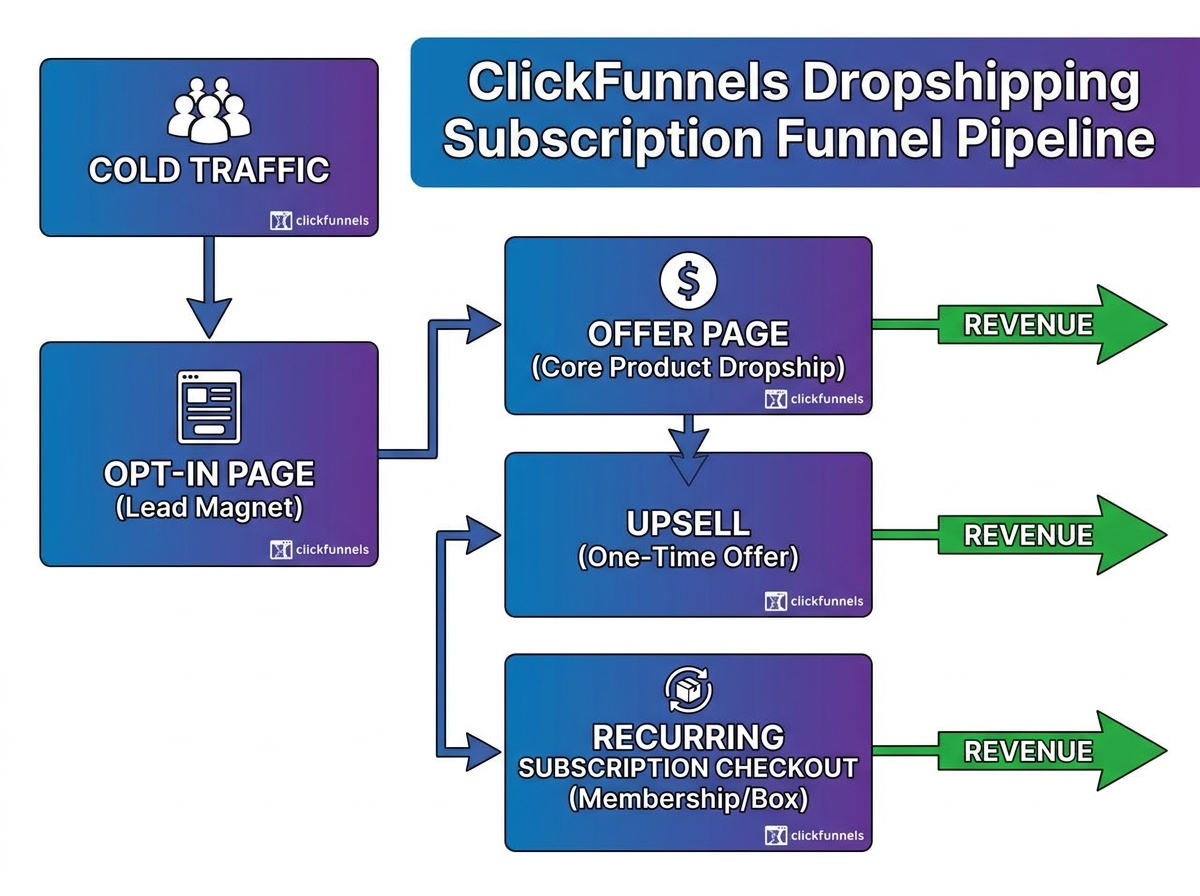
A standard dropshipping store is a catalogue. A ClickFunnels dropshipping funnel is a conversation. Instead of a homepage with dozens of product links, you build a tightly focused sequence of pages — an opt-in, an offer page, an order bump, an upsell — each one designed to do a single thing. You never carry inventory. Your supplier ships directly to the customer. But unlike a Shopify store, where most visitors bounce from the home page, a funnel holds the visitor’s hand from interest to checkout.
The subscription element is what changes the math entirely. Rather than selling a one-time product, you package your niche into a monthly box, a replenishment offer, or a membership — and your ClickFunnels checkout handles the recurring billing automatically. One customer acquisition pays you twelve times a year.
| Format | Typical Conversion Rate | Revenue Model | Traffic Sensitivity |
|---|---|---|---|
| Shopify Store | 1–2% | One-time purchase | High — needs constant new traffic |
| ClickFunnels Sales Funnel | 3–8% on targeted traffic | One-time + upsells | Medium — funnel maximizes per-visitor value |
| ClickFunnels Subscription Funnel | 3–8% front-end + retention | Recurring monthly | Lower — LTV absorbs ad cost |
Three Things No One Tells You Before You Start
- Picking a niche without buying intent research is just guessing with extra steps.
- A high-converting offer is more important than the product itself — the framing is the product.
- Facebook ads don’t fail because of budget; they fail because the funnel can’t hold attention past the first page.
How Long Does It Take to Build a Profitable Funnel
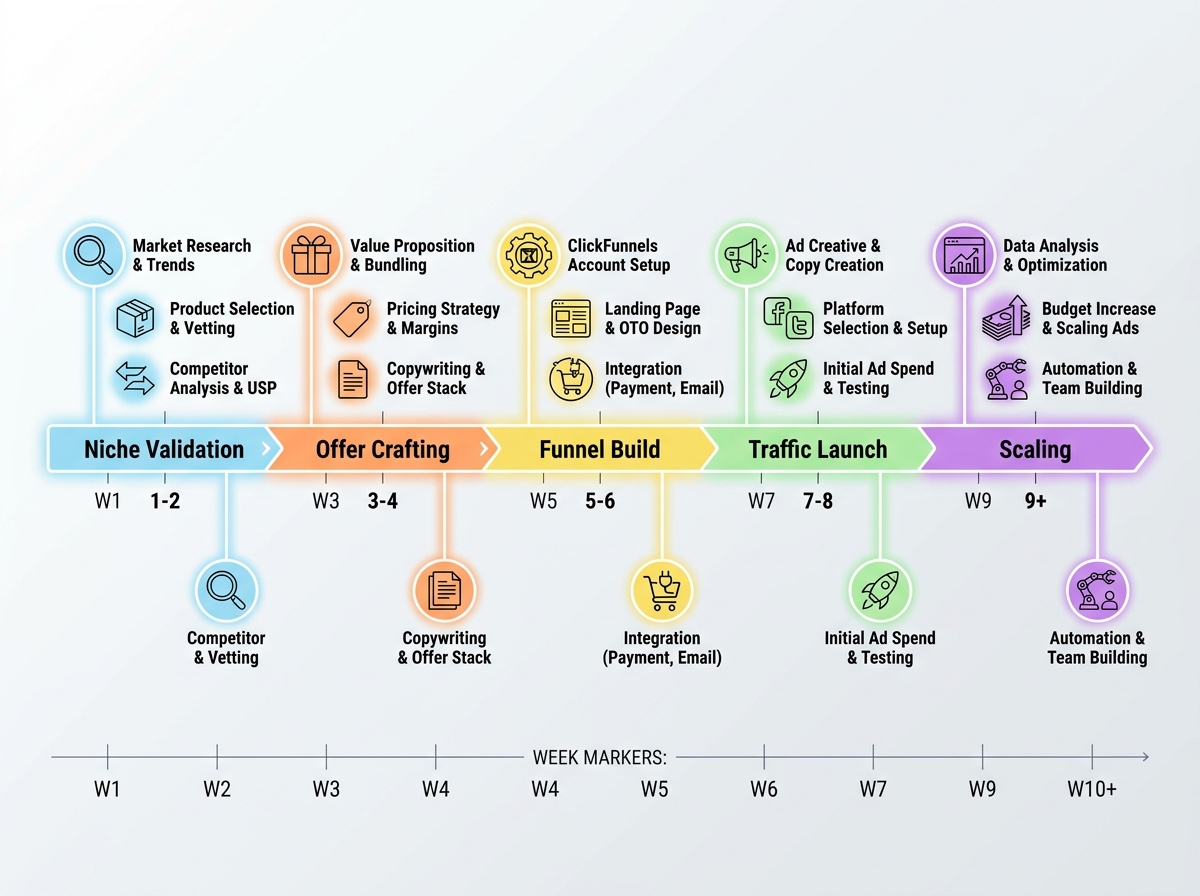
| Stage | What You’re Doing | Estimated Time |
|---|---|---|
| Niche & product validation | Researching audience pain, testing product-market fit | 3–5 days |
| Offer crafting | Writing funnel copy, building the subscription value stack | 2–3 days |
| Funnel build | Setting up pages, order forms, upsells in ClickFunnels | 3–5 days |
| Traffic launch | Running first Facebook ad sets and influencer outreach | 5–7 days |
| Optimization & scaling | Reading stats, killing losers, scaling winners | Ongoing (weeks 3–8+) |
| Total to first profitable funnel | 3–6 weeks |
Order matters far more than speed here — someone who validates the niche before building the funnel will get to profit in three weeks; someone who builds first and validates never will. And if your timeline runs longer, that’s normal — the optimization phase is where most real learning happens, and rushing it costs money.
Why Niche Selection Breaks Most Beginners
The single biggest mistake people make when starting a ClickFunnels dropshipping business is picking a niche they personally find interesting instead of one where buyers are already spending money. I spent two weeks building a funnel around a hobby niche I loved, with a product I thought was genuinely useful — and I couldn’t get a single ad to break even. The audience existed. They just didn’t buy online. Passion for a niche doesn’t create purchasing behavior; existing purchasing behavior does.
The right process works backwards from buyers. You identify where people are already spending money on subscription boxes, consumable products, or recurring solutions. Then you find a gap — a specific sub-niche or underserved demographic — and position your funnel there. The goal isn’t to invent a new market. It’s to enter an existing one with a better-packaged offer.
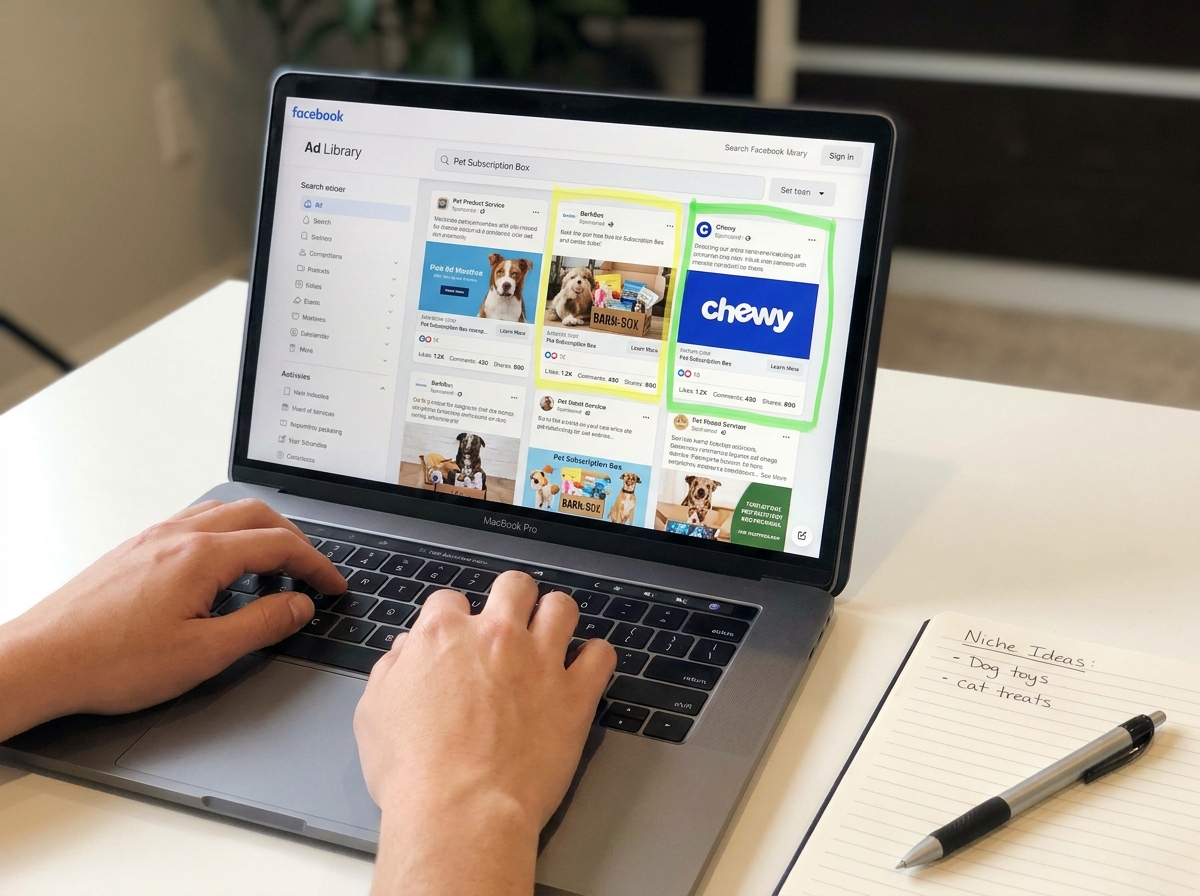
Validation means more than checking search volume. It means looking at whether competitors exist (they should), whether there are active Facebook ad campaigns running in the niche (there should be), and whether the problem your product solves is something people feel urgently. If you can’t articulate the buyer’s exact frustration in one sentence, the niche isn’t validated yet.
Once I shifted from “something I like” to “something people are already paying for monthly,” everything changed. I found a niche with active subscription competitors, a specific audience segment they were all ignoring, and products that could be bundled into a box. That was the click.
Building an Offer People Can’t Walk Away From
Most people building their first funnel focus on the product. The ones who succeed focus on the offer. The product is the thing. The offer is the reason someone should buy it from you, right now, instead of doing literally anything else. These are not the same thing, and conflating them is how you end up with a technically functional funnel that converts at 0.8%.
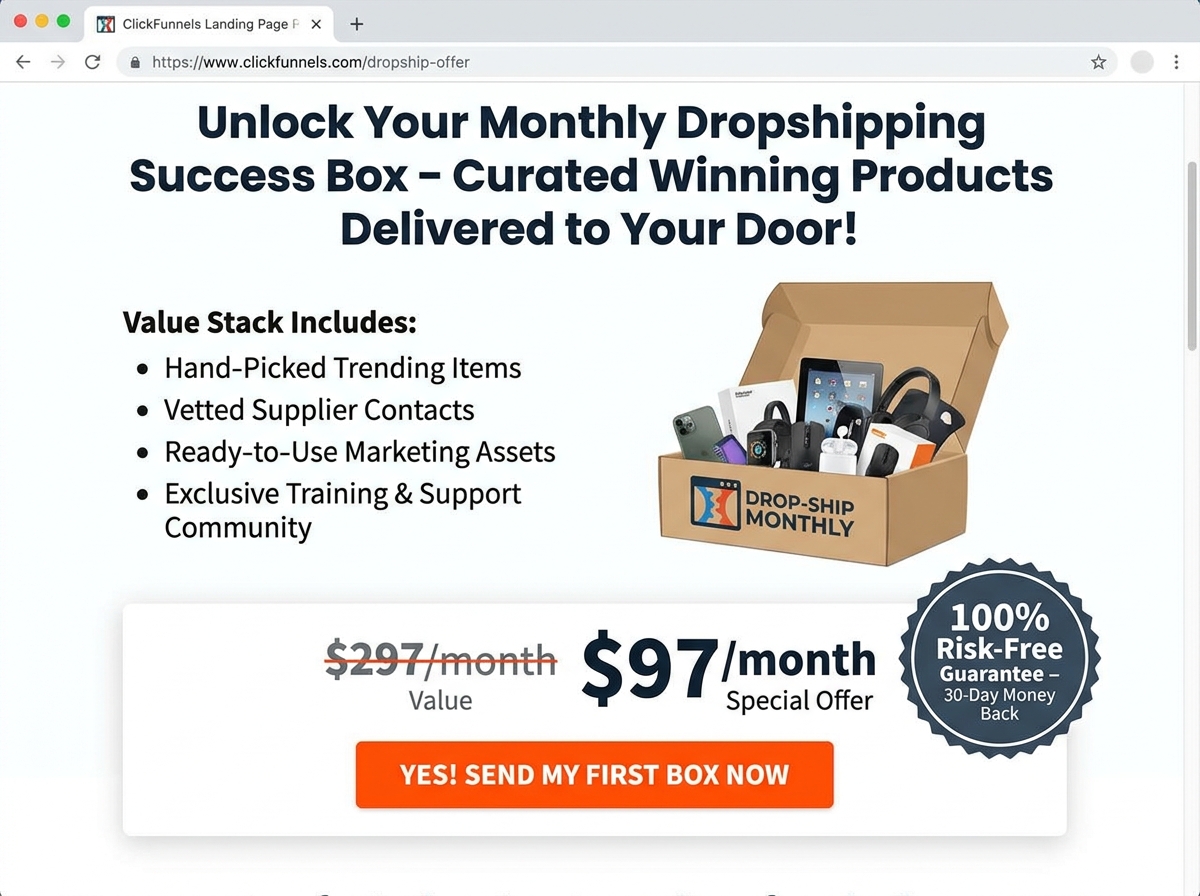
A strong dropshipping funnel offer has three components: a clear result (what the customer’s life looks like after buying), a risk reversal (why it’s safe to try), and a value stack (everything included that makes the price feel like a steal). When you build a subscription offer, you add a fourth element: the reason to stay. Monthly exclusives, first-access to new products, members-only pricing — anything that makes cancellation feel like a loss.
The copy on your offer page does the heavy lifting, not the design. I’ve seen ugly funnels with handwritten-style pages outperform polished ones because the offer was tighter. Write your offer page as if you’re explaining to a skeptical friend why this is the most obvious purchase they’d make this month. Remove every sentence that doesn’t directly move them toward clicking the button.
For beginners learning how to build a dropshipping sales funnel with ClickFunnels, the offer stage is where most of the iteration happens. Expect to rewrite your headline and subheadline at least three times before your conversion rate stabilizes.
What Building the Funnel Actually Feels Like
The first time you open ClickFunnels and start building, the software feels overwhelming — not because it’s complicated, but because every decision feels consequential. You’re choosing a template, editing a headline, connecting a payment gateway, setting up an order bump, wiring the thank-you page to an email sequence. Each piece works independently until you make them work together, and that integration step is where most beginners stall.
The mental model that helped me: think of the funnel as a physical store with one entrance, one cash register, and no windows. Every page serves only one exit — the next page or the checkout. Once I stopped trying to give visitors “options” and started thinking about removal (what can I take out that’s slowing the decision down?), my page-to-page drop-off improved immediately.
Templates exist for a reason. The instinct to build from scratch to “make it your own” is almost always a mistake at the beginning. Start with a proven-to-convert template, swap the copy and images for your niche, and don’t touch the layout until you have enough data to know what’s actually underperforming. Premature customization is how you spend three weeks on design and zero time on traffic.
Email integration and order automation also live inside this stage, and they’re worth setting up before you launch — not after. Automating ClickFunnels orders means a customer can buy at 2am and have a confirmation and a supplier notification processed without you touching anything. This is what makes a subscription funnel feel like a business rather than a side project.
Driving Traffic Without Burning Your Budget
Facebook ads and influencer traffic are not interchangeable — they serve different stages of your funnel’s lifecycle. Influencers work best early, when you need social proof and initial data cheaply. Facebook ads work best when you have a converting funnel and want to scale a winner.
The influencer approach for a new ClickFunnels dropshipping funnel is straightforward but requires patience: find micro-influencers (10k–100k followers) in your exact niche, offer them a free product or a revenue-share, and measure the traffic quality by opt-in rate and cost-per-acquisition — not just clicks. A fitness influencer with 25,000 engaged followers in your niche will outperform a generic lifestyle account with 500,000 followers every single time.
Facebook advertising for dropshipping funnels lives and dies by the creative. The copy on the ad and the first three seconds of the video determine whether someone stops scrolling. The biggest mistake at this stage isn’t poor targeting — it’s creative that looks like an ad. Pattern interruption — something visually or verbally unexpected in the opening frame — drops your cost-per-click because more people engage, and Facebook rewards engagement with cheaper distribution.
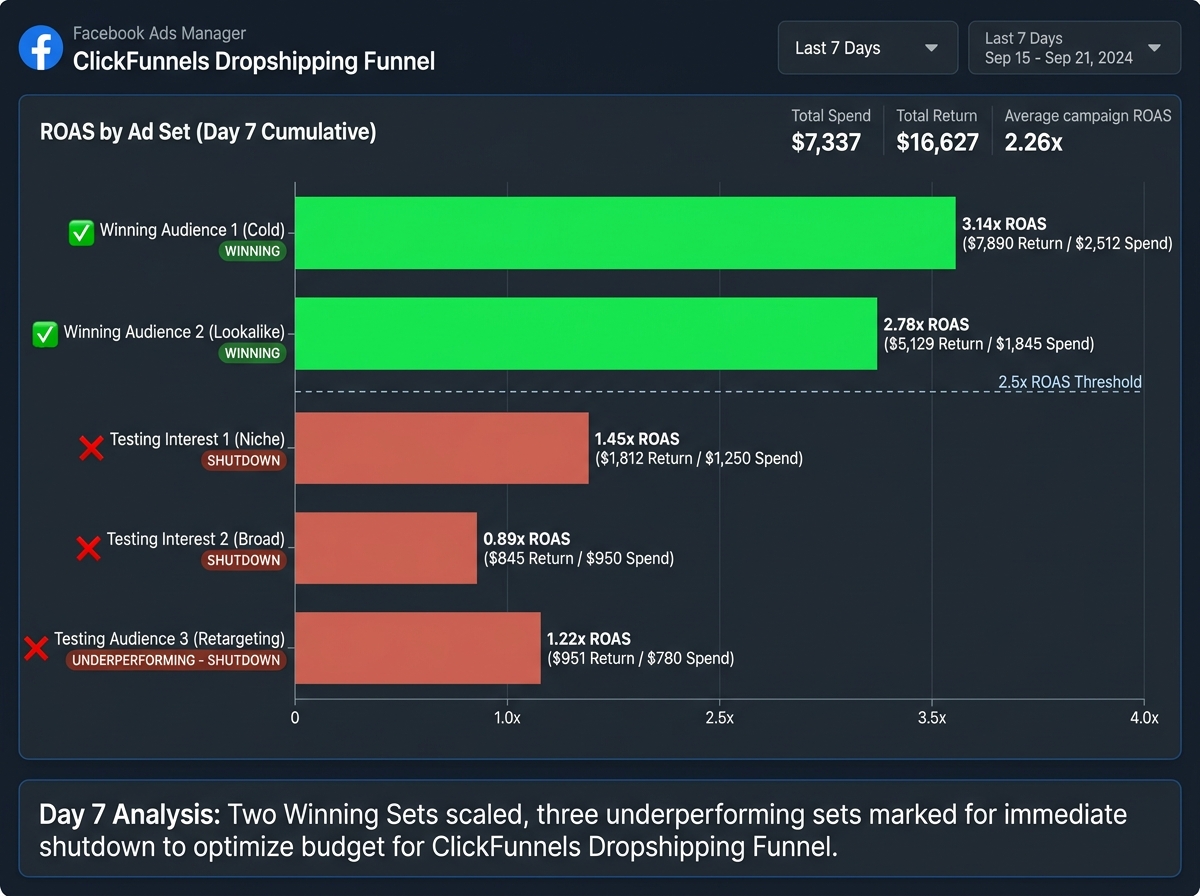
Start with $20–$50 per day across three to five ad sets, each testing a different angle or creative. Kill anything that hasn’t produced a purchase after 2–3x your target cost-per-acquisition. Scale only the winners — and when you scale, increase the budget by no more than 20% every 48 hours to avoid resetting Facebook’s learning phase.
Reading Stats and Knowing When to Scale
Most people who fail at scaling a ClickFunnels dropshipping funnel fail because they scale too early or scale the wrong thing. They see one good day — a $300 revenue day on a $100 ad spend — and they triple the budget. Facebook’s algorithm resets its learning phase, the ROAS collapses, and they conclude that scaling doesn’t work. The algorithm didn’t fail them. The sequence did.
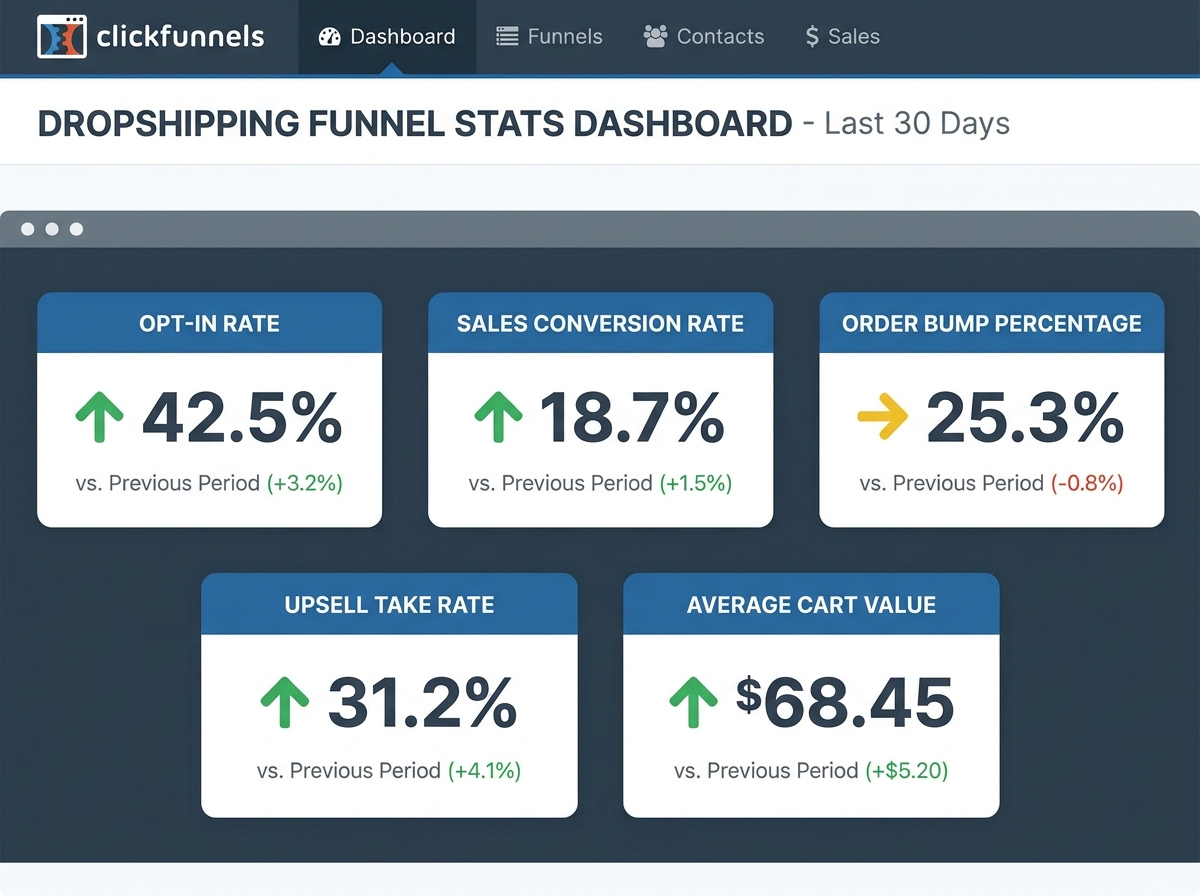
The stats that matter most in a subscription funnel are not the ones Facebook shows you inside Ads Manager. They’re the ones inside ClickFunnels: opt-in rate, offer page conversion rate, order bump take rate, upsell conversion rate, and 30-day subscriber retention. A funnel with a 4% offer page conversion rate and a 35% order bump take rate is a completely different business than one converting at 1.5% with no bumps taken — even if the Facebook ROAS looks similar on day one.
Scaling profitably means knowing your numbers well enough to calculate the maximum you can spend acquiring a subscriber while staying cashflow positive across their first 90 days. Once you have that number — your maximum acceptable cost-per-acquisition — scaling becomes a spending decision, not a guessing game. Understanding how to backtest and analyze your funnel metrics with the same rigor as a trading strategy separates operators who hit $10,000/month from those who plateau at $1,500.
The Email Layer Most Funnels Skip
A ClickFunnels dropshipping funnel without email is leaving money on the table every single day. Email is what turns a one-time buyer into a retained subscriber, an abandoned-cart prospect into a converted customer, and a one-product buyer into a lifetime value asset.
The sequence that matters most isn’t the broadcast newsletter — it’s the automation: a welcome flow triggered immediately after opt-in (three emails over five days building trust and delivering the promise), an abandoned cart sequence (two emails within 24 hours of a cart drop-off), and a re-engagement flow for subscribers who haven’t opened in 30 days. These three automations, running silently in the background, consistently add 15–25% to a funnel’s total revenue without additional ad spend.
Write email copy the same way you write funnel copy: one idea, one call to action, no filler. The subject line’s only job is to get the open. The first sentence’s only job is to keep them reading. Everything else drives toward a single click. If you’re also building passive content channels around your niche, the same principles behind passive income through content creation apply here — the email list becomes the owned audience that no algorithm can take away from you.
What I’d Do Differently From Day One
Looking back, the funnel itself was never the hard part. The hard part was developing the judgment to know what was worth fixing and what was worth abandoning. Here’s what I’d apply immediately if I were starting over:
- Validate buying behavior before building anything. Search the Facebook Ad Library for your niche and look for ads that have been running for 30+ days — long-running ads are profitable ads, and profitable ads mean a buying audience exists.
- Write the offer page before you pick a template. Headline, subheadline, value stack, and guarantee — finalized copy first, design second. Fitting copy into a template forces compromise; the template should serve the copy.
- Use existing subscription box models as creative references, not competitors. Analyze what their best-performing ads say about the buyer’s core desire, then position your offer to own that same desire with a differentiated angle.
- Set a hard daily budget limit and a kill rule before you launch ads. Decide in advance: if an ad set spends 2x your target CPA with no purchase, it’s off. Emotional ad management costs more than bad targeting.
- Build the email automations before you send traffic. A welcome flow and an abandoned-cart sequence take four hours to set up and pay dividends from the first week. Doing this after launch means lost revenue you can never recover.
- Track order bump and upsell take rates from day one. These numbers tell you whether your offer is credible (people trusted you enough to buy more) or whether there’s a friction problem in your checkout flow that no amount of ad spend will fix.
- Increase ad budgets slowly and watch ClickFunnels stats, not just Facebook ROAS. A 20% budget increase every 48 hours preserves the learning phase; a jump from $50 to $200 in one day destroys it and wastes a week of data.
- Build for retention from the first product choice. A subscription funnel that sells a consumable (something people run out of and need to reorder) has structurally better retention than one selling a novelty. Pick products that create a reason to stay.
Leave a Reply