


How to Learn Wu Qin Xi Qigong for Real Energy Balance
The first time I tried Wu Qin Xi, I thought I was doing “stretching with vibes.” My body felt busy, but my energy didn’t. Within a few weeks, I stopped chasing the feeling and started tracking what my qi seemed to be doing—especially around sleep, digestion, and that wired-but-tired fatigue.
Direct answer
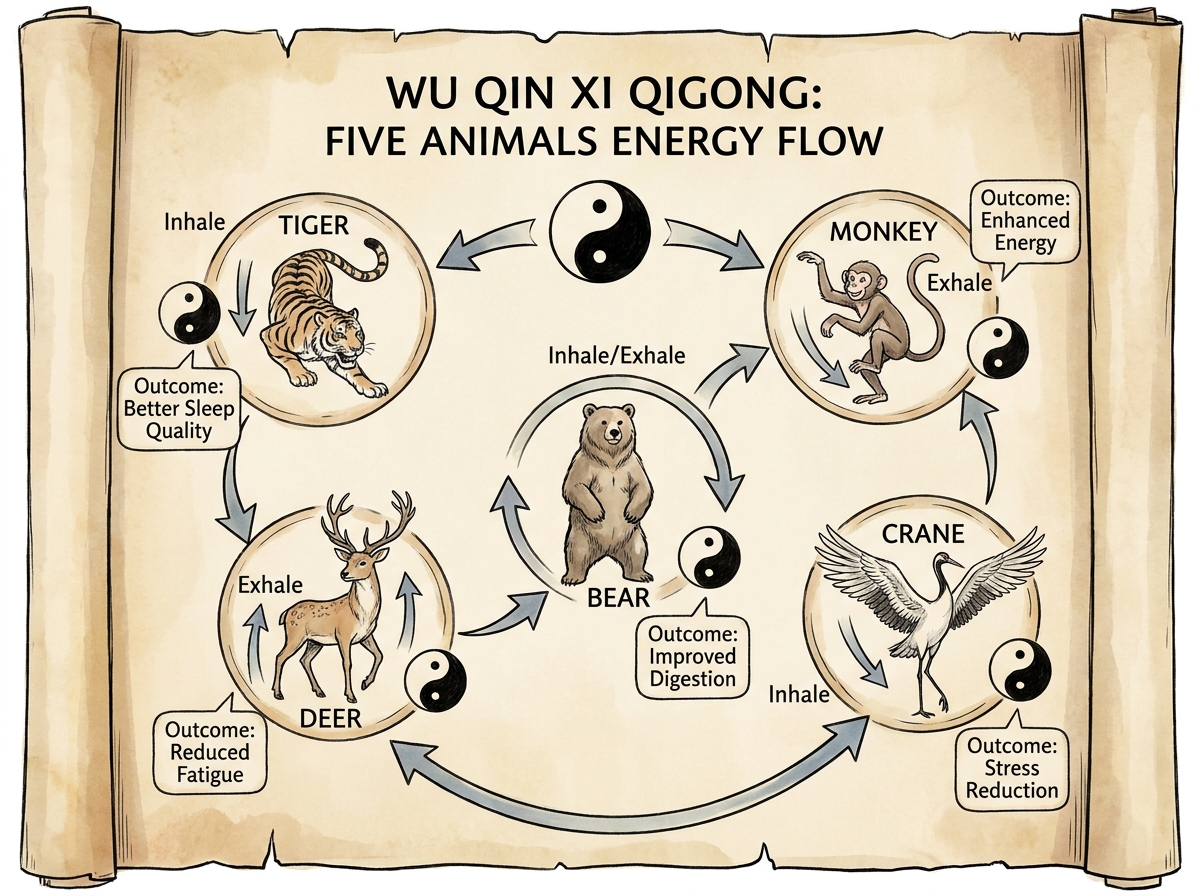
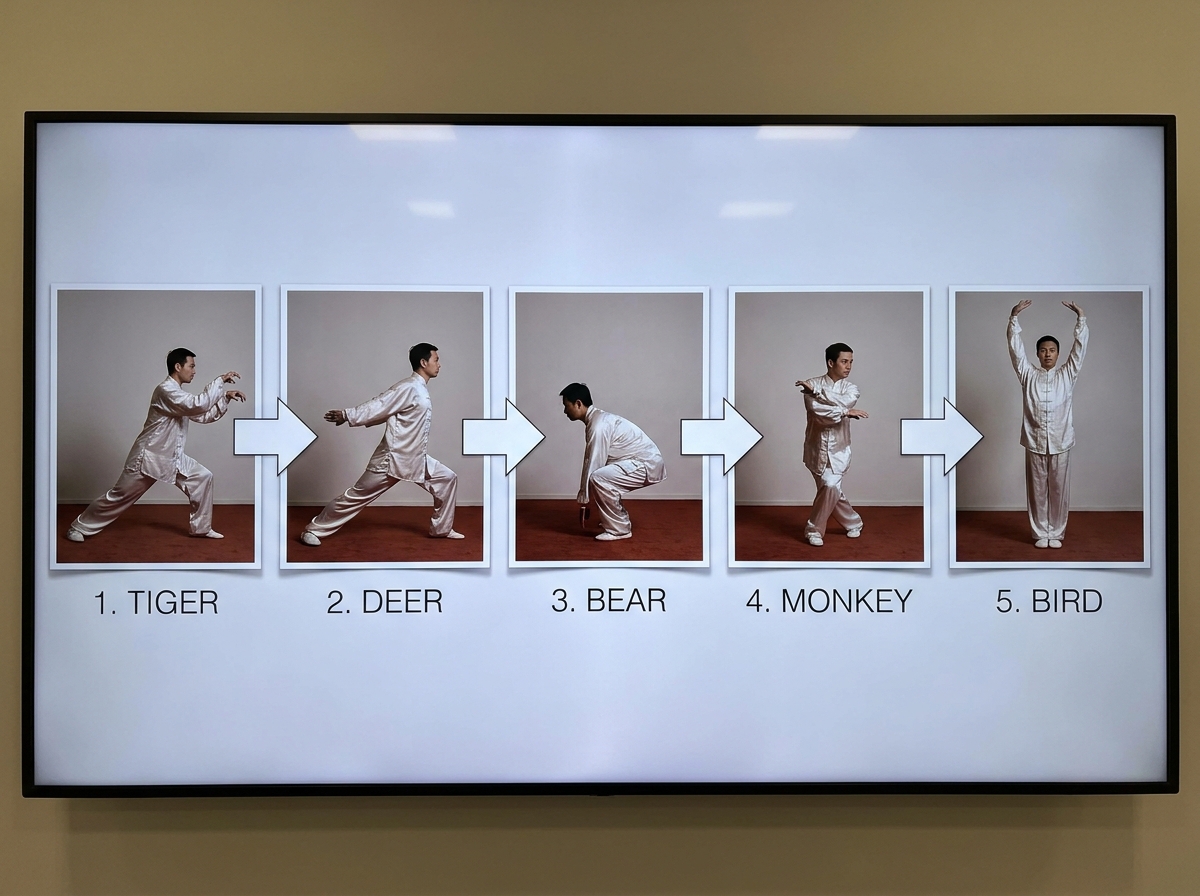
If you’re looking to learn Wu Qin Xi qigong, start by practicing the five animal movements with consistent timing and a clear intention tied to balance (yin-yang) rather than power or flexibility. Wu Qin Xi—often described as the Five Animal Exercises—uses movements that resemble tiger, deer, bear, monkey, and bird to support energy flow, and it’s the “how” that matters as much as the “what.” When I finally matched the movement to the internal focus, my sessions stopped feeling like random workouts and started feeling like maintenance.
- If you learn Wu Qin Xi without understanding yin-yang balance, you’ll feel “nothing” or get sore without improvement.
- If you anchor each animal to what you’re trying to change (sleep, digestion, skin, fatigue), your practice becomes measurable.
- If you repeat the same routine long enough, your body starts responding in patterns, not surprises.
A simple definition: what Wu Qin Xi qigong means
Wu Qin Xi is a movement practice linked to Traditional Chinese Medicine, where you move in animal-like shapes to encourage smoother energy flow and restore balance. For me, the key idea wasn’t mystical—it was structural: yin-yang balance and the idea of qi, blood, and body fluids behaving like systems that can get “stuck.”
People usually approach it in two ways:
- Form-first: learn each animal posture and timing, then refine intention.
- Intention-first: focus on balance and bodily signals, then refine form.
If you’re trying to “solve” fatigue or insomnia, you’ll get faster results when you blend both instead of choosing one.
Sharp insights
- Your arms aren’t the point; your breath timing is.
- “Feeling relaxed” can mean you actually skipped alignment.
- If your digestion feels off, your qi work will feel pointless.
How long it takes
| Stage | Content | Time |
|---|---|---|
| First contact | Watch the five animals, try once, notice what feels awkward | 1–2 days |
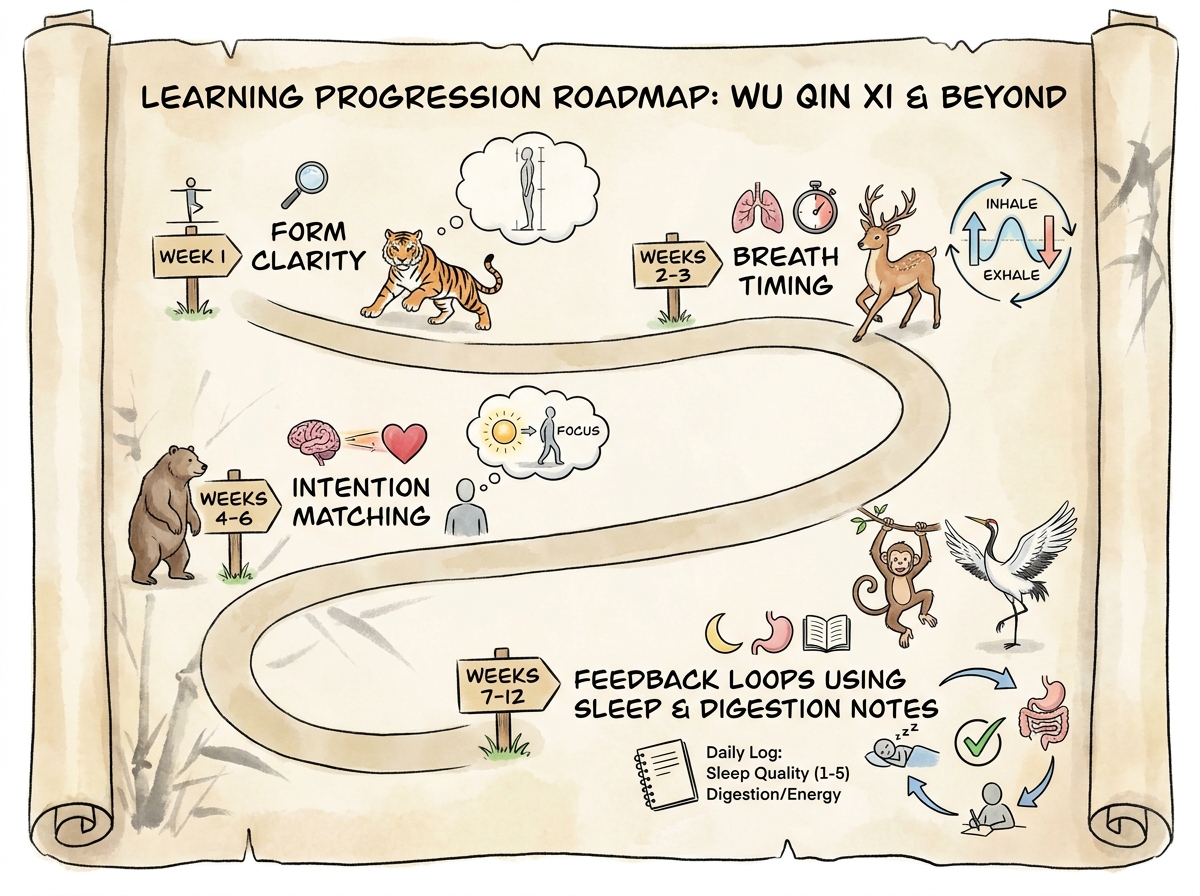
| Form stabilization | Repeat tiger/deer/bear/monkey/bird until you can do them without thinking every second | 2–3 weeks |
| Internal matching | Tie each movement to breath + intention, noticing sleep, energy dips, digestion cues | 4–6 weeks |
| Real-world effects | Focus on one issue at a time (fatigue, insomnia, skin), track changes weekly | 6–12 weeks |
| Total estimate | Repeat weekly with attention to balance, not perfection | 12–23 weeks |
Order matters more than speed. If you’re slower than the estimate, it usually means you’re building the part that actually sticks.
Where I started wrong
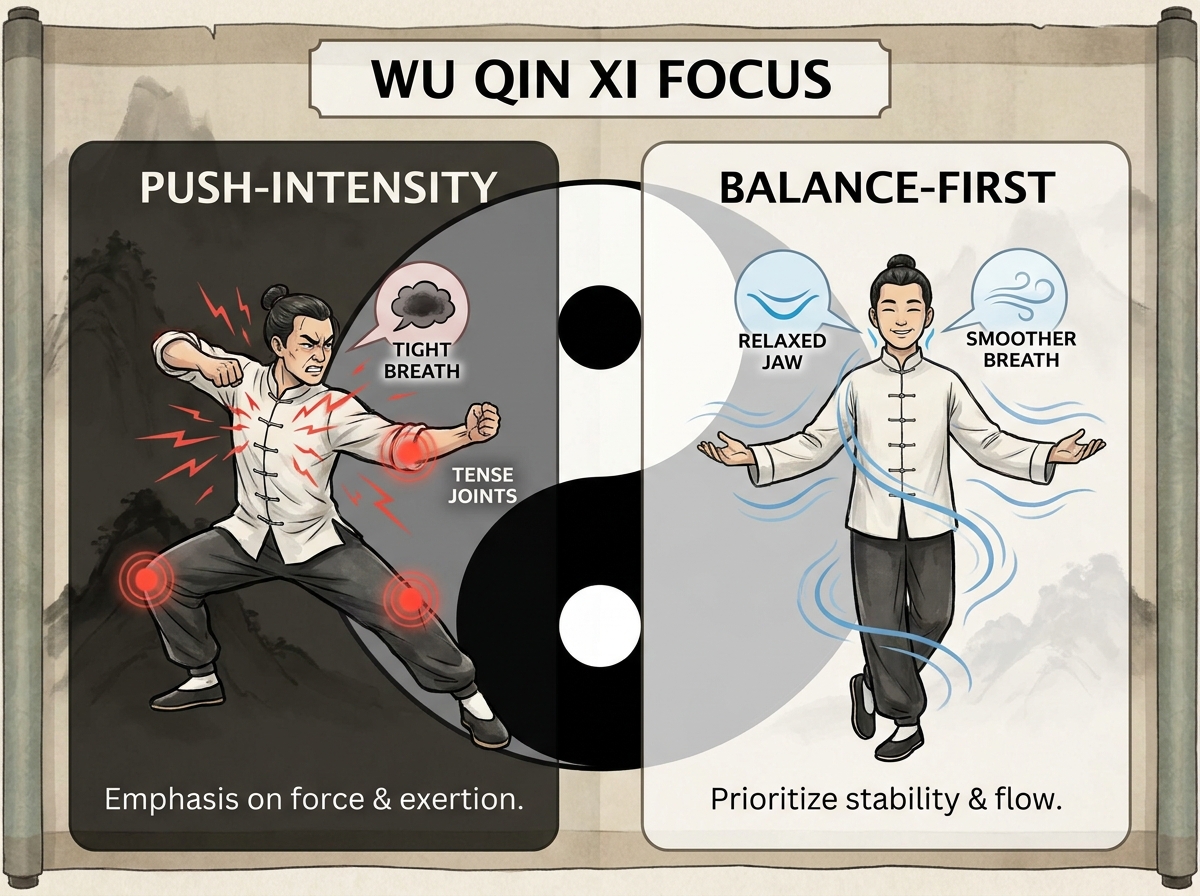
When I first tried to learn Wu Qin Xi, I treated it like a performance. I picked a version that looked impressive, copied the shapes, and hoped my body would “catch up” magically. The problem was that my sessions turned into a negotiation with my stiffness: I’d force a range, hold my breath, and then wonder why fatigue got worse.
I didn’t realize I was missing the foundational lens: yin-yang balance. Instead of feeling the practice as “energy moving,” I only felt the physical effort, so my results were random. Some days I’d feel calmer after training; other days I’d feel drained, like I’d burned something but not rebuilt it.
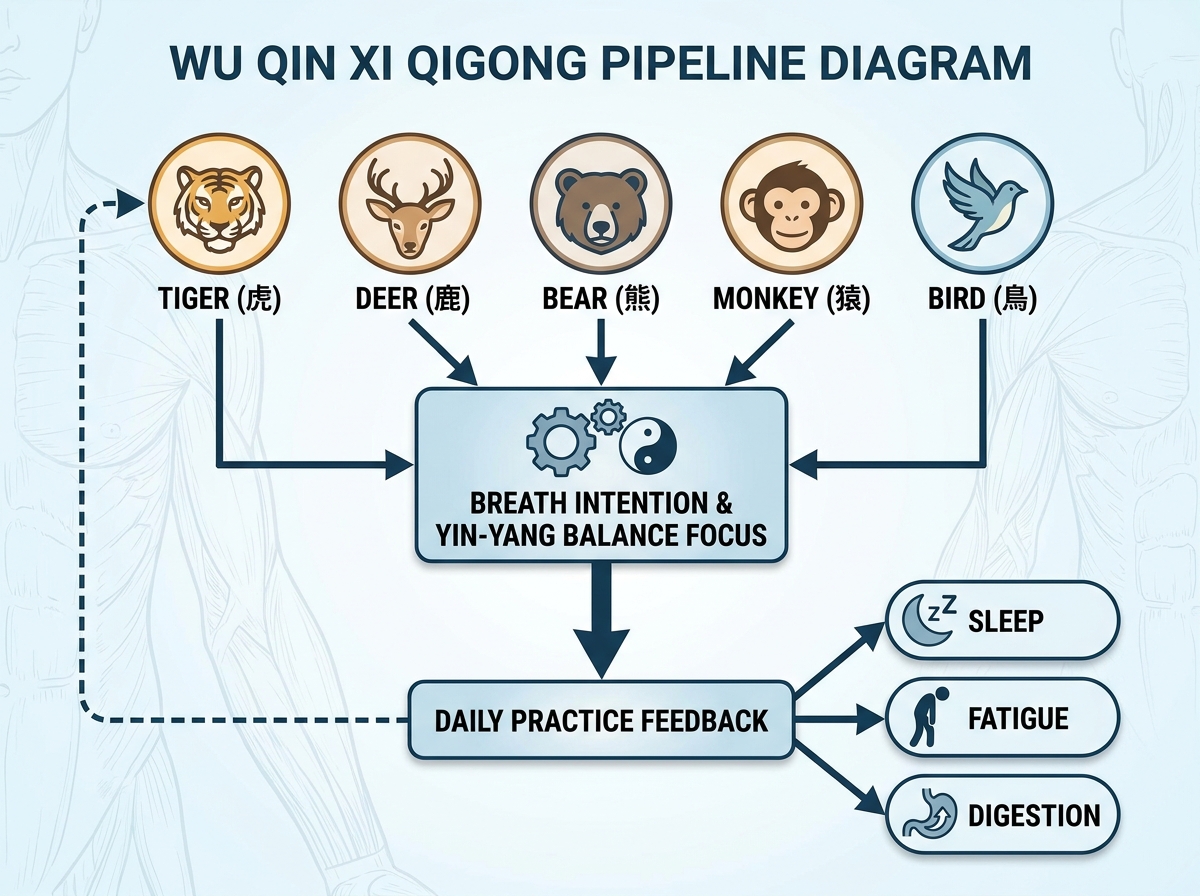
The turning point came when I stopped asking, “Did I do it right?” and started asking, “What did my body do afterward?” Sleep became my scoreboard, digestion became my early warning system, and fatigue became the signal I couldn’t ignore.
Building the TCM lens before you move
The moment you try Wu Qin Xi without any TCM framework, you end up chasing feelings. I learned that the hard way when I tried to “manifest energy” with big motions—only to get headaches and restless nights. The practice didn’t fail because Wu Qin Xi is ineffective; it failed because I didn’t understand what balance was supposed to look like in my own body.
Once I internalized the basics—yin-yang, and the idea that qi, blood, and body fluids influence how you feel—I stopped guessing. I started treating my daily state like it had causes, not moods. If I was run-down, I approached the animals differently than when I felt steady.
Then the Five Elements theory stopped being trivia. Wood, fire, earth, metal, and water became a way to notice patterns: how stress sits in the body, how digestion affects energy, and how sleep can reflect more than “a late night.” When I began aligning my intention to those categories, I wasn’t just moving—I was aiming.
Learning the five animals so your practice actually sticks
My biggest struggle wasn’t memorizing the animal sequence. It was the feeling of inconsistency: one day my deer posture felt smooth, the next day it felt clumsy, and I’d lose confidence fast.
The fix was boring on purpose. I chose one daily time window, kept the same order of the five animals, and practiced until the routine stopped demanding attention. In the beginning, I counted breaths obsessively; later, I stopped counting and let breath become a natural tempo.
When I started approaching each animal as a distinct “job,” everything got clearer. The tiger felt like focus and activation without rushing. The deer felt like length and steadiness rather than forcing flexibility. The bear felt like grounding—my body finally understood how to rest while still working.
The monkey and bird were where I stopped being arrogant. I kept realizing I was doing them “for show,” swinging too much or tightening too hard. Once I softened the effort and let the movement feel supported, my anxiety lowered in the same week I finally stopped trying to conquer the shapes.
How Wu Qin Xi helps fatigue and insomnia
People talk about sleep like it’s only about bedtime, but my body taught me otherwise. When my practice was sloppy—especially when my breath got shallow—insomnia didn’t disappear. If anything, I’d feel sleepy during the day and wired at night, like I was producing fatigue instead of releasing it.
A brutally practical shift helped: I stopped treating insomnia as something I needed to “fight.” I started using Wu Qin Xi to regulate rhythm. I’d practice with less intensity when my mind was loud, and I’d practice with more grounding when my digestion felt heavy.
That’s when I understood why fatigue and sleep are connected through the same internal systems. In TCM terms, you’re not just relaxing—you’re balancing the conditions that let the body restore. I noticed it most clearly when I tracked how my digestive comfort affected my nighttime mind.
If you’re learning Wu Qin Xi qigong specifically for insomnia or fatigue, choose one consistent goal: calmer nervous rhythm at night. Everything else—how impressive the movement looks, how deep you can go, how quickly you can “advance”—stops being the priority.
Where skin issues fit in (and why it’s not random)
I learned the hard way that skin problems don’t care about your motivation. I tried to solve eczema and hives by doing “extra” practice—more intensity, more time, more everything. My skin didn’t become calmer; instead, I felt more reactive.
When I finally applied the TCM way of thinking—connecting internal imbalance to external expression—the practice changed. I focused less on pushing through and more on steady care: nourishing digestion, reducing agitation, and keeping the body in a balance-first mode.
It wasn’t overnight. But the pattern was clear once I stopped expecting instant results. On weeks when my digestive comfort improved, skin agitation tended to calm down too. When I ignored that link and chased intensity, both my skin and my mood got worse.
If you’re dealing with skin problems and using Wu Qin Xi, your goal should be regulation, not domination. The movement becomes a signal to your system that you’re safe enough to settle.
The one mistake that delays real results
The single biggest mistake I made when learning Wu Qin Xi was trying to “correct everything” at once—breath, posture, energy, stress, and sleep—during every session.
I thought the body would reward multi-tasking. Instead, I overloaded my attention, and my movements turned into a series of micro-crashes: I’d tighten to fix alignment, then lose breath, then blame the practice for failing. That’s the moment I realized the training isn’t supposed to be complicated; it’s supposed to be clear.
Once I picked one priority issue—fatigue, insomnia, digestion comfort, or anxiety—and stayed with it long enough to notice patterns, results became obvious. I didn’t “graduate” by doing more. I advanced by doing the same thing with fewer contradictions.
So when you practice, choose your lever. Move the animals with breath discipline, keep yin-yang in mind, and let feedback from sleep and digestion tell you what to adjust next.
Closing reflection + what to do next
I used to think Wu Qin Xi was a mystery you either “got” or didn’t. Now I see it as a relationship: you show up, your body responds, and you pay attention to what changes first.
The practice became real when I stopped chasing intensity and started working with balance like it was measurable. If you want results, make your next few sessions specific enough that you can tell whether they’re helping.
- Pick one outcome to track for two weeks. Sleep quality or digestive comfort gives you fast feedback that form-only practice can’t.
- Keep the same animal order daily. Consistency reduces the mental tax so breath and intention can actually lead.
- Practice with a softer jaw and slower exhale. It’s a concrete switch that lowers agitation better than “trying to relax.”
- Use less force in deer and monkey. If you force range, you’ll often pay back with restlessness at night.
- Ground bear when your energy feels scattered. When fatigue is high, stability beats intensity every time.
- Adjust duration, not the basics. Shorter sessions with correct breath are more effective than longer sessions with sloppy alignment.
- Change one variable per week. If everything shifts at once, you’ll never know what actually worked.
Internal link inserts
Use this link inside your planning document: How to Learn Python Basics Fast: A Beginner’s Real-World Roadmap
Use this link when you want a system mindset: How to Learn a Skill Deeply: A Real-World Journey
Use this link if you want to build a personal routine that lasts: How to Start an Amazon DSP Trucking Company from Scratch
Leave a Reply